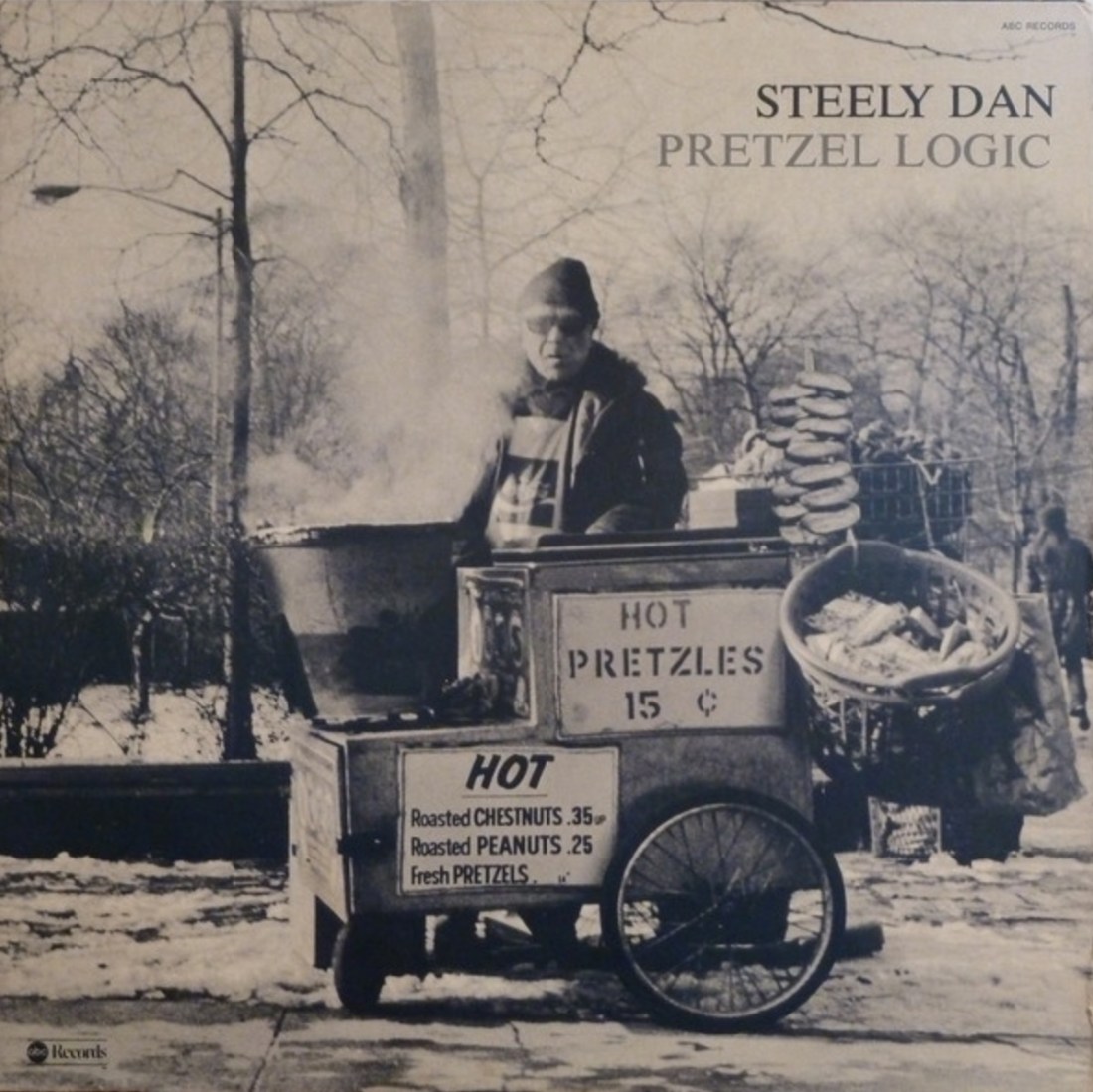
The word that always comes to mind when I listen to Steely Dan is “lush”. The music is complex and perfectly played, the lyrics clever and insightful. Listening, you can’t help but feel a bit more elevated than with the usual pop, with all its messy emotion and histrionics. It can feel downright extravagant to allow yourself to wallow in these songs. It’s music for a concert hall, not a bar or repurposed hockey arena or ballpark.
Yet, for all the richness, it somehow manages to be understated at the same time. Donald Fagen never once seems caught up in what he’s singing about – he is simply the reporter of others’ misadventures, calmly giving you the details. Is it wrong to want something else from them? I know Steely Dan isn’t that kind of band – and I love them for it – but can anything so absent of danger properly be considered rock ‘n’ roll? They seem more of a jazz ensemble playing within the pop idiom, which sounds great, but without the unpredictability that can make jazz so exciting to listen to, there is nothing here to get the heart racing.
To an untrained ear, which definitely includes my pair, it all sort of sounds the same – other than the hits, with their built-in goodwill, very little jumps out and makes you take notice. The band definitely play with genre – the mild salsa feel early in “Rikki Don’t Lose that Number”, the funky guitar of “Night by Night”, the bluesy beat of “Pretzel Logic”, the rollicking hillbilly vibe of “With A Gun” (my favourite song on the record) – but it almost always ends up sublimated to the Steely Dan sound. The one strong exception is the goofy old timey feel of “East St. Louis Toodle-Oo”, which would benefit from being a bit ragged – perfectly played, it has a sort of pointless wonderment to it.
In the end, for all its beauty, I felt unmoved by the seemingly effortless cool of “Pretzel Logic”. It is high end background music, the perfect accompaniment to an afternoon spent doing the laundry, or for when you’re stuck waiting to see a doctor and the magazines are all out of date. Certainly not what the band was aiming for, but worthy nonetheless – we all have unavoidable tasks to get through and they are made more palatable by a pleasing soundtrack.
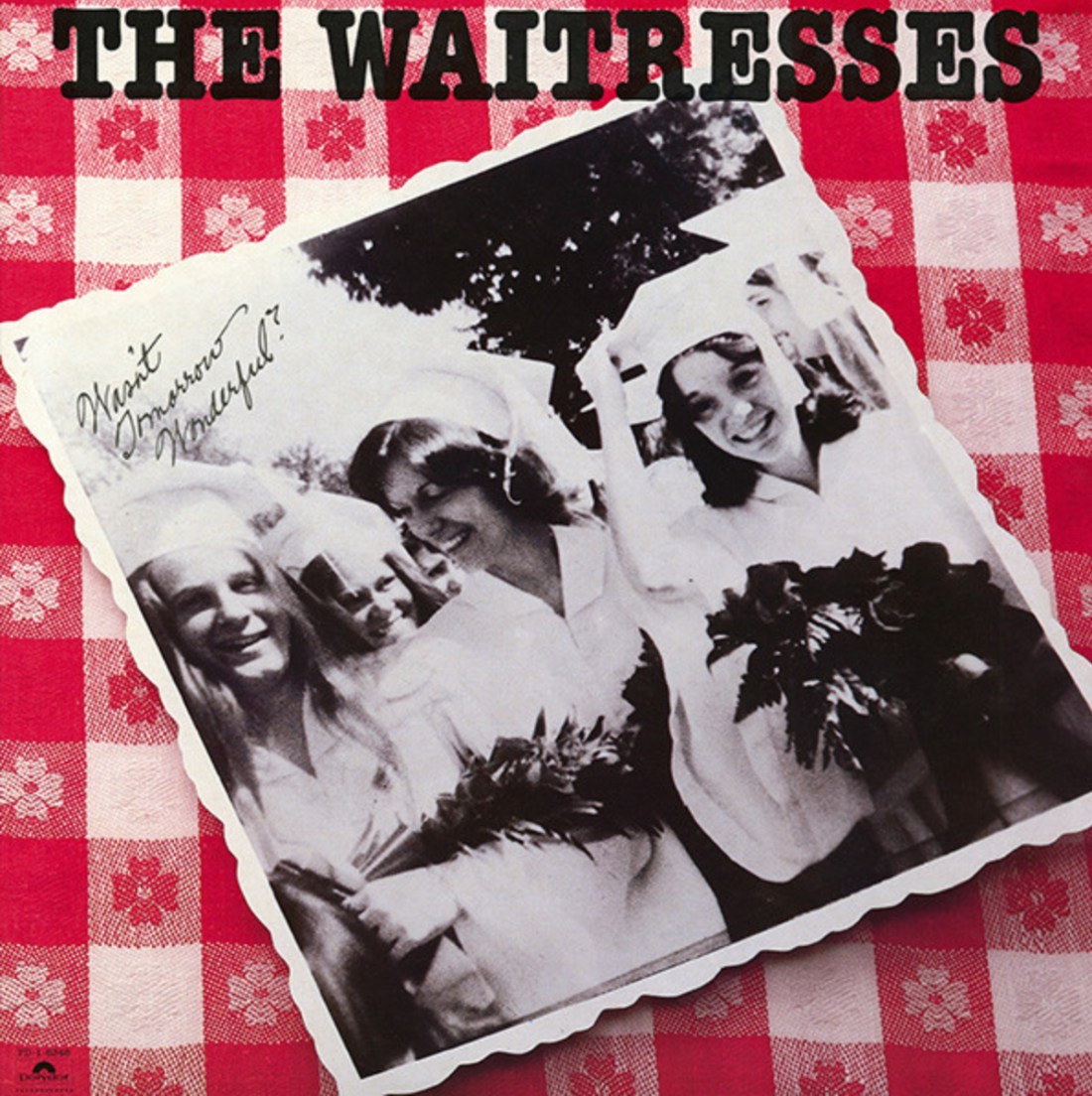
On a recent evening, I selected “Wasn’t Tomorrow Wonderful?” by The Waitresses for my drive-home aural accompaniment. I had owned it on vinyl in the ’80s, but never went beyond playing a few favoured tracks. It seemed like a fun way to navigate rush hour traffic, with Patty Donahue’s droll delivery guiding me home. (Also, what was the deal with Akron in the 1950s? How did Donahue and Chrissie Hynde both come out of there?) As the album played, and each familiar tune was followed by another familiar tune, I soon realised that I had played the whole thing before, and probably a few times. How could I have forgotten that? I love The Waitresses: they’re even on my Christmas playlist. I have spontaneously sung the chorus to the title track (“What’s a girl to do? / Scream and screw? (No!) Pretty victories”) in the presence of my then-young children (maybe not the best decision). I was befuddled.
The next morning, I selected “Vivid” by Living Colour (shoutout to Americans for following the Anglicised spelling) to accompany my rituals of cat feeding, dishwasher emptying, lunch preparing and generally getting ready for the day ahead. I had also owned this album (this time on cassette), which had been a critics’ darling in 1988, though much of the coverage had been in the back-handed and highly racist nature of “Can you believe that Black guys can play hard rock?” I was fairly certain this time that I had listened to the entire album, but after the opener “Cult of Personality”, I became less confident with each track, and certain I never had by the end.
I rather enjoyed the surprise that came with both experiences. Mixing the familiar with the unexpected is part of my love for cover versions. A few days ago, I played “Tomorrow the Green Grass” by The Jayhawks. I’d never listened to any of their records, but knew “Blue”, the opener, from its inclusion on Spotify Americana and alt-country playlists. At roughly the midpoint of the album, “Bad Time” started playing, and I almost immediately recognized it. I looked it up on Wikipedia, and saw it was written by Mark Farner, a name I knew but couldn’t place. A few clicks later, I knew it was a 1975 hit for Farner’s band Grand Funk, another group I have never consciously listened to, off an album whose cover photo I remember from album racks of that era. My enjoyment of The Jayhawks’ version had been enhanced by a bunch of things I either didn’t know or knew only subconsciously. Such are the wonders of music.
And so, we come to my list of favourite listens of the month past, including Living Colour in the slot where I expected to find The Waitresses.
The Clash – The Clash (1977) (Never listened to a Clash album before. Not sure what was wrong with me for 45 years, but at least I finally got it fixed.)
The Kinks – State of Confusion (1983) (Every album I dip into is a fresh revelation with these under appreciated masters.)
David & David – Boomtown (1986) (Simply one of the greatest one-album bands ever.)
Living Colour – Vivid (1988)
N.W.A. – Straight Outta Compton (1988) (Easy-E is not mentioned often enough when the best rappers of his era are discussed.)
Cub – Betti-Cola (1993) (Further evidence that Canadian content rules failed us: did radio stations really need to play another Bryan Adams or Celine Dion song when this delightful cuddlecore band from BC was waiting for our attention?)
Freedy Johnston – This Perfect World (1994)
Poi Dog Pondering – Pomegranate (1995) (If there is a genre that they miss on this delightful record, I don’t know what it is. Spotify has much that is wrong about it from the artists’ perspective, but it allows musical nomads like me to discover bands like this, which applies to both the previous name on this list and the next one.)
Blake Babies – God Bless the Blake Babies (2001)
Mayday Parade – A Lesson in Romantics (2007) (Nothing says you’re in an emo band like titling one of your songs “If You Wanted a Song Written About You, All You Had to Do Was Ask”.)
Tyminski – Southern Gothic (2017) (A masterful bluegrass-tinged country-rock album from Alison Krauss’ long-time band mate.)
Taylor Swift – folklore (2020) (I am slowly accepting that I need to let go of Swift’s public persona – which may be out of date in any event – and just enjoy her resplendent art.)
The Beths – Jump Rope Gazers (2020)
Leo Nocentelli – Another Side (2021) (It is no slight to say that the story behind this record is even more amazing than the album itself.)
Myriam Gendron – Ma délire / Songs of Love, Lost and Found (2021) (This and the next record from a pair of Montrealers made for a magnificent soundtrack to a walk along the beach.)
Allison Russell – Outside Child (2021)
Leikeli47 – Shape Up (2022)
Hollie Cook – Happy Hour (2022) (Maybe the path for me to enjoy reggae is the artist’s own characterization of her sound as “tropical pop”. As a bonus, her dad was a Sex Pistol.)
It’s not a good time to be saying anything less than glowing about Joni Mitchell, with her recent triumphant return to the stage. A lot of people love her music. I am not one of those people. The ones who love her are right to do so. And the rest of us are right not to.
Of course, it’s not allowed to be that simple. We struggle to understand why people don’t share our values and opinions. Is there something wrong with them? Or am I the problem? We are highly irrational about the things we love, and no better about the things we don’t.
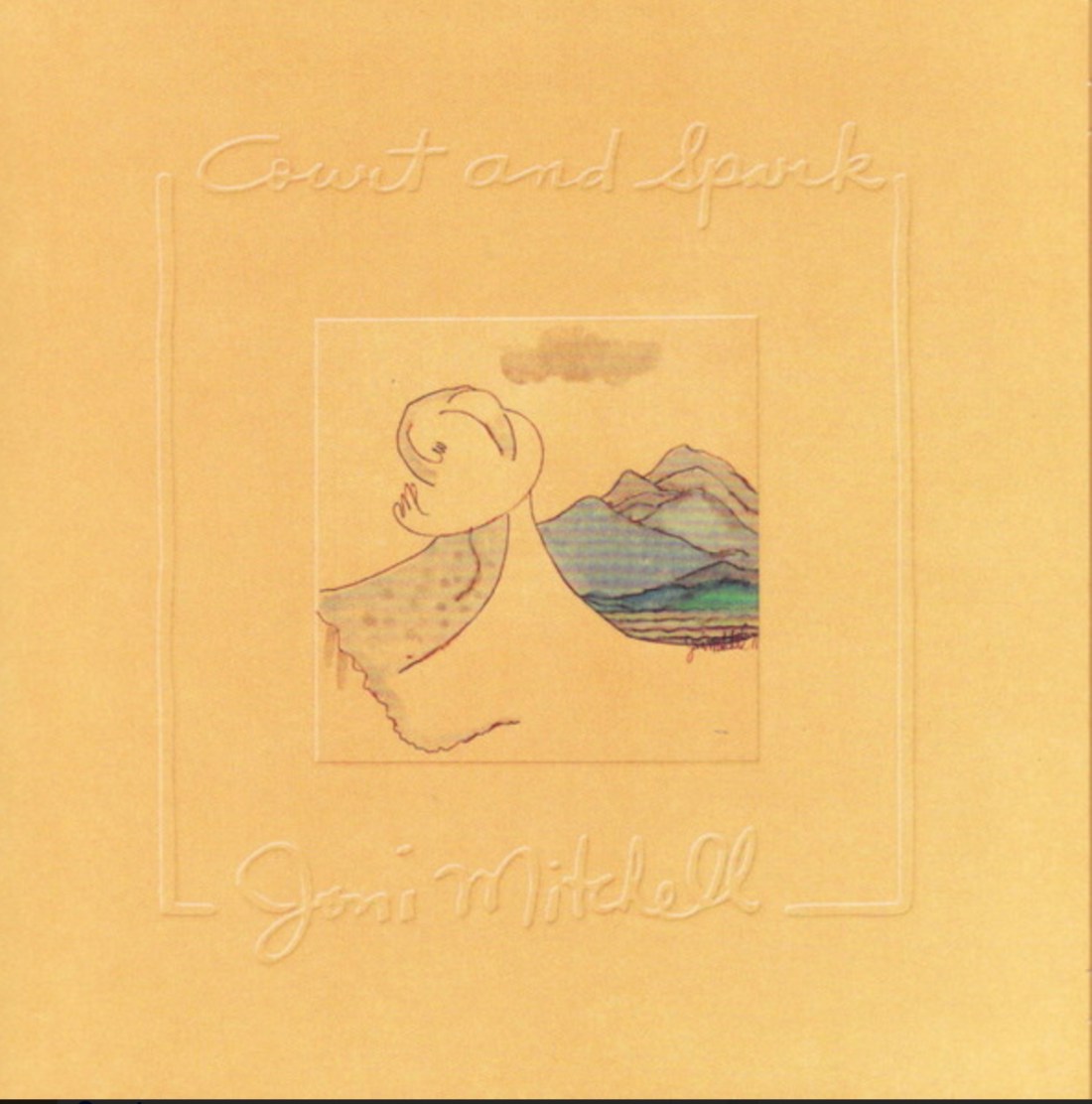
Somewhere, there’s a Rammstein fan asking herself why she should give a shit about some old lady. I’m not quite there, but I can’t fake caring about Joni Mitchell’s music. Oh, it isn’t absolute – there are things on “Court and Spark” that I quite like, as there were on “Blue” (“A Case of You” still gives me chills) and the less-heralded “For the Roses” and “Chalk Mark in a Rain Storm”. But, for the most part, I have resisted the mighty weight of the Joni Mitchell Critical Complex.
When you read or talk about music, you will run into lots of people telling you that you’re wrong about something like this. They will explain patiently, as if speaking to a well-behaved child, why you are wrong: her intimate confessional lyrics, her melodies, her novel vocal style, her experiments with jazz. None of this is incorrect, but it misses the point. I don’t care how “great” she is, because I don’t care about the sounds she’s making. And if you don’t get enjoyment from what you’re listening to, why are you even listening to it? For all her greatness, give me something I enjoy. This isn’t broccoli, or cardio, or meditation, or any other thing I do (haphazardly) because it’s good for me. Give me cuddlecore, bedroom pop, emo. Give me my 50th play of “Welcome Interstate Managers”, my 100th play of “The Stranger”, my 250th of “My Aim is True”. But also give me artists that I had never even heard of until this very month: give me Cub, Freedy Johnston, Blake Babies, Leo Nocentelli, Leikeli 47, Hollie Cook. I hope you’ll check them out, but I won’t argue if they don’t do it for you. Just don’t tell me why I’m wrong to not love Joni.
Even some of the reasons given for why she is great don’t sit right with me. Does the personal nature of her lyrics make them better than less personal work? “My Sweet Annette” by Drive-By Truckers never fails to move me (pedal steel guitar is one of the most mournful instruments ever invented, and if you pair it with fiddle, I am pretty much done for), and that story absolutely did not happen to the writer. Artists make the personal universal and the universal personal: neither is intrinsically better than the other.
Or her voice. Yes, it’s distinctive, and you would know it anywhere. But what are you to do if you find it so displeasing that it distracts you from the song? This is sometimes what I experience with her work.
Often what I like in her music are the things that seem less like what I expected to hear. The shambling southern rock feel of much of the guitar work in “Free Man in Paris” (which I have been spontaneously singing over the past week). The boogie-woogie rhythms of “Raised on Robbery”. The minimalist funk of “Trouble Child”. The madcap silliness of “Twisted”. There are pleasant smooth jazz-adjacent moments throughout the record, and from what I know of her subsequent career, it turned out to be a sandbox that she quite enjoyed playing in.
“Court and Spark” is a perfectly fine pop record: I just don’t hear whatever it was that made critics decide it was the best album of its year, and I could listen to it one hundred times and probably never hear it. Luckily, I don’t have to: there’s always another play of “Purple Rain” waiting for me if I run out of ideas about what to put on next.
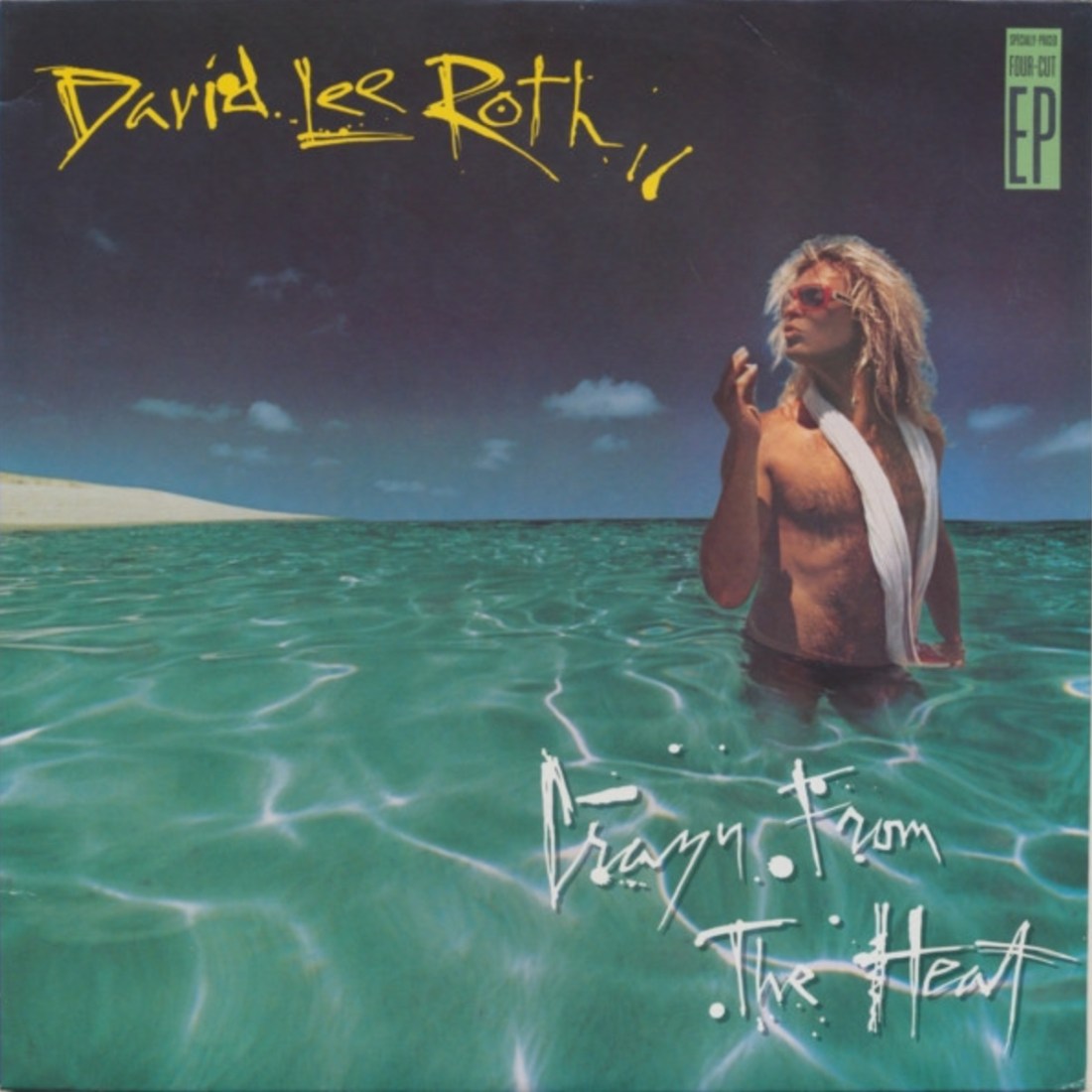
David Lee Roth – California Girls and Just A Gigolo/I Ain’t Got Nobody
The first time I really noticed Van Halen was in 1983. What got my attention was that the band was paid $1.5 million dollars to perform at the Us Festival, and the press about this made it clear that getting one-quarter of a Steve Austin was a very significant payday. At this point, Van Halen had one decent-sized hit in Canada – a not very interesting cover of Roy Orbison’s “Oh, Pretty Woman” – and as a dedicated listener to Top 40 radio, this amount made no sense at all to me. Why would they be paid so much when they had so few hits?
That, of course, changed the following year, with “1984” the album and a little song called “Jump”. Now, “Jump” is an awesome song that I am always happy to hear. But what came next was a lot more fun.
Eddie Van Halen may have been the heart and soul of the band, but frontman David Lee Roth was its genitals, and in rock and roll, that’s really what matters most. Outside of the music, everything interesting about the band starts and ends with Roth. Eddie was an amazing guitar player, but other than the axe nerds, we were all watching Crazy Dave to see what would come next. Roth was a consummate showman who would have fit in any era of music, and he proved it in 1985.
You can’t separate the songs from the videos, and it was those visuals that made him, ever so briefly, a solo superstar. “California Girls” casts Dave as a wacky – Dave is always wacky – tour guide. The subject of the tour is a collection of beautiful women, who Dave displays to his charges. It’s horribly sexist – most of the women are little more than props, although it is clear at the end that everyone knows that’s what’s happening. Between the faux Rod Serling intro and outro, and Roth suggestively peeling an ear of corn and generally bringing an energy that at one point reminded me of Heath Ledger as The Joker, the whole thing is completely nutbar. Meanwhile, “Just A Gigolo” pokes fun at his competition, with Dave electrocuting Billy Idol, getting put in a wrestling hold by Cyndi Lauper, dancing with Michael Jackson, and being pawed at by Boy George. Both videos break the fourth wall, showing what happens behind the scenes in a sort of heightened madness. Throughout, Dave is the campy ringleader.
And the songs are just crazy fun to listen to. As covers, they don’t reinvent the wheel – they just add a healthy dose of Daveness to a few classics. There are howls, yelps, falsettos. “Just A Gigolo” is a knowing wink at his persona, which, in case you missed it, is made clear with the line change to “people know the part Dave’s playing”. Roth is just out there having fun, but he also knows he’s a product, and there’s a psychic price to that. It’s all fun and games until no one cares anymore, and there’s a world weariness to his delivery that brings this home.
But let’s not get too serious. In the end, this is just a very rich man at the top of his game screwing around because he’s playing with house money. No one was saying “no” to David Lee Roth in 1985, and he cashed in with a pair of delightful camp classics.
“California Girls” is easily the better of the two songs, and is for my money superior to the Beach Boys’ original (blasphemy!). The Beach Boys’ version is sluggish when put up against Roth’s, and just not nearly as much fun to listen to. It’s also more rock and roll with Dave. While the Beach Boys looked so conservative in their short hair and collared shirts, the kind of boys who would give their letterman jacket and school pin to Barbara Ann, David had other ideas for what he could get up to with those midwest farmers’ daughters.
Roth and Eddie Van Halen had an often tempestuous relationship, but everything seemed to be okay between them when Eddie passed in October 2020. Roth is only 67, but he claims he is retired. I have a hard time believing that – he always seemed like a guy who would die in the saddle (an appropriate turn of phrase if you’ve ever listened to the band’s album “Diver Down”). Roth may prove to be the musical version of the answer to the question, “If a tree falls in a forest and no one is around to hear it, does it make a sound?” If David Lee Roth isn’t entertaining someone somewhere, does he still exist? I hope so, but I’d love it if he gave us another “California Girls” before he rode off into the sunset.
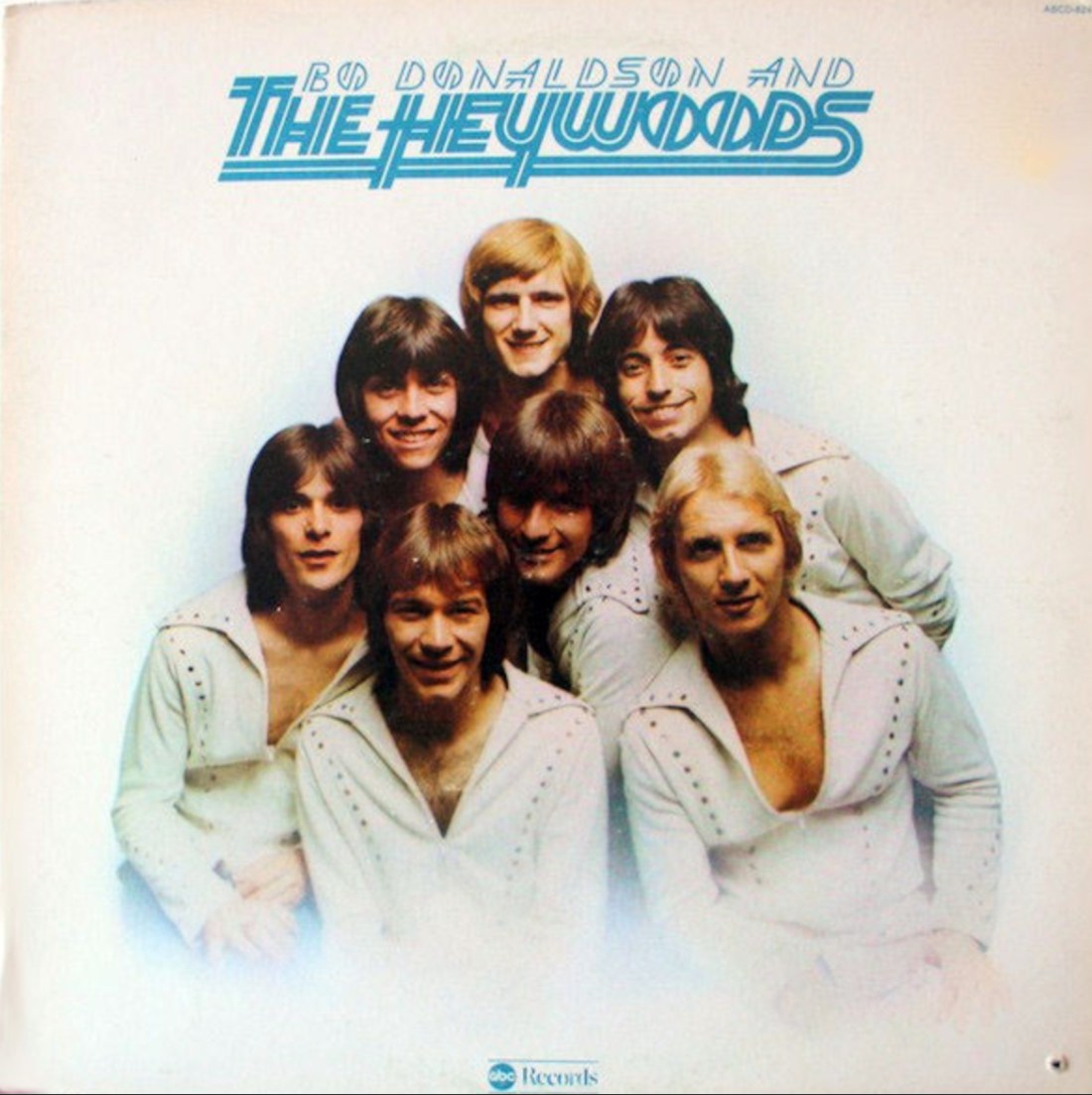
Bo Donaldson and the Heywoods – Billy, Don’t Be A Hero
I haven’t completed my empirical study on this issue – I’m still waiting on my Canada Council for the Arts funding to come through – but my preliminary findings would indicate that the 1970s were the Golden Age of musical cheese. A quick look at the Billboard charts will steer you towards enough product for the largest fondue party of all-time, with chart-toppers like Ray Stevens’ “Everything is Beautiful”, Debby Boone’s “You Light Up My Life”, Mary McGregor’s “Torn Between Two Lovers”, Morris Albert’s “Feelings”, Terry Jacks’ “Seasons in the Sun”, and, of course, Paul Anka and Odia Coates’ “(You’re) Having My Baby” all making fine contributions. But none can match the all-encompassing melted Gruyere mastery of Bo Donaldson and the Heywoods when they put “Billy, Don’t Be A Hero” on tape.
I was aware of the band through the pages of “Tiger Beat”, though the amount of coverage seemed to far outweigh their cultural import. (This was a common issue with the magazine: for example, see De Franco, Tony or Eure, Wesley or Sherman, Bobby.) I certainly was very familiar with “Billy, Don’t Be A Hero”, but can’t say I knew at the time who was singing it: when looking up the song recently, I was sure it was Paper Lace’s slightly earlier version that was the Canadian hit, but in fact Bo and company topped both the RPM and Billboard charts while Paper Lace (which made its own important contribution to musical Emmental with “The Night Chicago Died”, reaching number one that same glorious summer of 1974) barely made a dent in either country with the song. I usually have a pretty good memory about such things, which says a lot about how much I’ve thought about this song in the past 48 years.
But, my god, why would I have thought about it? Rolling Stone readers voted it the 8th worst song of the 1970s, and with no disrespect intended to list-topper Rick Dees, who knew that “Disco Duck” was awful (and that awfulness was part of its charm), or the other un-notables in spots two through seven, I really think the Golden Toilet (yes, I invented that award, but it’s apropos) should have gone to “Billy” in a walkaway.
Sometimes, I revisit these songs with a measure of trepidation, thinking time will have dimmed my ardour. With “Billy” it was the opposite: would it, like a fine wine, have improved with time? I need not have concerned myself. “Billy” is, in fact, like a whine: something that gets worse the longer it goes on. I don’t blame the band: they were just trying to make a living, and this certainly helped draw those crowds to Mott’s Berry Farm (a mythical place that played an outsized part in my musical imagination thanks to “Tiger Beat”). When it comes to reading the musical zeitgeist, they couldn’t have made a better choice.
Considering the subject matter – Billy heads off to war and gets himself killed by doing the one thing his girl told him not to do (a mistake men have been making in endless contexts since the first caveman made note of a well-turned ankle) – it’s an amazingly cheery-sounding song, all jaunty Civil War-era marching band snare drum and toot-toot whistles. I’m sure it came off better live, because on record it gives the impression that no actual instruments were played; rather, it sounds like it came out of a late-night GarageBand session that ended when someone said, “Fuck it, I’m putting it up on my Soundcloud.” Some unidentified perv is close enough so that, while he’s eyeballing Billy’s “young and lovely fiance”, he hears her instructing the young soldier to let his fellow warriors take the fall rather than put his own life on the line. Really, if that was going to be the plan, Billy would have been doing everyone a favour by just staying at home. But he goes, tosses his lady’s advice in the dumpster, and gets taken down by some eagle-eyed (or lucky) Johnny Reb. And after Billy saved her from the Confederates, the ungrateful young lady, rather than carrying her virginity to the grave, drops the letter from Edwin Stanton into the garbage, and, maybe (I’m speculating here), goes looking for the narrator, who for some reason did not sign up for duty in the Union army and thus may have been the one un-maimed man of marrying age left in their town in 1865.
Anyway, that was a lot of reading between the lines.
Look, it’s not a good song (I need to be careful here with my “there is no bad music” ethos), but I don’t hate it, and I get why it was a hit. At that moment in time, bubblegum sounds ruled. Pop music often got too smart for its own good in the 1960s, and there was a lot of reactionary dumbing down in the first few years of the 1970s. Radio was painful to listen to a lot of the time, but the young people who rejected what they were being fed went out and started bands of their own to change this. So, yes, “Billy Don’t Be A Hero” can take some of the credit (just go with me on this) for “God Save the Queen” and ”I Wanna Be Sedated”.
Thank you, Bo Donaldson and the Heywoods, for your service.
When my first marriage broke up, my nine-year-old daughter, who loved “The Princess Diaries” and “Ella Enchanted” (I can’t recall if we had let her watch ”The Devil Wears Prada”), told me I should date Anne Hathaway. It’s sort of awesome that my daughter – who clearly couldn’t see what a complete mess I was – thought that me dating a movie star was not completely implausible. Aw, children. We will never know how that might have turned out – I didn’t have Anne’s number at the time – and things have gone just fine for us both: Anne won an Oscar, and I, in my usual sort-of oblivious way, found my soulmate. But that alternate timeline is worthy of “Everything Everywhere All at Once”, or at least “Remedial Chaos Theory”.
I still haven’t seen Anne’s award-winning turn in “Les Miserables”, but parents of adolescent girls had long known she could carry a tune. The “Ella Enchanted” soundtrack was mostly covers of popular songs, and Anne showed she had chutzpah to spare by taking on a track originally sung by Freddie fucking Mercury.
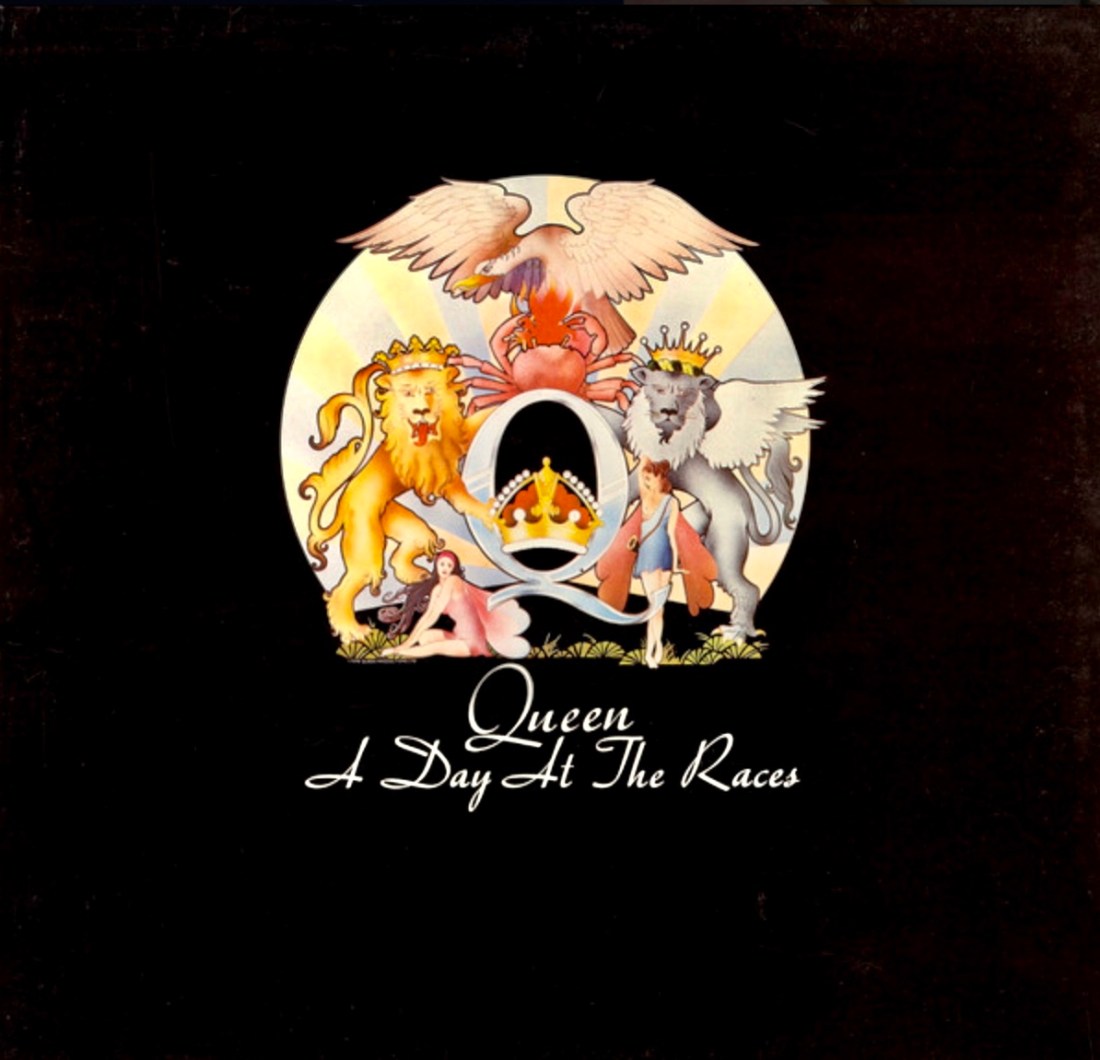
Oh, Freddie. If he isn’t among your 10 greatest singers in rock history, I want to know who crowds him out of your personal selection, because I will take that person’s best track and crush it with Freddie’s 30th best. Queen are sort of overrated as a band – they made a lot of great singles, but the deeper cuts on their albums are pretty unmemorable – but that takes nothing away from the brilliant lunatic at the mic stand. Pick a random Queen hit and be rewarded by the dexterity of his instrument. Too bad the movie about his life is complete garbage (love the sequence about the making of “Bohemian Rhapsody” though).
Anyway, “Somebody to Love” is way down on my list of favourite Queen songs. (“Bohemian Rhapsody” will always be at the top, but in recent years “Don’t Stop Me Now” – shoutout to the rest of the band on backing vocals: they always have amazing harmonies – and “I Want to Break Free” have given me a lot of pleasure.) But there is certainly an argument to be made that it’s Freddie’s best individual performance. His voice switches gears on a dime, low then high, quiet then loud. I love the way he sings the “everybody wants to put me down” line at around the 1:44 mark, and he really does sound a little mad when he sings “crazy”. There’s a lot of repetition in the song: it feels like it’s going to end about a half dozen times, but it goes on and on and on, way past the point when it should finish up, but Freddie and the lads still hold your attention.
And little Anne Hathaway took that on? Did her people try to talk her out of it? They should have – there’s no better way to highlight the frailties of your own voice by covering a Queen song. Maybe she was under a spell, like her character in the film. Was “Ella Enchanted” really a documentary? “Here, Anne, put on this old-timey outfit and act like you’re a rock star.” Zing! And you find yourself way out of your depth but go for it anyway because you have no choice.
There aren’t a ton of versions out there – professional musicians really know better, but Troye Sivan does a weird sort of dirge-like gloom monster meets teen idol version that isn’t as completely horrible as that description makes it sound. The San Francisco Gay Men’s Chorus really believe in the song, but, yikes, the lead singer is pretty dreadful. And the season one cast of “Glee” did a decent job of butchering it into submission, which was pretty much what happened weekly on that show for long after most of the world stopped caring.
For Anne’s competition, I chose MxPx, a pop punk band that I sort of recall (I erroneously thought they had a track on the “American Pie 2” soundtrack). At one point they were considered Christian punk, which is a thing I did not know existed but am now dying to dig into. It sounds exactly like you’d expect – sped up, sung in a yelling monotone, completely lacking in subtlety. Which is sort of the smart play: if you love Queen and know you can’t compete with Freddie – because who can? – then you need to make your own path through their songs.
And then there’s Anne. Strangely, though most of the “Ella Enchanted” soundtrack is on Spotify, this song has been pulled (Anne’s people trying to protect her too late, perhaps). Thankfully, the movie clip is preserved for the curious on YouTube. Somehow, it’s worse than I remember. Her voice is strong enough, but there isn’t a lot of colour or nuance, and the cover is so committed to trying to sound like the original that it’s doomed to failure. Only a lunatic goes head on with Freddie.
The Winner: MxPx
This was a tough one. I wanted to reward Anne for her nerve, but it just isn’t a very good record: if you’re going to be slavish in a cover, you need to be a powerhouse, and that just doesn’t describe my almost-girlfriend. But MxPx, sometimes for the worse but often enough for the better, make the song their own, and I like it more with each play. It’s sort of a stacked deck – I owned that “American Pie 2” soundtrack because I love pop punk – but it’s still an honourable effort in tribute to the master, and that gets them over the top. Anne will have to make do with her Oscar and the sweet memories of our near miss for now.
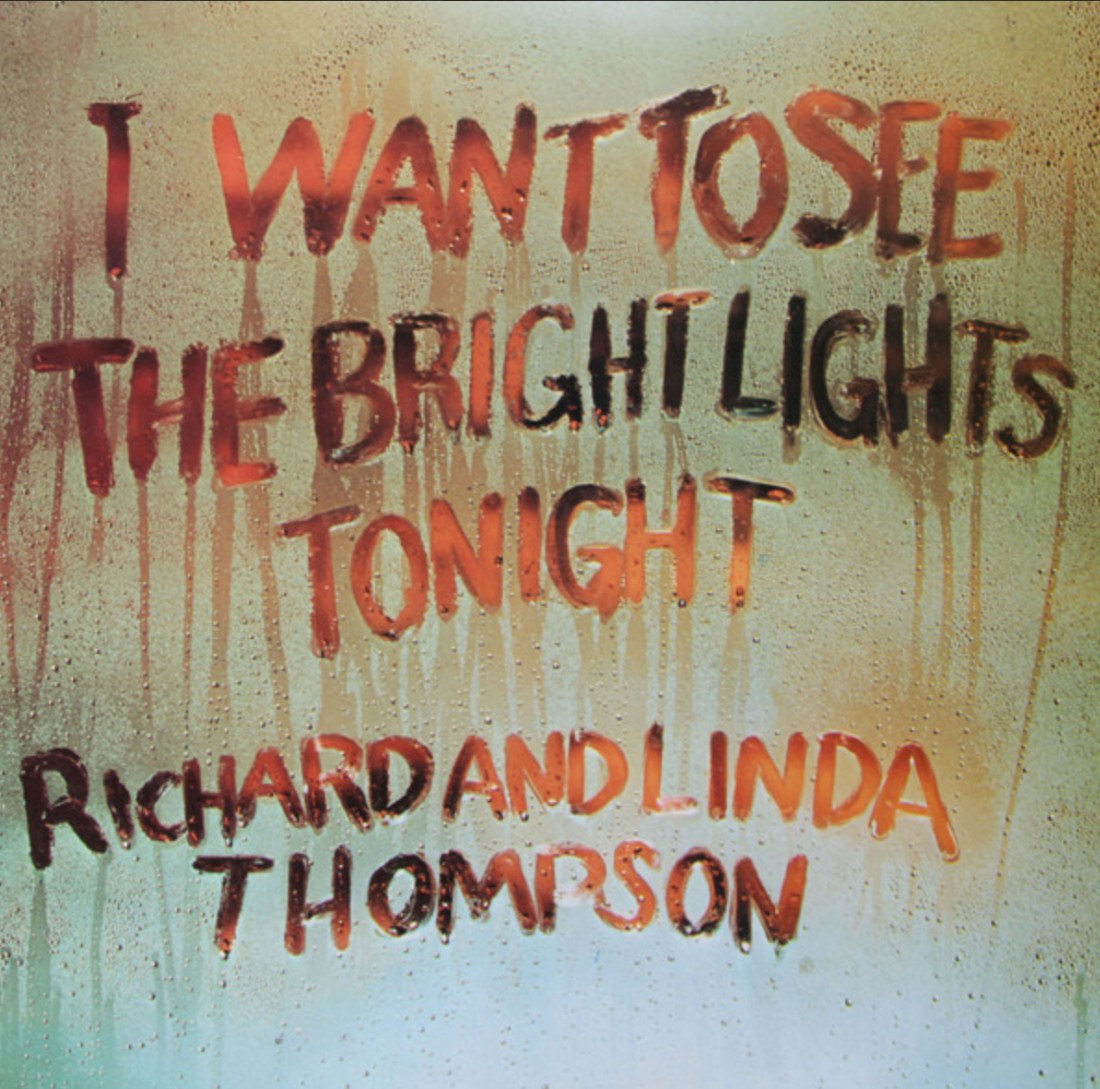
Richard and Linda Thompson – I Want to See the Bright Lights Tonight
The problem of small sample size has long vexed researchers. If you are trying to project results from a study onto a larger population, it’s better to have 500 participants than 20. The bigger your group – assuming it’s a representative collection of subjects – the more likely it is that your conclusions will have wider application.
The early Pazz and Jop polls, which returned after a two-year absence in 1974, reflect practically the worst case scenario, since not only were there very few voters (24 in 1974), but they were also mostly male, white, and of similar ages and cultural experiences. The result is that they shared a lot of the same perspectives about music, and this lessened the diversity of the list. Remember: in 1971, they did not include Marvin Gaye’s “What’s Goin’ On”, a record that I don’t much care for but which a much larger pool of voters has ranked as the greatest album ever made. This would reach its nadir a few years later when they concluded that Graham Parker made 2 of the top 4 records of that year. That opinion has not come close to standing the test of time.
I questioned whether this should continue as a Pazz and Jop or Not the Pazz and Jop series. I’m sticking with my original intent, but will drop in periodically with more of the nots that I think were egregious oversights by voters of the time. And I’m not sure if there could be a better example of them screwing up than 1974’s “I Want to See the Bright Lights Tonight” from Richard and Linda Thompson, which did not make the top 30 in that year’s voting.
I don’t know why this wasn’t appreciated for the masterpiece it is on initial release. Richard was known from Fairport Convention, and the airwaves were certainly friendly enough to lame versions of the folk rock that the Thompsons were putting out. It could be one of those records that takes time to grow on you, but I sort of reject that premise, because the first song grabbed my attention and the second ripped my heart out at the 52-second mark, threw it on the floor and stomped on it for the entire three minutes that remained of the track. Is it possible that critics in 1974 were just idiots, so awash in mediocre prog rock posing as art that they couldn’t hear simple unshowy brilliance when it was right there waiting to be recognized? That’s what I’m going with.
Of course, it is actually a rather showy record, with a fanciful mix of instruments – a mandolin here, marching band horns there – played masterfully, and often elusive and allusive lyrics (yet another songwriter wanting us to know how clever he is). It’s a fairly cynical record, populated by con artists (“The Little Beggar Girl”), well-meaning but inappropriate advisors of children (“The End of the Rainbow”: “Every loving handshake/Is just another man to beat” hardly inspires one to get out of bed in the morning – with this kind of worldview, you can see why Richard sought peace in a commune a few years later) and confident but distrustful performers (“I’m your friend until you use me” sings Linda in “The Great Valerio”).
In some sense, the Thompsons, at least on this record, were more two soloists than a true duet, as there is rarely any interplay between their voices, though they did work well together on “Down Where the Drunkards Roll”, less so on “We Sing Hallelujah”, where it sometimes feels as if Linda is still learning the words. I don’t find either of their voices particularly pleasing, but they are unquestionably potent interpreters of Richard’s songs: these aren’t pretty songs, and they don’t need a pretty voice. Richard sounds much older than the 24-year-old he was, and for all the folkie elements here, Linda is best represented on a pair of “modern girl in the world”-type tracks. In “Has He Got A Friend for Me”, her work on the chorus is heart-rending: she starts hesitant and lacking confidence, then strong but wavering on the second effort, before retreating into insecurity. Richard doesn’t sing on that track – it would be an intrusion. The title track finds her liberated from the limits of folk ballads, with a modern-sounding come-hither tune about seeking liberation from a ho-hum life.
“When I Get to the Border” is a toe-tapper with the feel of an old traditional folk song, but grounded in the modern by Richard’s guitar and a steady, uncomplicated drumbeat (the unostentatious drum is also a critical element in “We Sing Hallelujah”). The mournful “Withered and Died” is another of those songs that feel like they were already 100 years old when he wrote them, traditional ballads from long-forgotten masters rescued from obscurity for today’s audience. Similarly, “The Little Beggar Girl” is a slowed-down jig – up the tempo and you’d be swirling around the floor.
But all of this pales to “The Calvary Cross”. Richard shows here that he is a true balladeer. After some amiable, sort of rambling guitar (that really sounds like a sitar in places), he hits with three repeated yet subtly different chords, that same steady drum backing him up. The song is dirge-like, spiritual, and rooted in Christian imagery, which may explain why it has such an impact on this lapsed Catholic. (The movie “Jesus of Montreal” similarly wrecked me on the initial watch in 1989 – resisting my innate Catholicism has been a lifelong project, it seems.) When Richard sings “scrub me ‘til I shine in the dark”, I have no idea what he’s getting at, but it doesn’t matter – it feels deeply personal to him, and I want to feel that, too. I know I’m doing a really poor job of saying why this song hits me so hard, but maybe that’s the point: the best art touches us so deep in our subconscious that efforts to articulate that feeling are no more than the wailings of an infant in an unknowable darkness.
It is the rare song that is made better by stretching it out, but “The Calvary Cross” is one such exception. The Spotify version of the album ends with a live version that falls just shy of 10 minutes. It drops the 51 seconds of noodling that starts the album version and jumps right into the three notes that crushed me so. It’s a showcase for Richard’s amazing guitar work, and a compelling argument for his position among the greatest axemen of his day.
All I can really say is that listening to this record makes me happy. I have probably played it 10 times in the past month, and “The Calvary Cross” maybe 10 times more, and even now, as I write these words with those three magical notes in my ears, I am slightly teary-eyed and feel my heart filled with joy. Music has that kind of insane power, and it would be wise not to trust it completely: it would definitely be a bad idea for me to be, say, operating machinery right now, or making an important financial decision. But we need to find joy wherever we can, especially in this darkest timeline in which we live, and so I am thankful for the Thompsons and others who can take me there. Good luck to you in finding your own “The Calvary Cross”. It’s out there, somewhere.
I tend to assume that people of my own generation have similar cultural touchstones. Depending on your interests, it may be where you were when Paul Henderson scored the winning goal in the Summit Series (I’ll save for another time my tale of Valentine’s Day, an English-style pub and the relationship that my friend and I almost ended by drawing the male partner into a discussion about said event, together with “Seinfeld” “second spitter” on the grassy knoll reference), having your mind blown the first time you saw “Star Wars”, your pride when the American diplomats escaped Iran with the assistant of Uber-Canuck Ken Taylor, or the sorrow when you learned John Lennon had been murdered (lying in bed after one of the greatest weekends of my life, still). I am, of course, wrong in that assumption, and received another reminder of this yesterday.
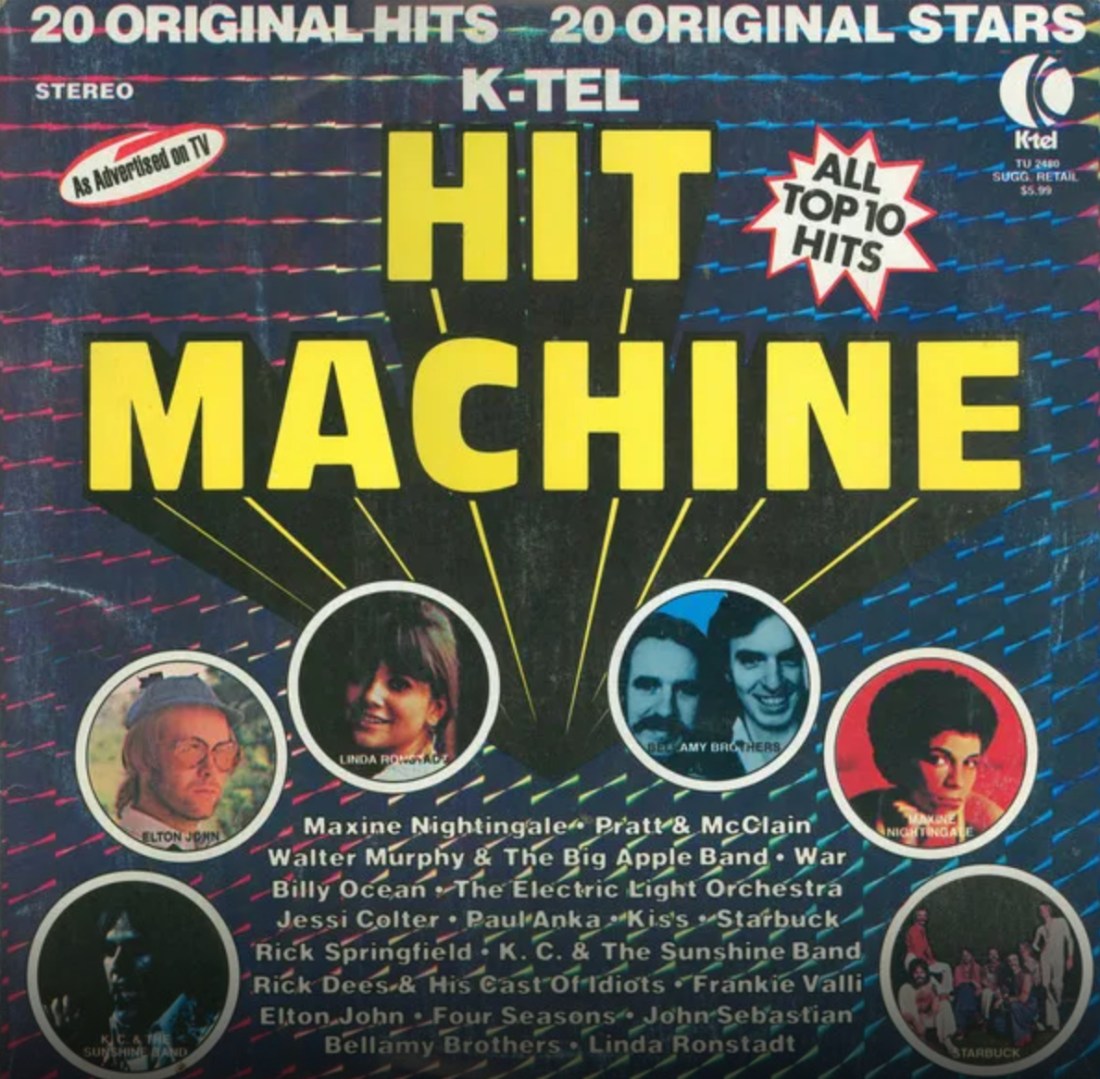
Let’s step back a moment, shall we. I own a lot of t-shirts, which are my go-to casual wear of choice. These are largely related to pop culture: movies (“Pulp Fiction”, “Star Wars”, anything Marvel), television (“Community”, “The Last Kingdom”, “WKRP in Cincinnati”), even literature (Haruki Murakami) and art (Roy Lichtenstein), the latter two courtesy of Uniqlo. Most were purchased by my wife as gifts, but last year, after the Festivus giving of cash stretched to include my mother, I invested said funds in another batch of my own choosing. And high on my list of choices (thanks to RedBubble) was this one:
Ah, yes. K-Tel. The source of so many of the records that I listened to as a child and young adult. 20 songs crammed into a space that usually held 10, so some of them were edited down to make room for the others. 20 songs when you at most wanted half of those, never knowing that some of the songs were on there because they were either (1) Canadian and helped fulfil CanCon regulations or (2) forced onto K-Tel in order for it to get the rights to a song it actually wanted. I can’t complain too much about either: as a lifelong hunter for new sounds (I always listened to the “B” sides, and sometimes ended up preferring them to the “A” track), those deep cuts certainly must have occasionally (I can’t say for certain right now) revealed to me a few songs that I might not have encountered otherwise, to my misfortune.
I would expect someone of my approximate generation to have had some K-Tel records, or to at least be familiar with them from endless television ads hocking their product. I was wrong. I wore said t-shirt to work yesterday, and ended up having to explain what K-Tel was to two colleagues who aren’t so much younger than me that the company could have been completely off their radar. Speaking to another colleague shortly after, he was shocked to be told this about our co-workers.
Anyway, I loved those records, and am glad to have had K-Tel in my life when I was young. 20 singles would have cost me around $25. For less than a third of that amount, I could in one blow increase exponentially the stock of my music collection. It’s too bad my colleagues missed out on that opportunity.
Which brings us to my favourite “new” music of last month. I try to avoid including compilations, so I mention here two such beasts:
Steve Harley & Cockney Rebel – Make Me Smile: The Best of Steve Harley & Cockney Rebel (1992). This guy was something of a big deal in Britain, though I’d never heard of him before. It’s career spanning, and thus sort of all over the place stylistically, but always a delight.
XXXtentacion – Look at Me: The Album (2022). He was not a very good person – serious issues with impulse control paired with a violent temperament – but a brilliant hip hop artist. A good subject for one of those “do we throw out the art because the artist is a piece of shit?” discussions. I fall on the “keep the art” side, but get the other perspective, because listening to Michael Jackson still makes me feel a bit squeamish.
And here is the actual list. Enjoy!
Paul McCartney & Wings – Red Rose Speedway (1973) (Critics are not fans of this record, which likely proves that most critics are more interested in being clever than being right.)
The Only Ones – The Only Ones (1978)
Aztec Camera – High Land, Hard Rain (1983)
Tiger Trap – Tiger Trap (1993)
Steve Burns – Songs for Dust Mites (2003) (Yes, it’s the “Blue’s Clues” guy, and he absolutely deserves more attention for his work as a musician. Glad those PBS paycheques freed him up to make this record.)
The Flat Five – It’s A World of Love and Hope (2016)
Tacocat – Lost Time (2016) (A perfect blast of pop punk – I will stan for any band that makes me forget my baseline anxiety for 29 beautiful minutes.)
Ratboys – GN (2017)
I Am the Polish Army – My Old Man (2017) (Frontwoman Emma DeCorsey put out a decent EP, “The Dream”, the following year, but nothing since. I’m waiting.)
Spoek Mathambo – Mzansi Beat Code (2017)
Nicholas Jameson – NJ (2018)
The Beaches – The Professional (2019)/Future Lover (2021) (Apparently, these two EPs will be repackaged as an album sometime soon, and that will likely also be a favourite listen when it comes out.)
Slothrust – Parallel Timeline (2021)
Ryan Pollie – Stars (2021)
Rosalia – Motomami (2022)
FKA twigs – Caprisongs (2022)
Caracara – New Preoccupations (2022) (A compelling emo-esque record that would fit nicely on your Jimmy Eat World or Dashboard Confessional playlists.)
Fantastic Negrito – White Jesus Black Problems (2022) (This feels like a recovered Sly Stone record.)
Sharon Van Etten – We’ve Been Going About This All Wrong (2022)
Ethel Cain – Preacher’s Daughter (2022) (Very disturbing record (umm, ritual murder and cannibalism), but you can’t shut it off. Still a bit haunted by this, several weeks later.)
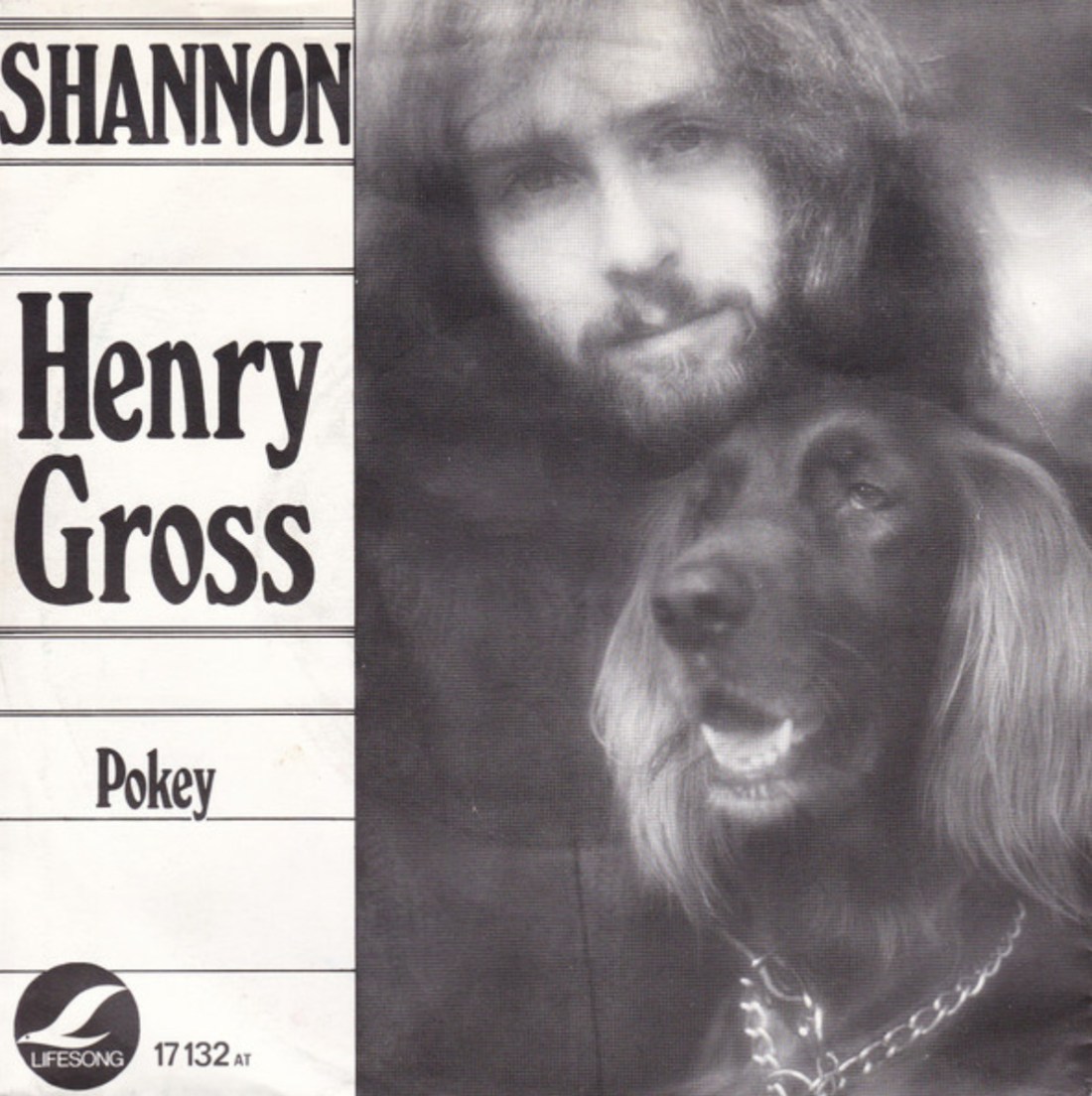
Before we get to this, let me state that I love this song. I wouldn’t be writing about it if I didn’t love it. But . . . I have some issues.
First, was I the only one back in 1976 who didn’t know this was about a dog? Second, if I was not the only one, and, unlike myself, you have not in the many years since been corrected in your erroneous ways by a loving spouse, then I apologise for the blunt way I just broke the news to you.
The incongruity between the verses and the song’s meaning are knock-you-off-your-chair awkward. I always thought it was about a young girl, likely the singer’s sister, and thus the heaviness made sense. But a dog? I love animals, and have had strong attachments to multiple cats as an adult. And I was sad when they passed on, even cried a few times, and sometimes feel great melancholy when I think of them now. But I never once tried hard to pretend things would get better again. I certainly didn’t need Papa to tell me what was going on, and I didn’t need to keep it all inside me.
I don’t mean to minimise the bonds that people have with their pets. Those connections can be incredibly intense. But if you had a very close relationship with a human relative – like what I believed to be the daughter and sister of the song – and then lost that person, I have a hard time believing that your emotional reaction was on a par with what you felt when a pet died. I’m talking about someone you share DNA with versus someone you bought/found and then had a mostly parasitic relationship with. (A reminder here: I love animals.)
So, notwithstanding my feelings about being deceived, I still love the song. The chorus is heart-rending, and it manipulates the crap out of you, and your voice will likely crack if you sing along, and, no, I have no idea why I thought a young girl would be looking for a shady tree other than it being something awesome to sit under and who wouldn’t want that?
It starts out like a less mellow Seals & Croft deep cut, or maybe something John Oates would’ve played around with if Daryl Hall had dumped him before they made “Bigger than Both of Us”. It has a very sunny vibe, like it was meant to be played on a tinny-sounding transistor radio on a scorching July afternoon. Gross does a sort-of falsetto on the chorus, with those Beach Boys-esque “ahs” in the background and a drummer who sounds like he’d rather be somewhere else until a little run near the end, which is then followed by 33 seconds of nothing – ahs and ehs and hums and oohs – until it ends. It’s a pretty good example of the richly-produced AM radio fodder of the mid 1970s. But, again, it’s an ode to a pet, so all those junior high school slow dances seem even creepier in retrospect.
Gross had a great start to his career, founding Sha Na Na, touring with the Beach Boys – the song is about Carl Wilson’s late Irish Setter – and having a number one song (in Canada, but it still counts, damnit) by age 25. He’s not a true one-hit wonder – “Springtime Mama”, which I remembered existing and know that I heard though it is not at all familiar to me now, also made the top 40. But I won’t argue if you count him as one: “Shannon” has 191 times as many streams on Spotify as his next most popular tune. And he’s still out there: he last released an album in 2020, and a single last month. That song – “Thank God for God” – reinforces my long-held suspicions about there being a slightly Christian angle to his song about a dead dog. Which is fine – we all need whatever help we can find when dealing with the rainbow bridge.
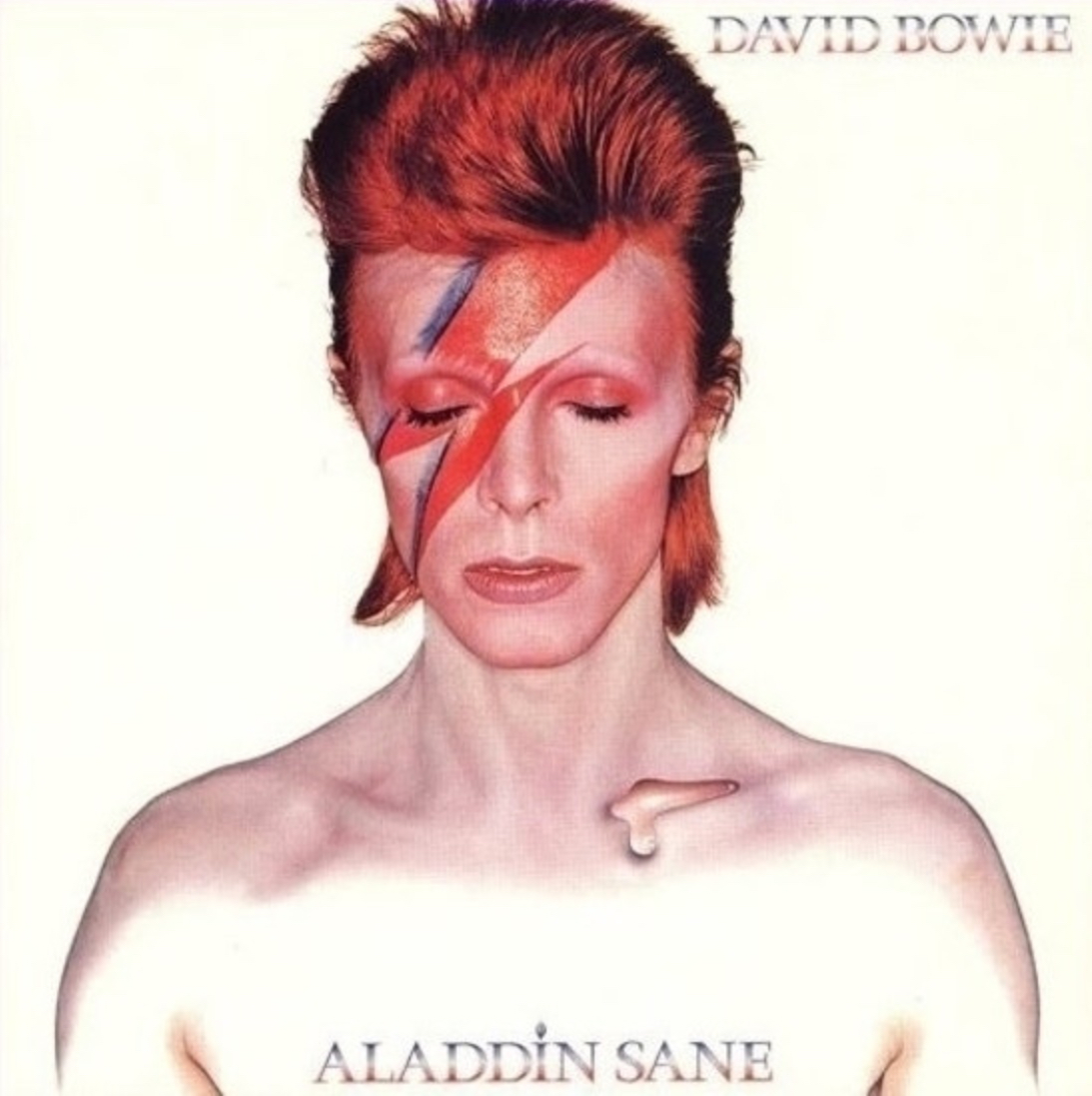
And so we end our journey through the “best” music of 1973 with David Bowie. This is the third of his albums that I’m writing about, and that would normally concern me. Since what I write is as much memoir as music commentary, I only have so many stories to tell about my connection to any artist. After all, I ran out of things to say about Jeff Beck after one paragraph.
Bowie, chameleon that he was, is the antidote to such woes. Each record (so far) has been so unique, so distinctive from its forebears, that it invites a fresh eye, and the stories just tell themselves. I don’t need to personalise “Aladdin Sane”: I need only to swim in its delights, and the pen takes over.
In places, it’s Bowie embracing his inner pop star, producing crowd-pleasing, danceable music that, after the experimentation of “The Rise and Fall of Ziggy Stardust and the Spiders from Mars”, invites you to love him. And it works – if you don’t love Bowie after this record, then you probably never will. It’s more accessible even than his much bigger later hits, because those records – especially “Let’s Dance” – are comparatively soulless, the work of a slumming master.
But, because he’s Bowie – or at least 1973-version Bowie – he can’t just make a pop record. Over his radio-friendly melodies he has to lather up off-beat vocalisations, janky pianos, fuzzy guitars, and oddball lyrics. His voice is often low in the mix, fighting against the music.
“Drive-In Saturday” and “The Prettiest Star” are something of a pair, the sound of an early 1960s doo-wop band, their genre slipping into obsolescence as they try to figure what to do next to stay relevant. The latter is more his updated version of such a record, all bop bops and jazzy horns and honky tonk piano, but with the distorted guitars of a garage band reboot. The former has my favourite line on the record: “She’s uncertain if she likes him / but knows she really loves him.”
That piano keeps coming back, including on “Time”, parts of which make me wonder if Tim Curry was trying to channel this version of Bowie in “The Rocky Horror Picture Show”. A grander, more epic use of the instrument is found in the title track, including a completely unhinged bit of playing around the middle of the song, and the haunted “Lady Grinning Soul”.
An almost staccato at times cover of “Let’s Spend the Night Together” is playful, not sexy. It’s the Sheldon Cooper version of sexual attraction, so matter-of-fact that it seems carefree when it’s actually laden with mountains of insecurity and confusion. He then does his own take on a Stones tune with “The Jean Genie”, which sounds like a bluesy glam version of southern rock. And I would be remiss if I failed to mention the conga drums setting the beat on “Panic in Detroit”.
This one ranks behind “Ziggy” for me, but well ahead of “Hunky Dory”. After over 50 years of people writing and thinking about his work, there is probably nothing much new to be said about Bowie, and if there is, it won’t be me saying it, or at least not yet. Luckily for me, he (probably) won’t reappear in this space until I get to 1976, which buys me some time to think something up.


 PopNotes