Classic Songs of My Youth Revisited #8

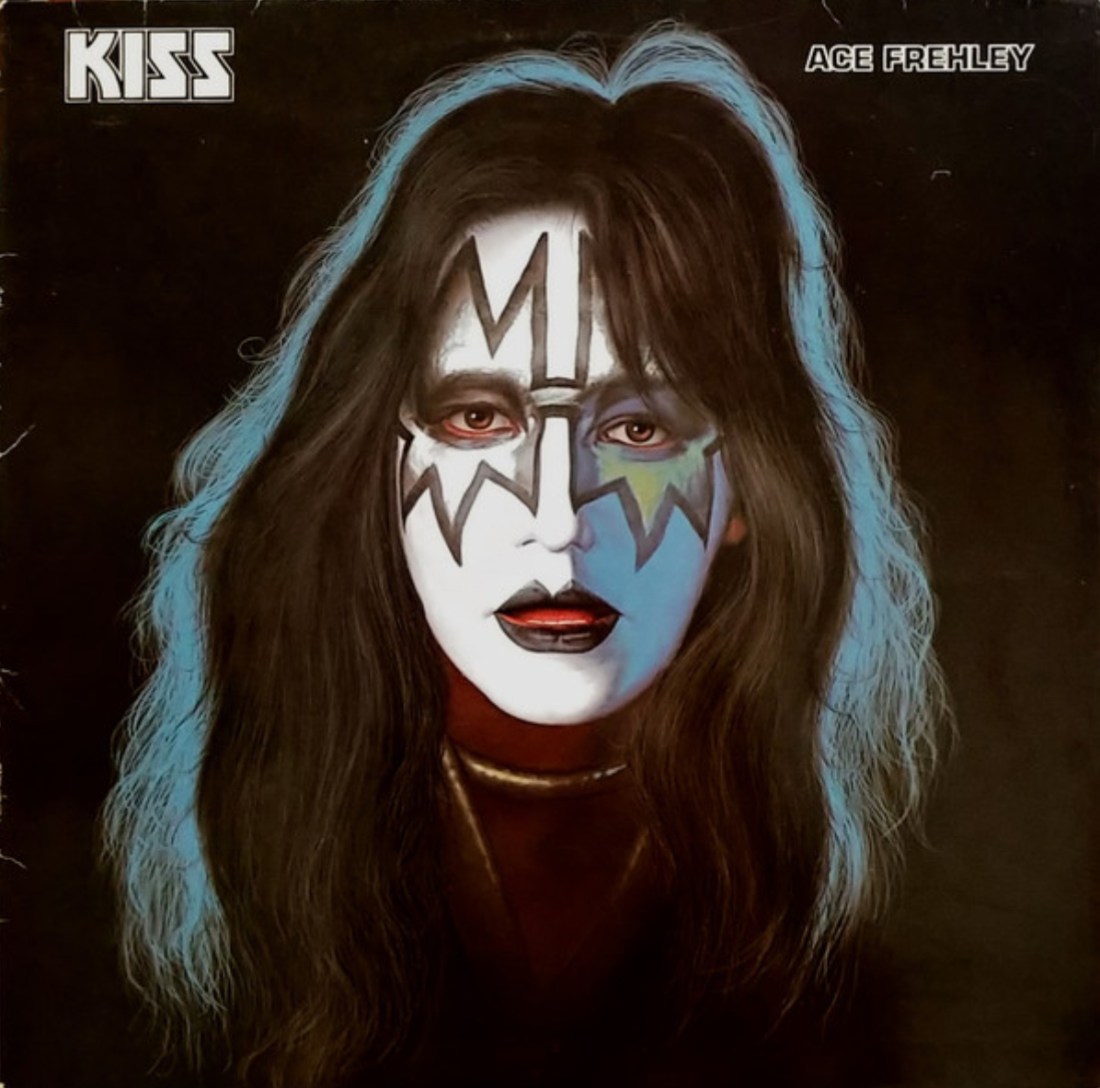
Ace Frehley – New York Groove

Unlike a lot of hormonal boys in the 1970s, I was not the biggest Kiss fan. The makeup and overall schtick was undeniably cool, and I loved the movie “Kiss Meets the Phantom of the Park” (though I remember nothing about it other than some of the band members’ character names). But I was far less enthused by their music. I had their 1979 disco-tinged atrocity “Dynasty”, but it mercifully was soon scratched, and its arresting of my musical development brought to an end. Much better was 1978’s Christmas present from my parents “Double Platinum”, but even this collection of “hits” (only “Beth”, a real outlier for the band, had reached the Top 10) had an awful lot of drudgy filler. The record also irritated me because, for reasons that are unknown and could never make sense anyway, two of their more popular tunes, “Shout It Out Loud” and “Christine Sixteen”, weren’t even included.

So when the band members, either through misplaced confidence in their individual abilities or corporate greed, released solo albums on the same day in late 1978, I mostly shrugged. That they were almost universally dismissed by critics, and performed way below commercial expectations, gave me no reason to reconsider my position. The one exception was the effort from Ace Frehley. It received by far the best reviews – I still remember (meaning I didn’t have to look it up!) a critic saying he was like a .350 hitter on a last-place team who should go play somewhere else. It also sold the most copies. And, for today’s purposes, produced the only hit single.

I don’t know if I loved “New York Groove” from the first listen, but it sure feels like it from the vantage point of 43 years now of playing it. I have never owned a physical copy, but as I moved between delivery models, I usually found a version – a radio-recorded play (cut off slightly at each end to remove the disc jockey’s contribution) on cassette in the ’70s until it become unplayable, a Napster download in the ‘90s, Spotify now – to include on my playlists. It owns a permanent spot on my all-time 100 favourite songs.

I finally used this exercise as a reason to listen to the album, and it is bloody good. More power pop than rock for the most part and not like most of the Kiss that I remember (I think I need to revisit “Double Platinum”, but Spotify is of no help with this). Space Ace did not disappoint.

But the standout remains “New York Groove” – even in a sea of pretty decent tracks, it is the earworm port in the storm. Starting with stomps and handclaps that dare you to not join in, then paired with a guitar that chugs along with a subtle, slowed-down disco churn, it builds to a perfect balance between the vocal and backing track. The ooooooo’s leading into the chorus encourage you to sing along. Against the main guitar line, Ace interjects simple-sounding rock-star flourishes that are in harmony with the rest of the song. His singing conveys the wonder of a traveller getting his legs under him on his return to the site of his greatest triumphs. There is a sense of not believing his good fortune in having a “wicked lady” by his side in HIS Cadillac as he heads into the enticing night. The song never fails to make me want to bounce around and sing along (even after playing it about a dozen times while writing this). It’s 3:03 of pop perfection, ending right before it overstays its welcome.

As an object lesson in how the artist can make the song, check out the original version by Hello. It’s still a pretty good tune, but Ace’s cover – with his more impassioned vocal and slightly-altered grittier lyrics – is the one that has endured. It’s a cleaner and poppier production, and a more fully realized work. Plus, it’s the one, for most listeners, that benefits from the tinge of nostalgia that improves almost everything it touches.

The promise of this record was never fulfilled, and the rest of his tenure with Kiss was filled with drama. He’s still going, 70 now but always rocking, with his last album out in 2020. Not a true one-hit wonder, more a star who exploded with one moment bigger than anything else he could have imagined. If there’s a party in my honour after I’m gone, this absolutely better be played, or I will haunt everyone present until their own final day. Heed these words!
Classic Songs of My Youth Revisited #7

Edward Bear – Last Song

I don’t remember how old I was when I first attended a dance, but it was definitely well before my 12th birthday, because I was still 11 when I experienced my first heartbreak at one of those dances. But before Patsy Jessome tore my heart apart – yes, I went there – on an earlier Friday (probably the one exactly seven days earlier, given the trajectory of our “relationship”), she and I had certainly danced to “Last Song” by Edward Bear. I know that because every dance I went to at that point in my life ended with Larry Evoy singing us into the night. Well, evening – they always ended at 8:00 pm. (Shoutout to the friends who had my back that night when I cried like a kitten at an empty food dish – you know who you are (or maybe you don’t – it naturally was a bigger deal to me).)

My first dances were the Friday sock hops at the church hall in Florence, the village closest to mine where I attended elementary school. This was the Catholic hall and I was Catholic, but that was just incidental – I often went to the Saturday evening Protestant church hall events, and would have gladly spent time with Rosicrucians or Santerians for the chance to spring awkward boners in the close proximity of a pretty classmate.

I know the classic end-of-dance tune is “Stairway to Heaven” – the Barenaked Ladies didn’t sing about Edward Bear in “Grade 9” – but that wasn’t how our disc jockey rolled in 1975-76 Florence. Maybe he thought we were idiots – even the dimmest altar boy couldn’t miss the message – or maybe he needed the reminder himself or maybe it was a CanCon thing. Maybe he just loved the song.

In any event, this was our song. Was it any good? Eh, not really – it’s a slow poppy tune that’s perfect for the side-to-side shuffle we called a waltz, but the lyrics are nothing special and the music diabetes-inducing sweet. But at 7:55 pm on a Friday with the girl you’re in love with that week in your arms (well, your hands on her waist and hers on your shoulders), it was the greatest fucking song ever. So, yes, it wasn’t good – it was, for that brief moment in time, the greatest fucking song ever. And that’s all that matters.

Not the Pazz and Jop 1973 – #6

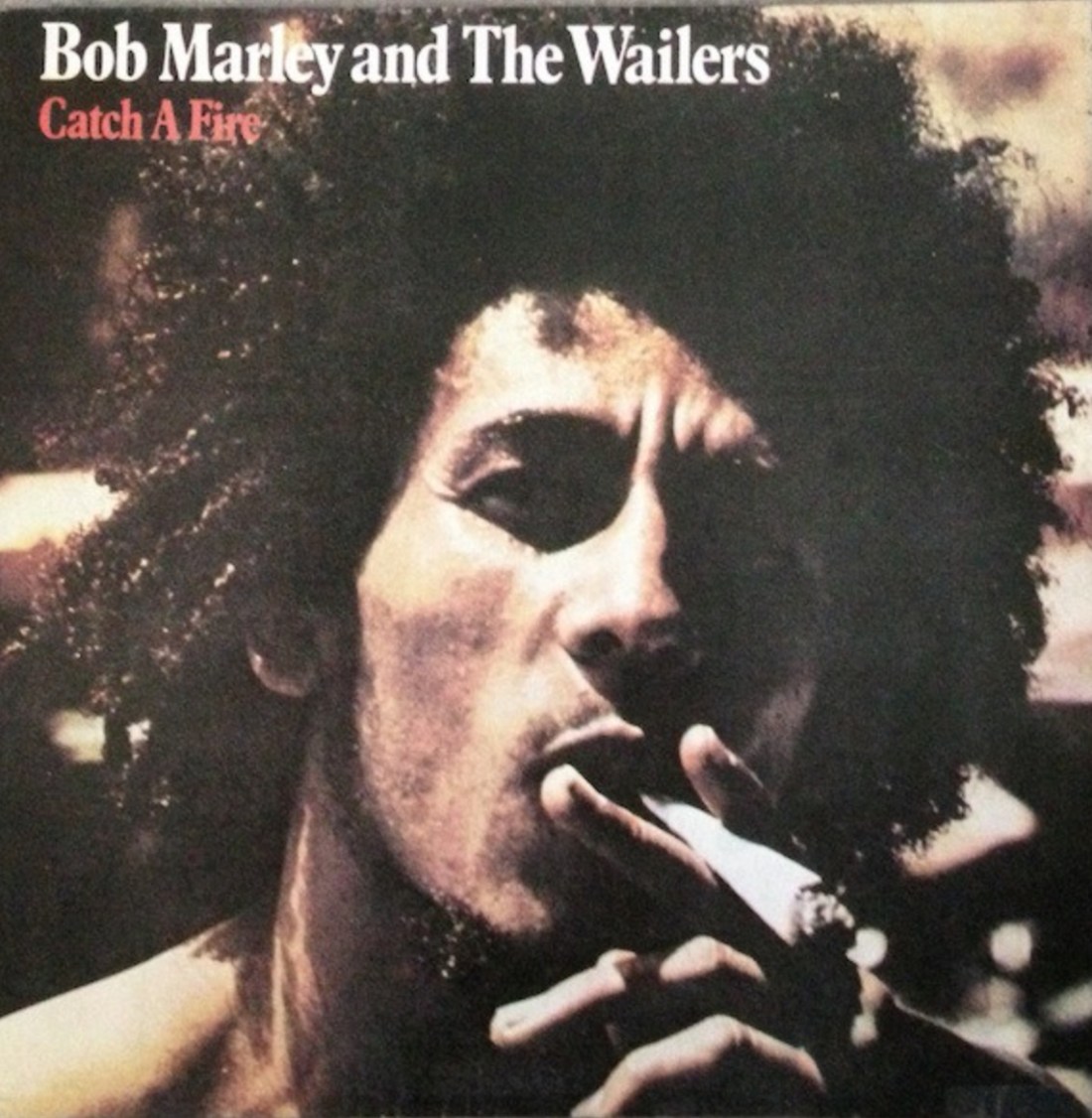
Bob Marley & the Wailers – Catch A Fire

I’ve struggled with this one, because I want to be respectful. I know nothing about reggae, beyond recognizing it when I hear it. And when I hear it, it all sort of sounds the same as every other time I’ve heard it. So, more than most genres, listening to a record like this is both educational and, one hopes of course, entertaining. I’m basically trying to teach my brain – with a critical assist from my ears – to hear things they’ve missed in the past during casual encounters. Consider it the aural equivalent of making love like Sting and Trudie instead of a quickie in a back alley.

My first exposure to reggae was in its influence on early Police records (two Sumner references in one post!), and in the ska bands I heard coming out of England on “90 Minutes with a Bullet” in the late ‘70s, though I knew it only as a word and not as a genre unto itself. I loved the Police (still do), did not like ska at all (that hasn’t changed much either, though the Essential Ska playlist on Spotify has some interesting possibilities), and never thought even once of trying to actually listen to some reggae so I could understand what the music press was talking about. I was far less adventurous in my early teens.

The sound is instantly recognizable on this record, with disjointed rhythms, heavy yet often subtle bass lines, and light fluttery keyboards. In the end, as a bit of a variety junky, it all just sounds too similar to itself to make much of a dent on my consciousness. Very little stands out to me. I love Marley’s vocal, and the interplay with the backing singers, on “Concrete Jungle”, which has an oppressive feeling despite the sunny sound. “High Tide or Low Tide” has a delicate rolling spirituality, and the Peter Tosh-penned “Stop That Train” has a quality that I can’t quite put my finger on, almost a gentle southern rock feel in parts. The closer, “No More Trouble”, has the feel of a spiritual again, with an insistent message.

Feeling contained by my limitations, I cued up the Reggae Classics playlist on Spotify, and it was a revelation. I think the problem is that for the average listener in this market, reggae means Marley, which means one sound and about 6 or 8 songs in rotation. (Imagine how you’d feel if your only notion of rock was, say, U2 and you’ll understand.) So unless we make the effort to change this, we aren’t exposed to the incredibly diverse range seen across different artists. For now, I like reggae just fine, but as more of a palate cleanser between other music, and not as a meal itself. But I’ll keep listening – Jimmy Cliff, especially, caught my attention – because I want to grow in my appreciation of different styles of music, and island rhythms offer warmth on a miserable autumn day.

Classic Songs of My Youth Revisited #6

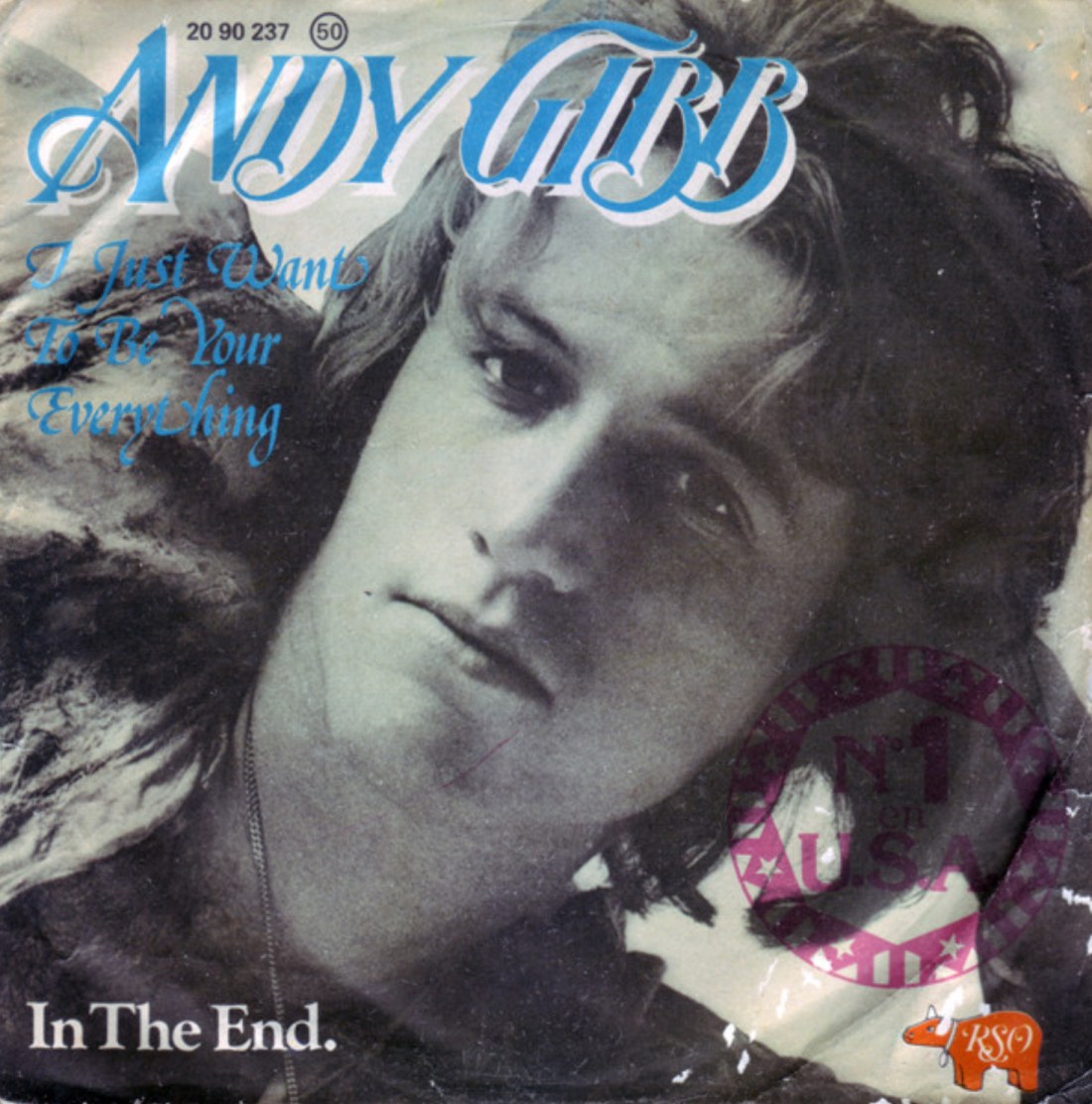
Andy Gibb – I Just Want to Be Your Everything

Probably no musical collective has dominated a year’s airwaves like the Gibb brothers did in 1978. The only competition is The Beatles in 1964, when they landed 5 of the top 16 songs, including the top 2, on Billboard’s year-end charts. The Gibbs managed to top that by farming out some of the work. The core trio, known to the world of course as the Bee Gees, had three of the top six songs in 1978, and, in various combinations, they wrote three more of the year’s top 19: “Grease” by Frankie Valli, “Emotion” by Samantha Sang (I am yet to be fully convinced this wasn’t just a clean-shaven Barry Gibb in drag) and “If I Can’t Have You” by Yvonne Elliman. Finally, they turned to little brother Andy to put them over the top, and he came through with two big hits of his own, including the year’s top song in “Shadow Dancing”.

Of course, when Andy first came on the scene in 1977, we had no idea that such a juggernaut lay in our futures, nor that it would end so soon. The Bee Gees’ hits dried up in mid-1979, and Andy’s the following year. He made a series of bad life decisions, then cleaned up and started trying to get his career back on track, but the damage was done, and he was gone less than a week after turning 30.

I wonder if people have forgotten how great this song is. I never hear it on the radio when my wife plays an oldies program, Acclaimed Music ranks it as only the 128th best song of 1977, and on Spotify it has a relatively paltry 36 million plays, of which I have contributed a healthy proportion. The first time I heard this was in my parents’ car on a bright day in the late spring, coming out of what I’m sure was another miserable Cape Breton winter, and I remember that feeling of just instantly loving a song so much that I wanted to live inside it for a while.

It has a sort of slow-roll disco beat, with just enough rhythm to make it danceable. Synths and faux strings gently glide along, the percussion is subtle, and the effect is sunny despite lyrics that are a cry of love to someone who may not feel the same, and the desperate fear of loss that presents (“If I stay here without you, darling, I will die”). The vocal shows that passion, with the trademark Gibb brothers falsetto that makes so many songs sound like they are life and death (check “Fanny (Be Tender with My Love)” for what I think is the best example of this). I think it also makes a very simple but true statement about how love should work: “If you give a little more than you’re asking for, your love will turn the key”.

What really makes this – and all of the Gibbs’ songs – so great is that they are just the most fun to sing along to. I could write 20 of these about those songs (and “Tragedy” is definitely going to happen). I think it’s the falsetto. Even the most voice-challenged listener can muster one up, and it – though you’ll have to check with my poor wife to confirm this – helps hide the weaknesses of the singer’s delivery. Plus, it’s really fun to play the castrato and just howl. There’s a lot of music that I used to love that I no longer have time for, but there will always be a place in my life for the Bee Gees and their tragic junior partner.

Not the Pazz and Jop 1973 – #5

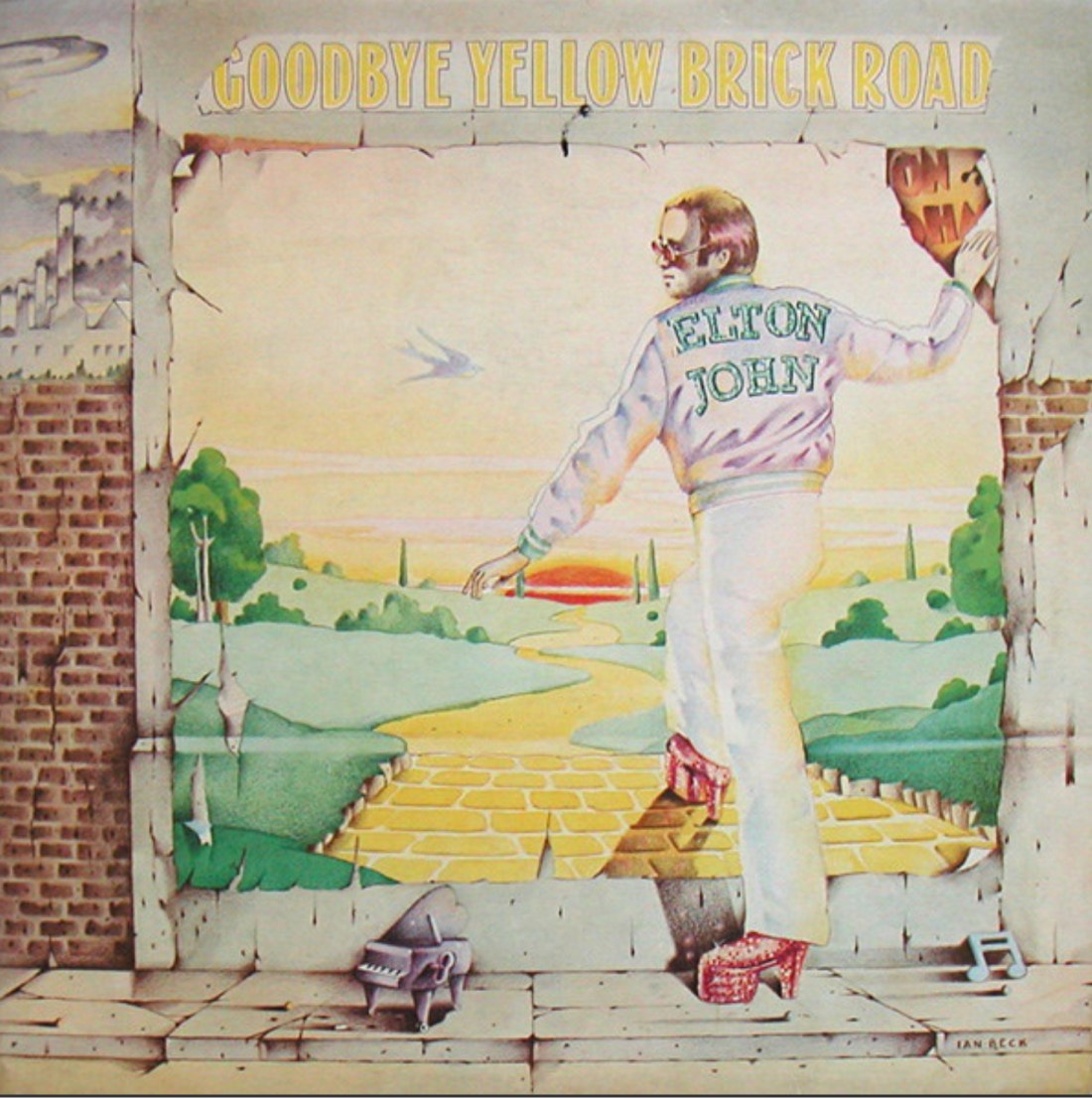
Elton John – Goodbye Yellow Brick Road

In the early to mid-1970s, no artist’s album covers entranced me like Elton John’s. I distinctly remember looking at “Goodbye Yellow Brick Road” and “Captain Fantastic and the Brown Dirt Cowboy” at the local Woolco or whatever department store that was with a sense of awe. The covers were playful and mysterious, and thus very inviting. You wanted to know what was in the grooves of such a package.

Of course, though I never owned any of his albums from that period, I probably knew Elton’s songs better than any other contemporary artist at that time. First, he was all over the radio. Plus, pretty much every K-tel collection in my bin had a track of his: “Crocodile Rock” (my least favourite of his songs from that era), “Daniel”, “Saturday Night’s Alright (for Fighting)”, “Philadelphia Freedom” (okay, maybe this is my least favourite), “Island Girl” and “Don’t Go Breaking My Heart” all had regular spins in my bedroom. “Someone Saved My Life Tonight” remains an all-time favourite song. By 1977, I was buying 45s, and Elton’s artistic peak was over, so I didn’t listen to him much after that. But the songs from that era remain masterful, undimmed by time.

There are a ton of hits, and it’s always nice to revisit those. The title track is one of my favourites of his, “Saturday Night” still kicks serious ass, and even Katherine Heigl can’t ruin “Bennie & the Jets”. It’s also nice to hear “Candle in the Wind” in its original form, without the nonsensical treacle of the post-Diana version. 

The best part for me of listening to these older albums is discovering the songs that weren’t singles. The album’s two-part opener, “Funeral for a Friend/Love Lies Bleeding”, goes from a mournful, stirring extended buildup into one of the rockingest songs Elton ever put to wax. Other tracks that I really liked include “Grey Seal”, the heartbreaking kiss off “I’ve Seen That Movie Too”, the rolling melody and music hall piano of “Sweet Painted Lady”, “The Ballad of Danny Bailey (1909-1934)”,and Bernie Taupin’s fantasies of the American west brought to life in “Roy Rogers”. “All the Girls Love Alice”, with its fuzzy guitars, solid backbeat, jarring piano and tempo switches, is a song I first heard a few years ago, and while it has great energy, it’s best not to listen too closely to the lyrics if you don’t want to get seriously bummed out.

Time has not been kind to Elton (it never is to any of us, of course): the music (mostly) stopped being great around 1977, and he largely became a parody of himself (though this was at least used to great effect in “Kingsman: The Golden Circle”). I stopped paying much attention to him a long time ago. The excellent biopic “Rocketman” (so, so, sooooo much better than the insanely overrated “Bohemian Rhapsody”) shows what great showpieces these songs are for Elton’s over-the-top persona, and it was a reminder of how much I used to love his music. It’s been a real joy listening to this album over and over in recent weeks, and if you’ve forgotten how really great he once was, I suggest you do the same. Elton will not disappoint you.

Classic Songs of My Youth Revisited #5

Public Enemy – Fight the Power

I realized too late that I put myself in a very small box when naming this series. The word “youth” imposes a time limit. For example, I would be hard pressed to include any Fountains of Wayne songs here, despite my love of the band, since I was close to 40 when I first heard them. But what should the cutoff be?

Wikipedia, as usual, is a great resource. Almost 40 turned out to not be too far off, as both Russia and Nigeria have definitions that stretch it to 35. Since I’m in neither country, let’s go with the United Nations, which caps youth at 24. Which means the last possible date for an eligible song to have been released is July 30, 1989, as I turned 25 the following day.

(BTW, if we went with 35, the cutoff of July 30, 2000 would open the floor to a few really amazing songs from 1999 – “I Want it That Way”, “Praise You”, “…Baby One More Time”, “The Bad Touch” (oh, I have so much to say about this last one) – and 2000 – “Goodbye Earl”, “All the Small Things”, “Bye Bye Bye” (with a fantastic “Ted Lasso” shoutout), “Thong Song”. (JK about that last one.))

I’m comfortable with that date. By the end of my 25th year, my heart had been broken at least once, I had dropped out of university, I still hadn’t figured out a career path, I was living in a rented room in a basement, I had twice walked away from my life with no real plan for what came next. Basically, I was pretty fucked up without actually realizing it. You know – a youth.

Weirdly, things did change a bit in my 26th year. I went back to university (I still didn’t finish, but that’s because other adult things like marriage and kids took priority), I entered into my first relationship of some permanence, I settled in the city where I still live. You know – an adult.

A few fine candidates got in just under the wire before my somewhat-arbitrary-but-UN-sanctioned cutoff point. In a very strange twist, two of them showed up on the same Spotify playlist earlier this week: Young MC’s still awesome “Bust a Move” (released May 22) got me rapping along in my car on Tuesday, and The B-52’s “Love Shack” (June 20) had me gliding down my street Wednesday afternoon. Finally, there was “Batdance” by Prince (June 8), a completely ridiculous song that is still pretty fantastic if for no other reason than it gave us the line “If a man is considered guilty for what goes on in his mind, then gimme the electric chair for all my future crimes, oh”.

But there could be only one winner, with a release date of July 4, 1989. “Fight the Power” is a song I still listen to often, and it has been on my 100 favourite songs playlist since it’s inception. I usually listen to the “Fear of a Black Planet” version, but the Branford Marsalis solo is a special treat from the “Do the Right Thing” version.

It can’t be an accident that the most radical Black hip hop group of that era released an anthem of empowerment on U.S. Independence Day. It’s propulsive, defiant, angry and, maybe most important for catching your attention, it gets you moving. Digs at Elvis Presley and John Wayne – symbols of White culture and authority – hit hard, together with the crushing follow-up point that “most of my heroes don’t appear on no stamps”. Playing over the opening credits of “Do the Right Thing”, with fireball Rosie Perez (unjustly denied a Best Supporting Actress Oscar nomination despite convincing us she was sexually attracted to scrawny Spike Lee) dancing and shadowboxing for the camera, it set the tone for a powerful and not at all subtle film.

I was nowhere close to the target audience for this in 1989, despite already being a sort-of fan based on “It Takes A Nation of Millions to Hold Us Back”, which I owned on cassette, and my appreciation for Rosie (whose youth ended just five weeks after mine), Spike and company didn’t mean I appreciated the song, but over time it captured me. Sometimes, people need to mature in order to value things properly. On the other hand, maybe the song just aged a lot more gracefully than I did, allowing me to catch up.

Kanye West – Donda

I don’t really want to comment on this record – I need more distance from the hype before figuring out what I truly think about this mess. I’m more interested right now in what I’ve been seeing from music writers about the record. There is a lot of negative press about “Donda”, and it seems to fall into two camps.

First, there are the people who can’t separate the art from the artist. I get it – Kanye is the most exhausting personality in music today. In one way, he is the exact opposite of his nemesis, Taylor Swift. (Insert Drake’s tears here – sorry, Aubrey, but your beef with Ye can’t compete.) Swift wants to give the impression of not caring about the game, of being all about her art, but she is deadly serious about managing her image and product (see the Scooter Braun fiasco for an object lesson in this). Kanye, on the other hand, wants you to see how much effort he is putting into being in control of, well, everything.

The second issue I am seeing is that a lot of writers are talking about how it isn’t as good as his previous albums. This annoys the crap out of me. Of course, it isn’t as good as the old stuff. This is the man who gave us “The College Dropout” and “My Beautiful Dark Twisted Fantasy”. It’s like slamming Paul McCartney because Wings never made a record as good as “Sgt. Pepper”. Duh, almost nobody has. The curse of being a great artist is being compared to your greater younger self. I prefer to judge art on its own terms, which is why my Goodreads has a Hardy Boys book with a five-star rating (“What Happened at Midnight” rules!), and Martin Amis, an undeniably much, much, much better writer, gets only one star (because less than this isn’t permitted) for the pure excrement that is “Yellow Dog”. Amis should’ve done better (and has since), but that Hardy Boys book is a perfect mystery aimed at young readers.

Having said that, this is not Ye’s “Yellow Dog”. It’s weird and self-indulgent, but never boring. I picked this first over Drake’s new record because I knew Ye would hold my attention, while the most interesting thing about Drake’s release was when Kawhi Leonard turned up in a video where they all looked like the lamest Boyz II Men tribute band ever assembled. (Having now listened to “Certified Lover Boy”, I feel vindicated in my choice.) There are some tunes that I genuinely love: “Jail”, “Off the Grid”, “Jesus Lord” and especially “Hurricane”, with The Weeknd’s silky falsetto. And I have felt compelled to replay it, which is the ultimate compliment for music, right? So I will keep on ignoring the press, and keep giving “Donda” the chance to make me fall in love with it. I don’t think I will, but Kanye has surprised me before.

Not the Pazz and Jop 1973 – #4

Roxy Music – For Your Pleasure

(This is going to get a bit meta, so please bear with me. I will (eventually) get to Roxy Music.)

A while back, a friend described what I do here as criticism. I don’t think that’s accurate, though I do have opinions about what I listen to because, hey, I’m a human being with functioning ears and a soul. I think a lot of the time, music critics feel like frauds. Everything cultural is about taste, and we all have it. I may think you are crazy for liking Jethro Tull, but what I can’t say is that you are wrong to like them. Well, I can say it, and you can tell me to go to hell and that I’m just as crazy for liking Olivia Rodrigo. And we are both right, and also both wrong. And it doesn’t matter, because everyone who disagrees with us can ignore anything we have to say on the issue.

I (almost) never feel like a fraud on this blog. I do this for free, so if I want to babble on for several paragraphs then take a parting shot at a band – it’s coming – I can, and you can read it or not. But what about people who get paid to do this? What is a writer to do when an editor needs 500 words on something you don’t give a shit about and the rent is due?

It’s easy to write about things I love – just open a vein, as they say, and it flows out, whether it’s an old love like the Bay City Rollers, or a new one like Can. It’s also pretty easy to write about things you don’t like – I rather enjoy coming up with new digs at Jethro Tull. The worst are things I like and respect but don’t feel passionate about, or that I can’t connect to my own experience. Stevie Wonder is frickin’ awesome, but I had so little to say about “Innervisions” that the piece I wrote doesn’t even sound like me. If you’re reading this, it’s because you like my voice, and if that’s lost, I don’t really have anything to offer that you can’t find somewhere else from someone who knows a buttload more about music than I do.

Anyway, my point (you knew it was coming) is that, while it is growing on me a bit, this feels like a record that only a music critic could love from the get-go, because it invites extensive commentary, and soon enough you have those 500 words. It all seems very clever and creative, but to me there is almost nothing here that grabs the listener and makes you pay attention. It’s a very mannered record, all artsy pretense and rich sounding and dry as fuck. The one track that stood out was “Grey Lagoons”, with a rockabilly feel dominated by pianos and horns that is just messy and energetic and fun. This record definitely needed more fun. But critics loved it, and through some madness it ended up as the 4th best record of the year in their estimation. If anyone actually listens to this for pleasure, I’d love to hear from them. Because I have a 10cc record I think they should check out – and Olivia Rodrigo, too, for that matter.

Olivia Rodrigo – Sour

I’m not going to make a habit of this, but when you’re wrong about something and for the dumbest of reasons, there should be a mea culpa, even if you’re the only person who knows you were wrong. There is integrity in being honest, even about internal failures.

Stay with me, because I’m going to find redemption before I type -30-. But I really only listened to ”Sour” because of the plagiarism allegations.

When “drivers license” came out of nowhere, I played about 30 seconds of it on Spotify, decided it wasn’t for me and moved on. I heard more of it in an SNL skit, which was fun, but didn’t really force me to pay attention to the song. I don’t know why I resisted so strongly. The idea of the song – and the made-for-TV drama behind that – certainly was a factor. Female singer-songwriters are one of my musical sweet spots (just this week I discovered Macie Stewart and Nilufer Yanya, and you absolutely should be listening to Mitski), but when they are super young, they seem to either be idealized (isn’t she amazing?) or disregarded (she’s manufactured) or, much worse, infantilized (isn’t she cute?). I’ve done it myself – I’m still sort of resisting Billie Eilish, and I will totally get to work on that soon.

But then I read about the plagiarism claims, and rubbed my hands together with Scrooge-like glee. Especially because one of them involved Elvis Costello. Now, Elvis was a complete gentleman about it, acknowledging the debt his own work has owed to others. What he didn’t say was if he liked the record or not. So now I had to check it out.

Well, shit.

It’s a bit awkward, being 57 and therefore old enough to be her grandfather or maybe father with a much younger wife, to admit how much I like this record. The opener, “brutal” (which owes an unavoidable debt to Elvis’ “Pump It Up”) and “good 4 u” are high energy rockers with irresistible hooks. 

But it is the ballads where she shines. They have a recurring theme of girls who love too desperately and too openly. Maybe this partly struck a chord because I’ve been caught up in the teen angst of “Never Have I Ever”. But I really think it’s because Rodrigo is so plugged in to how it feels to be young and heartbroken, and she just lets it all out in that direct and unfiltered way that only teenage girls can. Her narrators have such innocence and vulnerability, that comes from believing every idiotic thing that comes out of the mouths of the boys they love like breath itself. Though the theme is repeated, each dead or dying relationship seems distinct.

All that sadness becomes a bit much, and I don’t love the record – it might be a bit weird if I did – but I respect it, and that might be a bigger deal for Olivia’s long-term career prospects. This is a good album, and I hope she has more to offer as her artistry matures. I also hope she never holds back telling us how she’s really feeling about something. Because those songs are the ones that just might leave you in a puddle in the corner, and there really isn’t enough music like that in the world.

Classic Songs of My Youth Revisited #4

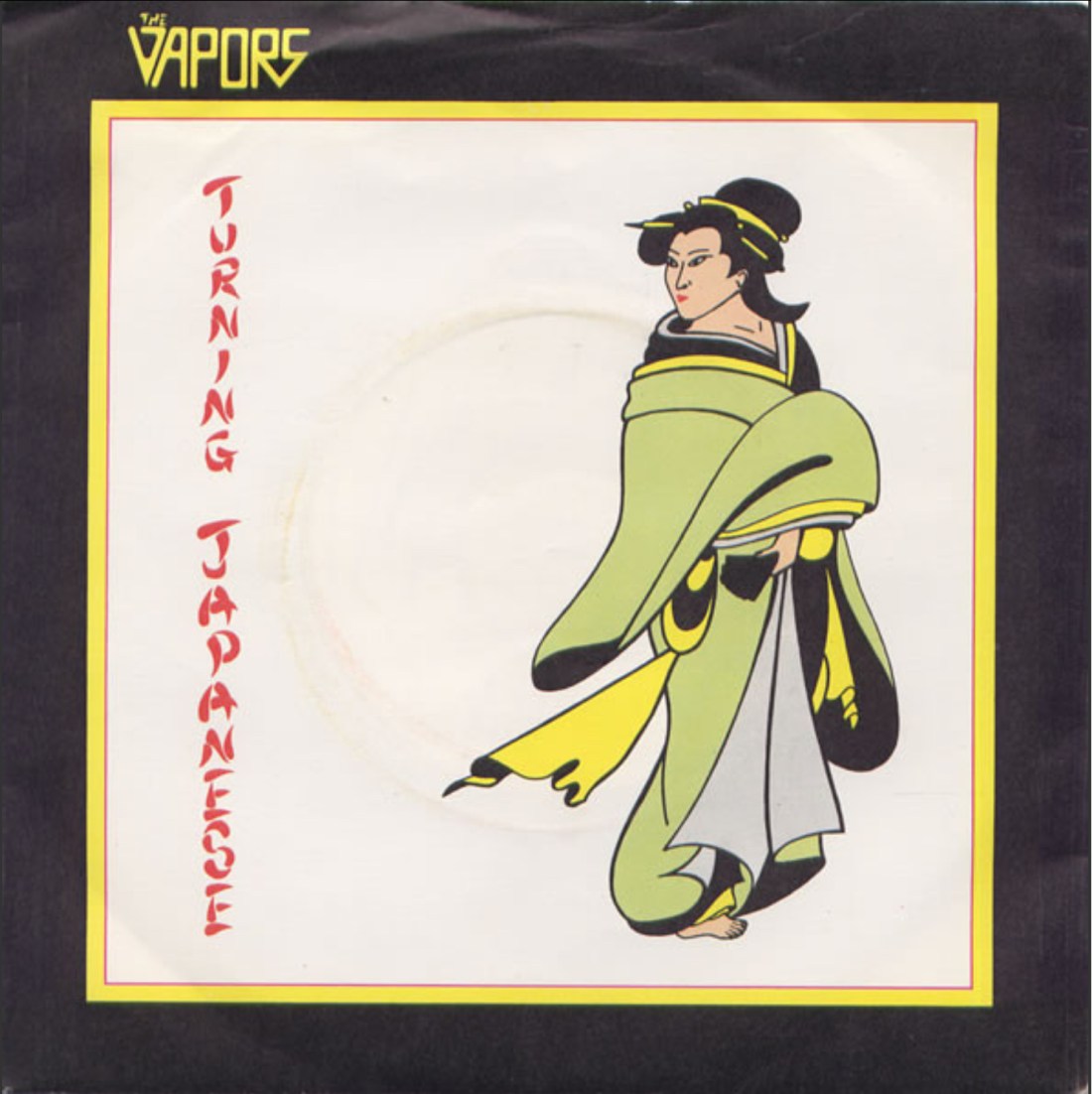
The Vapors – Turning Japanese

If you had the good fortune to attend a Friday night dance at Memorial High School during the 1980-81 school year, you might have witnessed me having what could best be described as a spasm whenever “Turning Japanese” was played. I don’t remember if it was my favourite song of that year – though I’m pretty sure these trips down memory lane will inevitably answer that question – but it was definitely the song that gave me the most joy. Never the most graceful of dancers – ask my wife and children if you doubt the accuracy of that statement – this song somehow made me worse, all flailing arms, spastic legs and, oh regret, a racially insensitive bow or two. My friend Sandy Nicholson, who always had an air of chill about him, was definitely embarrassed for me for my gyrations. And I gave zero fucks, which might have been the only thing in my life then that made me feel that way. I wasn’t a good dancer, but I was a committed one, and giving in to a song and just moving was a source of immense joy.

I thought it might have been a Cape Breton novelty, a song that some local DJ fell in love with, but it was actually a pretty big hit across the country, getting to #6 on the RPM chart and ending up as one of the top 100 songs of the year in both 1980 and 1981. It barely made the top 40 in the U.S., but the Aussies loved it even more than we did, and it did well in other parts of the waning British Empire. There is a pretty cool video – David Fenton’s dancing isn’t much better than mine, and he also went on to become a lawyer, so maybe it’s a lawyer thing – and the critics at Pazz and Jop knew a good thing when they heard it, ranking it the 8th best single of 1980.

The band was confident this was going to be a hit, but were concerned it would doom them to be one-hit wonders because it was such a novelty. Which is rather unfortunate, because the album it came from, “New Clear Days”, is pretty fantastic, a great example of the New Wave of the era, bleeding into power pop, sounding often like The Jam on speed, which was probably not an accident, since Paul Weller’s dad was their manager.

The song is either (depending, it seems, on Fenton’s mood when you ask him) about masturbation or just regular teen boy angst, which, if we’re being honest here, is probably the source of more teen boy masturbation than actual lust is. It, of course, starts with that stereotypical Oriental riff, telling you this isn’t like anything you’ve heard before on pop radio, and it keeps coming back throughout. It is propulsive, a high energy rush from end to end, and if you don’t end up bouncing around your kitchen as it plays, I’m not sure I want to know you. It easily remains one of my all-time favourites. Kirsten Dunst loves it, too.

And The Vapors are back, baby! They released an album in 2020, and had a few songs on the lower end of this very British thing called the Heritage Chart. It’s more power pop than New Wave, and a pretty good listen, proving that lawyers can rock, even in their 60s. The bar thanks you, David Fenton.