Not the Pazz and Jop 1972 – #19

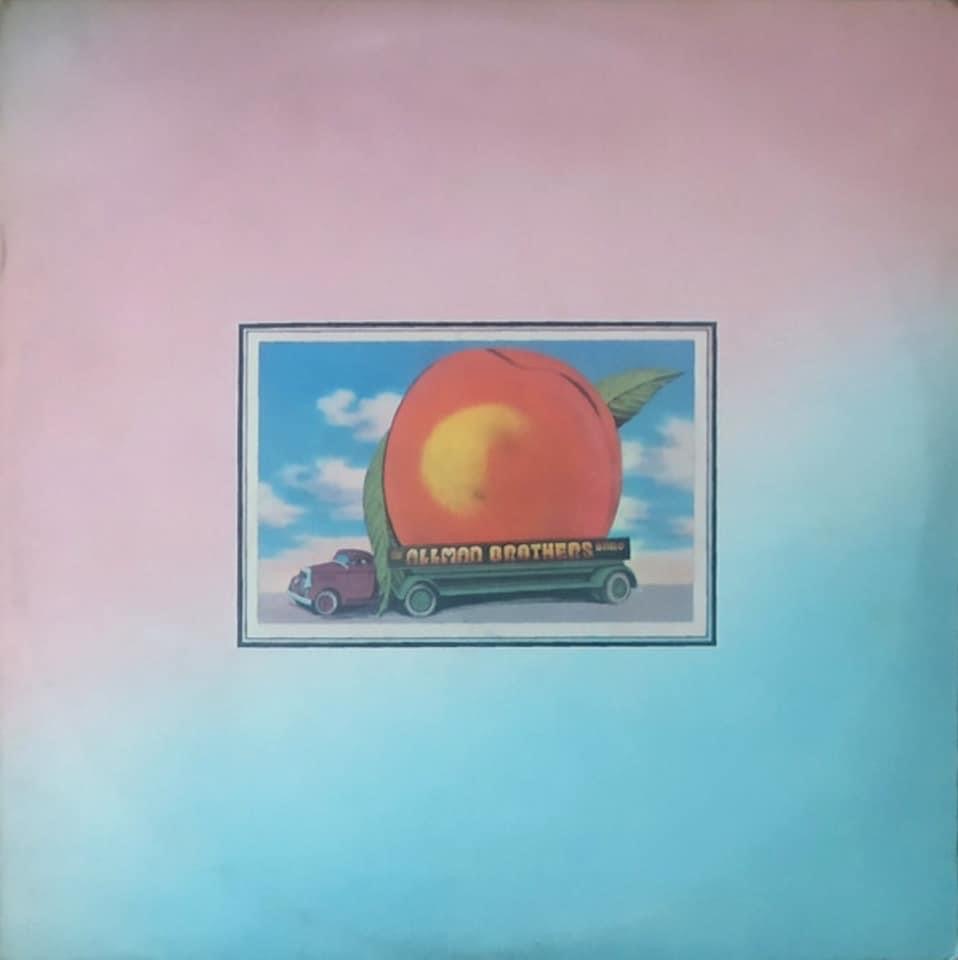
Allman Brothers Band – Eat A Peach

When I think of the Allman brothers, it isn’t for the music they made together. Rather, two things come to mind: one cultural (Duane’s playing on “Layla”), the other pop cultural (Gregg’s marriage to Cher). The only song of theirs I can say I certainly knew was “Ramblin’ Man”, which never inspired me to dig deeper into their catalogue. I’ve never much liked southern rock. The things I heard on the radio growing up didn’t trigger any sort of sweet spot, and it was too close to country, which, as my parents’ music, I was mostly trying to avoid in my personal listening. Later, I came to love some country, and now I think southern rock has an unearned sentimentality to much of it, a claiming of country-and-western tropes but with a poser’s lack of commitment and honesty. That’s a pretty broad brush stroke, and maybe my attitude will change as I continue along this exploratory path. But I’ll fight to hold this hill right now.

So, this album turned out to be an unexpected pleasure. It hasn’t changed my mind about southern rock because that isn’t what the Allman Brothers were in 1972. There are hints of it coming down the pike – most notably on “Blue Sky” – but this version – half dominated by Duane’s guitar, half finding a new path after his sudden death during the recording process – shows a band in transition, making for a bit of a Frankenstein. They were at heart a blues jam band during Duane’s tenure, more spiritually akin to the Grateful Dead than later notables like Lynyrd Skynyrd. Their blues bonafides show up in the covers of “One Way Out” and “Trouble No More”, and there’s no jam band flex like having some 45 minutes of a record taken up by instrumentals.

Of the originals, “Ain’t Wastin’ Time No More” finds Gregg in a contemplative mood after Duane’s passing, and I love the uptempo ballad “Melissa”. But the highlight, unexpectedly, is the 33:41 “Mountain Jam”. I never thought I could ever love listening to a band noodle around for over half an hour, yet with every play of this track I become more entranced. The energy never flags, no one mails it in even once, and there is not a second of this that doesn’t hold your attention. Every time I started to think, “Well, this is going on a bit too long”, they would switch it up, a keen sense of the moment taking control. I can’t ever just skip to the end, because I want to hear what’s coming next. A lot of prog bands could’ve taken a lesson from this had they been paying attention.

(Originally posted on Facebook, August 29, 2021)
Not the Pazz and Jop 1972 – #18

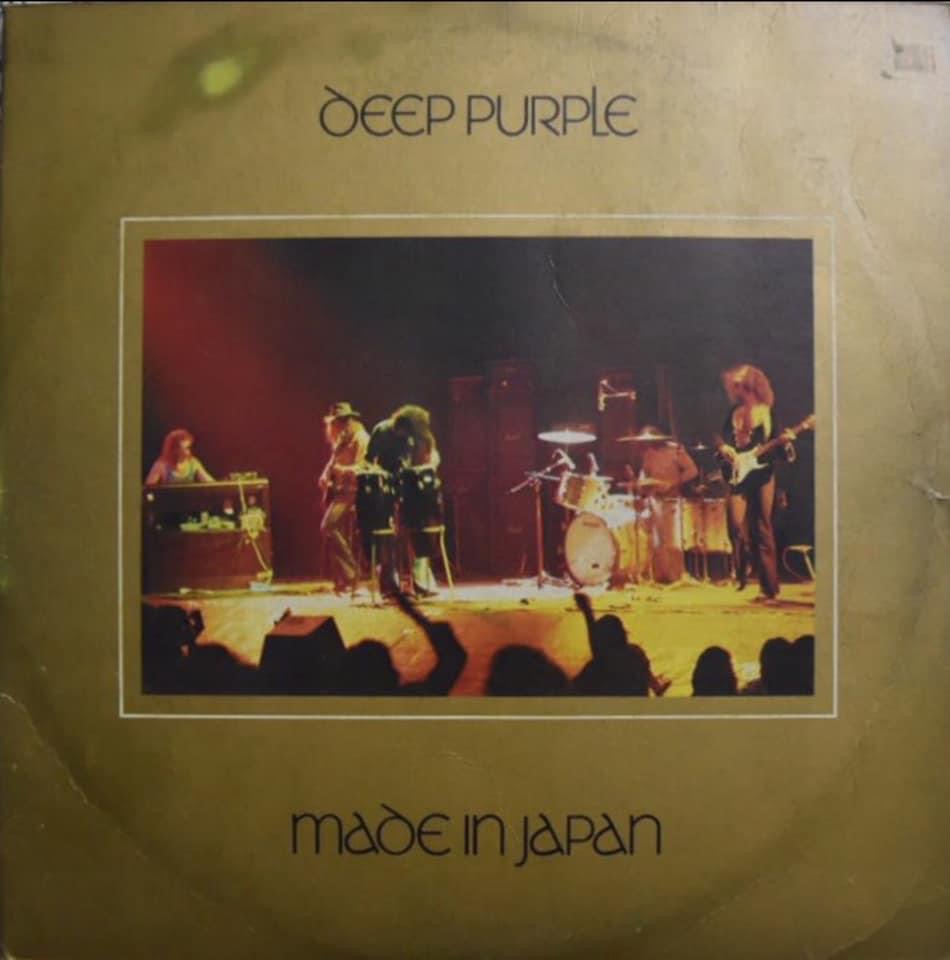
Deep Purple – Made in Japan

I’m not the biggest fan of live albums. Live music is great, and when your favourite band takes a tight 5-minute tune and stretches it to 19:28, you are there for every repetitive second of it. On record, not so much: on your (hopefully) comfortable couch or behind the wheel of your (maybe) comfortable car, you sort of just want them to get on with it.

So, we have another Deep Purple record, with a fair bit of overlap with “Machine Head”: four of that album’s seven tracks get the live treatment. This time around it’s a seven-track double album, so you know there is at least one ridiculously long song that meanders with no apparent purpose. On this record it is “Space Truckin’”, a not very memorable “Machine Head” cut that came in at 4:31, now stretched to an almost unbearable 19:42. I lost interest long before the end, and it seemed the band might have, too, and as I strolled along the boardwalk, I stopped paying attention to the song and started thinking about what I was going to have for breakfast.

Otherwise, I liked the three tracks that were new to me – the Deep Purple canon being a mostly blank spot in my music listening history – and the length didn’t seem overdone even though each tops nine minutes. Blackmore’s playing still shines, and “Smoke on the Water” remains an unassailable classic. I just have a hard time accepting there wasn’t another record more worthy of the slot.

For my money, if you limited yourself to just picking another album that rocks, this spot in the Top 20 would’ve been much better allocated to Black Sabbath’s “Vol. 4”, in which Ozzy Osbourne and company answer the question, “Is there a limit to how much drugs you can take and still make a kick-ass metal record?” with a resounding “No!” Favourite tracks include “Wheels of Confusion/The Straightener” and “Laguna Sunrise”. But the peak for these ears is “Changes”, which I knew from a soul version that serves as the theme song to the hysterical and obscene Netflix animated series “Big Mouth”. If, like me, you are mostly aware of Ozzy as the greatly dissipated force that became a TV star in the early 2000s, the grace with which he sings this gentle tale – written by a band member about the end of his marriage – will knock you off your feet. I doubt I’ll encounter any other Black Sabbath records on the formal portion of this journey, but I’m curious enough that I might check them out anyway.

(Originally posted on Facebook, August 25, 2021)

Not the Pazz and Jop 1972 – #17

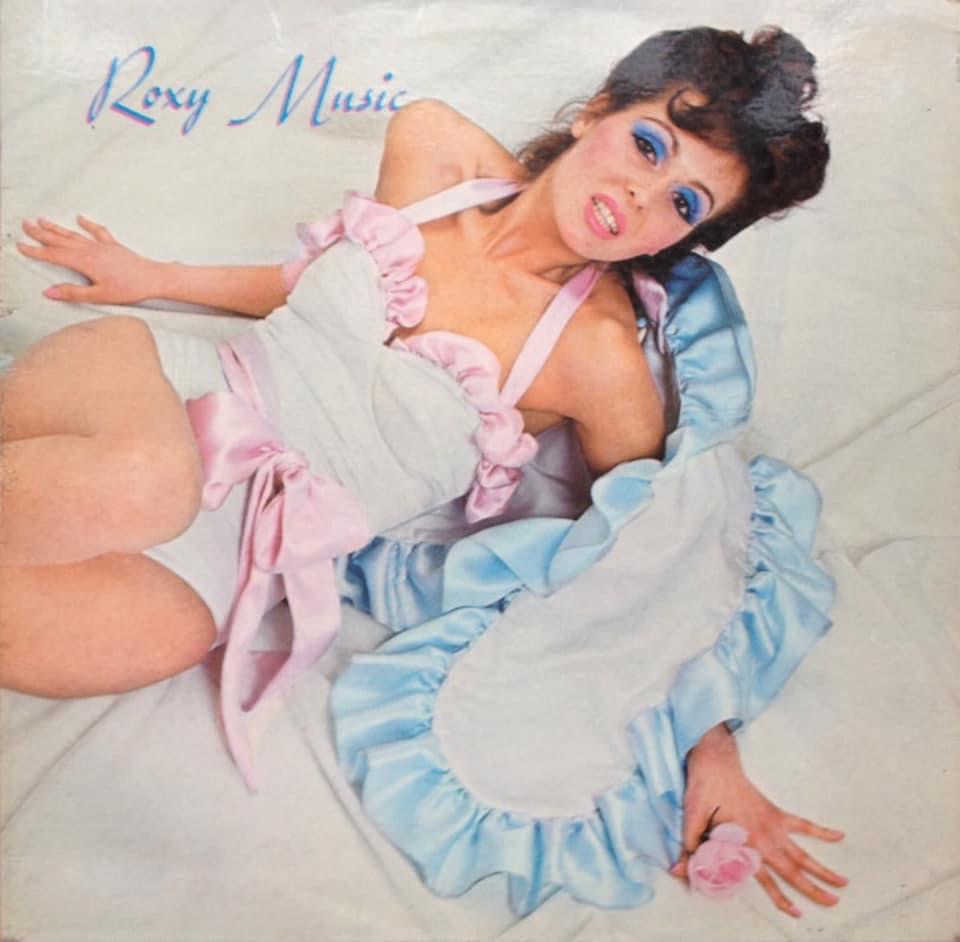
Roxy Music – Roxy Music

If your impressions of Bryan Ferry were formed from listening to the lush bedroom vibes of “Avalon” or his early post-Roxy Music solo work, as mine were, you might also consider him to be probably the coolest man in rock. His singing never seems emotional, even when love is the subject. He always presents as slick and stylish, the most relaxed man in any crisis.

Of course, once upon a time, Ferry also told us that love is a drug, and drugs can have many different effects. With this first album, it seems the band wanted to try every option in the pharmacy, as if they might never be given the key again and so were afraid to leave out any experience. What we get is a band discovering what it is on the fly, and maybe trying a wee bit too hard to sound interesting, sometimes at the expense of making a coherent song. It’s a pastiche of styles – glam, pre-punk, art rock, honky tonk, rockabilly, country – that is wilfully disjunctive at times, as if they were testing how many tone changes a single song can contain.

My favourite track here is one of those messes. “If There Is Something” starts out country-tinged. I love the guitar when it comes in at the 1:40 mark (putting me in mind of the Procol Harum tune “Simple Sister”), and that motif is repeated later with other instruments. The song slows down, becomes more lush, lulls you with its beauty, horns build the emotion, then Ferry gets lost in angsty nostalgia in the last minute and a half. It’s a tour de force, a crystallization of what the band seems to be trying to accomplish.

Another favourite is “Would You Believe”, with a middle section that harkens back to a 1950s sock hop (or would if it were a bit less raucous). The synths in “Chance Meeting” capture the emotional turmoil of unexpectedly encountering an old love. Side two has some prog-rock pretensions (especially on “The Bob (Medley)”, which is wonderfully cinematic, and “Sea Breezes”) that would have made me anxious for the band’s future if I didn’t already know how well it would turn out. They don’t get bogged down in it, as if they were just trying it on, then thought, “No, that’s not for us”. Which can be said about a lot of things on this record.

In the end, while this is all a bit too confused to make it into my permanent rotation, it’s still great to hear a band at the beginning of its arc and compare it to what came later. Though I will always prefer the cool version, the immature hot mess certainly has its charms.

(Originally posted on Facebook, August 21, 2021)

Not the Pazz and Jop 1972 – #16

Stevie Wonder – Talking Book

I’m beginning to think Stevie Wonder may be a forgotten master. He’s never stopped being popular – “Superstition” has over half a billion streams on Spotify – but, unlike Steely Dan for example, it seems that popularity is being driven entirely by oldsters rather than finding a new audience. This occurred to me when my massage therapist, who is roughly a decade younger, told me about a friend getting her to listen to some of his albums, which were new to her. His run in the ‘60s and ‘70s has few equals. But after 1980, there isn’t much worth listening to. If you came to his music after that, your main avenues of exposure would have probably been “Ebony and Ivory” and “I Just Called to Say I Love You”, two of the most execrable pieces of garbage ever put to tape by a major artist. And if that is how you first heard of him, then it is more than reasonable if you decided that your ears had suffered enough offence for one lifetime. Which is too bad, because, man, when he was on, it was fire.

This is one of those “on fire” records. 

I have probably heard “You Are the Sunshine of My Life” hundreds of times over the years, and it always seemed like a sappy song of no great significance. But when the needle dropped and the familiar sounds washed over me, I felt so happy. It was a beautiful sunny day, I was strolling on my beloved boardwalk, and the world just felt like a really good place for a change. That was Wonder’s power – he brought joy with his music.

His other ballads are great – especially “You and I”, which I first heard in 1976/77 as the “B” side to either “I Wish” or “Sir Duke” (I had both on 45). It leads with piano, but it’s the synthesizer underlying it that gives the song an air of needed sadness, since it is as much about the fear of losing a great love as the joy of being in the middle of it. But it’s the funkier songs that I like best. “Maybe Your Baby”, with Ray freaking Parker Jr. on guitar, is a classic strut song, the kind where you feel more confident just hearing it, like mainlining cool (though it goes on for about two minutes longer than needed). His voice is so dexterous – it might have been my fourth listen when I finally realized it’s Wonder singing the chorus. Or “Superstition”, which I was surprised to discover had a heavy contribution from Jeff Beck (whose version from the Beck, Bogert, Appice album is a much rockier approach to the song).

There is a richness to the record, and as sweet and gentle as it can sound at times, it’s never cloying, because he leans on synths, and their technical chill, rather than strings for those backing elements. There’s some great soulful pop, too, like “Tuesday Heartbreak”, with sax and wah-wah disco sounds, “You’ve Got It Bad Girl” and “I Believe (When I Fall in Love it Will Be Forever)”. There isn’t a weak track, though “Big Brother” is a tad heavy-handed lyrically.

There’s going to be a lot of Stevie in my future – he released three more all-time great albums between 1973 and 1976 – and I can’t wait. Until now, I really didn’t appreciate his mastery. There was too much “Ebony and Ivory” clogging my ears.

(Originally posted on Facebook, August 14, 2021)

Not the Pazz and Jop 1972 – #15

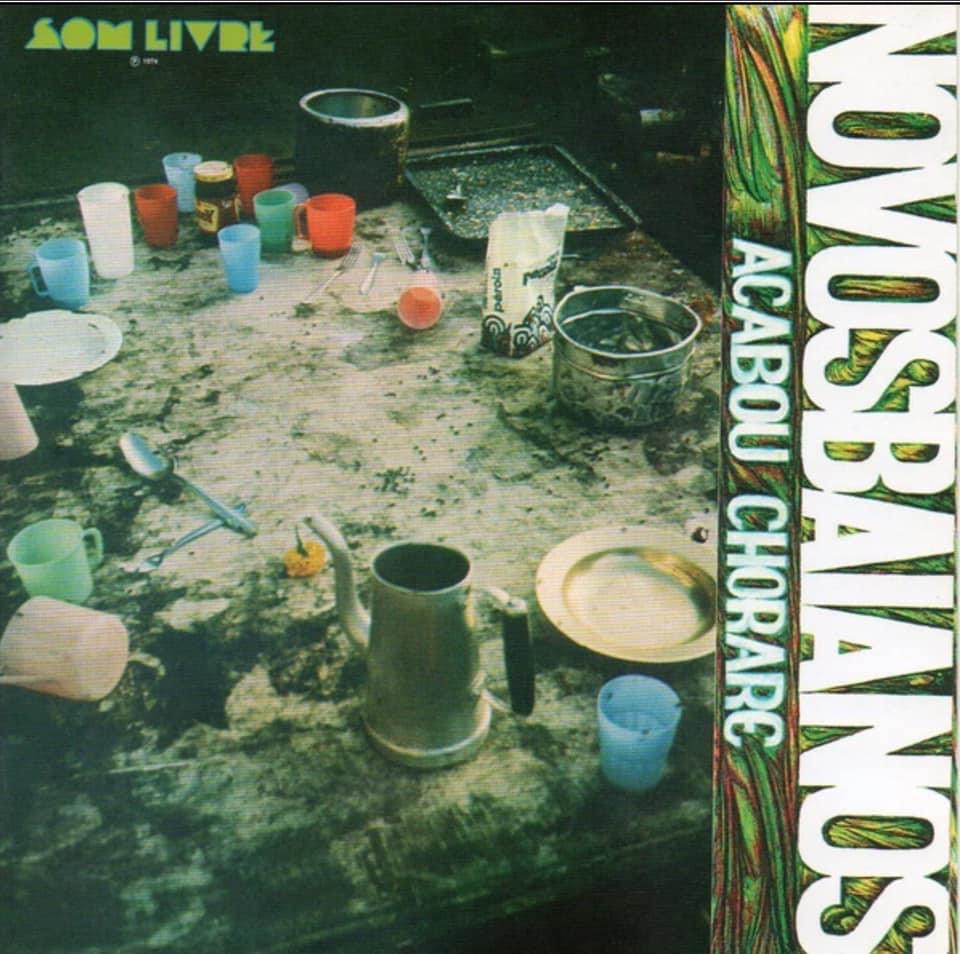
Novos Baianos – Acabou Chorare

After not listening to any Brazilian music for almost 57 years, I’ve now listened to two albums in close succession, 49 years after they were released. That was unexpected.

To the extent I had any preconceptions, this is much more in line with those than “Clube da Esquina” turned out to be. I can imagine encountering these songs on a street corner, or a beach, or a tiny bar with a sweaty crowd of rowdy regulars. The title translates as “Stop Crying”, and the album is the band’s direct assault on what they saw as a far too glum Brazilian music scene. I can’t tell a samba from a bossa nova (I’ll work on that), but I do know when a band is having fun, and this record is a party. The top track for my ears is “Preta Pretinha”, which seems like a super sweet love song, and I’m going to trust my feelings on this one. Other favourites include “A Menina Danca”, “Besta e Tu” and “Tinindo Trincando”. The guitar work stands out (love the layered sound at the end of the title track), with a mix of acoustic picking and some crazy aggressive electric playing, and you can’t have danceable music without great percussion. The vocals are gentle and clean, and inviting.

This was voted the greatest Brazilian album ever by Rolling Stone’s panel in 2007. I can’t agree with that – it’s the second best Brazilian album I’ve heard, and I’ve only heard two. But it’s a fun listen that will have you swishing your hips from side to side and imagining sipping a Caipirinha on the beach. If that isn’t a worthy accomplishment, then nothing is.

(Originally posted on Facebook, August 8, 2021)

Not the Pazz and Jop 1972 – #14

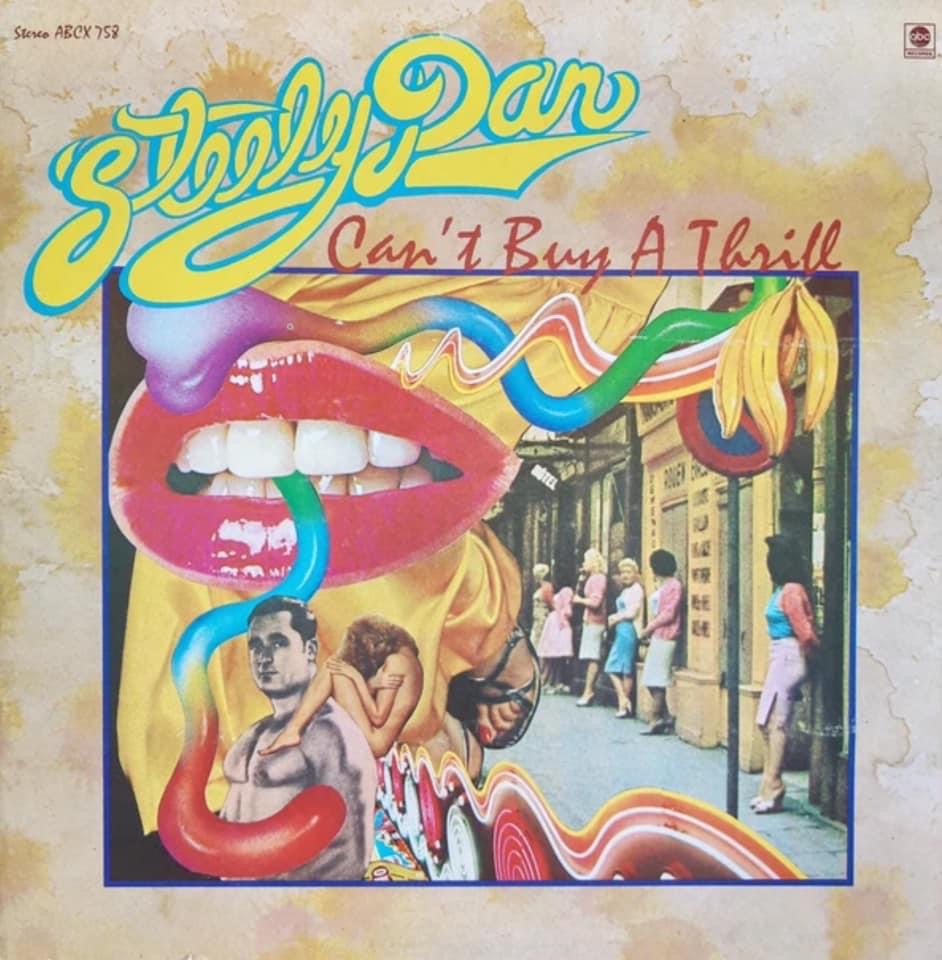
Steely Dan – Can’t Buy A Thrill

Steely Dan are, apparently, having a moment, which is excellent news. I’ve always enjoyed their music, though this is yet another band that I listened to passively. And they’ve been pretty much unavoidable throughout my listening life: lots of acts have three (or more) hits off their first album, but not so many have three songs that are iconic. “Do It Again” (sort of a Latin feel), “Dirty Work” (very melancholic) and “Reelin’ in the Years” (great guitar riffs) are classics of 1970s FM radio (and the band’s three most streamed tracks on Spotify). So, it made sense that when a film called “FM” came out in 1978, Steely Dan were recruited to deliver the theme song. I had this double album on vinyl, for reasons I can’t even slightly recall (maybe to fill out my introductory Columbia House selections), but it’s a great record that included my first introduction to Tom Petty. (Mostly great – who, even in 1978, needed back-to-back cover versions from Linda Ronstadt?) It isn’t available on Spotify, but it took me less than 5 minutes to create a playlist, populated as it was with hit after hit after hit.

Everything about Steely Dan radiates cool. It’s easy to be lulled into thinking it all sounds very similar, because the band definitely leans into a smooth jazz vibe on pretty much every track. I’ve never thought of these guys as making danceable music, but maybe that’s because we dance very differently in our 50s as compared to younger years. Dancing now is sort of embarrassing: head bobbing, jaw clenched, silly faced, arms chugging, switching from hip to hip. (Not that the flailing around of our youth was any less horrible to observe.) My cats look at me with confused eyes. There were lots of tracks here that brought that out in me, which was (thankfully) within the safety of my home. Of the unfamiliar tracks, I especially liked “Only A Fool Would Say That” and “Fire in the Hole”. “Change of the Guard” is one of the poppier things I’ve heard from them. I’ve been returning to this record again and again since the first listen, taking enormous comfort in the familiar rhythms. All in all, not too shabby for a band named after a steam-powered dildo.

(Originally posted on Facebook, August 2, 2021)

Not the Pazz and Jop 1972 – #13

Clube da Esquina – Clube da Esquina

I’m not the biggest consumer of so-called “world music” (hey, western music journalists – we’re part of the world, too!), so I come to a record like this with a healthy dose of ignorance and not a lot of preconceptions. Other than father and son Kuti, both of whom I loved on first listen and once went through a phase where I pretty much only listened to Femi Kuti for a few weeks after ripping a bunch of his CDs that I picked up from the library, my exposure to music outside North America and Europe has mostly been limited to the appropriations of folks like Paul Simon and David Byrne. I came to this project hoping to fill in such gaps, so seeing a Brazilian band I’d never heard of show up was very exciting.

I guess I did have some preconceptions about what music from Brazil should sound like (think Carnival), which is pure idiocy – if you can find a common thread in the music of, say, Gordon Lightfoot, Our Lady Peace and KAYTRANADA that makes them distinctly Canadian, then you’re much better at this than I am. I don’t know if this meets those prior notions because I realized what I know about Carnival is limited to brief snippets from films. Another gap in my knowledge base exposed.

So what is “Clube da Esquina” then? Well, it’s a pop record mainly, just sung in another language, so it needs to be considered in such a context. I couldn’t find a fully translated lyric sheet, then decided to stop looking and just consider how the music makes me feel. Which turned out to be pretty damned awesome.

There are so many amazing tracks here. First, Milton Nascimento is a great singer: you don’t need a lyric sheet to know that “Dos Cruces” (my favourite track) is a lament for a tragic lost love. Another favourite is “Um Girassol Da Cor Do Seu Cabelo”: sung by Lo Borges, it is Beatlesesque, with an orchestral flourish starting at 2:08 right before the tempo picks up with piano and a race to the finish. (Why has Tarantino not used this yet?) “Cais” starts by burrowing into your heart with fluttery guitars, hits harder with simple piano then, bizarrely, drops into mono, with everything on the right side (I was sure my headphones were dying).

I love the guitar work in “Tudo O Que Voce Podia Ser”, and “Nuvem Cigana” feels like a bouncy early 1960s tune. There’s the deep and bold guitar just after the midpoint of “San Vicente” (another great Nascimento vocal), with church bells at the end, and the lush strings and gentle picking of “Clube Da Esquina No. 2”. “Paisagem Da Janela” feels like a summery pop song to play on a stroll by the beach, though the translated lyrics tell a much darker tale that led to it being censored. “Me Deixa Em Paz” is clearly another tale of forelorn love, with gentle cymbals, and as his female counterpart, Alaide Costa is more than a match for Milton. “Os Povos” has another powerful Nascimento vocal, and “Um Gosto De Sol” calls back to “Cais” at around the midpoint, layering on the strings this time instead of piano. “Nada Sera Como Antes” is so Beach Boys cheery (I love the piano in this) I didn’t dare look at the lyric sheet for fear it would turn out to be about murdering kittens. The fuzzy guitar of “Trem De Doido” is an oddity, and feels a bit out of place, but this is as close as they come to a misstep over 21 tracks. I can’t say enough about how much I love this record. It almost makes me want to learn Portuguese so I can sing along. Though it’s probably best I just leave that to Nascimento.

Oh, and since I’m talking about music from other countries, do check out Fela Kuti and Femi Kuti. Truly magnificent. And for something fun, the Japanese girl group CHAI subverts J-pop stereotypes with a glossy rock edge. The world is full of exciting things to explore.

(Originally posted on Facebook, July 27, 2021)

Not the Pazz and Jop 1972 – #12

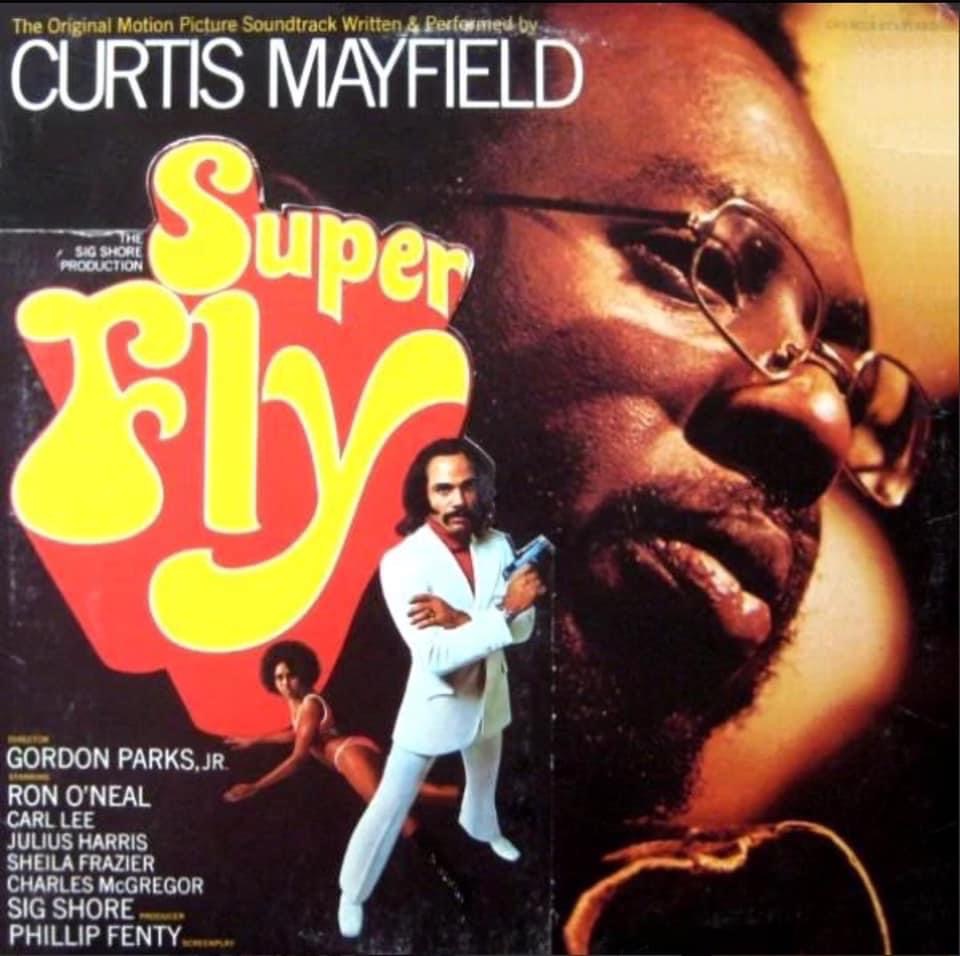
Curtis Mayfield – Super Fly

I don’t think I’ve ever seen a blaxploitation film. “Uptown Saturday Night” (a great film, but one I can’t recommend due to the whole Cosby-is-a-sex-criminal element) is probably not one, and the recent “Shaft” remake was a goofy homage rather than a true entry in the field. “My Name is Dolemite” is a love letter to one of the genre’s outsiders, but the film itself is not blaxploitation. “Jackie Brown” slots in similarly, with the usual Tarantino genius in the mix.

Look at the cover photo. A sharply dressed (five years before Travolta, I might add) serious looking dude with a gun and a lady who looks like she stepped off the jacket of a Mickey Spillane paperback. It’s not just wrong that I’ve never watched one of these – I should have seen them all. These films took their soundtracks seriously – in addition to Mayfield, artists like James Brown, Isaac Hayes, Marvin Gaye and Bobby Womack were tasked with helping to create the soundscapes for these movies. Think of that list of talent the next time you hear some Diane Warren piece of treacle run over the credits at your local cinema.

The record starts on fire, with three blasts from “Little Child Runnin’ Wild” (with the chorus’ plaintive cry “didn’t have to be here . . . Why couldn’t they just let me be”), “Pusherman” and the solid funk of “Freddie’s Dead”. The middle tune is my favourite, with island rhythms, a gentle bass line and disco-worthy wah-wah guitars. Mayfield uses a lot of strings, and they certainly sweeten things up, but this balances the funk without becoming cloying. He likes horns, too, with the sax on “Little Child” a standout. I’m not as big a fan of side two – it just doesn’t have the same energy – and while I usually find instrumentals on pop records a drag on the festivities, Mayfield nails these, with the adrenaline of “Junkie Chase” (how can you not love a record with a track bearing such a name?) and the unhurried contemplation of “Think”. He ends on another high note with the funky title track, laying on the guitars and horns. There is a strong anti-drug stance in the album’s lyrics, and an even stronger push towards the dance floor in its music. 1972 continues to impress.

(Originally posted on Facebook, July 24, 2021)

Not the Pazz and Jop 1972 – #11

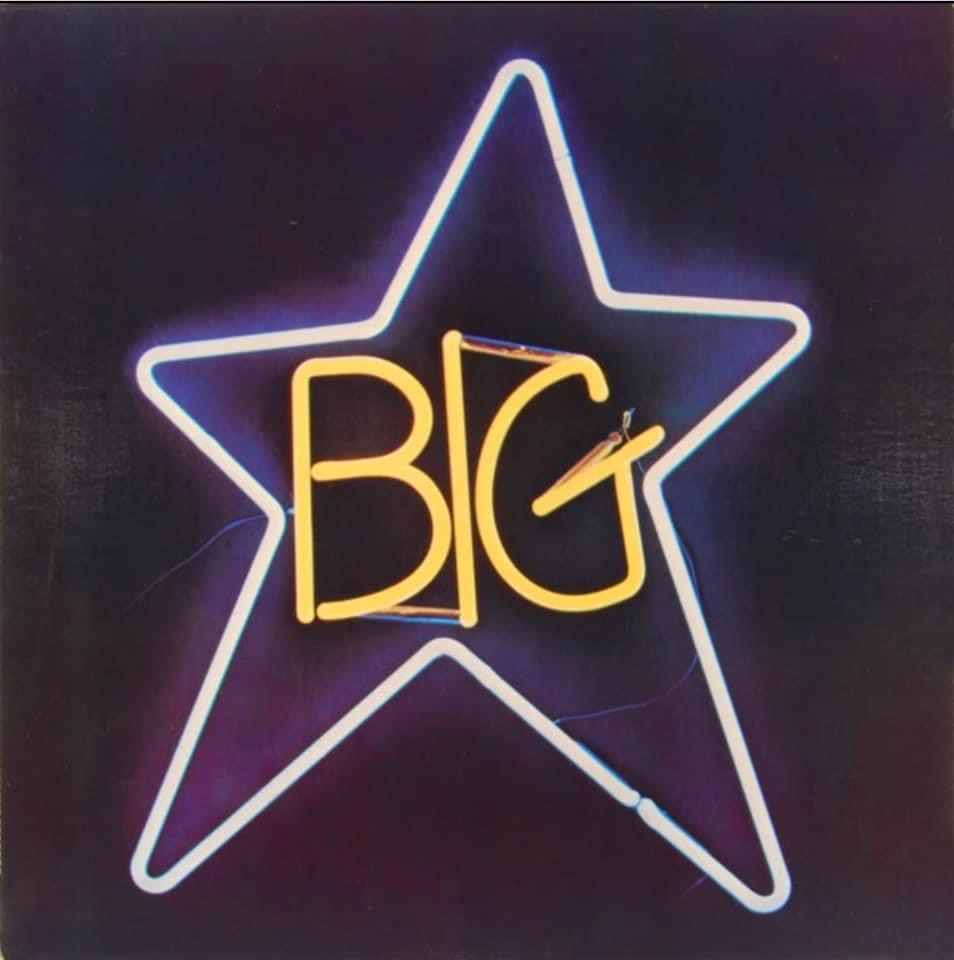
Big Star – Record

Business is never “fair”, in the Merriam-Webster sense of “free from self-interest, prejudice, or favouritism” (hell, is anything?), and the music industry has made zero effort to be an exception. Talent and hard work matter, as do luck, timing, and all those other things that led us to watch VHS instead of Beta, listen on iPods instead of Zunes, and run Windows instead of Linux on our computers. But a world where Macklemore is winning Grammies over Kendrick Lamar is obviously one seriously effed up place.

Which brings us to Big Star, and “#1 Record”. With every listen, I love this album a little bit more, and yet somehow only 10,000 people laid down their cash – and it absolutely was cash – to own a copy of it in 1972. It isn’t a lost gem – it earned great reviews out of the gate – but the label bungled the release and that was that. There was no social media to allow the band to take control of promotion, no hordes of Pitchfork-loving nerds to make YouTube cover versions and TikTok skits for favoured tracks. Maybe it wouldn’t have mattered – Chris Bell would’ve probably still quit the band, since depression, Christianity and resentment wouldn’t have been “cured” by wealth and fame – but a world where Big Star topped the charts would’ve been a more interesting place than the endless prog rock I’ve been slogging through.

Possibly the original power pop band, admired by REM and The Replacements (check out “Alex Chilton”, their tribute to the band’s frontman), there are echoes in their music of acts I would come to love over the years: Squeeze, Toad the Wet Sprocket, Matthew Sweet, Fountains of Wayne, and, especially, Sloan and Guster. Fans of “That 70s Show” (such people exist, right? It was on the air forever.) will recognize “In the Street”, and the poignant tale of young love, “Thirteen”, has been widely covered. Other favourites include the surprisingly spiritual “The Ballad of El Goodo” with its lovely harmonies and jangly guitars, and “The India Song”, which seems almost from a different band. It isn’t perfect – too much of side two sounds alike – but side one is flawless, and this has been my go-to listen for two weeks now. Summer 1972 should’ve been filled with “Feel” or “When My Baby’s Beside Me” blasting from open car windows. I’m doing what I can to make up for it in 2021.

(Originally posted on Facebook, July 15, 2021)

Not the Pazz and Jop 1972 – #10

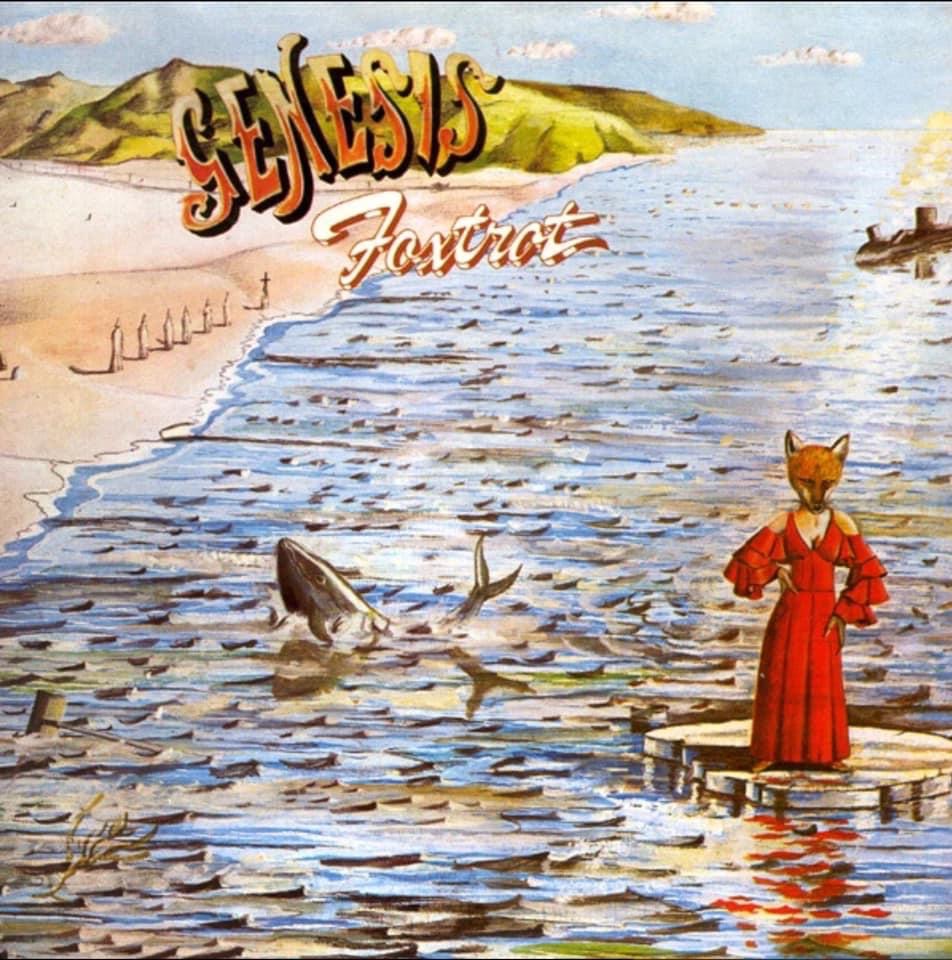
Genesis – Foxtrot

What did they put in the water in England in the late 1940s and 1950s that led to the rise of so many progressive rock bands filled with clever lads in the late 1960s and early 1970s? Was it their public healthcare, making children healthy for once (maybe the first time) in the country’s history and thus allowing their minds to reach greater fulfilment? And if this is true, why did they choose this particular avenue of expression? Were they just not ambitious enough to get that novel out of their systems and then settle into writing pop music, instead of trying to write musical novels?

I only ever owned one Genesis album, “Invisible Touch”, which I played a ton when it was popular and have never once thought worthy of a listen in the last 30+ years. I also liked a lot of solo Phil Collins hits, but the only one I ever play on purpose now is “In the Air Tonight” (though I’m always especially happy to encounter “Against All Odds”). The reverence for Peter Gabriel-era Genesis made me resist it (my historic stubbornness is becoming a recurring theme on this journey – ah, the idiocy of youth), as I quite liked Collins as a personality (Ex-wives and occasionally his children excepted, who didn’t? He’s the patron saint of short chubby guys, with the land mines of our own ex-wives and children to navigate through.) and wasn’t happy seeing him being slagged for, basically, not being the guy who quit.

Having endured a fair bit of prog rock lately, it clearly isn’t my bag, which isn’t to say I didn’t find much to enjoy here. Throughout, there is a wonderful balance in the music, heavy on the keyboard, with timely guitars and a strong drum backbeat. “Time Table” is gentle and delicate, with the lovely “why, whyyyyyyyyy” in the chorus. And a note to Jethro Tull: “Supper’s Ready” is how you make a 23-minute song. It meanders at times over the course of its seven mostly distinct sections, but it’s never boring, and the final two sections neatly tie it together with a callback to the first two. Romantic, soaring, whimsical, goofy, aggressive, angry, frightening – there are so many mood changes here, it can feel like an hour in the life of a 13-year-old set to music. Overall, a pleasing-enough experience, but not a record that will likely come to mind when looking for something to play on a lazy afternoon. That is absolutely not the case with the next record I’ll be writing about.

(Originally posted on Facebook, July 10, 2021)