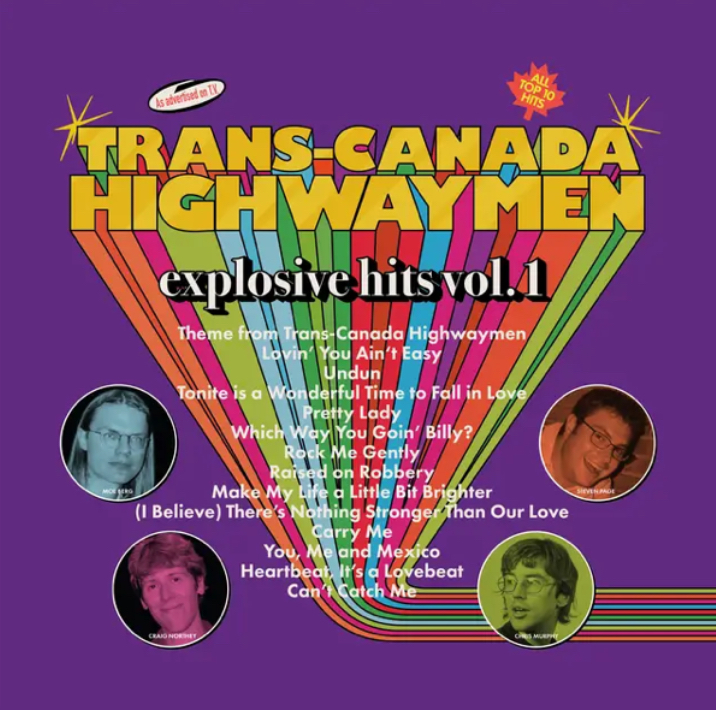
I’m always a bit surprised when fans of a band don’t follow former band members when they set out on new musical adventures. If someone has given you joy as part of one outfit, it only seems logical to me that they might be able to do it again with another. Barenaked Ladies have 2.7 million monthly listeners on Spotify, and I think we can all agree that a big chunk of those people (myself included) are mostly listening to music made when Steven Page was the band’s co-frontman. (I wonder if there is still some bad blood there, since you would never know from the band’s Spotify bio that he was ever one of them.) Page on his own, however, has just over 5,500 listeners, and Trans-Canada Highwaymen – his supergroup with Moe Berg of The Pursuit of Happiness, Craig Northey of Odds and Chris Murphy of Sloan – has a mere 3,115 at this writing. And in the case of the latter at least, that means a whole lot of people are missing out on a giant heap of fun.
Now, even the idea of a Canadian supergroup seems pretty un-Canadian to me. Considering the gang’s middling commercial success, they’ll have to do until Drake, The Weeknd and Bieber join forces with whoever they pick to play George. (Sorry, Biebs fans – he’s Ringo in this scenario.) Mendes? Avril? Shania? Buble? My pick is Celine, medical concerns permitting – I’m pretty sure the album would be an unlistenable mess, but what a glorious mess it would be.
This album is wall-to-wall joy, starting with the throwback cover art in homage to those messily bright K-tel collections of the band members’ (and every other Canadian of the era) childhoods. After an entertaining opening track setting out a possibly fake story about how the band even exists, we get nothing but cover versions (my kryponite!) of classic Canadian pop songs of the 1960s and (mostly) 1970s. Part of the fun – assuming you share my definition of that word – was learning about the songs that were unfamiliar to me. But there was plenty I already knew here – many of them from those same K-tel collections – and hearing them in these faithful renditions was both nostalgic and revelatory. I never cared for Lighthouse’s “Pretty Lady”, but something about Berg’s clogged sinus delivery opened me up to its charms. Joni Mitchell’s “Raised on Robbery” is a honky tonk roof raiser, the cheese of Paul Anka’s “(I Believe) There’s Nothing Stronger Than Our Love” becomes less of a threat to your cholesterol level, and I apologise to Larry Evoy and the rest of Edward Bear for not recognizing that “You, Me and Mexico” is, indeed, a classic. And if they hadn’t already won me over completely, they sealed the deal with a high energy and not even slightly ironic take on “Heartbeat, It’s a Lovebeat” by, in the words of Mr. Pink in “Reservoir Dogs”, “Little Tony DeFranco and the DeFranco family”.
I haven’t had the chance to see them live yet, but I really hope their calendar and mine will align while they still feel like doing this. In concert, the band liberally mixes in tracks from their past bands, and any show where the setlist might include “Brian Wilson”, “She’s So Young”, “The Rest of My Life” and, especially, “Heterosexual Man” is a night that I’ll happily take a chance on. You should, too.
I listen to a lot of new (to me) music, and sometimes I feel like telling people about things I like in case they might like them, too. That’s all this is. Every time I have four records I want to share, one of these is going up. Consider it my own mini version of Robert Christgau’s consumer guide.
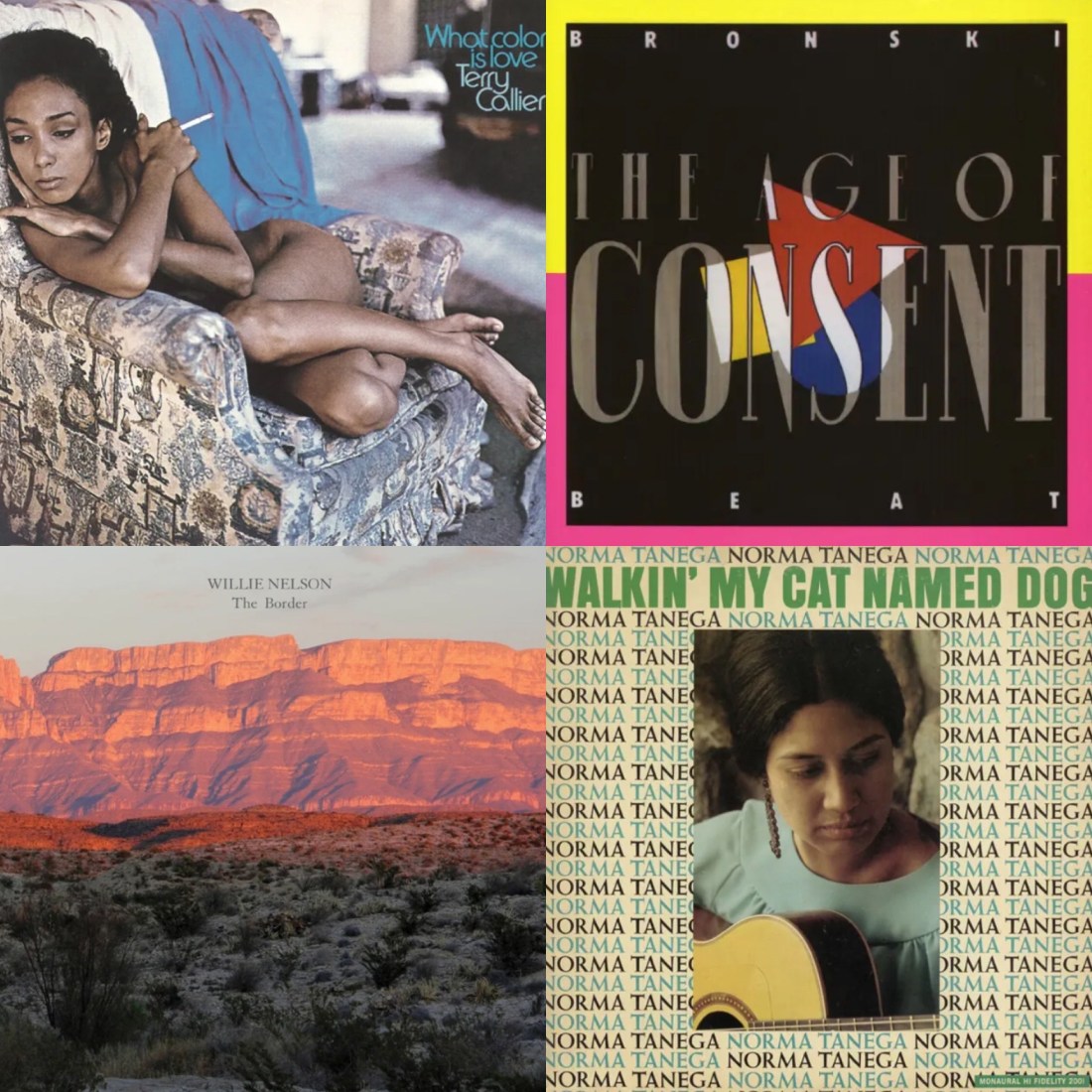
Terry Callier – “What Color Is Love” (1972)
This is the kind of record that’s called jazzy by people (like me!) who don’t really listen to much jazz, but it’s actually easy listening with a heavy dollop of bedroom eyes Chicago soul. The easy listening cliches are there in abundance – faux classical guitar, satiny smooth backup singers, dramatic strings – but these are elevated by Callier’s impassioned vocals and the crisp production of Charles Stepney. The opener “Dancing Girl” is so gentle that you barely notice how it rises in emotion and stakes until it’s caught you up in its whirlwind. And in the middle of all this AOR, there suddenly appears “You Goin’ Miss Your Candyman”, which is about as funky as a song can get – it’s no surprise Stepney went on to work with Earth, Wind & Fire.
Bronski Beat – “The Age of Consent” (1984)
There was a recent trend on TikTok – I assume it’s passed by now, given the short attention spans on that app (okay, all apps) – where younger folks asked their parents (or grandparents, I guess) to dance the way they did in the ‘80s while Bronski Beat’s “Smalltown Boy” played. Besides seeing myself in some of those oldsters – and marvelling at how well a lot of them still moved – I was also reminded of what a great song it was. My cis male roommates and I didn’t see it as a tale of gay discovery – I’m not sure we were even paying attention to that element – and we mostly mocked Jimmy Sommerville’s falsetto, but we also rushed the dance floor when it came on at our local nightclub. The whole album is one banger after another, and I can only say that listening to it in my car instead of under a disco ball (which I absolutely need to invest in) was a massive error in judgement.
Willie Nelson – “The Border” (2024)
Willie never had the most beautiful or dynamic voice, but it wasn’t really his calling card either. Rather, his stellar guitar playing and ear for a great song – both his own and others – has been the mark of his success, and neither have deserted him yet at age 91. The record is mostly a collection of songs that attest to the power of enduring love, but the highlights to these ears are the title track opener and the sentimental “Hank’s Guitar”. It’s been awhile since I listened to one of Willie’s albums, but this was a good reminder that he is one of the all-time greats, as well as a solid liberal elder statesman among country music’s conservative lunkheads.
Norma Tanega – “Walkin’ My Cat Named Dog” (1966)
A smart and world-weary collection of eccentric folk pop with an opening track that will be instantly recognizable to fans of “What We Do In The Shadows”. Tanega didn’t often display much vocal range, but her soulful delivery always holds your attention. The more upbeat tunes stand out, in particular “Treat Me Right”. The title track was a top 40 hit in the musically weird year that was 1966 (and reached no. 3 in even weirder Canada, nestled in between songs from the-not-at-all-weird B.J. Thomas and the Righteous Brothers), and though she never had that kind of commercial success again, she continued to make music into her late 60s.
My first awareness of Ry Cooder was when he wrote the score for “The Long Riders”, a 1980 western that looked cool from the television commercials but not cool enough to spend my hard-earned 16-year-old dollars on at the local multiplex. It had a great marketing gimmick, casting four sets of acting brothers (the Keaches, Carradines, Quaids and Guests) as four sets of bank robbing, murdering outlaw brothers (the Jameses, Youngers, Millers and Fords). The marketing also made note of Cooder, which I thought odd because I had never heard of him.
We can add Ry Cooder to the long list of very successful artists who I managed to get through life without listening to until starting this project. I was clearly a lot less adventurous in the past, because the list of styles he’s associated with on his AllMusic profile is a feverish wet dream of possibility: country, roots and blues rock, contemporary, modern electric and slide guitar blues, Cuban pop and traditions, worldbeat and – my favourite because I had never heard of it – ethnic fusion. (I was sort of disappointed when I saw what it was.)
This is another 1974 album that is either mostly or entirely covers (see here, here and here) or live versions of earlier studio work (more of those are coming). What was happening that made the year so bereft of great original music that the good voters of the Pazz and Jop couldn’t find 20 collections to get behind? The singles chart doesn’t offer any help: sure, there was dreck like “Seasons in the Sun”, “(You’re) Having My Baby” and “Billy Don’t Be A Hero”, but any year that includes chart toppers from the likes of Stevie Wonder, John Lennon, Paul McCartney and The Spinners is not doing too badly for itself. Based on this list from Acclaimed Music, I believe they just weren’t paying attention.
There are several songs about relationships and infidelity, but that’s all they have in common. The easy rolling “Tattler” may be the most pop-ish song on the record, with the sunny gleam of a fatigued Pablo Cruise. It’s followed by the sluggish Southern rock feel of “Married Man’s A Fool”, then later we get the peppy ‘50s-feeling rhythm and blues of “If Walls Could Talk”. And though the subject matter is far from happy, he never wallows in it: Cooder is having too much fun playing these songs that he clearly loves to let them drag him down.
Other than “Mexican Divorce”, which is a disjointed mix of styles that doesn’t have the same energy as the rest of the record, and the record’s closer, “Ditty Wah Ditty”, which has some delightful jazz piano but doesn’t really come together as a song, I love everything here. It’s one of the more summertime records I’ve ever listened to: if you can’t see yourself sitting around a campfire with a beer in your hand after a blistering hot day while Ry soothes your soul, then we aren’t listening to the same record. The entire album feels like a mosaic of cultures and styles. “Tamp Em Up Solid” has the gently chugging rhythm of a train ride, while “Jesus on the Mainline” is a thumping old spiritual. But my favourite track by far is the jittery rhythm of “It’s All Over Now”, with its cribbed reggae style beat, ragtime piano and sing-a-long chorus.
I finally sat down and watched “The Long Riders” a little while ago (you can find it on the (lightly) ad-supported free streaming service Tubi). It had its moments – a scene at a funeral where almost all the men carried rifles struck me in particular – but the script is cliche ridden, the plot takes considerable liberties with the true story of the protagonists’ misbehaviours, and the violence is so over the top that it becomes a distraction. Cooder’s score, though, perfectly captures the era when the post-Civil War south was evolving into the stereotypical Wild West. You can get a small taste of it from this trailer: you will also see near the end that Cooder’s name was listed before the director, writers and producers. It feels like something that should be playing under sepia tone images from a Ken Burns documentary. That he accomplished this with some instruments that were definitely not found in Missouri in the 1870s – the baglama and tanpura among them – is all the more a tribute to his creativity, and a good reason why the music has aged better than the images that it accompanied.
Growing up – and, really, still pretty much to this day – I never found Canadian history to be all that interesting, and certainly not in comparison to our neighbours directly to the south. The American Revolution was a lot more dramatic than our polite – and oh so Canadian – advance to nationhood. Their Civil War had much higher stakes than our endless battles over Quebecois sovereignty, and the Quiet Revolution was a tempest in a teapot when compared to the horrors inflicted on Blacks before and during the civil rights movement. (Hopefully, today’s students are being educated in a way that I wasn’t about the awful shit we did to Indigenous peoples.) American history was “Roots”, while Canadian history was “The Last Spike”: definitely important, but not very dramatic.
I don’t know much about Craig Baird, but he is doing God’s work over at Canadian History Ehx in promoting our country and its vast and fascinating history. I haven’t checked out his podcast yet, but he is a prodigious tweeter, and I have learned a lot about Canada and Canadians from following him.
In recent months, Baird ran a poll over at Twitter (no, I will not use the current name) to pick Canada’s Greatest Song. It started out covering a remarkably broad swath of CanCon. In addition to all the names you would expect to see, there were multiple tracks from Indigenous and Québécois artists, children’s entertainers like Raffi went up against rock icons, and our nation’s hip hop community was well (if incompletely) represented. Delights from bands that many barely remember, like The Kings, were put up for a vote, as was at least one act I didn’t know were Canadian (The Four Lads). “I’m Just Ken” made the cut, and even Bieber got a (begrudgingly deserved) shot.
Where we ended up was, unfortunately, kind of sad. The final 16 tunes included four tracks each from the Tragically Hip and Neil Young and three from Gordon Lightfoot. Worthies all, but not exactly a true reflection of our cultural mosaic. They were joined by (almost) exclusively other white men: Bryan Adams, Leonard Cohen, Stompin’ Tom Connors, Barenaked Ladies and Spirit of the West. Only Connors and Spirit of the West (with its one female member) could be considered surprises. Where were the women? No Joni, Celine or Shania. How about people of colour? No Drake or The Weeknd. What about someone under 30 years old, like Shawn Mendes or Alessia Cara? Nope, none of them either.
It got even less diverse by the semi-finals, where two Lightfoot tunes defeated a pair of tracks from the Hip. And then came the final, where Gordon’s “Wreck of the Edmund Fitzgerald” took down his “If You Could Read My Mind” to take the crown. I can’t argue with the final result: outside of his own “Canadian Railroad Trilogy”, there may not be a more Canadian song than Lightfoot’s ballad of remembrance of the crew of the ill-fated Great Lakes bulk carrier. But it would have been a lot more satisfying to see him take down some sort of popular dreck, like “(Everything I Do) I Do It For You”, or an unexpected wild card, like 54-40’s “I Go Blind”, Stan Rogers’ “Barrett’s Privateers” or Maestro Fresh Wes’ “Let Your Backbone Slide”. Alas, it was not to be.
Despite the result – which seemed pretty much guaranteed early in the process – it was fun to follow along and vote every day. And while many of my favourites fell away early, it was great to see them included. It was also a delight to see the surprising (to me at least) support for tunes like Stompin’ Tom’s “The Hockey Song” and “The Last Saskatchewan Pirate” by Arrogant Worms, as well as some of my favourite homegrown acts like Hot Hot Heat, Matthew Good Band and Carly Rae Jepson. So, while what we ended up with was rather narrow – Craig’s following is definitely a lot of folks who look like me, even if our musical tastes don’t line up very well – the overall field of songs that began the process shows how much great and diverse music has been produced by this country’s artists. (You can check for yourself on this playlist.) I hope Craig does this again in a few years – with some tweaks to the voting process that will create a more diverse final field, as he has acknowledged is necessary. I will definitely be nominating “Jealous of Your Cigarette” by Hawksley Workman or Rich Aucoin’s “It” (or both if permitted) – and probably still rooting for “I’m Just Ken” to triumph.
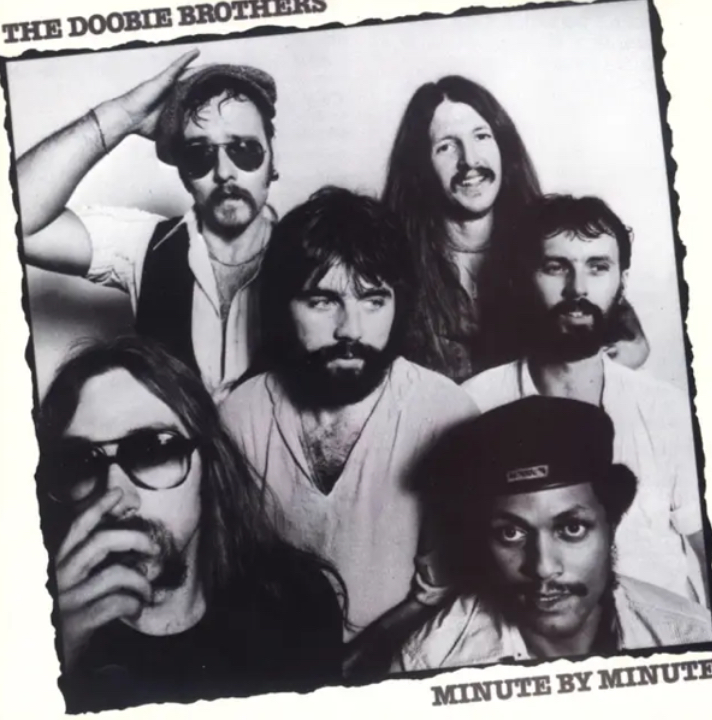
I don’t believe I was really aware of The Doobie Brothers until they turned up on the soundtrack to the film “FM”. I have never seen that movie (the plot summary on Wikipedia suggests a fairly pedestrian rebellion story that I probably would have loved when I was 14), but I did own the double album soundtrack, likely thanks to one of my memberships in Columbia House. Owning it was an easy way to get recent hits by a bunch of artists I liked – Steve Miller Band, Foreigner, Bob Seger – without buying the 45s, and it was absolutely the first place I ever encountered Tom Petty & the Heartbreakers. And right in the mix, as the opening track to side four, were The Doobies and their 1976 top 40 tune “It Keeps You Runnin’”.
If you’ve been reading along at all, you would expect this to be the place where I say that a lifelong love of the band began then and there. But this is not that story. Truthfully, the song made very little impression on me: the band’s variant on boogie rock just wasn’t where my ears were in 1978. (See here, here and here, among others, for examples of what I favoured.) So, when they had a monster hit in 1979 with “What A Fool Believes”, it was just another decent pop song that I enjoyed but formed no great attachment to. That’s how music works: you can’t fall in love with everything. Even when the song took the major Grammy categories in early 1980, it didn’t lead to any reconsideration. The band had a few more lesser hits, then broke up in 1982. If it weren’t for former lead singer Michael McDonald being a constant chart presence over the next few years, I might have forgotten them entirely.
My first name is of Greek origin and means farmer. My last name is French and means pear tree. So it was something akin to nomenclatural destiny that I became – this is absolutely true – a pear farmer in the mid to late 1980s. From April 1986 to October 1988, I worked for a vineyard and orchard maintenance company, helping the farmers of the Niagara region of Ontario get their pears, apples, peaches, plums, grapes and other produce off the trees and vines and on to be processed or otherwise directed towards the marketplace. It was hard work that didn’t pay all that well, but I was incredibly fit – easily the closest I’ve ever come to being even remotely buff – and had a glorious year-round tan from working outdoors (winter wind burn counts, people). I spent hours of every day working on my own, listening to music and enjoying the outdoors. There were a lot of things that I was trying to work out in my life, but I was pretty satisfied – save for the pay – with my employment right then.
My employer was a man named Bernard, who was maybe 10 years older than me. When it came to listening to music, Bernard was a purist of a most unusual sort: everything he owned was stored on reel-to-reel tapes, which he played on a monstrously-sized yet surprisingly portable machine. He thought the sound was better, and since I typically listened to music on a cheap plastic stereo or some low cost Walkman variant I had picked up at Consumers Distributing, I was not in a position to argue the point. Bernard loved The Doobie Brothers. He did not love Michael McDonald. To his ears, The Doobies’ glory years ended in 1976, when McDonald started sharing lead vocals with Tom Johnston. “What A Fool Believes” might as well not even exist.
(Commercial reel-to-reel players are still a thing, and while I’ve seen new models going for over $12,000, there are lots of used versions on eBay and elsewhere. I could at this very moment walk into a store not a 10-minute drive away and trade some $1,600 for a used one from TEAC if I so desired, though why would I do that?)
Co-written by McDonald and Kenny Loggins, the song actually showed up first on Loggins’ 1978 album “Nightwatch”. The Doobies’ version was an anomaly, one of the few non-disco tracks to top the charts in 1978/79, and that it managed to pop and become a hit in that context says something about the record. It’s still unbearably catchy – from the first bar, the keyboard almost demands that you start humming along. We’re not reinventing the wheel here: that I can listen to it over and over to write this piece is because it’s a sort of musical wallpaper, comforting and unchallenging. And it never wavers – the backing track barely changes from start to finish. It’s a pretty conventional pop song – I won’t even call it pop/rock, since I can’t clearly hear anything that resembles an electric guitar, and while there is probably a real drum in there somewhere, I defy you to find it. It definitely qualifies as yacht rock, but it feels more like a sort of white guy funk, which is very low on the scale of genre coolness.
And what’s it about? I have to be honest here – I never cared, I just figured it was about a guy deceiving himself about his relationship with a woman. The lyrics are sort of vague (why is she apologizing?), and force you to pay attention to certain nuances, which I absolutely had not done, and it doesn’t help that McDonald sometimes sounds like he is singing with a few walnuts tucked away in his cheek pouches. I now see that it’s about two former lovers where one partner hopes to rekindle things while the other is merely being nice. Again, nothing earth-shattering.
Although Loggins got there first, the tune is a rather slight confection in Ken’s (as he went by on the record’s credits) hands, and not a recording that would give the slightest impression of glory ahead. I would blame it on Loggins’ lack of funk were it not for Complex ranking him as the 25th funkiest white boy in music history in a 2013 article. (McDonald was not ranked.) Let’s just call it an honest misstep. When Aretha Franklin covered it brilliantly in 1980, she followed the Doobies’ template, but with the funk dialled up to 10.
I last spoke to Bernard a short time after I left his employ in 1988: he was my boss, not my friend, and I was at the time also running away from his faith, which I had realized I didn’t share. His firstborn, still a toddler when I knew him, is staring down his 40th birthday, which makes me feel unbearably old. Googling Bernard this past weekend was not a satisfying experience, as I learned that he passed away in September 2019. (I have got to stop turning over these old rocks.) He and wife were together 38 years, and ultimately had five children together. And he continued to work in vineyard and orchard maintenance until, it seems, ill health took that away. Bernard loved being outdoors, loved the sun and the fresh air, and even the blast of a January wind across a wide open field of barren grape vines couldn’t break him. He was a very spiritual man, and I expect he was disappointed when I turned out not to be, or at least not his type of spiritual. He wouldn’t have forgiven me for that choice, and I never expected him or anyone else to: I knew that was a consequence of walking away. I do hope, however, that he forgave Michael McDonald for ruining his favourite band: as redemptive acts go, I think “What A Fool Believes” is a pretty good listen.
I listen to a lot of new (to me) music, and sometimes I feel like telling people about things I like in case they might like them, too. That’s all this is. Every time I have four records I want to share, one of these is going up. Consider it my own mini version of Robert Christgau’s consumer guide.
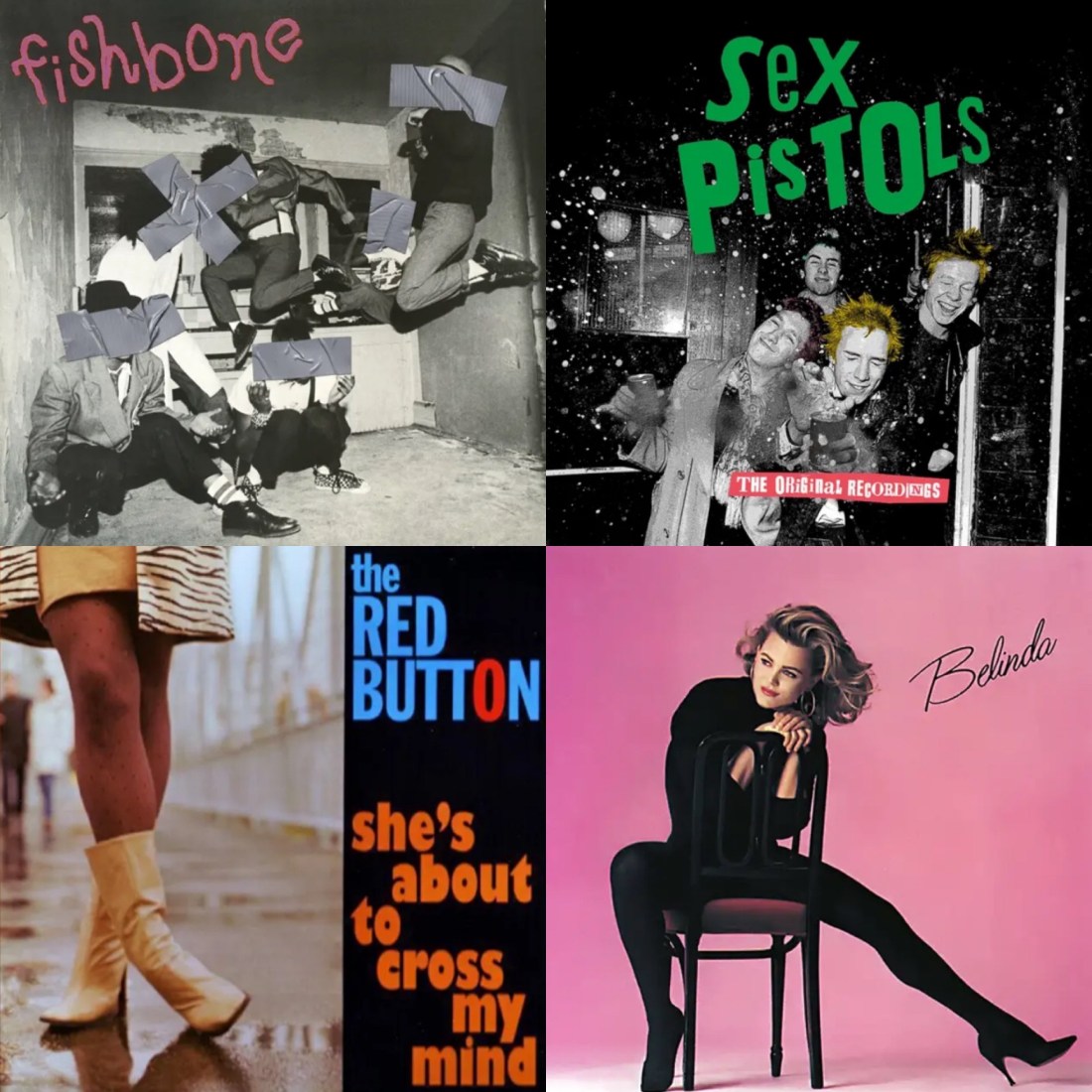
Fishbone – “Fishbone” (2023)
I was looking for their classic EP from 1985, but it turns out Fishbone is still around and creating new music, though not new EP titles. The music is mostly an invigorating blend of ska, funk and hip hop, except when they go full-on pop punk with “I Don’t Care”. The highlight is “Estranged Fruit”, an updating of the Billie Holiday classic for the MAGA era. Just a super fun listen (mostly – see MAGA reference).
Sex Pistols – “The Original Recordings” (2022)
The Pistols’ lone completed studio album, “Never Mind the Bollocks”, is an all-time top 10 for me, and I’ve really enjoyed John Lydon’s post-Pistols work, but I never took the time to dig into the rest of the band’s limited catalogue. This collection of “Bollocks” tracks mixed with B sides and covers of tunes from the likes of Eddie Cochran, The Who and Paul Revere & the Raiders was a blast. Two new (to me) originals, “Lonely Boy” and “Silly Thing”, are great pop songs that give a hint of what the band might have evolved into had they managed to carry on through the drama and tragedy.
The Red Button – “She’s About to Cross My Mind” (2007)
This sounds like the bastard child of the British Invasion washed up on a beach in California and started hanging out with some surf brats playing jangly CSNY knockoffs, with echoes of Ben Folds and Fountains of Wayne on certain songs. No duds, though the last third of the album lags a bit behind the earlier tunes. The title track, “Floating By” and “Can’t Stop Thinking About Her” are among the standouts.
Belinda Carlisle – “Belinda” (1986)
I always thought she was super adorable (though my sort-of crush was for her band mate Jane Wiedlin), so I was rather surprised when I came across a blog post where the writer was surprised to find that he now thought she was attractive but never had before. Different strokes, right? Anyway, I loved The Go-Go’s and never took Belinda seriously as a solo artist, but this is a really fun record (“Mad About You” still kicks) with a bubblegum pop gloss on her former and future band’s sound.
When it comes to music, we live in a super-sized era. The digital delivery system means there are no theoretical limits to how long an album can be: I know of at least two original releases that exceed four hours, and I will absolutely listen to them someday when I have nothing better to do. On the same day recently, Taylor Swift released a 65-minute album and a 122-minute extended version. These kinds of excesses put even Drake’s extravaganzas to shame. Even now, Kanye West is probably plotting his return to glory with a 106-hour album that is 90% him making animal sounds. (And, yes, I would absolutely check that out.)
In an earlier time, the length of a record was confined to the limits of the medium it was delivered on. (These are all approximations: there were technical tweaks that could lengthen these times, though sound quality degradation was a real risk in doing so.) A compact disc could run up to 74 minutes, the standard cassette tape held 30 minutes per side, vinyl albums up to 44 minutes total. The shortest of all was the humble 45 vinyl record: just a mere 5 minutes maximum per side.
These technical limitations had an impact on how the art could be presented. The Allman Brothers’ 34 minutes-plus epic “Mountain Jam” took up two (non-consecutive for some reason) sides of their 1972 double album “Eat A Peach”. Anyone who ever listened to music on an 8-track player knows the experience of the loud click between tracks interrupting a favourite tune. Longer songs were edited to a 45-friendly length, creating a pretty much new song, such as chopping out more than 14 minutes of Iron Butterfly’s “In-A-Gadda-Da-Vida” for the thrill of reaching number 30 on Billboard.
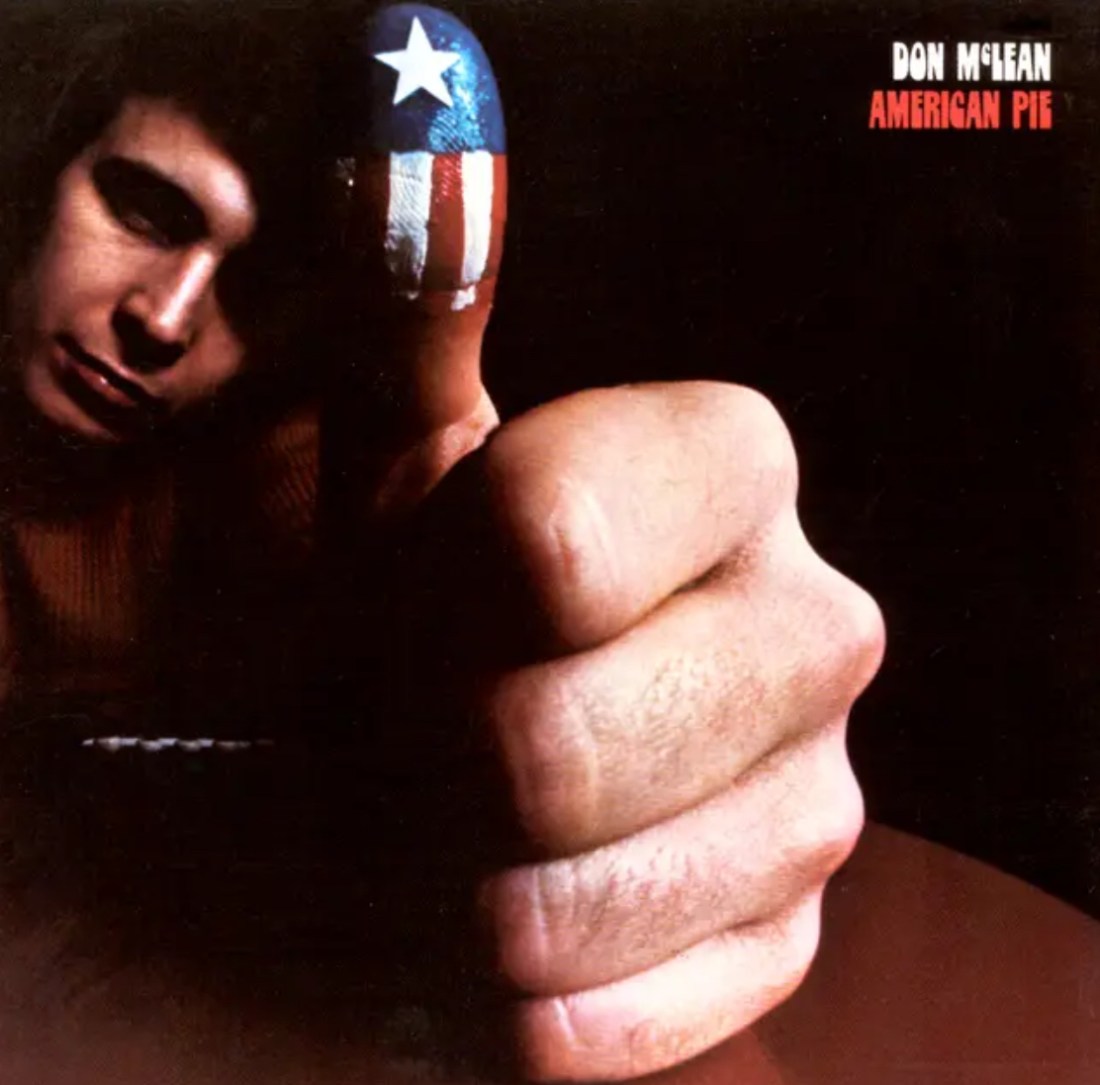
Don McLean’s opus “American Pie” wasn’t edited: it was sliced (roughly) in half, with 4:11 of the 8:42 song on the 45’s A side and the rest on the B. I had that 45, and it was annoying, though not so annoying that I went so far as to just buy the whole album. As the tune grew in popularity, radio stations started to play the album version, and that’s the one I – and probably most people alive today – heard first (ownership of the 45 came later, from deep diving a discount bin at K-Mart, Woolco or some other bygone department store chain).
An entire cottage industry was built up around trying to figure out what McLean was singing about, and the songwriter himself was often coy or offered misdirection, although in recent years he’s started to come clean. It’s a song that’s drenched in nostalgia, in the recall of those key moments that marked his development as a person. It begins with an air of sadness over the death of Buddy Holly (“bad news on the doorstep”), with only piano under the vocal. Acoustic guitar jumps in, the tempo picks up, and now we’re racing through the landmarks of a young life. There’s unrequited love, as the “lonely teenage broncin’ buck” sees the object of his affections dancing with another in the school gym. (I always think of the dance scene from “It’s A Wonderful Life” during this part.) It’s an oddly disjointed song, with a peppy sound diluting the slashing of its words. There are questions about god and country and of the part that music can play in nurturing your soul. The song is hopeful, but those hopes frequently falter (“the levee was dry”, “no verdict was returned”). We keep coming back to music, to dancing, and to the celebration of what is good. It’s about being young, when everything is possible, of an unearned hopefulness that can go sour, ending in a slowed down coda, where the news is not happy, and the loss is real, and cuts close.
I think the ambiguity has been good for the song’s longevity. It doesn’t matter that the references that McLean makes are very personal and connected with his life experiences. Because what “American Pie” means to him isn’t what it means to me, or what it might mean to someone 10 years older, or 20 years younger. For McLean, “the day the music died” refers to Buddy Holly, but for someone else it could mean Joplin, or Presley, or Cobain, or any artist, musical or otherwise, who moved you, inspired you, terrified you. And it is, after all, merely a metaphor for the loss of innocence, of McLean’s innocence to be sure, but also of his country’s, mired at the time in an unwinnable war for no good reason and a lot of bad ones. What he is really getting at – specific references to the likes of James Dean, John Lennon, Charles Manson and the fear of nuclear destruction be damned – is timeless. Youth always feels lost, always feels like it’s figured shit out and things will get better, always ends up disappointed, and ALWAYS recalibrates to the new reality. This song is about the ‘60s, but adjust some of the references a bit and it can be about the ‘80s, or the ‘00s, or last week. That’s partly what makes it a classic: it’s a choose your own adventure song.
If you’re offended by foul language, stop reading right here. You might not want to click any of the links either. I’m not shy about using the occasional obscenity to make a point, but the guys I’m writing about below are on another level. They have song titles that would make George Carlin blush! Consider yourself warned.
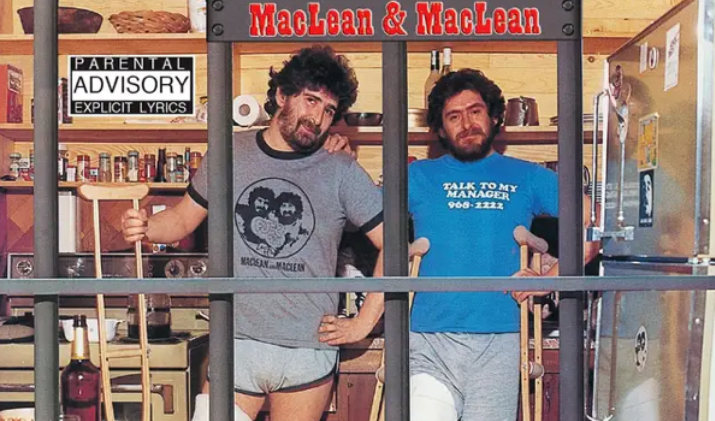
It’s pretty unusual to celebrate a song from my youth that I do not, in fact, know for certain that I ever heard the originators perform before I began this journey down memory lane. Such is the case with MacLean & MacLean, the guys who gave the world a musical F- you more than 30 years before Ceelo Green.
In spite of my failing memory, I know I heard this song when I was in high school. Somebody in my circle had access to a copy of their album because we sure as hell weren’t hearing these tunes on CJCB. But on listening to it now, I realized that the tune I’ve had in my head for more than 40 years came from someone else. The voice I’ve been hearing all these years is Robert Barrie’s. Which is good, because Robert is and has always been a singer. God forbid it was Sandy Nicholson or Sandy Fraser – yes, I had two friends with the same first name, who we creatively called Nick and Fras – or some other guy’s voice in my head. Gads, it could have been my own voice.
But it was Robert’s, and I remember his take on the song being less bouncy than the original. Before we get to that, let’s actually talk a bit about MacLean & MacLean. A pair of Cape Bretoners who relocated to Winnipeg, the heyday of brothers Gary and Blair was from 1974 to 1985, over which years they released six albums and allegedly had to go before the Supreme Court of Canada to earn the right to swear on stage in Ontario (it in fact appears to have gone no further than the Ontario Court of Appeal, which is still an impressive commitment to what is essentially a bit, though their entire careers were built on that bit). Before that, they were pals with The Guess Who, and were even credited as co-writers on the band’s live-only 1972 track “Glace Bay Blues”. Their oeuvre was unabashedly obscene: the song titles alone – “Dolly Parton’s T**s”, “Dildo Dawn”, “You Set My D**k On Fire”, and others I don’t dare repeat – tell you exactly what you need to know about the brothers’ act. It was puerile, gloriously stupid, and enormously appealing to the kind of guy who howls with laughter when he sees another man get hit in the testicles for comic effect.
“F**k Ya” was one of their many rewritings of existing tunes, another one being “I’ve Seen Pubic Hair”, which spun out from fellow Nova Scotian Hank Snow’s 1962 number one country hit “I’ve Been Everywhere”. This one was from a number called “Ja-Da”, which I had never heard of but is actually a jazz standard, with covers by such artists as Frank Sinatra, Oscar Peterson, Louie Prima, Count Basie, Al Jarreau, Frankie Valli and the Four Seasons (!) and Sharon, Lois & Bram (!!!). My friend Robert’s take on the MacLeans’ parody was harder edged than the original’s finger-snapping, a cappella, standing-on-a-street corner sort of sound. It was a very adaptable tune.
Look, I don’t have much to say about this song, or any of the brothers’ other tunes: it’s a parody, and not even a clever one. But it matters to me because my enjoyment of it shows a side of my personality that might surprise anyone who doesn’t know me all that well (which I think is most people I encounter – I’m a good compartmentalizer). To the world in which I work, and (I think) most family members and more dignified acquaintances, I’m a fairly buttoned down, conservative living and generally decent fellow. I read a lot of books that you would call literature, enjoy foreign and classic movies, listen to a lot of really smart music (and some not-so-smart stuff, too), and have zero interest in “dumb” popular culture like reality TV (except cooking shows). My wife, however, has long commented on her surprise over the things that I find funny. I will happily watch a movie like “Dodgeball” for the umpteenth time and still howl like a maniac at what I’m watching. (If this scene doesn’t make you crack up, I don’t know if we could be friends.) I am that guy who thinks that a kick in the testicles is hilarious – they’d just better not be my testicles. Generally, any kind of comedy that uses low-level violence or bad words to get a laugh is in my wheelhouse. If it would feel awkward to watch it with my mother or daughters, you know I’m turning it on as soon as they leave the room.
MacLean & MacLean are a part of that grand tradition of doing or saying stupid things to make people laugh. I can’t remember the last time I heard anyone mention them, and the under 5,000 monthly listeners on Spotify shows that whatever minimal relevance they had to the culture during their run has long since disappeared. These songs aren’t meant to endure: the best they can offer is a howl while you down another beer and try to forget what’s hurting you. That’s still a pretty noble pursuit in my book, no matter how foul the words are that get you there.
There are lots of good reasons to dislike a song. I don’t need to list any of them here, especially since there are more good reasons than songs, as two people can dislike a song for equally valid and entirely personal bases. I am firmly in the “there is no bad music” camp if someone – anyone – likes it, so I stand just as firmly with you when you don’t like something. Without being guided by our own taste, what’s the point of art?
But I do know one objectively dumb reason to dislike a song: Because of a baseball team.
Let me explain. I first started following baseball in 1972, which was the year I turned 8. My team was Canada’s one major league entry, the Montreal Expos, and I was soon religiously watching their nationally televised Wednesday night matches. This was not a good time to be an Expos fan: it was their fourth year in existence and the team was not very good. After a brief flash of relevance in 1973, they took a step back, and by 1976 were again the worst team in baseball.
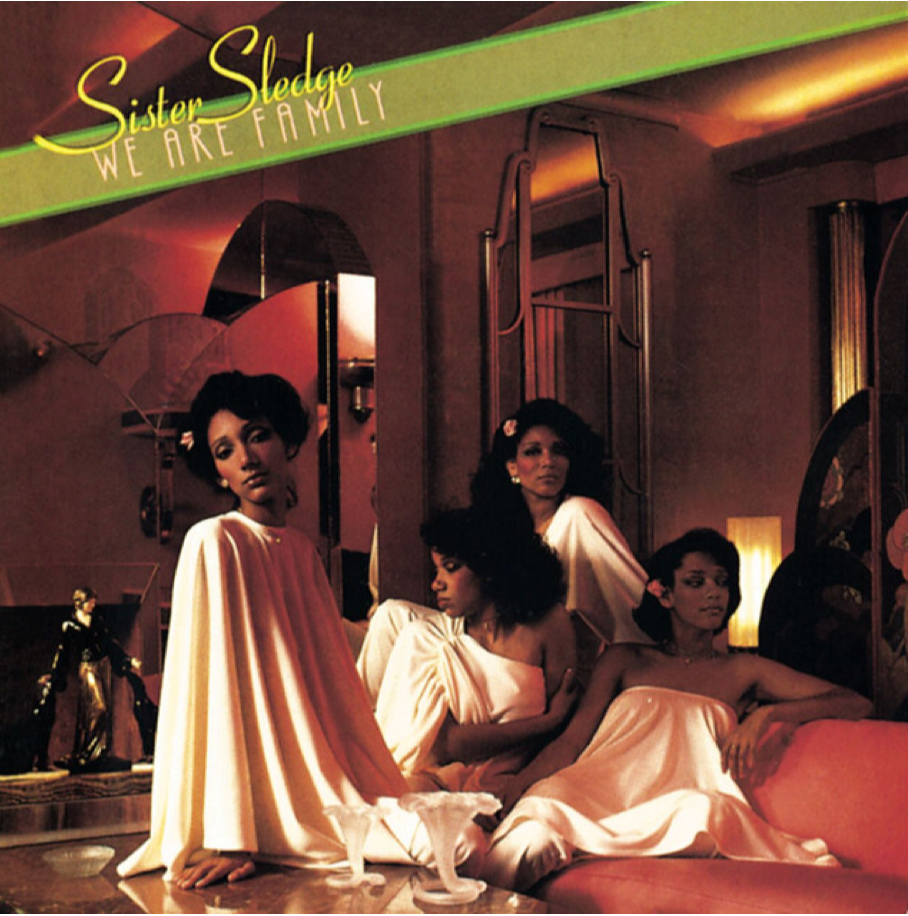
But in this mess, there was hope for the future. That 1976 team included a bunch of youngsters – most notably future Hall of Famers Gary Carter and Andre Dawson – who would be among the leaders of the organization’s first great team in 1979. And when that day came, I was even more glued to my television. When they entered September in the hunt for a playoff spot, our local FM radio station started broadcasting all their games, and I ended up watching or listening to 34 games in 30 days – basically, four days of my life spent drinking tea, eating buttered popcorn (yes, I had rituals) and keeping my own box scores. The Expos ended up being the third best team in all of baseball that year. Unfortunately, the best team was in the same division, so they fell short of the postseason. And I hated that other team. The team was the Pittsburgh Pirates, and they had a theme song: “We Are Family” by Sister Sledge. So, naturally, I had to hate the song. That’s just how these things work.
I had nothing against Sister Sledge before this. Earlier that year, “He’s the Greatest Dancer” had been a disco hit for the four Sledge siblings, and while I have no specific recall of how I felt about the song at the time, hearing it now causes no bad vibes to resurface from my subconscious. It’s actually the opposite, since a pre-cuckolded, Chris-Rock-slapping Will Smith built the verse of “Gettin’ Jiggy wit It” around a sample from the sisters’ first hit, and who wouldn’t be happy to get jiggy?
But “We Are Family” causes a form of PTSD, as I remember one of my first truly intense sports fandom disappointments. Sports was incredibly important to me at the time, and my sense of self worth was ridiculously tethered to some degree to the success or failure of the teams I rooted for. (It was absolutely my father’s fault that this was going on, and I’m not going to let him off the hook just because he isn’t here to defend himself.) Any threat to my team’s winning was an existential threat to myself, and if our rivals drew inspiration from a song, then that song was on my no-play list. It was that simple.
But I did it: I listened to “We Are Family”, and then I listened to it again, and again. It was more than needed for the music, as it isn’t a very complex song, but it may have been good as exposure therapy. Written and produced by Nile Rodgers and Bernard Edwards of Chic, it’s like a less interesting Chic record. A syncopated disco beat underlain with metallic piano and a subtle bass line from Edwards, with equally unobtrusive drumming from his bandmate Tony Thompson. It’s a pretty relaxed beat for a dance hit, but that was not unusual for disco tunes: Chic’s own “Good Times” has a drugged-out sluggishness. Yet, despite there being nothing particularly unique about this recording, music critics have regularly ranked it among the best songs of its year (#4 on the Pazz and Jop), decade (some guy named Steve Crawford has it at 101) and all-time (currently ranked at 967 at Acclaimed Music). I don’t hear it, and it can’t just be leftover petulance from 15-year-old me. There’s nothing wrong with the record, and it’s even sort of grown on me since starting to write this post: I just don’t hear greatness anywhere.
My Expos remained a good team for a few years but never managed to win a championship before falling apart over drugs and money, and the stars fell away one by one. After a decade of mostly average and occasionally bad play, they were the best team in baseball in 1994, but a players’ strike ended those hopes, and the franchise never recovered, relocating to Washington after the 2004 season. I remained a loyal fan to the end, but I couldn’t follow them to their new home: my heart had been broken too many times. I had also learned long before then not to get too tied up in things I had no control over, like sports, and to let go of those grudges. That reckoning had come at the hands of a New York Yankees catcher named Butch Wynegar, whose team didn’t have an obnoxious theme song, so that’s all I’m going to say here about that son of a bitch.
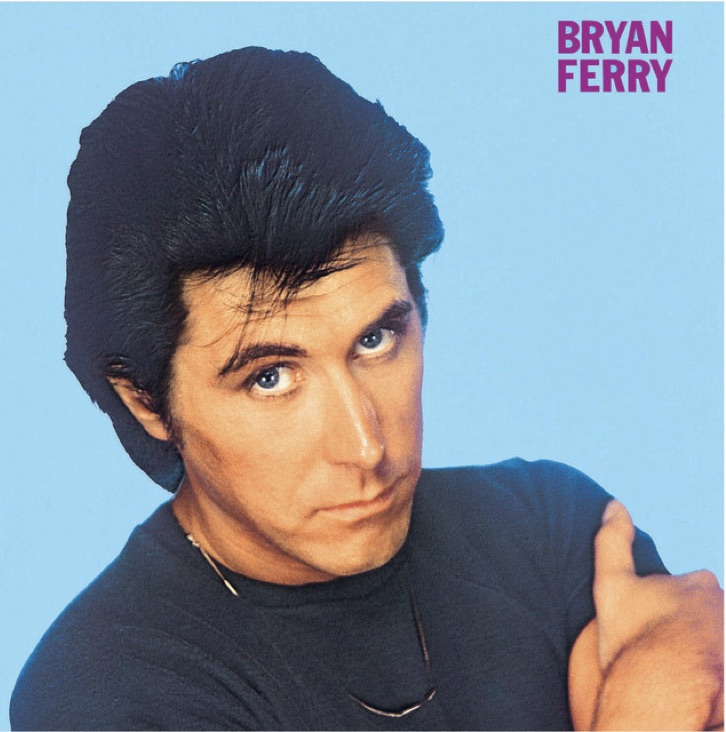
I’m not a fan of early Roxy Music, and to go by his first solo album, frontman Bryan Ferry may have been having some issues of his own with the band’s quirky and often uninviting output. His apparent solution was to do an album of nothing but cover versions, and if you’ve been playing along at home, you know that’s catnip to this tabby. I love this album from wackadoodle beginning to heartfelt ending, but it doesn’t mean it all works equally well. To truly appreciate a cover, you need to also know the song that’s being reinterpreted, and that doesn’t always go to Ferry’s favour. (Here’s a little playlist that I made if you want to do your own comparison.)
Let’s get the misses out of the way first. To adopt my late Uncle Brad’s comment on something reckless I had done, it takes more balls than brains to cover a Smokey Robinson song, and maybe he’d have been wiser to stay away from the luscious perfection of The Miracles’ “The Tracks of My Tears”. His innate eccentricities likewise get the better of him when he tackles The Beach Boys’ “Don’t Worry Baby”, losing the simple romanticism of the original. Finally, on “Piece of My Heart” he is competing not only with the well-known Janis Joplin version, but the blistering, heartfelt, tear the MFing roof off original from Erma Franklin, and Ferry’s kind of goofy take is no match for the vocal chops of Aretha’s older sister.
Another weird thing that shows up on some of these covers is a sort of vocal vamping, like it’s “Rocky Horror Picture Show” night for the bottom two queens on “RuPaul’s Drag Race”. It’s really noticeable on Lesley Gore’s “It’s My Party”, which – sidebar – I now see as an empowering tale of a young lady with an IDGAF attitude who is owning her right to be publicly miserable because she’s been screwed over by a jerk, no matter how awkward it is for everyone else.
Some of the songs that work best have a tempo that is sped up from the original. Bob Dylan’s “A Hard Rain’s a-Gonna Fall” goes from stately protest song to rollicking madhouse rant. The Everly Brothers lite of The Crickets “Don’t Ever Change” is turned into a dance tune, with handclaps and dramatic piano. It will put a smile on your face, but also leave you questioning his intent: it is never entirely clear when Ferry is being serious or putting us on, when he’s being a romantic or a dick. And the wispy sweetness of The Paris Sisters’ “I Love How You Love Me” becomes a raunchy, sexual doo-wop: instead of letterman jackets and fraternity pins, there’s dance floor groping and couples being pulled apart by watchful teachers.
Some of these songs just seem to fit Ferry better than their originators. It is blasphemy to say this about one of my favourite Rolling Stones tunes, but Ferry’s weirdness makes for a believably slick Satan as opposed to Mick Jagger’s seductive version in “Sympathy for the Devil”. His more mature sounding voice strips away the sweetness that Paul McCartney brought to “You Won’t See Me”, making for a more accusatory tone that better fits the lyrical content of a messy romance in its endgame. Likewise, there is a deeper tone and a more desperate vocal in his version of Four Tops’ “Loving You is Sweeter Than Ever”, so that Ferry does a better job of drawing the listener in to the celebratory tale of finally finding real love by dropping his cool for a moment to show the emotion he feels. Finally, the album ends with the oft-covered title track, which starts out like a piano bar lament, with the tempo rising as Ferry ticks off the little things that remind him of his lost love. But it’s a jaunty tune, and never maudlin: he misses his lost love, but has no regrets about it.
In the end, Ferry followed his muse, and while I don’t think it’s entirely successful, it’s still a lot of fun, just a guy singing songs that he loves the best way he knows how. There are two Roxy Music records coming up when I reach 1975, and dear God, I hope some of that fun stuck around for those albums.



 PopNotes