Pazz and Jop 1974 #13

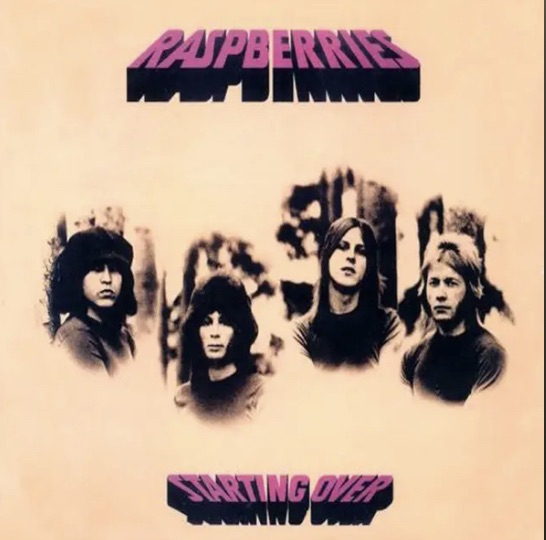
Raspberries – Starting Over

My first awareness of the musical genius that was Eric Carmen came via the Bay City Rollers. On the Rollers’ 1976 album “Dedication” – the one with Ian Mitchell – the opening track is a catchy number called “Let’s Pretend”. One evening, 12-year-old me was playing the album when our baby-sitter – likely only a few years older than me in classic John Mulaney fashion – said the song was by Raspberries. “Who?” I wondered.

Now, before long, Carmen would become a big part of my musical childhood. Shawn Cassidy’s covers of “That’s Rock and Roll” and “Hey Deanie” were part of my 45 collection, as was Carmen’s own “She Did It”. He had other hits, of course – at times, “All By Myself” has been pretty much inescapable – and if I was then who I am now – and had access to a Spotify account – I absolutely would have given Raspberries a listen.

It’s a little more complicated now. These days, you can’t consider Carmen without acknowledging the bloated orange elephant in the room. Yes, he became a Trump supporter, and while I prefer not to dive too deeply into that foetid pool, I remember him getting into Twitter pissing matches with Peter Frampton and the always delightful Richard Marx, plus Amy Lofgren said he was “rabid”, and that’s good enough for me. It became even more complicated when Carmen passed away last week. His story has been written, and the later chapters have some clunkers, with no time for another edit.

For me, all of this makes Carmen another one of those litmus tests about separating the artist from the art. Some of those choices are easy – my life is no less, and probably a lot better, for not having the likes of Ted Nugent and Kid Rock in it. I do not miss R. Kelly, Woody Allen movies, “Dilbert” comic strips or “Love Connection” reruns. Michael Jackson is a bit trickier, and I just can’t quit Kanye. (I’m really hoping he gets some therapy. Redemption is still possible!) Carmen supported a man who has said and done awful things and is making it clear he’ll do much worse if he gets another chance. But this is about 25-year-old Eric Carmen, and I’m giving that guy a chance. So while he may have become a piece of shit in his later years, maybe he wasn’t a piece of shit then, or at least he had the decency to limit the damage caused by that shittiness to his inner circle. Either way, I tried to put the later version out of my mind while listening to this record. I needed a good long shower after, but I did it, because I am a serious person.

By the time “Starting Over” came out in September 1974, the band was running out of steam as a commercial force. Their single top 10 hit had been two years earlier, and their previous album hadn’t cracked the top 100 albums chart or produced a top 40 single. Strife had resulted in two of the four members being replaced over the previous year. They were clearly a band in transition, though they were in fact in their death throes: they never released another studio recording. But, as evidenced by its position on the Pazz and Jop, their collective creative juices still had one last blast of power pop to set free into the world.

Except it isn’t really a power pop record, is it? That’s how we usually think of Raspberries, but this is without a doubt a rock record, and more specifically a “rock band” record. There are songs about being on the road, about the pressure to succeed, about figuring out your path as an artist and as a person. And, of course, there are songs about romantic entanglements, where difficulties are often connected to that life on the road. It’s an album that is infused with the travails of the artist’s life, and the desire to have the freedom that comes with that but also the stability of success. 

The lyrical content of the romantic side of this pairing highlights challenges in matters of the heart (the bitter I-don’t-want-you-back screed of “Cry”, or the delicate beauty of the album’s closer, “Starting Over”, which evokes the image of couples holding hands, swaying on the lawn at an open air show, as they explore a new love) and groin (the hoped-for threesome of “Hands on You”, the “please leave” afterglow of a drunken hookup in “All Through the Night”). But these are all secondary to the pull of creating music: to the thrill of hearing your song on the radio, of being on stage, of creating and dreaming. In the end, there are heartbreaks and failures along the way, but no one would ever willingly give up the rockstar life: the perks are too high to be lost in the noise of the lows. If there is an overarching theme, it’s freedom – to go where you want to go, do what you want to do, sleep with who you want to sleep with without commitment or consequences: the hippie ethos. The spirit of the Summer of Love still alive seven years later.

Musically, what stands out is that on a number of tracks – notably “Overnight Sensation (Hit Record)”, “I Don’t Know What I Want” and “I Can Hardly Believe You’re Mine” – the drums are prominent, not buried in the backbeat but crystal clear and as critical to the sound as any other instrument. Piano is also an important element, tinkly here, honkytonk there, and it lends a southern rock vibe to some of the tracks (“Party’s Over” could have been a Lynyrd Skynyrd B-side). Cribbing from other artists is frequent: there are sweet Beach Boys-esque harmonies on tracks like “Overnight Sensation (Hit Record)” and “Cruisin’ Music”, the goofy acoustic singalong “Hands on You” feels like a Beatles throwaway, and I’ll just have to take the word of the many, many, many more knowledgeable music writers who are hearing Elton John and The Who in these songs. Maybe what they are hearing is the sonically dense, epic feel of many of the tracks: it’s a busy record, the instruments sounding sometimes like they are competing with each other, but completely harmonious in its execution. 

There isn’t a weak song here, and though “Overnight Sensation (Hit Record)” is justly praised as the record’s spiritual centrepiece, my favourite track is probably “All Through the Night”, with its dive bar chug and frank statements on the sexual mores of the scene: “Don’t you tell me your last name / I won’t recognize you after tonight” and “Now that I’ve already had ya / I’m gettin’ bored with the idle chitchat”. 

Carmen wasn’t a one-man show – band mates Wally Bryson and Scott McCarl also contributed songwriting chops and lead vocals, and then there are Michael McBride’s epic drums – but he’s the person most associated with Raspberries, and the only one who had any sort of commercial success outside of the band. There is the kind of optimism that only the young have: he sings that he wants a hit record, not the money that might come with it. I suspect that if 2024 Eric Carmen had a time machine, he would have gone back and slapped his 50 years younger self. Hopefully, 1974 Carmen would have slapped him back twice as hard.
SoundTracking #4

”And the Oscar goes to . . .”

Rob Lowe is a very good looking man who is aging so gracefully that you can’t even dislike him for it. He’s also an excellent comic actor who for some reason keeps appearing in dramas. What he is not is a singer or dancer. Yet, in a decision that can never be truly understood, he was called upon to do both as the blind date of Snow White in the opening number at the Academy Awards on March 29, 1989. The results were glorious.

I am a regular Oscar ceremony watcher (though these days I rarely make it to the end unless I’m invested in a particular film’s prospects, like last year), but I missed the 1989 show, so I had not watched this video until just this week. I certainly knew the legend of the botched opening. But I assumed that Disney, who were so upset by the unapproved use of their intellectual property that they (1) sued the Academy and (2) had Snow White portrayer Eileen Bowman agree not to speak about the show for 13 years, made sure that this clip was buried. I wouldn’t be surprised to see it taken down at some point, so, please, take the 11 minutes right now and watch the video. It is so undeniably awful that you can’t help but feel embarrassed for (almost) everyone involved, yet you are also compelled to keep watching, to see what fresh horror is coming up. It’s supposed to be a tribute to old Hollywood, and I guess the amount and variety of cheese on display is consistent with that. But what is the cheesiest part? The dancing stars? The dancing tables? Snow White’s voice? The rewritten lyrics to familiar songs? Rob Lowe shimmying? The gigantic hat – I guess it’s a hat – that Snow wears towards the end? The mere presence of Merv Griffin? The only one for my money who comes out of this a winner is Cyd Charisse: just past her 67th birthday and more than 20 years since her last major film role, she turns up at 3:37 and shows that she still has moves, and looked awfully good in the process.

Now, it’s Oscar time again, and it is certain that nothing so gloriously camp will turn up in tonight’s ceremony. Unless, of course, it’s on purpose. Which brings us to “I’m Just Ken”.

There are five tunes up for best original song this year, but three of those have no chance of winning, despite contributing honourably to a strong nominee slate. “It Never Went Away” (from “American Symphony”) has beautiful piano, and is a lovely and moving elegy to enduring love. “The Fire Inside” (from “Flamin’ Hot”) is yet another Diane Warren anthem, but with a faux Latin beat, and I can’t deny that it had me moving my head and shoulders along with the music in a way that my wife would instantly recognize and, hopefully, be embarrassed by. And, last but not least of the also-rans, we come to “Wahzhazhe (A Song for My People)” (from “Killers of the Flower Moon”), which I can’t even begin to pretend to understand but which also dug under my skin and made my heart race.

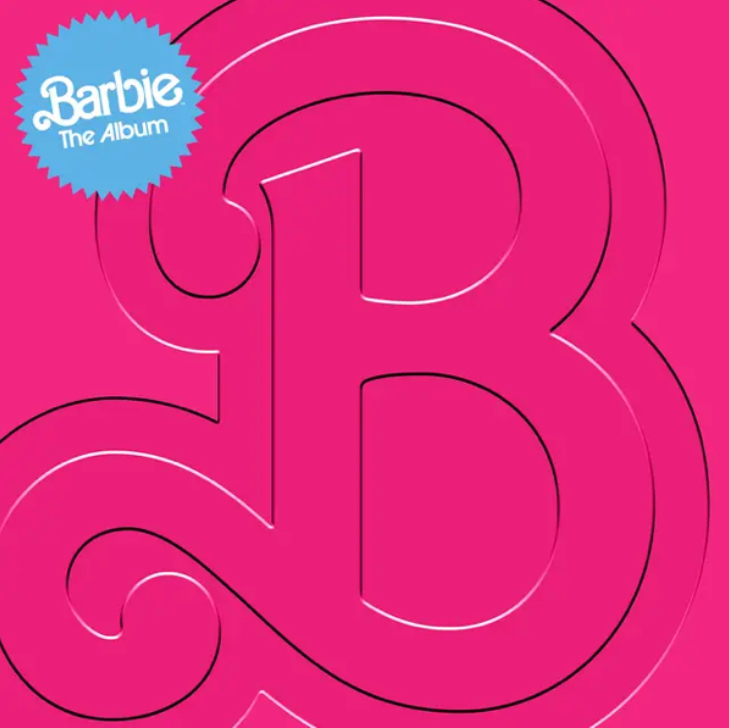
But this is “Barbie”’s year, and it is probably 99% certain that Billie Eilish and her brother will be walking off the stage tonight with their second little gold man. And it’s hard to deny that it would be a deserving victor. “What Was I Made For?” is a delicate lament, light and airy sounding but with lyrics that display an existential questioning of purpose that is also grounded in the film’s through line. An Oscar winning song should ideally be connected to the movie itself, and not just a pretty trifle played over the closing credits. Eilish’s song touches on the emotional centre of the film, and of Barbie’s journey.

And yet, nothing is certain until someone says “And the Oscar goes to”, and in that tiny 1% of space that remains, I will be rooting for Mark Ronson and Andrew Wyatt – two of the folks behind “Shallow” – to win their second Oscars with “I’m Just Ken”.

My love for this song is a little irrational, but I’m okay with that. It, too, is connected to the story, as Ken grapples with his insecurities and confusion over why Barbie doesn’t appreciate his awesomeness. That it is accompanied by a massive production number, in which dozens and dozens of Kens (but no Allans) battle each other with beach toys and, I don’t know, charisma, I guess, organically ties in to the problems with the patriarchy and toxic masculinity that the film addresses. I prefer to watch the movie clip so I can appreciate its full glory, with Ryan Gosling in beach god mode and fellow Canuck Simu Liu as his preening nemesis, but the song on its own is great, switching from power ballad to ‘80s dance track to grungy techno then back to power ballad. And the lyrics: “a life of blonde fragility”, “the man behind the tan”, “Am I not hot when I’m in my feelings?” and, my personal favourite, “I’m great at doing stuff”. Plus, this song gave the world Kenergy. Give these geniuses another Oscar, damn it!

Okay, that’s absolutely not going to happen. For one thing, Hollywood, despite being a place that has churned out great comedic entertainments for over a century, has never had a sense of humour about itself, and rarely has awarded those comedies its highest honour. So the emotional turmoil of “What Was I Made For?” is more on brand for the Oscars than the absurdist humour of “I’m Just Ken”. Also, everything Eilish touches turns to award-season gold – she has already won the Grammy for Song of the Year for her track, an award for which “I’m Just Ken” was egregiously not even nominated. But what would it say about Hollywood if Barbie’s moment of triumph was stolen away by Ken? It would fuel thinkpieces for days on every feminist (and anti-feminist) Substack, every website and magazine, every culturally oriented TikTok, Instagram, Reddit, X, blog, vlog and whatever the heck else is out there. If nothing else, it would take our minds off Trump and the American apocalypse in the making for just a few more days.

Do it, Academy. We demand that you step up in this moment of need. Give “I’m Just Ken” the Oscar. The world is counting on you.

Songs of My Divorce #2

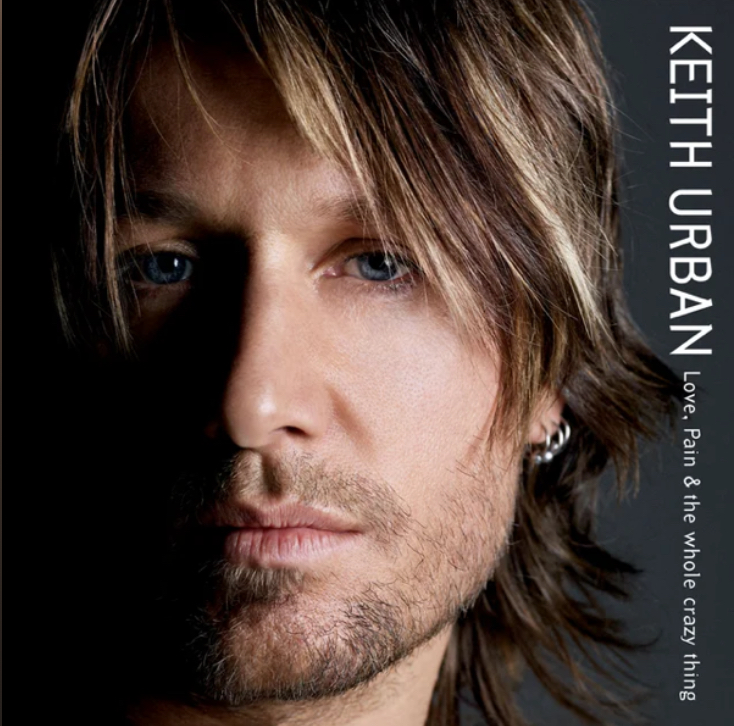
Keith Urban – Stupid Boy

You don’t always get to be, as David Copperfield intuited, the hero of your own life, and that can be especially true when going through a breakup. Sometimes, you’re the Joker, not Batman. In that spirit, I’m going to tell this part of the story now, because I’m sort of the bad guy here, and I would like it if you’re still on my side by the time we get to the end of this part of my musical story.

My wife and I often kid about my complete obliviousness to things that are obvious to her. (My catchphrase is that I am “a keen observer of the human condition”.)  My observational skills are hit and miss: I pay attention to things in direct correlation to how much I give a crap about them. (So, yes, gentle reader, I am a man.) This isn’t a new development – and it seems to be getting worse as I age – I had just never had anyone in my life who could be bothered to point it out to me. I wonder now though whether my ex was, in her own less direct way, trying to tell me something similar. As our relationship was circling the drain, two things became clear to me. First, I wanted to save our marriage a whole lot more than she did. Second, and naturally relating to the first, she had come to believe that I was holding her back from becoming all that she wanted to be in life. I won’t get into all the history that led us to that point – that’s mostly her story to tell – but at its heart was that what I thought was encouragement to be the best version of herself was being received as browbeating, that my coaching was seen as more Woody Hayes or Bobby Knight rants than (insert your favourite coach here – I could find lots of examples of violent, racist and asshole sports figures, but no universal opinion on who the nicest ones were – let’s go with Andy Reid, since he at least looks like a Zeddy bear and had the restraint during the “Big Game” (this post is not NFL-approved) not to drop Travis Kelce onto his overhyped ass).

Not unexpectedly, I finally understood what was going on thanks to a song. I don’t for a fact know that her attachment to this song had any connection to me – I wasn’t the only stupid boy in her life by this point – but the way you experience music is always deeply personal, and in the context of everything that was going on at the time, it felt like “Stupid Boy” was a mirror. And I did not like what I was seeing.

From the first time I heard him speak, Keith Urban has felt like a bit of a gag to me. How did a guy from Australia become, of all things, a country music star? Well, like myself, he started out listening to country music because that’s what his parents listened to. Talent and hard work took him from there. It’s a niche stardom: after punching just his first name into Google, he was the sixth suggestion, after Moon (would be a solid #2 option), Emerson (I guessed he was the Emerson, Lake and Palmer guy, but this is too high), Haring (3rd seems about right), Richards (there’s our top guy) and Morrison (the power of being on television all the time, I guess). (Keith David was 7th. Not relevant – is any of this though? – I just like that he came up.) And I can’t honestly recall now if I had even heard of him before the fall of 2007. He was only on my radar because I was trying to save my marriage through the magical power of country music. 

I listened to a fair bit of Urban over the next few years, and “Stupid Boy” is probably my favourite of his songs, followed by “You’ll Think of Me”. There are two versions, and I always preferred the six minutes plus take over the under four minutes radio release. It gives Urban a chance to really show off his guitar playing chops, which definitely felt anomalous in country music at the time: that his major influences when he started out were Mark Knopfler and Lindsey Buckingham may explain the rockier approach.

The song, co-written and originally sung by a woman, Sarah Buxton, is a pretty harsh indictment of its target. It’s the story of a girl who has a beautiful spirit and the potential to do great things, but finds herself trapped by a boy who is threatened by everything that makes her special. The guy is definitely a dick, and lines like “She never even knew she had a choice / And that’s what happens when the only voice she hears is telling her she can’t” and “I guess to build yourself up so high / You had to take her and break her down” don’t give him a lot of wiggle room to make a contrary case. No knock on its originator, but the switch in perspective gives the song more power – where Buxton is telling a story of liberation, of her escape from the stupid boy, in the male voice it becomes a tale of pain and failure, which, if we’re being honest, is a damned sight more country. He is coming to grips with every mistake he ever made, and that pathos elevates the song.

There is some naturalistic strumming to start, with nothing but guitar for almost a minute, turning mournful on the chorus. There are no drums until the second verse, when the entry of a firm, steady thump heightens the intensity of the song. The guitar run at 2:38 is chilling and an absolute rock star moment. It builds to the finale – “It took a while for her to figure out she could run / But when she did, she was long gone, long gone” – and her freedom at 3:45 is celebratory, and a natural end point to the song.

But Urban keeps going, and the last two and a half minutes become an existential howl against the fates that had broken him. As much as I love the first part of the song – and it’s really a damned near perfect pop single (genre be damned) – it’s the ending that kept gutting me again and again as I played it. Because when you are in the middle of a disaster, you can’t see the end. In the days of “Stupid Boy”, I worried about what would happen to my daughters, about being alone, about all my narcissistic tendencies that had brought me to that point (another ex had often said “George will do what George wants to do”, and this was so not a good thing), about being a fundamentally unhappy person incapable of experiencing joy because I had spent so much of my life avoiding pain. I was so desperate to preserve something that wasn’t working for anyone (except, perhaps, our children, though I knew from my own experience of being around two adults who no longer loved each other that that shit wore down everybody real fast), that I didn’t see it as a trap. She, at least, was able to see that, and acted. I reacted.

Now, I don’t think I’m THAT bad. But in my utter lack of awareness about what I had been doing, and maybe to no small degree out of her need to not be the bad guy for being the one who broke up our family, she repainted me as a villain who had prevented her from becoming all that she was meant to be. She needed me to be the stupid boy, because the alternative was accepting her own part in things going wrong. I won’t fault her for that – at the time, I was doing a fair bit of finger pointing myself.

In the end, none of this mattered. We were a poor match, and I could have been as solicitous and nurturing towards her as she thought she deserved and it wouldn’t have prevented either of us from being deeply and irresistibly dissatisfied with our lives together. By the end, even a stupid boy like me could figure that out. And, fortunately, I was a whole lot less stupid about such things the next time love found me – though maybe not any less oblivious. Right, honey?

Cover Version Showdown #6

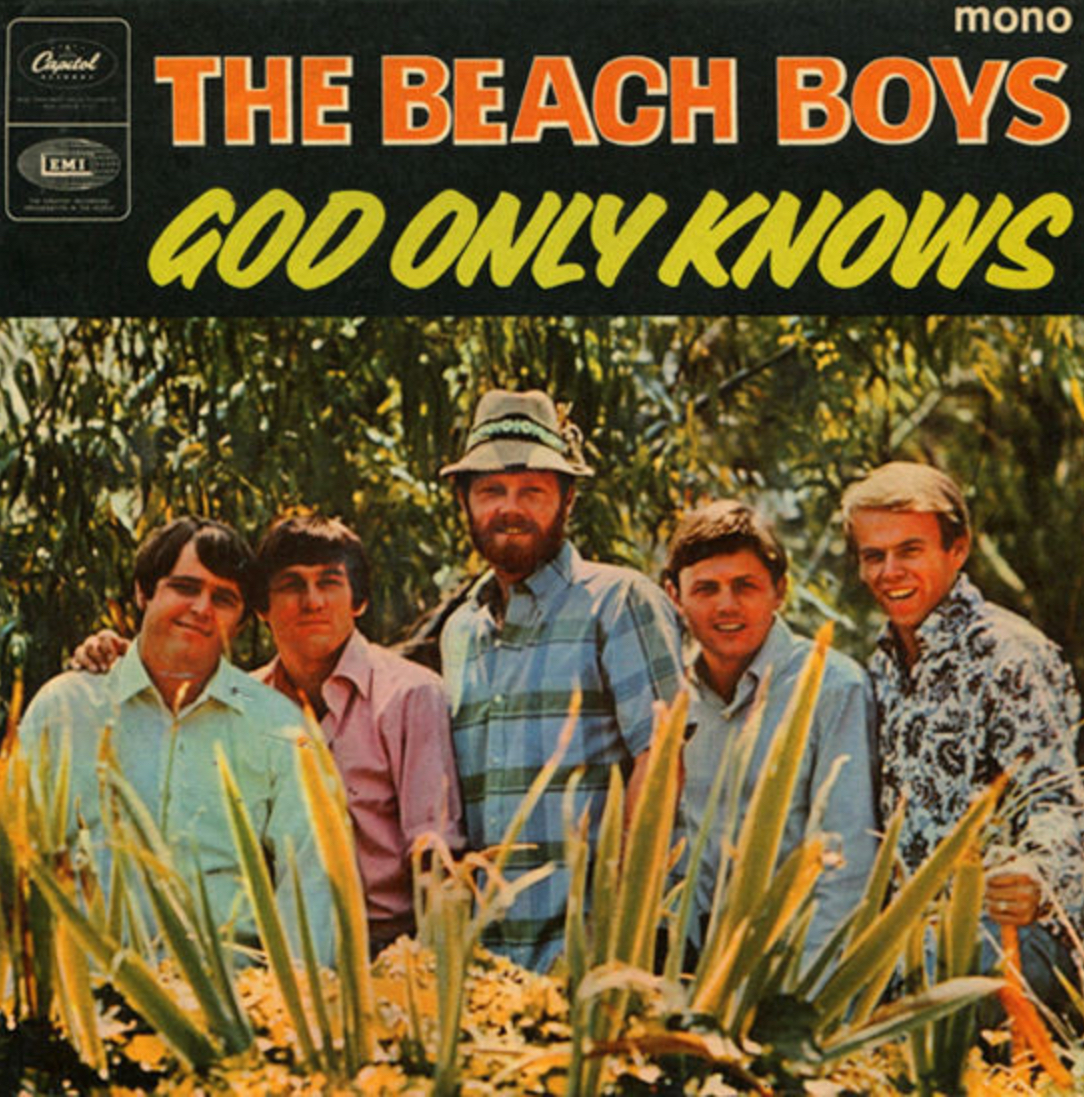
The Beach Boys, “God Only Knows” – David Bowie v Claudine Longet

Probably the first Beach Boys song that I have a clear memory of hearing is “Surfer Girl”, which turned up on “Flashback Fever”, a 1975 K-tel compilation of 1960s songs that also included such classics as Jan & Dean’s “Surf City”, Ronettes’ “Be My Baby” and Bee Gees “(The Lights Went Out in) Massachusetts”, which is also possibly the first Gibb brothers track that made a real dent on my attentions. Over the nearly 50 years that have followed, I have heard a lot of Beach Boys music and saw them live a few times, though I never really got on board with the idea that they were anything special. They had a lot of really good singles, but it wasn’t an output that could stand comparison to the Beatles or Stones, and anyone that said otherwise was delusional.

After starting my Pazz and Jop project, I finally began listening to their albums, and my appreciation blossomed. This included “Pet Sounds”, which, while brilliant, also has a bit too much of a “Look at me, Ma, look at me!” vibe. Sure, it’s cool that you can do all this interesting stuff, but should you? It has “Wouldn’t It Be Nice?” and “God Only Knows”, which are two of my three favourite Beach Boys songs (“All Summer Long” is the other), “Caroline, No” and “Sloop John B” are also classics, and there really isn’t any dead air. It’s just very busy.

God Only Knows” certainly isn’t free of Brian Wilson’s artistic fever dreams, but it’s the lyrics that have always pulled me in anyway. Though the opening line is “I may not always love you”, it’s framed in such a way – immediately followed by “But as long as there are stars above you / You never need to doubt it” – that you know instantly that it’s a lie, that the narrator is so besotted that there is no coming back from this. When he sings “God only knows what I’d be without you” it is both a declaration and an entreaty: please don’t let me find out. It is a song of undying love, and though he will carry on if she leaves, he will be a shell. It’s also a song that is deeply personal for me. I felt lost when I met my wife, not knowing what was coming next, and every time I hear this song – which was about 50 or 60 times today – I think of her and feel like she rescued me from an unknowable darkest timeline. So, of course, it’s not only my favourite Beach Boys song: it’s probably one of my 5 or 10 favourite songs period. Thus diving into cover versions was not without some risk, though I felt confident that my love of the original would preserve me in the face of whatever fuckery people got up to in the name of artistic expression.

Sometimes, finding two distinctive and listenable cover versions can be a struggle, but when it comes to “God Only Knows”, there are riches beyond the dreams of avarice. Not that all are created equally. Too many versions – Captain & Tennille (the Captain should have known better given his history with the Beach Boys), Neil Diamond, Michael Buble, Bryan Adams, Holly Cole, Joss Stone – slow it down and by doing so suck all the life out of the song. Yes, it’s a love song, but it’s celebratory, not the mourn-fest that these artists seem to think it is. Similarly, John Legend and Cynthia Erivo have lovely voices, of course, especially hers, but the orchestration is a complete slog. Other versions miss for different reasons: Andy Williams’ mannered and melodramatic singing ruins some lovely piano; Glen Campbell’s is pure cheese (though the opening appears to have been ripped off in 1978’s Superman movie tie-in “Can You Read My Mind”); Joey Hetherton is too bombastic; and Edith Whiskers is painful to listen to (though at least it’s sort of intentional). The backing track on Olivia Newton John’s version is annoying, and she seems to be trying to be sexy when that was definitely not the brand of pre-“Grease” Olivia. Brandi Carlile’s version is guitar forward, but it sounds like a guy in the corner at a party fiddling around with an instrument he’s still learning how to play. And, finally, Pentatonix are, well, Pentatonix, and you either like this overwrought a capella or you don’t, and I do not – it’s exhausting to listen to, all mannerisms and no subtlety, and no joy. Hard pass.

There are also a lot of whimsical versions, picking up on the baroque side of “Pet Sounds”: She & Him’s version is lighter than air, and just what you would expect from a manic pixie dream girl; Imaginary Future slow it down but still have some bounce, and it feels like the husband and wife that make up the band are singing to each other; and Lilia Tracie gives it a sort of tinkly bossa nova take. There are also some versions that don’t try to reinvent the song but just do a stellar job of showing their respect and love for it: Dale Earnhardt Jr. Jr., Avenged Sevenfold (which starts out quietly, and sort of low energy, like they aren’t really sure why they’re even playing this particular song, until the tempo picks up and they rock out the rest of the way), Jars of Clay (as wholesome as you would expect from a Christian band, but unexpectedly one of the more purely enjoyable listens), and Dr. Teeth and the Electric Mayhem, which is faithful, but with The Muppets, which has to be worth something. 

Finally, before we get to our contenders, three unique versions that stand out. The Nylons bring a joy to a capella that Pentatonix lacks, and while the song works well in this style, it does go on much longer than it should considering how repetitive it is. Although I love Elvis Costello, classical music is not my thing, so I rarely revisit his work with the Brodsky Quartet, and while their version of this, as Elvis says, old California folk song is lovely, I just cannot get into it. Finally, we have Daniel Johnston, whose singing voice is a taste I have not yet acquired, but it’s still charmingly minimalist, which is a real challenge with a Brian Wilson composition.

The first of these covers that I listened to was from David Bowie, who quickly established himself as the front runner. Bowie never waters things down: to call it epic may not do it justice. It’s like the centrepiece of a gothic musical: the Phantom crying over his Christine, a tortured soul howling into the darkness. He stretches the song out, slows it down, accentuates the pain and fear at its heart. Swelling strings, heartbeat drums, a gloom-inflected vocal that rises to despair. But, like the Phantom, a dark lord obsessing over an unreachable desire, there is certainly an air of creepiness, which Bowie also excels at. There is something of the stalker to its presentation, like a guy watching someone through slightly parted (stage) curtains.

So, who is he watching? Well, how about Andy Williams’ ex, Claudine Longet. Full disclosure: I did not know she was a “singer”, and the quotes are entirely in reference to this recording. What I knew about Longet came down to two men: Williams and Spider Sabich, the boyfriend who she may have murdered but escaped justice thanks to some dreadful police work. And while this is really talking musically instead of singing, it has the kind of breathless sexiness that never fails to charm (well, men, at least). Maybe it’s the accent, like a druggy “Zou Bisou Bisou”. The baroque feel of the original is retained, though subtly: you certainly would not have heard this playing in the court of Louis XV while Rousseau stood by waiting for his monarch’s response. The only problem is that you never really believe what she’s saying: you’d be fine without him, Claudine, but he’d be a mess. But the whole thing somehow works, drifting on a cloud of Gallic grace and charm.

The Winner: David Bowie

This was never a fair battle. While Longet’s version is a lovely distraction, Bowie’s has gravitas, and is a more worthy descendant of the original. If both songs were encountered without foreknowledge, I think it would take you longer to recognize the Bowie track as a cover, and that matters to me. But both are honourable, neither tied to the past nor neglectful of it, original without being destructive. 

The end of Brian Wilson’s time as a creative force seems to be close based on recent reports that he is suffering from dementia and being placed in a conservatorship. He has been part of that decision making process, so more music may yet come, but those days are certainly numbered. He has given the world a body of work that is breathtaking in both volume and quality, especially in view of the many interruptions to his career from challenges with his mental health. And his California folk songs will continue to brighten many a day in gloomier climes.

Classic Songs of My Youth Revisited #55

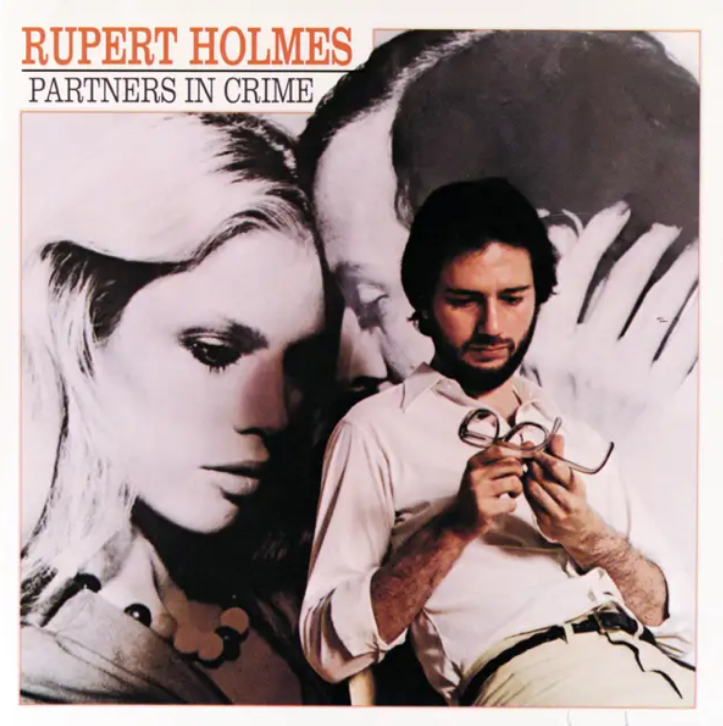
Rupert Holmes – Escape (The Pina Colada Song)

I don’t have a personal story about “Escape (The Pina Colada Song)”. I just want to talk about how completely bonkers this song is.

Not that writing bonkers songs was new to Rupert Holmes: in 1971, he made the Top 20 (and the Top 10 in Canada, because we are more comfortable with weirdness than our American cousins) with a song about cannibalism. After reaching the Top 40 for the first time in 1969 as part of The Street People with the very catchy “Jennifer Tomkins”, Holmes moved on to a band called The Buoys, for which he wrote the aforementioned song, called “Timothy”. The tale of three men (or two men and a duck, according to one sketchy theory) trapped in a mine, we aren’t told exactly how Timothy became an entree. (Peking duck, anyone?) We hear that Joe “would sell his soul / For just a piece of meat” and that there is only enough water for two. When Joe and the narrator are finally rescued, the narrator notes that his “stomach was full as it could be”, and poor Timothy was never found. The song was banned by some radio stations, of course, and it didn’t matter, because the popular will wanted to hear it on their airwaves.

It would be eight years before the public at large paid much attention to another Holmes song, though he kept busy in the interim, writing and producing for others (including Barbra Streisand) and releasing four barely noticed albums under his own name. Then came September 1979 and the release of “Escape”, which became the final song of the decade.

You know the broad strokes of the story: the narrator is bored in his relationship, goes looking for some side action in the personal ads, and discovers his partner (Wife? Girlfriend? He never really defines the nature of their connection.) has the same plan. In fact, she had the idea first: the personal ad that he answers was placed by her. Hilarity ensues. It could be the plot of a particularly weak episode of “Three’s Company”: You just need to work in a character misunderstanding a conversation on the other side of a closed door.

I trust my memory that when the song first came out, people for the most part thought it was adorable. (Later, when it was everywhere, it became annoying, but that’s true of many hit songs eventually.) How sweet: they don’t realize that they’re perfect for each other. 

But hold on. Both of them were ready to cheat on the other. (Holmes has said the narrator is supposed to be the bad guy in this story, since at least the woman is trying to do something. Yeah, “something”.) How do you come back from that? “Oh, hi, honey. Fancy meeting you here at the place of my planned infidelity.” And they both immediately admit what they’re up to. I know that neither has any reason to be upset with the other at this point – they’re both cheaters – but people aren’t always rational. Did either consider the possibility of pretending it was coincidental that they both went to O’Malley’s at the same date and time? Of not owning up to what was going on, thus leaving the other wondering if this boring old ball and chain was screwing up their chance at finding true love with an exciting new partner? “How do you know O’Malley’s?” “Oh, I just saw it mentioned in the newspaper and thought it would be worth checking out.” We’re talking 3D chess level mindfuckery.

Anyway, that’s not what happens. Over a gussied up tropical beat (the whole album that it came from, “Partners in Crime”, is classic late 1970s AOR, with elements of light disco, blue-eyed soul and piano bar), they laugh at how little they know each other, and – I guess – start down a path of rediscovery of what drew them together in the first place. (Let’s assume that both can set aside the sour truth that neither can be trusted.) Or – hear me out – nothing changes. Oh, they try. But he finds piña coladas too sweet and they give him monstrous hangovers, so he goes back to champagne. They both catch pneumonia after being caught in the rain, and neither cares much for the scratchy feel of sand against their genitalia when they make love “in the dunes on the cape”. Eventually, they understand that what was wrong with their relationship wasn’t how they spent their time together, it was who they were spending that time with. And they part over one last drink at O’Malley’s, which they very civilly agree is “his place” going forward since he discovered it.

Though this was the bigger hit, my favourite song from “Partners in Crime” was the second single, “Him”, which also made the Top 10. This is another song about infidelity, and I love how the narrator learns he’s being cheated on: a package of cigarettes that aren’t his lover’s brand. It’s a sweetly melancholy song about being part of a triangle and wanting no part of it, even if the cost is losing the one you love. 

Holmes hasn’t charted a song as a recording artist since 1982, but he’s never stopped working. He’s released more albums, wrote hits for other folks, created a television show and wrote its music, and wrote a novel, but mostly he’s worked in musical theatre, even winning a pair of Tony Awards in 1986. “Escape” is a bit inescapable – Holmes figures, likely correctly, that it will be the lead line in his obituary no matter what else he might do in life – and it had a nice nostalgia boost in 2014 from the first “Guardians of the Galaxy” movie. My guess is that there are still an awful lot of people who love hearing this song. I recognized how ridiculous it was a long time ago, but when that opening drum kicks in, I know I’m in for four minutes worth of comfort food. Just like Timothy was for his friends.

Classic Songs of My Youth Revisited #54

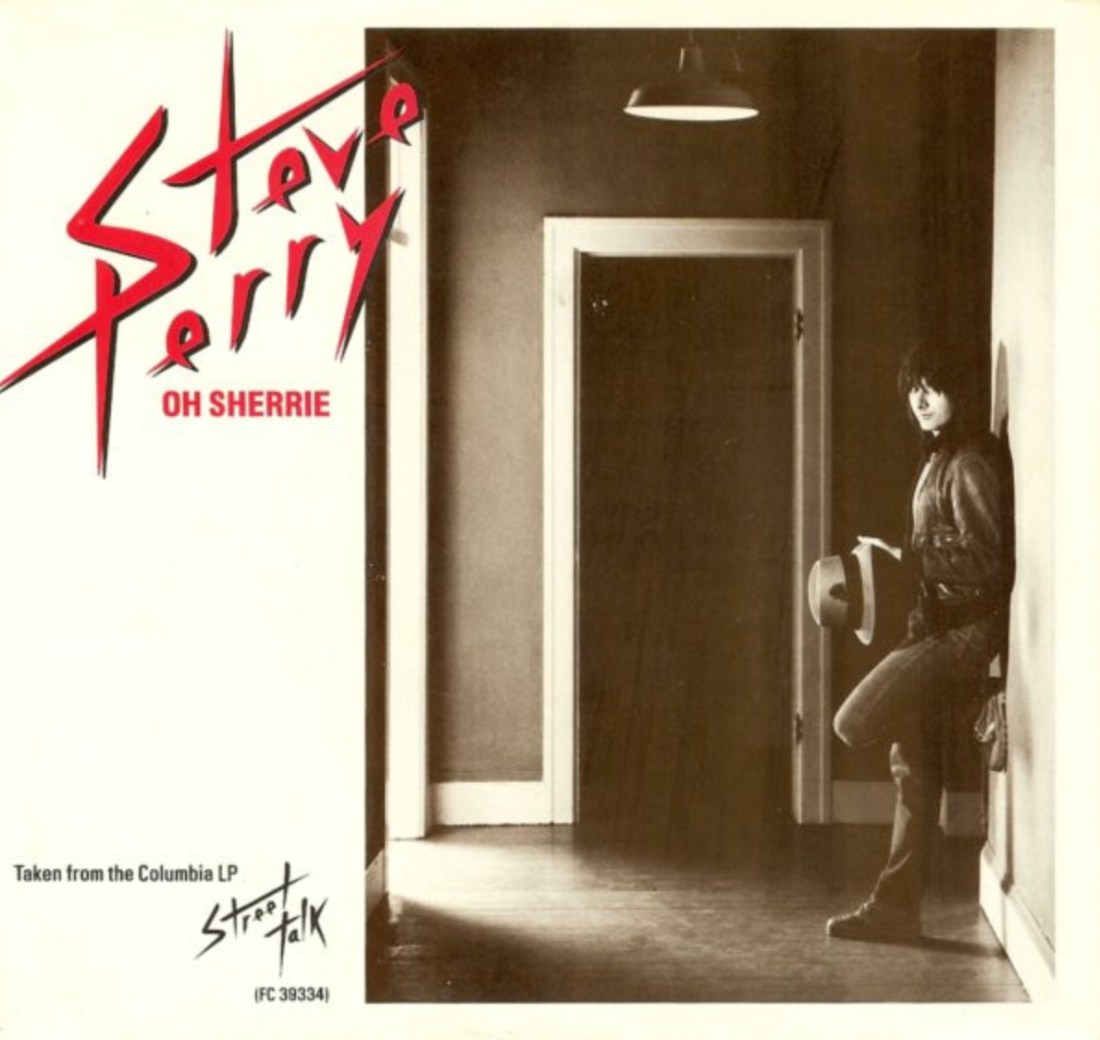
Steve Perry – Oh Sherrie

Starting in June 1979, when the ridiculously titled “Lovin’, Touchin’, Squeezin’” (a perfect stripper song musically, though lyrically problematic if a patron tried to test that invitation) began its climb up the charts, to the late spring/early summer  of 1987, when “Why Can’t This Night Go On Forever” sputtered to its peak at #60, there were few voices that we heard coming out of our radios more often than that of Journey frontman Steve Perry. 

Despite owning two of their albums thanks to Columbia House, I was never much of a Journey fan. They certainly sounded pleasant enough, a sort of mushy guitar-forward AOR. They were making power ballads before those were really a thing: I slow danced with a succession of failed hoped-for romantic partners to hits like “Open Arms” (a childhood friend told me she lost her virginity to this song, so at least it worked out for someone) and “Faithfully” (which, listening to it now for the first time in years, is quite a lovely tune – it gave me chills). And their rockers, like “Any Way You Want It” and “Don’t Stop Believin’” (which remains a damned good song despite becoming a pop culture cliche), were made for being blasted from a car stereo by restless teens on the make on a warm summer night.

I had stopped paying attention to the band before its run came to an end, so while I have a hazy familiarity with their 1986 hit “Be Good to Yourself”, the last of their singles that I clearly remember hearing in real time is late 1983’s “Send Her My Love”. It was at that point that Perry decided he needed to spread his wings and make a solo record. Working primarily with songwriter Randy Goodrum, in April 1984 he released “Street Talk”, which showed enough new tricks that you can get why Perry wanted to play in a different sandbox for a bit. But it was preceded a month earlier by the lead single “Oh Sherrie”, and that had to have caused some doubt: why go solo if you’re just going to make a record that sounds like the band you’re already in?

I have a fixation with what I like to call “good bad songs”. That is, songs that are, well, not bad, because I don’t really believe there is such a thing, but not good, in the sense that if you looked at them on sheet music, you would shrug or worse. “Oh Sherrie” is such a song. There isn’t a single quote-worthy lyric, and that it sounds so much like a Journey record shows that no boundaries were being broken with the music either. Yet, I loved this song from the first time I heard it, and still do almost 40 years later. What’s up with that?

The song opens (and eventually closes) with a synthetic baroque vibe, leading into Perry singing the first few lines a capella. It’s basically about a couple who keep hurting each other, but they have a love that always comes back stronger after those wounds heal. It’s a nice sentiment, the idea that bad times can preserve a love rather than destroy it. But I have listened to this song over and over and over while writing this, and I still really have no clear idea why I love it so. It has a nice backbeat that gets my foot tapping, but nothing else really stands out, and the guitar bits are nothing that anyone (other than Perry in the video) even once considered air guitar worthy. The thing I keep coming back to is the chorus: every time my interest starts to lag, the chorus kicks in, and, almost against my will, I find myself singing along – “Oh Sherrie, our love / holds on, holds on” – making rockstar faces (you know the ones) at this affirmation of commitment. I’ve always been a cheap romantic, and music that pushes those buttons will usually have its way with me. (I just did a test on this point, and, yes, “My Heart Will Go On” still guts me.)

It’s hard to separate the song from its ridiculous music video. The ridiculousness is initially intentional, with the opening two minutes a prick to the bubble of the video excesses of the era, with hip British directors, often from the world of commercials – John Self, the loathsome hedonist at the centre of Martin Amis’ 1984 novel “Money”, is maybe the worst case scenario of the brand – turning simple pop songs into treatises on contemporary society and culture. Perry wanders off to get his bearings amidst the set’s turmoil, and then we get other bits of ridiculousness – air guitar with a broom, an awkward walk down some stairs – mixed with neat bits like the shot of a young actress in Elizabethan garb puffing away on a cigarette. The stuff with Sherrie (a real person who plays herself in the video) is confusing: she’s initially happy to see him, then seems sheepish, then laughing, then sheepish again. (Hmm, maybe she’s the problem in this relationship – give poor Steve some clearer signals, lady.) In the end, the couple united, Perry blows off the video shoot, leading to off-camera recriminations and possibly litigation, while the director goes on to become an even bigger dick who makes every set a horror show until he finally returns to England and takes his rightful place in the House of Lords.

In a way, songs like “Oh Sherrie” are the most fun, because they don’t need context to be appreciated. I can’t remember the last time I encountered it in the wild, but if I heard it in a retail setting or a bar or even from a car driving by, I would be happier for the encounter, and would absolutely sing along for a moment before moving on to the next thing. Just a little blast of endorphins to give you a lift as you go about your day, like all the best pop music does. The “why” is never less important than in such moments.

Classic Songs of My Youth Revisited #53

Minglewood Band – Can’t You See

For music lovers of my generation living in Cape Breton, Nova Scotia, there may not have been a more important artist than Minglewood Band. While there were other bands in the area experiencing varying degrees of success – I remember Road (we owned the 45 of “Song for Noel”) and Sam Moon, among others, getting a fair bit of local radio play – Minglewood were the band that stood out, not only for their crisp country-tinged blues rock sound that played equally well in high school gyms, church halls and bars, but also for the fact that someone outside the Maritimes was paying attention: they earned a Juno nomination for most promising group in 1980.

But I have a slightly more personal attachment: every time I hear one of their songs, I think about the night that one of my closest friends stole my prom date.

Calvin Hood and Doug Maxwell were both a year ahead of me in school, as were several others in my circle of friends, and I really wanted to celebrate their prom with them. I was, however, as per my usual high school status, very single, and not exactly gifted with the skill set needed to end that. Calvin’s solution was to have me escort his sister Nadine, who was several years older than me and out of school already, but more importantly a super sweet girl who I was thrilled to have the chance to awkwardly (because awkwardly is how I rolled back then) hang out with. We would go on to become really close friends, and I spent as much time socializing with her as anyone over the next year or so before I headed off to university. But first we had to get through June 1981 and prom.

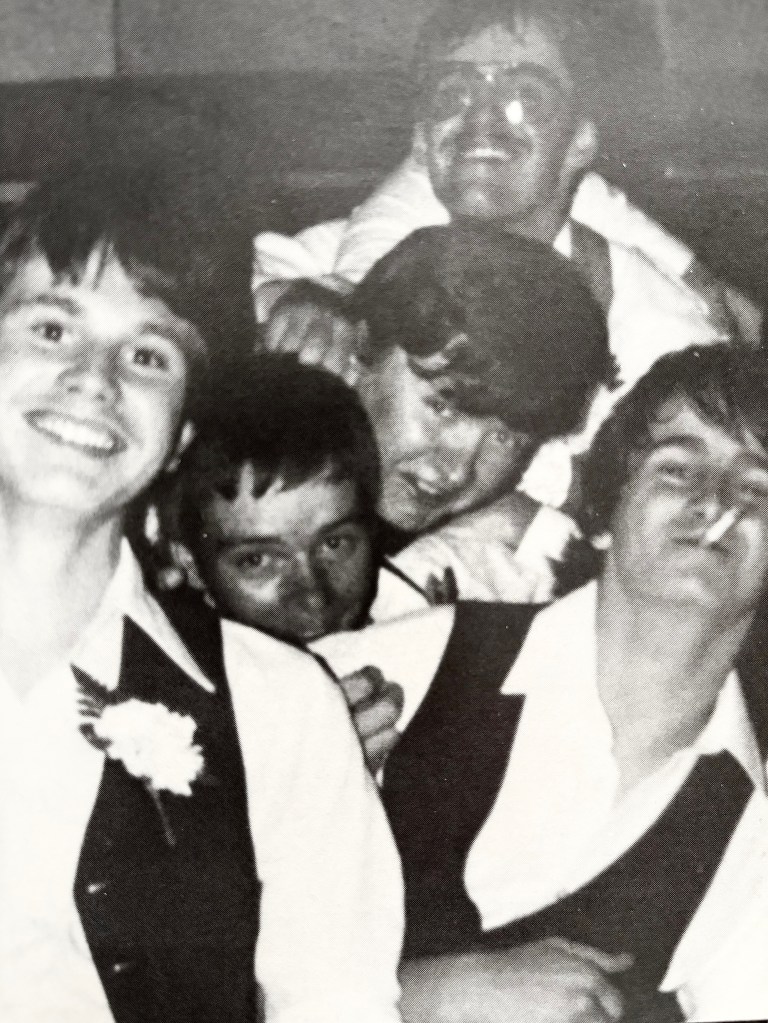
(This might be a good time to point out that I wasn’t entirely without swagger, as this photo taken that night will hopefully prove:

That’s me at the bottom right, with Doug at the top and Calvin directly below him, Robert Garnier on the left and Steve Horton in the middle fighting for breath.) (See! These people that I write about are real!)

And then there was Doug, who was also at prom with a friend who was not a potential romantic partner. And Doug fell hard for Nadine.

Doug knew there was nothing romantic going on between me and my date (as I recall, Steve was the only one in our crowd who was at prom with his actual girlfriend), but he was ever a gentleman and a righteous dude. Prom ended, and we retired to a small gathering at our pal Darrell Clarke’s house, where we ate lobster that I had procured earlier that day, impressing my friends by attacking the little creatures with such gusto that crustacean juice was splashing everyone at the table. We also became progressively drunker, and at some point Doug and I ended up alone when I found him waiting in the hallway as I exited the upper floor washroom. (Yes, it was a setup.) Leaning close in like conspiratorial stupid boys will do in such cases, he told me he had a crush on my date. This wasn’t out of character for Doug: of all my friends of that era, he was probably the most heart-on-his-sleeve type. I affirmed his belief that I was not a barrier to him acting on those feelings, and we parted.

Having been third-wheeled by my pal, I ended up at the stereo, where Minglewood Band’s self-titled 1979 album was playing. And for the rest of the night bleeding into sunrise, I did three things. I would travel to the fridge for another drink. I would flip the album over to the other side. And I would lie on the floor drinking beer and listening to Minglewood Band.

The truth was, I had never been much of a fan. I hadn’t seen them live at that point (that came a few years later, and they were pretty awesome). I was a committed top 40 kid in an era when – and I am surprised now to be reminded of this – Styx and REO Speedwagon spent four painful months moving in and out of the top spot on the best selling albums chart. Minglewood did not play the kind of music I was listening to. But there is something about being 16, hammered out of your ever-loving mind and filled with the glow of having done a solid for a friend that can bind you to the music of that moment, and that was Minglewood, and especially “Can’t You See”.

What’s amazing about “Can’t You See” is that they turned it from a southern rock classic (I didn’t know until years later that it was a cover of a Marshall Tucker Band record) into a tune that is as Cape Breton as pogey, cod fishing and bagpipes. The key lies in the narrative that frontman Matt Minglewood reels out at the beginning: the tale of a small town boy in the big city whose life is falling apart but he just can’t bear the thought of heading back home a failure. Leaving and coming back no better off than you left – whether materially or personally – is the classic Cape Breton journey. Succeeding means staying away, whether it’s for weeks at a time, or years. When my children were relocating to Cape Breton after their mother and I split up, my Ontario friends said I shouldn’t let them go, that they needed to see me all the time. I wasn’t concerned. My father was a fisherman, and he’d be away weeks at a time in summer. Some friends had it worse (or better?), with fathers off in Ontario for month-long turns on the boats that worked the Great Lakes, or longer as they toiled in the oil fields of Alberta or the frozen north. Absent fathers is the Cape Breton way, and I had turned out fine, right?

It’s a gentle opening, subtly evoking the loneliness of the open country, then a mournful guitar kicks in. Matt starts talking at 51 seconds, and right away tells you that “this is definitely a song about loneliness”. In two minutes, before singing even one of Toy Caldwell’s words, he spins the classic East Coaster’s tale of success and failure in the big city, culminating in the dread of “that long anxious walk down that short corridor” that soon leads to him waiting for a train to God only knows where at 4:00 a.m., wanting home but feeling like he can’t go back there, not now, not like this. When he starts to sing, all the pain and anguish of lost love and the migrant’s feeling of dislocation comes through, of feeling that no one would care if you just disappeared. There’s tinkly piano, tear-jerker harmonica and keyboard, and over it all is Matt, leaving every emotion, every bit of himself, in the grooves. The final minute is a tour de force of duelling instruments, conveying the confusion in the young man’s soul. And it ends where it began – with the small town boy going back home. A song of the south was never more poignant than when in the hands of a bunch of Cape Bretoners. 

As for other higher profile cover versions, The Charlie Daniels Band do a good job, but without quite the same depth as Minglewood, and my second favourite version might be from Black Stone Cherry, who dispense with the sentimentality and turn it into a howling rallying cry for a beaten down man. Hank Williams Jr.’s version is too loose, Waylon Jennings’ too mannered, Gary Stewart’s an abomination (this song is not a romp!). Many versions are too up-tempo, as if not trusting the pathos at the song’s heart. Minglewood Band didn’t miss that, and if they skirt the line of becoming maudlin, they don’t cross it. Maybe I only feel that way because the song is personal to me, to my experience, but what’s the point of making and enjoying art if that doesn’t happen?

Doug and Nadine dated for a few years, but their destinies lay elsewhere. I eventually reconnected with both for a time over Facebook, but those kinds of relationships aren’t real and can’t last. Doug is gone now, and it seems he remained a stand-up guy to the end, which would surprise no one who ever met him. I’ve been listening to “Can’t You See” on repeat and feeling sad over Doug, but in the end, the song is about a triumph, about having a home to return to even when you are at your lowest. If you’re from Cape Breton (or anywhere that you call home, really), you understand what that means. And if you’re not, you should go there anyway. As my wife could tell you, you’ll be warmly welcomed by people like Doug: decent, honourable and a good hang – even when they’re stealing your date.

Classic Songs of My Youth Revisited #52

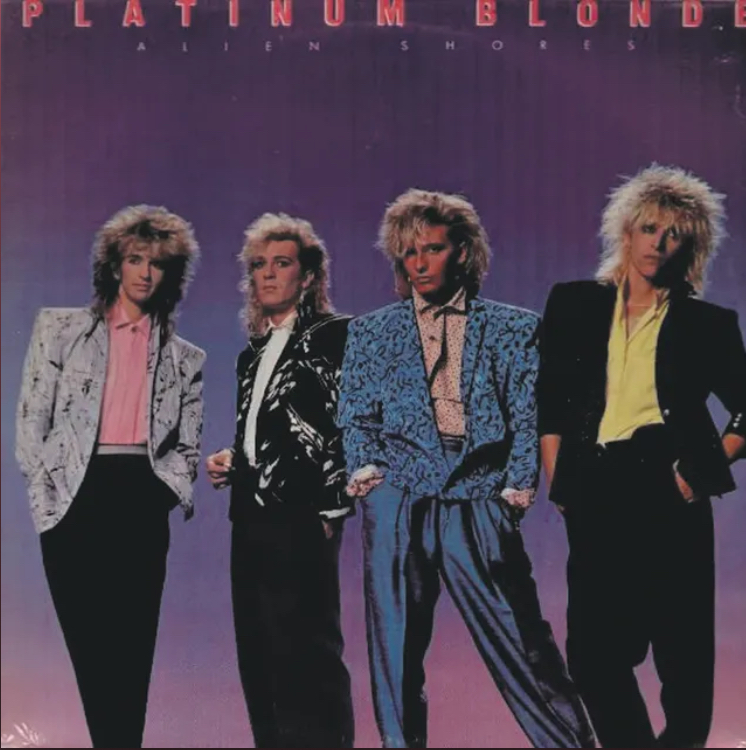
Platinum Blonde – Crying Over You

As I was growing up in the 1970s and early 1980s, internationally successful Canadian pop and rock acts were rare. Artists like Neil Young and Joni Mitchell were superstars but their album-oriented music didn’t get a ton of play on our local radio station, and others like Anne Murray and Gordon Lightfoot had lots of hits but were, well, lame. The Guess Who was long gone, and Bachman-Turner Overdrive peaked before I paid them much attention. There were outlier tunes like Nike Gilder’s “Hot Child in the City” and Dan Hill’s “Sometimes When We Touch”, and soon Bryan Adams would come along to spend the better part of two decades interchangeably yelling or growling at us.

But we had lots of bands with hit after hit within our borders. Because of government licensing requirements, Canadian radio stations had to play 30% domestic recordings, under a formula that eventually reached its nadir when it decided Adams – or at least his music – wasn’t Canuck enough to fit into that 30%. For better and often worse, these rules gave a lot of homegrown acts an opportunity, and that radio play helped them develop a following. This was joined in 1984 by the MuchMusic video channel, giving us a look to go with the sound. And possibly no domestic band took better advantage of the power that video had to offer than Platinum Blonde.

As the band name would suggest, yes, they were sort of ridiculous, and I also owned their first three albums, played them a lot, and make no apologies for that. Their biggest hit by a fair margin was “Crying Over You.”, and the video is a glorious mess of big (probably dyed?) hair and slick New Romantic styling, all glossy surfaces and flashy colours. (I wonder, too, if they ran out of money during the shoot: an awful lot of shots seem recycled. Lead singer Mark Holmes would later say that drug use played a part in the band’s demise. Just sayin’.) The four band members are styled so similarly and the video shot so allusively that it took my second reviewing before I remembered – I had to have known this in 1984/85, right? – that the point of the video is that the female subject is dating ALL of them at once, and only her inscrutable manservant is wise to her shenanigans. The premise seems to be a dudes only powwow where they share how they each were betrayed – and, umm, how they betrayed each other – ending with begrudging acceptance that they are done with her, though her wink just before the closing shot suggests that this game is far from over.

But this was of course a song before it was a video, and it happens to be my favourite of their tunes. Their early sound was post-new wave nu glam, and when I was introduced to The Cure a few years later, I recognized echoes of Platinum Blonde, so I was thrilled to hear Cure leader Robert Smith cover the band’s “Not in Love” with Crystal Castles. (Images in Vogue is another great Canadian band that fits with that group, and their “Call it Love” is overdue for the Smith treatment.) As they evolved, the guitars became more forward, and they also started pulling in shades of funk, which they would dive into headfirst on their next album and its eponymous lead single “Contact” (the other leading contender for my fave PB track). “Crying Over You” sort of catches them in the middle of that evolution: there’s a solid bass line from Kenny MacLean on the chorus (based on how into it he seems in the video, MacLean really liked this song) and nice shredding on the guitar solo (from guest player Alex Lifeson of Rush), but the main sound is a sort of jittery funk-lite groove meets pout rock on the verses. Together, they make not what I would call a dance tune, but definitely something with a hip swinging vibe (and not the borderline sashay seen in the reverse shot of Holmes that flashes across the screen at the 20-second mark of the video – I can’t be the only one who thought of Pete Burns of Dead or Alive). I don’t remember it getting club play back then, but it would have been a solid early evening entry to get the crowd warmed up.

“Crying Over You” hit in Canada and the album it came from, “Alien Shores”, got to #3, both marking the band’s commercial peak. They broke up a few years later but remained pals, with the original threesome of Holmes, guitarist Sergio Galli and drummer Chris Steffler reuniting to honour MacLean’s wish after his ridiculously early death. They haven’t released a record in over a decade but are still around (and newly inducted into Canada’s Walk of Fame), minus Steffler, who had to retire for the very rockstar reason of having developed tinnitus. Their music, which was very much in the style of the moment, holds up better than I expected, just like some of the other bands of that era, like Duran Duran (to which they were often compared), that were dismissed by many as bubblegum but were in reality masterful sugar confections. More bonbons than bubblegum, let’s say. But there’s nothing wrong with bubblegum either.

Classic [Band] of My Youth Revisited: April Wine

As much as I love music, I haven’t been to a whole lot of concerts in my life. There are a lot of reasons for this, which have varied depending on my current circumstances: financial limitations, parental responsibilities, time constraints, divided interests (a night out is six hours not spent reading, writing, watching a movie or television show, or listening to other music). I also am not a fan of crowds, and have had instances where I suffered panic attacks, or practically shut down from social anxiety. Those occurred without any warning (and on one occasion with the latter was not even in a large group) so they haven’t exactly led me into avoidant behaviours, but they are another reason why I lean towards a peaceful night at home with my favourite person over a jaunt to hear some live music.

Growing up in Cape Breton, missing out on live music was not a real concern since very few major acts came our way. I know I saw Dr. Hook in 1980 – I can date this more or less exactly because the opening act was Graham Shaw and the Sincere Serenaders, riding high on their #15 Canadian hit “Can I Come Near” – and since Dr. Hook were still churning out top 10 American hits (“Sexy Eyes” reached #5 that year), I cannot even imagine how they ended up playing the Sydney Forum. What we got in their place were a lot of Canadian bands, and probably none played our local arenas more frequently than April Wine.

With the recent passing of the band’s frontman Myles Goodwyn, lots of friends and acquaintances are posting stories on social media about meeting him and how he came across as a solid, friendly guy. I never had that pleasure, but his band’s music was still a big part of my growing up. April Wine were not just Canadian, they were Maritimers, though I don’t think I knew that back then. They were also prolific, releasing 10 albums between 1971 and 1982, with at least one song in the Canadian top 40 each of those years. Although their biggest success was at home, the band also made an impression south of the border, with 1981’s “The Nature of the Beast” selling over a million copies and reaching #26 on the Billboard albums chart. They also landed three top 40 singles there over the years, with the biggest of those being that record’s “Just Between You and Me”. 

Though April Wine released their share of rockers, it was on the ballads that they really excelled. I think you would be hard pressed to find another band of that era with a better collection of power ballads, and junior high school dance floors were filled with boys and girls experiencing their first serious hormonal stirrings to Goodwyn’s words and voice. 1974’s “I Wouldn’t Want to Lose Your Love” was a favourite of the disc jockey at my earliest Friday night dances at the Catholic Church hall in Florence circa 1975/76, and I am confident I felt my chest crack open and watched my heart tumble onto the dirty floor at least once while Myles sang “I couldn’t stand the pain / You know it’d drive me insane”, and it absolutely did just that.

I don’t have a particular favourite of their tunes, but there are a good dozen or more that pull me back to that time. Listening to “The April Wine Collection”, I see titles that make me think, “I should know this”, and then I play something like “The Whole World’s Goin’ Crazy” and I’m 12 or 14 or 17 years old again and listening to CJCB in my bedroom. April Wine never won a competitive Juno Award (Graham Shaw, on the other hand, does have one), they don’t seem to show up on critical appraisals of the top acts of their era, and even lists by Canadians of the best songs that have come out of our country mostly neglect them. This, strangely, seems right, because what made them good can’t really be summed up in one song. What they had instead was a body of work that was consistently catchy and musically diverse. From the ‘50s-esque singalong “You Won’t Dance With Me” (it stuns me that no retro crooner has ever covered this) to the electrifying train-crossing bells of “Oowatanite” (written and sung by Goodwyn’s band mate Jim Clench), the sly percolating funk of “Say Hello” and the jittery ass kicking fuzz of “I Like to Rock”, they were not a band that could be easily boxed in.

There are covers from Canadian artists that probably grew up loving them: fellow east coasters Sloan and Melanie Doane lovingly served up live versions of “I Wouldn’t Want to Lose Your Love” (complete with hand claps) and “Oowatanite”, respectively, Sebastian Bach gives us a fired up “Rock n Roll Is a Vicious Game”, and Treble Charger did a grimy version of “Roller” for the “FUBAR” soundtrack. More fun is to check out the originals of some of the artists they covered, from Elton John to Muddy Waters to King Crimson. They serve all well, but nothing tops their reinvention of Hot Chocolate’s funk jam “Could’ve Been A Lady” (which is maybe better than 1971’s original, but can’t quite match the British band’s much funkier 1976 reimagining of their tune).

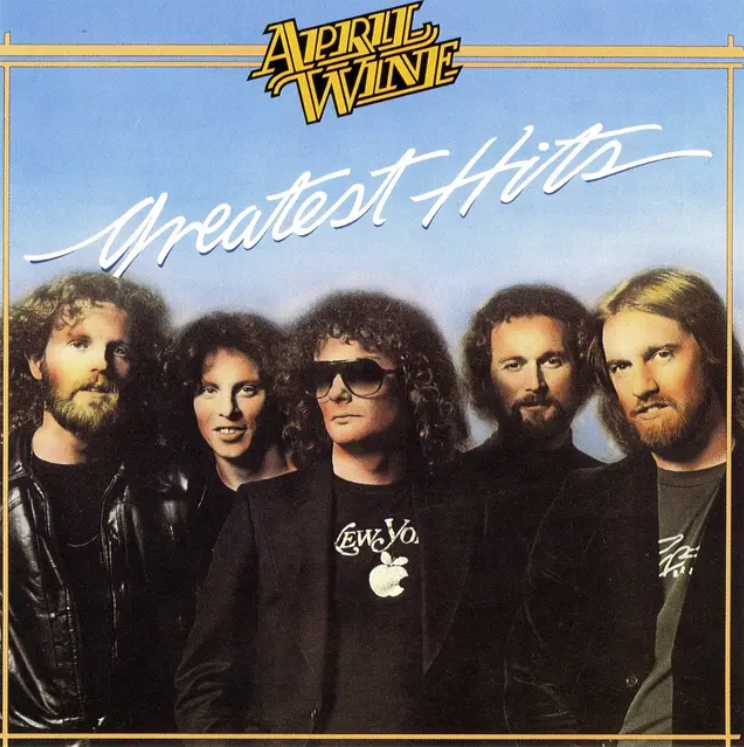
In August 2022, I played their greatest hits record. It was probably the first time I had listened to April Wine in close to 40 years, and I wrote my friend Robert Barrie to say I thought it held up better than most of their domestic contemporaries. He told me in response that Goodwyn had once said he always made sure there were hits on the albums so they would get airplay and people would know the band and come out to see them play when they came to town. Goodwyn understood that a band needed to connect with its audience, and the best way to do that is to give them songs to love, and then they’ll love you back. The power of a song that you love – which I relive in this space again and again – is that it never loses that hold over you, connecting you to another time and the person you were then and the people you shared those days with. I don’t have that pull from April Wine to the same degree as I do with many other artists and songs, but I know a lot of people who probably do. For them, and the people they once were and now are, I pour one out for Myles Goodwyn, a CanCon legend, and a man who knew how to make music that touched your soul.

Classic Songs of My Youth Revisited #51

Murray Head – One Night in Bangkok

What do you do after selling a few hundred million records? Well, if you’re the guys in ABBA, you write a musical about chess. (Sure you do.) Actually, they did.

So, a confession here: I have never liked ABBA. By that I mean that I don’t think I had ever, with intention, played one of their songs. I would let them play on when they came on the radio, or as part of a compilation, or on a playlist. I have probably even spontaneously sung along, and I’m certain I danced to some of them. But I had never once said to myself, or to anyone else, “You know what would sound great right now? How about a little ‘Knowing Me, Knowing You’?” They never created music that appealed to me. It’s okay: they did just fine without my support.

After the band split up in 1982, the two female members, Agnatha Fältskog and Anni-Frid Synni Lyngstad (under the name Frida), had minor pop hits – “Can’t Shake Loose” and “I Know There’s Something Going On”, respectively – that I sort of liked, or at least wasn’t super irritated by, possibly because they didn’t really sound like ABBA. Meanwhile, the male band members, Benny Andersson and Björn Ulvaeus, moved on to, among other things, “Chess”, on which they teamed up with Tim Rice, who’d made his name with Andrew Lloyd Webber on such musicals as “Jesus Christ Superstar”, “Evita” and, my favourite from the duo (thanks to my amazing junior high school music teacher, Miss Beaupre), “Joseph and the Amazing Technicolor Dreamcoat”. Before mounting an expensive stage production, as both a fundraising device and sort of proof of concept, the decision was made to release an album of the songs that would likely be in the show. And to sing one of the lead roles, the call went out to Murray Head.

This was not new to Head: he’d been part of a similar approach with “Jesus Christ Superstar”, on which he sang the part of Judas Iscariot. For “Chess”, he was cast as the Bobby Fischer-esque American grandmaster. Early in the second act, the former champion, who lost his world title in act one, takes in the nightlife of the next host city as a journalist. And he celebrates this in “One Night in Bangkok”.

I can’t really say Head sings “One Night in Bangkok”, nor do I want to equate it with talk singing, because what he is doing here is really talking musically. (Wikipedia calls it a rap, and whoever wrote that should have their editing privileges revoked.) It isn’t because Head couldn’t sing: just check out “Superstar” for solid evidence to the contrary. So this was an artistic choice, and it absolutely works, giving a sardonic creepiness to the performance. Rice delivers some great lines – I would give even money that I could sing the whole thing from start to finish, and that’s because zingers like “the queens we use would not excite you” are lodged in my brain. It’s a Thai pop culture journey, with nods to “The King and I”, Buddhism, martial arts and ladyboys. Over it all stands Head, commenting on the corrupt and disreputable setting for “the ultimate test of cerebral fitness”. All of this is to an upbeat tempo – this was a top ten dance hit – that has the synth sheen that was found on 95% (my non-authoritative and unverified guess) of the pop music released in that era. And the video is pretty slick, too: Head has the kind of cool that doesn’t look ridiculous in a white suit.

So, yes, I still love this song, and can’t see that changing anytime soon. But this brings me back to its co-writers and ABBA: why didn’t I care for them? Outside of the music, I was definitely irritated by the suggestion that they were even more successful commercially than my beloved Beatles. But I also never gave them a serious listen either.

So I checked out one of their albums, 1976’s “Arrival”, which is the only one in Acclaimed Music’s top 3000, at #852 (though four singles off the album are also ranked in the top 10,000 songs). A few of the unfamiliar tunes were slick and didn’t really distinguish themselves in any way. But there was much to like here. I caught myself bumping my hip to “Dancing Queen”, some sort of muscle memory from my barely pubescent earlier self let loose on a sweaty junior high school gym turned Friday night dance floor. And now that I’ve really listened to it, “Knowing Me, Knowing You” is pretty cutthroat when it comes to what happens at the end of a relationship, and damned heartbreaking. “Dum Dum Diddle” is silly fun, and “Money Money Money” shows that Andersson and Ulvaeus were writing stage-worthy songs long before “Chess”. The title track is an instrumental save for some aggressive humming, and it had me imagining a “Braveheart”-esque race across an open field to battle. And “Happy Hawaii” ends the record with a fun tune that wouldn’t have been completely out of place on a pre-“Pet Sounds” Beach Boys record (and also feels like a bit of counterpoint to First Class’ 1974 hit “Beach Baby”).

So, my final conclusion is that I should maybe listen to more ABBA. And maybe more Murray Head, too. (“Superstar” is pretty awesome.) The lesson I take away from this is that I need to keep an open mind. Now, if you’ll please excuse me, I think I need to go listen to “Knowing Me, Knowing You”.