That’s A Wrap . . . On 2023 (Sort Of)

It’s been a bit surprising to learn how important Spotify’s personalized year end wrap ups are to some listeners. Reddit – my current favourite social media hang spot – is filled with folks sharing their top 5 artists, total listening time, and other badges of their dedication to music generally and certain artists specifically. I feel like a slacker compared to some of them: my measly 89,300 minutes of listening can’t compete with people who are over 400,000, which can only be accomplished if (1) it is streaming while you sleep (which is a cheat, frankly) or (2) you have a serious need to see a doctor about your life-threatening insomnia. And the 909 minutes I spent on my act shows that I am a puny being unworthy of being called a fan when one listener showed proof that she spent over 290,000 minutes – that is, the equivalent of 201+ days – on Taylor Swift’s music alone. To my daughter Nicole: the gauntlet has been thrown down.

The real news to me personally was that, for all the effort I put into finding and listening to new music, not a lot of it makes its way into heavy rotation. Spotify has noticed that I do this, as lately it has been serving up more and more obscure acts for me to check out, like Wry (1,165 monthly listeners) and Scorpion Wolf Shark (6!). Still, the absence of these musical adventures makes sense: much of my listening is casual or in the company of my spouse, meaning I tend to favour things we both know and like. Exploration requires an element of focus that I just don’t have while puttering around the kitchen sous chef-ing or when doing the laundry. There are three tunes from Sobs released in 2022, a bunch of that year’s Oscar nominated tracks, my favourite cut from Lil Nas X’s last album, and that’s it for more recent releases.

Not news was that my favourite songs are dominated by music that I wrote about: my most listened to track was The Cars’ “Just What I Needed” (34 times, which seems like a total that could happen by accident), The Romantics’ “What I Like About You” came in at #3, and they were joined by other Classic Songs of My Youth Revisited alumni like Phil Collins, Rick Springfield and The Outfield. I have all of these songs on a single playlist, and wrote about them because I love them, so of course they get played a lot. (No, “Billy, Don’t Be A Hero” did not make the cut.)

There were a few surprises. I love “Close To Me” by The Cure but had no idea it was my fifth most played song of the year. I did not play Hall & Oates’ “You Make My Dreams (Come True)” even once with intent, yet there it is, snuggled in between Gazebo’s “I Like Chopin” and “Hey Ya!” from Outkast. I didn’t even know that The Flashing Lights existed until mid-August, but I have played them so much since that “Been Waiting” made the cut. Right ahead of them is my favourite surprise: “Ramblin’ Gamblin’ Man” a 1968 track from The Bob Seger System that I didn’t know before but Spotify correctly thought I might enjoy.

As for that 909-minute top act, it was Fountains of Wayne, and I totally believe that: their music is a form of really healthy comfort food for me. Elvis Costello is at #2 with the Attractions and at #4 on his own, and both of those track: he is one of the artists who my wife and I share an enjoyment of. The Rolling Stones are 3rd, and while it was a bit surprising, I did write about them a few times. But #5 is Bruce Springsteen, and other than “The River”, which somehow isn’t among my most played, I have a hard time recalling any time when I played one of his songs on purpose. But the numbers say I played him a lot, so I can’t really argue it.

From the comments on Reddit, I can’t tell if my experience is that unique. People are posting their top fives, and I have not seen a single one of my top 100 songs on any of these lists. Nobody on Reddit seems to have been listening to music from the 1950s, and my dominant era of the 1970s and 1980s is also not getting much love. I don’t really see anything whacky, like Sylvester’s “You Make Me Feel (Mighty Real)” in the middle of four Megadeth tracks. My favourite is probably the user who has three Tina Turner songs, the end credits theme to “Charlotte’s Web” (it doesn’t indicate which version) and a track from the video game Persona 4 Golden, followed by the guy who had one hard rock song (I can’t recall what it was) and four stand up comedy bits from Christopher Titus, who I will absolutely be checking out. Those are some distinctive choices.

I’m definitely getting my money’s worth out of Spotify: I’m in the top 2% of worldwide users. And while I feel a little guilty about artists getting shafted by the payment model, it’s not like they weren’t also getting screwed by every other iteration of the music industry since time immemorial. I listened to 5,149 artists this year, and that number would be much, much smaller if I had been required to pay for a record from each of them. Thanks to Spotify, I discovered artists that I love, like The LeeVees (nothing but songs about Hanukkah) and Nerf Herder, and was able to become reacquainted with acts like folk rocker James McMurtry (whose fantastic 1989 debut album “Too Long in the Wasteland” finally made it onto the service this past year) and The Bears. Wrapped doesn’t really show that: it’s the top slice of my listening, but doesn’t reflect who I truly am as a music fan, so it’s of limited utility to anyone who might want to try to figure out who I am based on my musical tastes. Except for the very top: Fountains of Wayne truly is my favourite artist, and “Just What I Needed” has been getting me fired up for 45 years now. The algorithm got those right at least.
Classic Songs of My Youth Revisited #50

Patrick Swayze – She’s Like the Wind

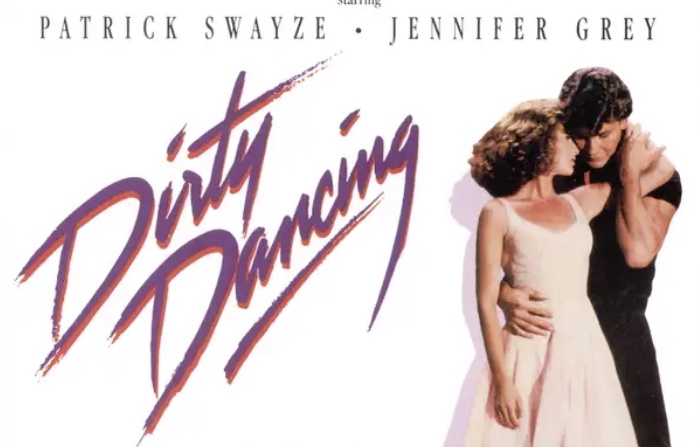
I’ve never seen “Dirty Dancing”. I have no plans to watch “Dirty Dancing” in the future. From what I know about “Dirty Dancing”, which is very little, but still far more than I should know for never having seen it, I am confident that my life is not less satisfying by its absence. I’m not judging those who love it: I just know there are a lot of things I would rather do with 100 minutes than spend them in the company of Baby, Johnny and the rest.

The music from the movie was a little more difficult to ignore, since it was all over the airwaves in 1987. There were three hit singles (four if you count the revival of Maurice Williams and the Zodiacs’ “Stay”), and not one of them sounds like it could have been in the air during the early 1960s when the film was set. It was obviously the right choice to get radio play and record sales, and I just as obviously have no idea how the songs were used in the film, but it just feels wrong. This isn’t anachronistically using rock music because it’s fun as in the awesome “A Knight’s Tale”: it is cynically rejecting the sounds of 1963 – which were, I must admit, pretty awful in a lot of cases – for a pure cash grab that would play well in 1987.

One of those hits – “She’s Like the Wind” – was sung by the film’s male lead, Patrick Swayze, who also co-wrote it. Though he was a beloved romantic hero in “Dirty Dancing” and “Ghost”, and a tough guy in “Point Break” and “Road House”, Swayze did some of his best work as an actor when he got weird. In “To Wong Foo, Thanks for Everything! Julie Newmar”, he was one of three drag queens (with John Leguizamo and (!) Wesley Snipes) stuck in a hick town for the weekend. Even better was his dark turn as a paedophile motivational speaker in the absolutely demented “Donnie Darko”. I don’t think I could bear to watch even five minutes of “Ghost” now, but would gladly rewatch those last two anytime. And let’s not forget his brilliant straight man work alongside Chris Farley as they both auditioned to become Chippendale’s dancers, while a less celebrated dancing moment comes when he gets very up close and personal with another male dancer at 4:24 of the video to Toto’s hit “Rosanna”.

What Swayze wasn’t, really, was a singer. As best I can tell, he only sang for the soundtracks of movies he starred in, which was probably for the best. (True fans lack any sort of objectivity about the artists they love, and this is no clearer than if you spend some time in the YouTube comments section of his tune “Raising Heaven (in Hell) Tonight” from “Road House”.) And yet, of the three hit songs from the movie, his was easily the one I liked best, and, yes, I owned the 45.

It’s a synth-heavy track – again, that lack of fealty to the sound of 1963 – with the same four notes repeated over and over, and frankly the whole thing could be synths and I doubt anyone would notice. Drums are an afterthought, the occasional rich bass notes are quickly forgotten, and while there are a few saxophone sections, they are blunt, not sensual. The lyrics are unbearably cheesy (“Can’t look in her eyes / She’s out of my league”) and clunky (can you be a “young old man”?), and the guitar, such as it is, is mostly a gummy mess, low in the mix. Swayze, so charismatic on the screen, offers none of that magnetism in his voice.

So, yes, I don’t think it’s a very good song. And yet, I still sort of like it, and that’s one of those weird alchemical things that happens with pop music, where the complete work is greater than the sum of its parts. There’s definitely nostalgia involved: we can easily convince ourselves that nothing beats the things we loved when we were younger, like your mom’s pot roast, even though we now know that the grey overcooked protein that she covered with a heavy handed amount of artery-clogging gravy is a culinary offence worthy of being banned from the kitchen. But it’s also good to be reminded that I was a lot more committed to my music back then. I might have been embarrassed by some of the things I loved – cough, Wham, cough – but I still went out, invested my limited income in those records, and played them. 23-year-old me loved “She’s Like the Wind” enough to choose it among all the possibilities to add to my curated record collection. It only took a toonie and a trip to the mall, but that is still worth celebrating in an era when finding a favourite song requires no more effort than a few clicks on your phone, and when there are millions of other readily accessible other songs competing to replace it in your heart.

Lesser (Known) Lights #6

The Flashing Lights – Sweet Release

I’ve been listening to a lot of defunct Halifax-connected bands of late, having learned that the east coast city was a bastion of awesome power pop bands in the 1990s. While it’s given me a lot of joy, I’m a bit melancholy about it, too. Every time I discover a great Canadian band that passed on without me ever knowing them, my irritation grows with radio programmers of, well, pretty much every era. I don’t know if radio failed The Flashing Lights – I was barely paying attention to it when the band’s two albums came out in 1999 and 2001 – but someone did. Wikipedia claims they had a hit on modern rock stations in 1999 with “Half the Time”, but it was a quiet hit for certain. What matters to me is that I missed them, and in the musical wasteland that was 1999 – I mean, just read this list and weep – their music would have been much appreciated.

The songs have that easy grace that the best pop music has, a confidence in their quality as songs and in their execution as recording artists. There is certainly a commonality with fellow Haligonoans like Sloan, The SuperFriendz, Thrush Hermit and Cool Blue Halo, but name any great power pop act of the era – Teenage Fanclub, Matthew Sweet, Material Issue – and the echoes are there. They are a lot noisier than many power pop artists, and it’s that rock edge that distinguishes them. My favourite tune here is the album’s opener “Been Waiting”, with the rock star boastful chorus leading into directions to their gig that ends with a “left at the Burger King / Look for a murder scene”. Other great tracks include every bloody song on the album, and I refuse to pick another standout because it would only diminish the songs I don’t pick, and they deserve better than that. Their first album was also great, though a little rougher, and “Highschool” is my fave there. (It’s cool that the three guitarists let a guy their dads’ age play drums.) Just a fantastic band, and I only learned of their existence – and some of the bands they have led me to – because Spotify thought “Been Waiting” was the right song to follow the end of Josh Fix’s delightfully eccentric album “Free At Last”. And they were absolutely right, but I don’t even remember how I came to listen to the Fix record. Random discoveries can be the best.

Pazz and Jop 1974 #12

Gram Parsons – Grievous Angel

The mythology of the singer-songwriter leans heavily on the second part, singing on its own somehow being perceived as a much less considerable artistic accomplishment. Squaring this with Gram Parsons is tricky because roughly half the songs he recorded – counting his first four albums as part of three different bands (it seems Gram did not always play well with others) – were written by someone else. (Showing the delusion of music writers when discussing their heroes, I read one article that redefined “prolific” by applying it to his output.) The peak – or low – of this comes here on “Grievous Angel”, where he covers his own “Hickory Wind” from the one record he made with The Byrds. One wonders what mix of admiration for others and inability to generate enough of his own material played into this.

There is, of course, no way of knowing what shape – if any – this record might have taken had Parsons lived to see it through to completion, let alone where the rest of his career might have gone. Certainly, his widow made some changes (allegedly due to jealousy over the large part played by Emmylou Harris in her husband’s artistic life), but even without that, there will always be the question of whether Parsons might have made different choices if he had seen it through to completion rather than keeping busy killing himself piecemeal. What we have instead is the idea of a Parsons record, rather than a Parsons record itself. 

Yet, such quibbles aside, what remains is a firecracker of an album, and one that somehow and contrarily feels more complete than his previous record, “GP”. The opener, “Return of the Grievous Angel”, is a mighty twang of a road song from a singer who’s had a few too many cigarettes and one too many beers. A lovely mellow piano stands out in this tale of a weary traveller who knows where he wants to go: “straight back home to you”. The mournful “Hickory Wind” is thematically similar, only this time the longing is for the home left behind.

There is a lot of loss on this record. “Hearts on Fire” has subtle piano and weepy steel guitar with nifty little picking underneath in a tale that mixes anger and a desire to be free with the enduring frozen-in-time love of the betrayed. The delicate rhythms of “Brass Buttons” are a sort of sense memory as the narrator recounts the details that distinguished a lost love to him. The ambiguous tale in “$1000 Wedding” – is the bride-to-be deceased, or did she merely abandon the groom-to-be at the altar? – is poignant either way, with sombre piano and Parsons’ most impassioned vocal.

When the tempo picks up, Parsons’ rock side doesn’t let him down. Honky tonk piano and southern rock guitar pace the rollicking tale of a girl who can get you to do things you otherwise wouldn’t on “I Can’t Dance”. The faux live version (the cheers and other audience sounds were created in the studio) of “Cash on the Barrelhead” races along, and “Ooh Las Vegas”, the only track on which Harris is formally co-credited, feels like a song that Elvis Presley should have covered.

The album ends with “In My Hour of Darkness”, a spiritual tale of friends who are no longer with us. The second verse could be about Parsons himself, and whether he was foretelling his early end or merely mocking how others perceived him is unknowable. Spiritual doesn’t mean religious, and while some have suggested that he was turning to God “In my hour of darkness / In my time of need”, this is inconsistent with how Parsons was living his life at the time. This makes me wonder if he was cynically parroting the advice he received from others in difficult times. And what he asks of God – to be granted vision and speed – are not stereotypical Christian desires. If Parsons is talking to the Almighty, it’s because he’s looking for a quick way out, not turning himself over to the Lord.

Parsons was a complicated person (but then, aren’t we all?), and whether his genius was amplified or blunted by his dedication to abusing substances is the kind of question that can be asked about a lot of artists. His star burned only briefly and was never very bright during his lifetime, but I’ve listened now to every album he was ever a credited artist on and there isn’t a dud in the regrettably small bunch. A week or so back, I was discussing music of the early 1970s with a similarly aged colleague and I mentioned Parsons in passing with a group that included Jackson Browne, Joni Mitchell and Neil Young. Those are his peers, and that they are still here and creating while Parsons is not is a tragedy. He was every bit their equal then.

Classic Songs of My Youth Revisited #49

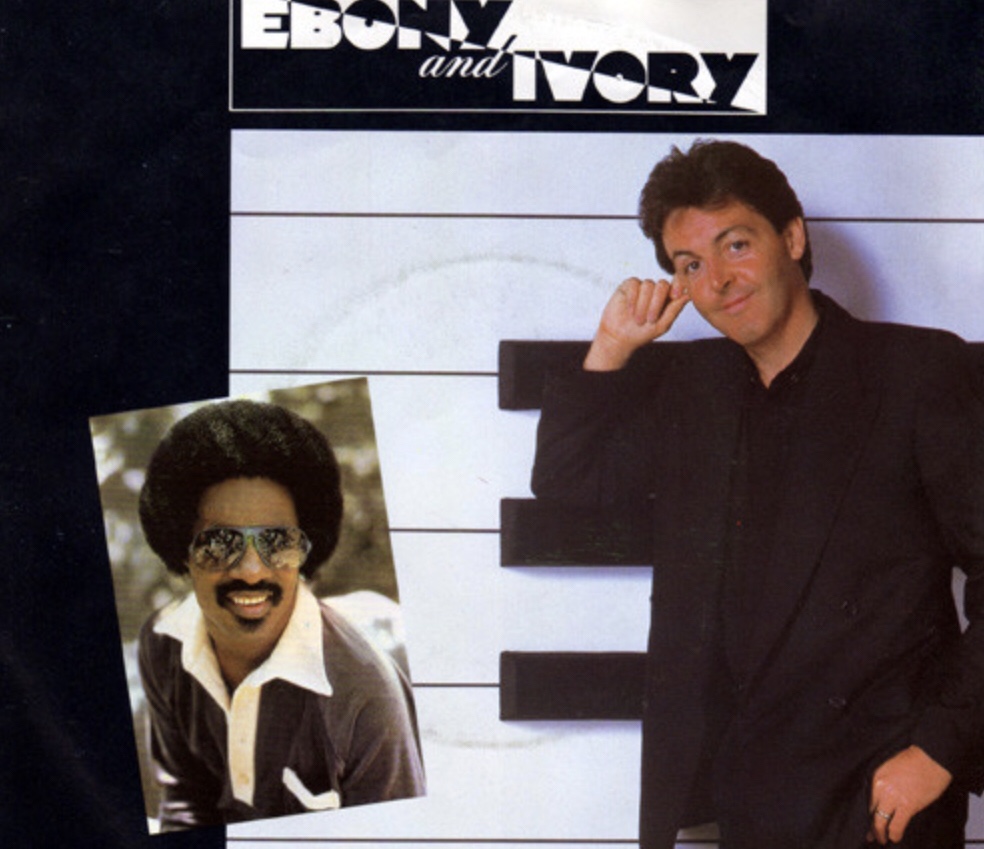
Paul McCartney featuring Stevie Wonder – Ebony and Ivory

It’s not surprising that our tastes change over time. When I was a teenager, I loved the novels of Irving Wallace. They were big books full of facts about fascinating topics: the Bible, the Nobel Prizes, American politics. Wallace was a capable but not particularly dynamic writer, and eventually I moved on to more challenging reads.

Those earlier loves can be enduring for nostalgic reasons even if our aesthetic sensibility no longer finds them pleasing as art. I recently listened to an album from The Ravyns, an early ‘80s band that had a minor hit called “Raised on the Radio” off the “Fast Times at Ridgemont High” soundtrack. The entire time it was playing, I just kept thinking that it was a perfect example of the overproduced faux rock of that era. I was trying to figure out what artist their sound most reminded me of, and then it hit me: Rick Springfield. Who I owned five albums by and listened to regularly into the early ‘90s without even once thinking that it might be shite. Who I still sort of love, but am now a little anxious about listening to very closely given my realization that his music may be sort of garbage and I think I’d rather not confirm that. Awareness can be a burden.

I mention all this because I am grappling with a question: why did 17-year-old me love “Ebony and Ivory”? Because 59-year-old me, and most intervening versions, wants all physical and digital traces of this song to be locked in a vault, dropped into Marianas Trench, have an anvil land on it Wile E. Coyote style and then blow the whole thing up for good measure. I don’t understand why we didn’t think it was awful at the time. I remember having a conversation about the song with my friend Alan Sutherland, who took his music very seriously, and he neither mocked it nor mocked me for liking it (and Al was always up for a good mock when circumstances called for it).

I had not really paid attention to it in years, and then suddenly there it was, in my poor ears, as the third track on a Paul McCartney compilation called “All the Best”. No, not even close to one of his best (though when “Silly Love Songs” also makes the cut, you know the bar is limbo champion low). Not when that record did not include “Helen Wheels”, “Maybe I’m Amazed” or “Mull of Kintyre”. Not when it could have been replaced by pretty much any omitted track from “Band on the Run”. No way.

So, why do I – the “there is no bad music” guy – think this song is so awful? First, is there a more treacly song out there? Yes, of course – the musical excrement that is “Butterfly Kisses” immediately comes to mind, and the name Bobby Goldsboro can give me hives. (I won’t link to them – if masochism is your game, you can easily find them yourself.) Neither of them, however, topped Messrs. McCartney and Wonder on Blender’s list of the 50 worst songs ever, where “E & I” ranked 10th. (“We Built This City” topped (bottomed?) the list, and I think everyone can agree – even, as it turns out, the woman who sang it – that it truly blows. (Aside: I just learned this was co-written by Bernie Taupin. How is such a thing even possible?))

Not a moment in the song isn’t sparkly clean, honed to a version of perfection that overlooks the part where a song should maybe be a bit dangerous to be actually fun. It’s all so artificial, a synth heavy soundscape that feels very lush, like lying in an aural down bed. There really isn’t much happening here: the only musically interesting bits are coming from Paul’s bass. It’s music for washing the dishes, not listening to, and thus is more akin to what is happening now than to an era where you still had to pay attention to the music coming over the air lest you miss something great and never have a chance to hear it again. “E & I” is musical wallpaper, and, like all wallpaper, if you look too closely you’ll notice the torn edges, the parts that don’t line up quite right and the soul crushing blandness of the thing. That’s this song in a nutshell.

I don’t doubt that Paul and Stevie believed in their message, limited as it may be to the confines of a chorus and a single repeated verse. The song’s notions about racial harmony were belittled on release as simplistic, and it’s not like another 40+ years of people trying to destroy each other on the basis of ethnic differences has redeemed their poptimism. But that never really concerned me: I knew exactly two Black people, and while race may have been something the two of them were highly conscious of, I wore blackface in our high school musical “Finian’s Rainbow” and never gave it a moment’s consideration. (I was 17 and living in a less enlightened time and place – the adults in the room maybe should’ve thought a little more carefully about the show they selected that year for a bunch of white kids to perform. Those photos could damage my political career!)

McCartney and Wonder made tons of music that I love, but very little of it came after this team-up: Stevie’s last widely acclaimed album was 1980’s “Hotter Than July”, and some feel this song marked the point where Paul began to lose credibility as an artist. You have to give them credit for one thing: it takes a lot of confidence to make a record this earnest, although no one ever went entirely wrong recycling lame messages about humanity’s inherent goodness. The lyrics were made for a United Nations banner, not the top of the charts, yet somehow that’s where they ended up. I guess we were just really boring in 1982.

Lesser (Known) Lights #5

Sobs – Air Guitar

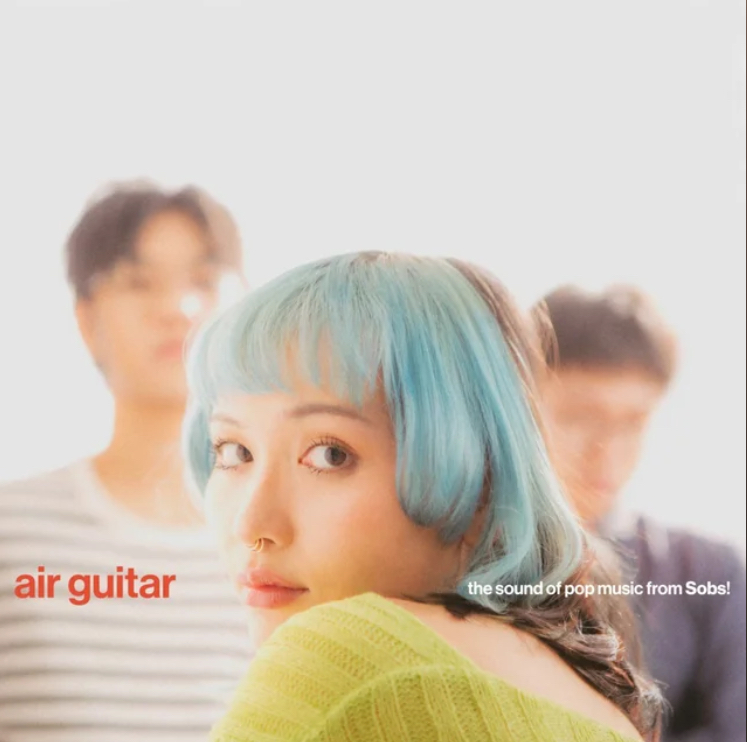
I’ve mentioned Sobs before, and hopefully they’ll become big stars, so I want to say something more substantive before I don’t have a series to place them in. (Classic Songs of My Late Middle Age Revisited?) They’re an adorably dorky band from Singapore, making a version of pop that blends elements of bedroom, jangle and garage with the kind of awkward sharing that even Olivia Rodrigo in her most confessional mode is too cool and glib for. The lyrics are loopily vague at times, but generally fall into the “first love fears, confusions and disappointments” and “trying-to-figure-shit-out young person” categories. Front lady Celine Autumn’s voice is disconcertingly little girl high, but it lends credibility to her apparent bewilderment about the entanglements she finds herself in. There is no escaping the bubblegum of it all, and they can be kind of twee, but the guitars are just too forward to be truly twee. At times it feels like Celine is channelling the cultural appropriation version of Gwen Stefani, and as if to prove that is exactly what she’s doing, the record’s last track is a cover of Gwen’s “Cool”.

I love the bass line on “Dealbreaker”, and there are songs with tinker toy sounds, fuzzy guitars and the kind of shredding that comes from guitarists who feel obligated to give it a try but their hearts aren’t really in it. Sobs are too normal to be pretentious, and although the production is of high quality, it’s not so slick that you can’t imagine the teen movie scenario of a garage band finding their way when the nerdy girl steps up to take command of the mic. My favourite tracks are “Air Guitar” and “Burn Book”, which both seem to best blend the rock star dreams of the men in the band with Celine’s manic pixie dream girl knockoffs. But Celine is no one’s muse but her own, and she has a confidence in her artistry that her narrators lack in their lives. Sobs will evolve, and maybe I won’t follow them, but their hopeful-sounding pop is a perfect tonic for a grim day right now – just don’t listen too closely to her confused words.

Songs of My Divorce #1

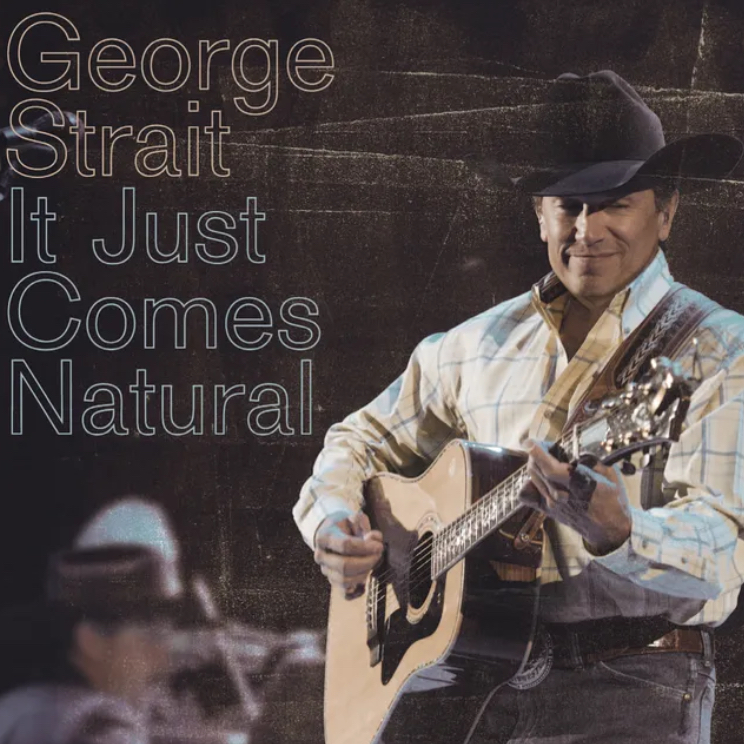
George Strait – Give It Away

With love to my wife Karen, who knows how this story ends.

Our aim in life should be to get better at things as we do them repeatedly, and I can say with absolute certainty that I did a much better job of choosing – or being chosen by – my second wife than my first. Marriages end for a lot of reasons, and I believe the core of my first marriage’s failure was that neither partner (1) fully appreciated what they were getting in the other and (2) fundamentally misunderstood who they were and what they wanted from life. She was 24 when we married and can probably be excused some for that: I was almost 30 and have no one to blame but my idiot self.

That doesn’t mean that, once you appreciate the magnitude of your mistake, you don’t stop trying to find a path forward together. If there is something worth saving, you each bend a little, adapt and, hopefully, grow stronger. And that can lead you into some unexpected places. When my first marriage was in its death throes, I did what many desperate men do in such times: I started listening to country music. This wasn’t due to its ample supply of busted marriage tunes, but for a far less subtle motive: my future ex had rediscovered her love of country, and I foolishly thought joining in might bring us closer. Of course, our issues were considerably bigger than that (though the gap between country and the post-punk and emo I was mostly listening to at the time is a pretty good microcosm for what was going on), and my project was doomed to fail.

I did, however, find myself enjoying a lot of what I checked out. I developed attachments to varying degrees with songs from a lot of artists – Dixie Chicks, Rascal Flatts, Keith Urban, Mr. Renee Zellweger – and I continued listening to country radio for several years until the proliferation of bro tunes chased me away. I still like Brad Paisley, and am looking forward to his upcoming album. (The uplift I felt listening to the first four tracks, released as an EP, show that he’s still got it, and then some.) But the one song that made the biggest impression on me during those sad days, and that I wish I had been able to listen to with my country-loving dad, was George Strait’s “Give It Away”.

My father had a pretty keen appreciation for the comforts of country music during marital turmoil. At one difficult point during his marriage to my mother, he wrote a song about the experience. I have the lyrics somewhere, in printed block capitals on lined school notebook paper, but I can recall the opening lines as if I wrote them myself:

Here I am, alone again, in a motel room once more / Just wishing that you would walk through that door

At another point – maybe the next two lines, maybe not – he sang:

I pray every night to the good lord above / To bring back to me the one I really love

Now, let’s stop here. My dad was not a praying man, or at least if he was, he didn’t make a big deal about it. But he was well versed in the cliches of country music, and a love-besotted man praying in a dingy motel room is about as country as it gets, assuming, of course, that he has a glass of whiskey in his hand (probable in my dad’s case), a dog by his side, a pickup truck parked outside and is waiting on a call from his mother while a lonesome train whistle blows off in the distance.

I also wrote songs when I was younger, but they were all awful (an early effort was called “Teddy Bear Love”, which is pretty damning on its own) and I had given up the practice long before my marriage rolled into the gutter. So I had to make do with the songs of others. Which is where “Give It Away” came in.

The premise is simple. A couple is splitting up, and the woman wants no reminders of the love gone sour, while the man soon finds that he can’t let go of those things. I was definitely the man in that story, trying to hold on to the dying relationship at (almost) any cost. Part of the appeal is the simplicity of the song. Co-written by the brilliant Jamey Johnson (seriously – listen to “In Color” and doubt me not) and two songwriting legends, the production is stripped down to a subtle backbeat, snappy guitars and mournful fiddle sounds. Strait’s voice has a gentle clarity – no trickery, just a straightforward purposefulness, a true troubadour (a role he would fully embrace on his next record of that name). It is emotive without being emotional, with not a drop of self-pity or false sentimentality. I don’t know Strait’s whole massive (30 studio albums) catalogue, but those who do consistently rate it among his best songs, and I won’t be arguing the counterpoint.

I don’t know if my dad ever heard this song – the single came out eight months before he died, but we weren’t really talking to each other then, and we certainly wouldn’t have discussed country music if we had been. I have sometimes thought my divorce might have given us a reason to draw closer – we would have finally had something in common. That’s foolish thinking, I know. But when I listen to “Give It Away” – even now, divorced almost 14 years, remarried to my soulmate for 12 and a half of those – I can’t help but feel a certain melancholy, but also pride that I overcame that attachment to my past (contrary to the ample evidence in this blog). In time, I became the woman in the song. When love ends, we should all aspire to that.

Classic Songs of My Youth Revisited #48

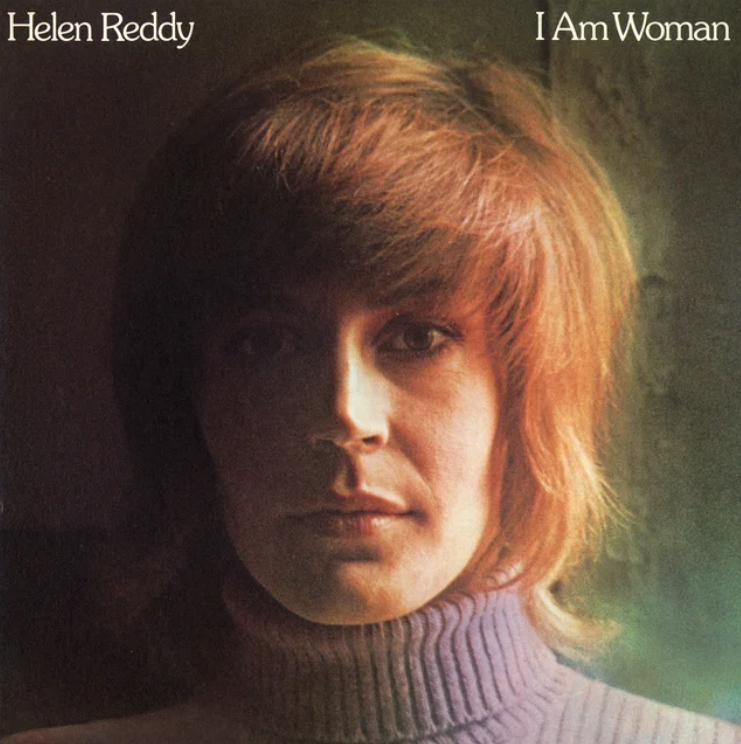
Helen Reddy – I Am Woman

Even though I write about music and give my opinion about it, I don’t consider myself a critic, mostly because an enormous percentage of music critics appear to be massive tools. I cite as exhibit “A” one asshat of a writer named Paul Cooper, who, in giving her album (they call it an EP, but it really isn’t) “Kelly’s Locker” a 2.4 on Pitchfork, seemed to believe that Sarah Cracknell owed him a personal apology for simply daring to exist and create. Cooper wrote 120 reviews for the site between March 1999 and December 2002, and consistent with Pitchfork’s place in the musical ecosystem at that time, I’ve heard of maybe 10 of the artists and listened to none of the records. I can’t find any clear trace of Cooper after 2002, so presumably he went back under the snarky rock he had crawled out from three years earlier.

I mention this because I have concluded that I don’t much like “I Am Woman” by Helen Reddy, and I want to make clear it is not personal. No one owes me an apology.

I came to write this because I was thinking about my mother, who is dealing with some medical issues right now, and how I’ve never really written about her except in connection with my dad, who’s had one write up so far and has another one coming down the pipe. This reminded me of Tolstoy’s justifiably famous opening line to “Anna Karenina”: “Happy families are all alike; every unhappy family is unhappy in its own way.” For a writer, unhappiness means conflict, and that is inherently more interesting to both the writer and their potential audience than people who love each other talking about how nicely everything is going. I write about my dad because I’m working through almost 43 years spent at loggerheads. I have no such issues with my Mom, who was the single most important person in shaping whatever bit of good I have in me.

The one song I always associate with my mother is “I Am Woman”, and I truthfully have no idea if she even likes the song. I know she owned it, and she definitely played it in our home, but was it for aesthetic reasons or for empowerment? The latter doesn’t actually require that you like something: my workout mixes have some tunes that I think are objectively awful, but they get me pumped up and ready to push for a new personal best on the leg press machine. In that mix, I found a home for “You Give Love A Bad Name” (which I must sheepishly admit to having owned on 45 at one point).

I usually listen to the songs I write about under this series 10 or more times to really get a feel for the song and to see how it holds up as a listening experience as compared to my memory of it. I just couldn’t do that with “I Am Woman”, breaking down at around the sixth or seventh play. My quibble isn’t with the message, which is no less necessary now than it was over 50 years ago when it was first released. But the song is an example of everything that was wrong with pop music at the time: a wall of mushy sound (other than some weirdly misplaced pseudo southern rock-lite guitar) surrounds lyrics that are all surface, no subtext. And I don’t much care for her singing: it feels like she’s yelling at me (and maybe she is – I am so not the demographic being targeted here). And yet, yes, I do feel a bit strong, maybe even invincible, as Reddy sings the chorus. It’s very easy to understand why the song was embraced by many (though not all) in the women’s liberation movement, and I am more than a bit surprised that it never really had a second life on the charts (and even then only in her home country Australia) until after Reddy’s passing in September 2020.

I’m not completely anti-Reddy. I remembered liking the song “Angie Baby” (written by future “Undercover Angel” hitmaker Alan O’Day), and while it has many of the same production tics that dogged much of 1970s soft pop/easy listening – space age keyboards, soulful female backup singers, barely a wisp of backbeat – it holds up much better to my ears than “I Am Woman”. It has a very spooky feel, almost like a slowed down take on Eagles’ “Witchy Woman”. The vocal is more understated, and the compelling tale of a mentally ill young woman draws you in. 

So, Mom – and everyone else out there who once loved or still does love “I Am Woman” – I see you, and I respect your taste. Because I appreciate that not all music is made for my ears, and because I’m not a jackass. You know – like Paul Cooper was.

One Hit Wonderment #4

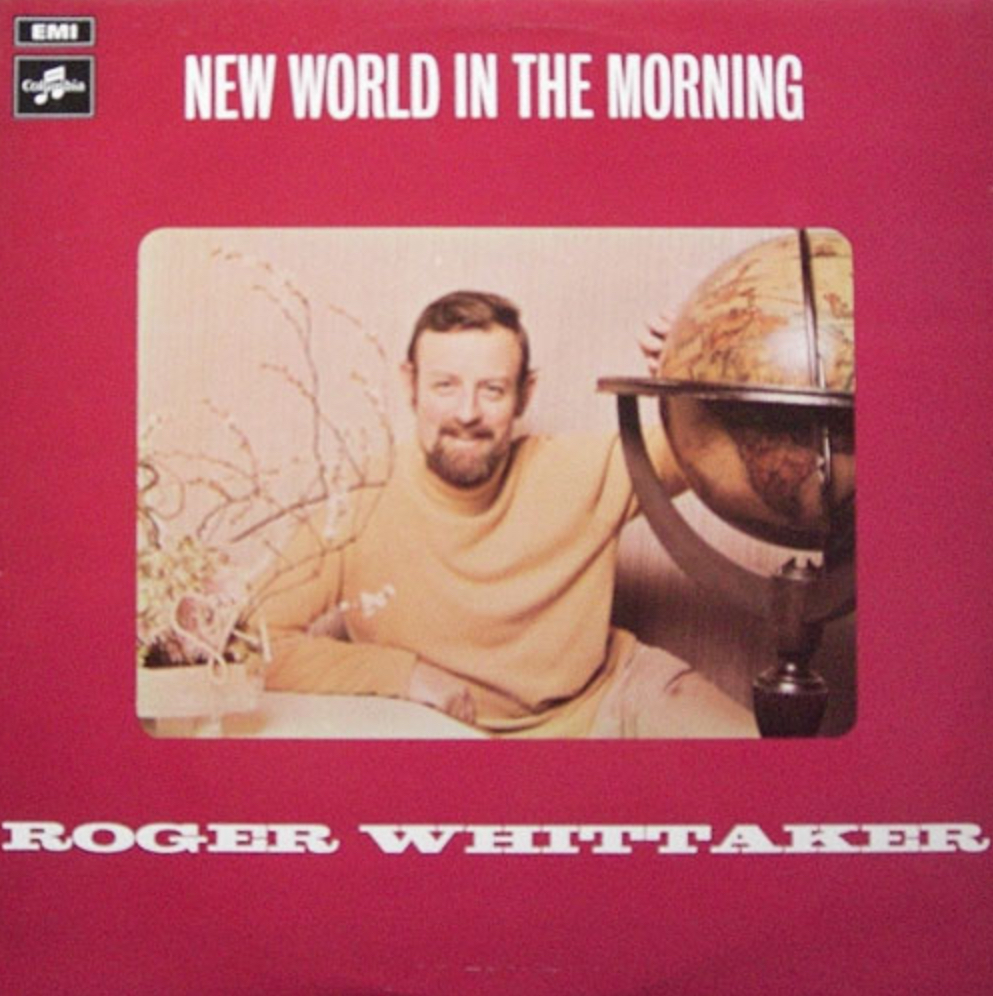
Roger Whittaker – The Last Farewell

Any successful relationship almost certainly requires that the participants change. It’s just simple logic: if all people are unique – and I believe we are – then the work of fitting your life into your partner’s and vice versa means, at a minimum, that there will be edges to be planed down. Or maybe it’s more about appearances, like applying a fresh coat of paint, or something more substantive, like ripping out the plumbing or adding a room. (Can you tell we’re going through a renovation right now?) Whether it’s a job that a Tim Taylor can handle, or if you really need an Al Borland, what matters is that the work gets done.

Of course, this applies to all unsuccessful relationships, too. And that is how I ended up at a Roger Whittaker show circa 1991/1992.

Fandom doesn’t really have age categories. While we probably think of the fans of Sir Tom Jones as ladies in their golden years, a work colleague who is probably (a gentleman never asks) not yet or at most barely 30 somewhat sheepishly professed her love for the silver Welshman to me when admitting that she was accompanying her mother to his show for her own reasons. So it is no comment on my 12 years older then-girlfriend’s musical tastes when she dragged 26/27 year old me to the Whittaker show. Except, of course, that it is.

I heard Whittaker on the radio a lot while growing up, so I was surprised to see he’d only had a single song hit the Billboard top 40. As it turned out, while he had multiple chart hits in the United Kingdom, Ireland and the Netherlands, Canada may have been his biggest market. In 1982, he even charted a song called “Canada Is” in a classic bit of sucking up to the already converted. He had only two “pop” hits here, but between 1970 and 1990, no less than 18 songs reached the top 20 of the adult contemporary chart, including two #1s. But not “The Last Farewell”, which peaked at #3 on the AC chart, as well as at #9 on the pop chart. But its chart performance doesn’t really tell the story of “The Last Farewell”: with roughly 11 million physical copies sold worldwide, the 45 is in very lofty company. Also at that number is a song from Cher, but more impressive is the next group in the 10 million range: Bing Crosby, George Harrison, Elvis Presley, The Monkees, Toni Braxton, ABBA, Paul Anka, Britney Spears, Procol Harum and, umm, “My Sharona” by The Knack.

I don’t remember much about the show. It was at Massey Hall, so the audience was well-behaved and quite elegant, at least by my standards of the time. Everyone remained seated throughout – it was more like going to the theatre than a concert. I recognized an awful lot of the songs, as if I needed more proof that Whitaker had been a big part of my subconscious aural life. And I had a reasonably good time – Whittaker was an amiable and relaxed performer, and the dude could whistle, a skill which never fails to impress me since I am, sadly, most inept when it comes to turning that part of my body into a musical instrument. (Drumming on pretty much any bit of my anatomy that I can reach is a different story.) His whistling was one of the things my girlfriend had been looking forward to – she was actually excited about it – and he did not disappoint.

On listening to “The Last Farewell” now, I was initially sort of boggled by how well the song did until I looked at the rest of the top 20 from its peak week of June 21, 1975. It fits in rather comfortably with a lot of the tunes ahead of it: Michael (Martin) Murphey’s “Wildfire”, Jesse Colter’s “I’m Not Lisa”, “Sister Golden Hair” by America, John Denver’s “Thank God I’m A Country Boy” and “I’ll Play For You” from Seals & Crofts. And radio playlists of that era always had room for the occasional folkie, no matter how truly old fashioned his style might be. Whittaker was probably fine with that – he just kept doing his thing for close to another 40 years.

As for this record, well, I just cannot connect with it in any way. I never paid attention to the verses, so I didn’t know that it’s about a sailor who heads into battle and, even as the possible end of his days looms darkly, he is remembering the great love of his life, and dreaming of the day when he returns to her. The lyrics – written by a silversmith who sent them to Whittaker for a radio contest – are quite poignant, but the whole thing is made unbearably mawkish by the music. It begins with an orchestral swell, before settling down to sappy strings, gently strummed guitar, tinny piano and poser martial horns. A few piano keys struck at the 31-second mark are a lovely note, but the rest is just a bombastic overproduced mush of sound with nothing distinctive about it, save for Whittaker’s warm vocal. Done live, and possibly off the cuff, without the orchestra or a faux attempt to recreate one, it’s just a whole lot more palatable to these ears.

Whittaker retired around 2012, and took that retirement seriously: he didn’t release any music nor, as best I can determine, perform publicly in the last decade of his life. But musicians never really stop making music, and he was still touting his continuing whistling ability in late 2014. He passed away in September 2023, aged 87. I hope he went out whistling.

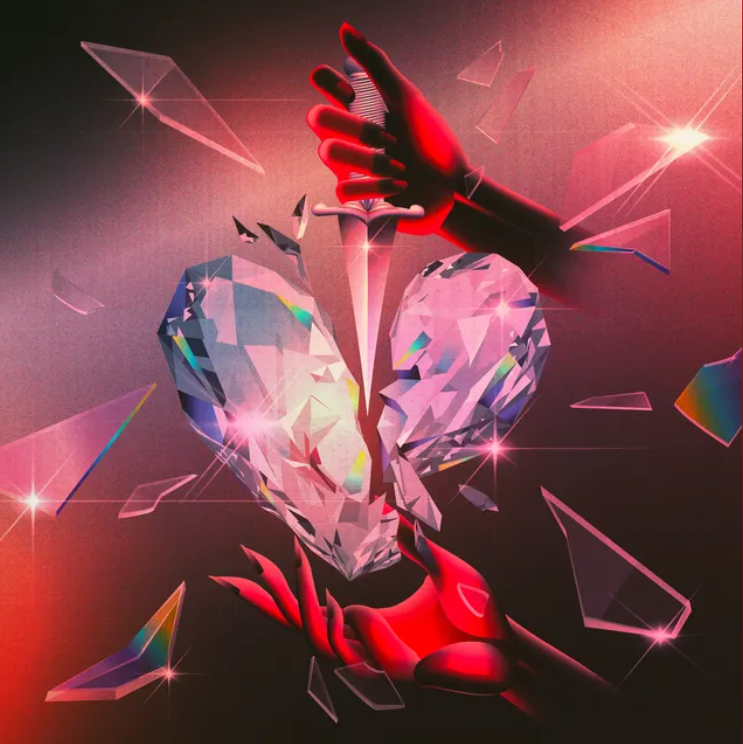
The Rolling Stones – Hackney Diamonds

Growing up, I believed that the music you listened to was a product of your chronological age. In younger years, you gravitated towards rock ‘n’ roll (the idea of “pop” didn’t even occur to me, and anything Black – soul, R ‘n’ B, blues – simply did not exist as a category in my corner of the world), followed by a dalliance with country before you settled into old age – which I suppose I imagined began around 50 – with the kind of stuff that Marg Ellsworth played on CHER on Sunday mornings, which was what Johnny Fever was rebelling against on that classic first episode of “WKRP in Cincinnati”. Classical and jazz were not considered – I knew they existed, but no one I knew was listening to them openly to any significant degree.

So, now that I know that all of that is a lie, and that I was not in fact destined to become musically boring, I am still left with the question of what it means to “act your age” musically. My father would sometimes say to me that I had to grow up and stop listening to that noise. Keep in mind, I was, like, 15 at the time, and years away from growing up. But that message fed into my mindset about what kind of music was proper at a given age.

Thankfully, The Rolling Stones never met my dad.

What are we to make of an ass-kicking band of actual and borderline octogenarians? Well, first there is a sort of amazement that they are even doing this, no doubt with their hearing aids cranked up to 11. The Stones will, like all successful acts, be faced with the reality of being compared to the better records they made when they were younger, and, god, I am so over that garbage. Yes, this is no “Sticky Fingers” or “Exile on Main St.” or whichever album tops your ranking of their canon. But, dear god, I had fun listening to this album. It’s a saggy balls out, smash/bang howl of a record, and if the Stones are now little better than a honky tonk bar band playing the nostalgia tour (and I don’t necessarily share that assessment), they are still the very best at that. The songs have solid melodies, Mick still sounds great, and Keith, Ron and the rest of the band deliver on every track. My favourite tune is probably the British grannies bitch slap “Bite My Head Off” with Paul McCartney, but you could talk me into favouring the opener “Angry” or “Whole Wide World” or “Live By The Sword”, the last of which includes contributions from former band mates Bill Wyman and the late Charlie Watts. Even the slower tunes, like the Lady Gaga and Stevie Wonder team up on “Sweet Sounds Of Heaven”, should feel no shame when sitting next to “Angie” or “Wild Horses”.

This might be their last gift to us – ending with an honest cover of the Muddy Waters classic that gave the band its name seems a signal – and, if so, it’s a very honourable ending. It’s a good record, even a great one at times, and if you disagree – I’m looking at you, Pitchfork – please, for your own sake, pull your head out of your ass and give it another spin.