Classic Songs of My Youth Revisited #28

John Lennon – “(Just Like) Starting Over”

From December 5 to 7, 1980, I had what was to that point probably the best weekend of my young life. The following day, December 8, John Lennon was murdered. The two events, of course, had nothing to do with each other (as far as I know, anyway), but their temporal relationship has always meant that I don’t think of one without the other.

Let’s start with Lennon. The Beatles were my first band, so I naturally loved John. But he was barely on my listening radar in the late 1970s while Paul McCartney still churned out hit after hit, so I by default fell on the Paul side of that particular dispute. John hadn’t had a hit single in over half a decade when “(Just Like) Starting Over” was released in late October 1980, and while it was doing well in the United States, it seemed like his recent fallow stretch was going to continue north of the 49th parallel: the song wasn’t even on RPM’s national chart when it came out on December 6. That quickly changed: it debuted at number 28 a week later, then hit number 1 on December 20. That momentum continued into the new year, and it ended up as the biggest song in Canada for 1981.

So, what was I up to that was so great that first weekend of December?

A regular part of my childhood Saturday evenings was watching “Reach for the Top”, a national quiz show that matched teams of four high schoolers in a battle to prove who knew the most stuff. I had always loved trivia – I was an incessant dabbler in “The World Almanac” with its lists of highest mountains and Olympic gold medalists, and by 1980 owned the first two editions of both “The Book of Lists” and the endlessly fascinating “The People’s Almanac” (which I still have, their condition evidence of heavy use) – so getting onto my high school’s “Reach” team was a life goal. Schools in Nova Scotia only competed every second year, so my Grade 11 year of 1980-81 was my one shot, and I made it. We had a magnificent and balanced team, with Sandy Nicholson, Nelson Rice and Doug Campbell joining me, and it could be intimidating to be around such smart people. I was beginning to understand that maybe this was my tribe.

The fun started on the night of December 5 when, after getting set up in our hotel following a long drive to Halifax, my uncle picked me up and brought me back to his apartment, where I ate pizza, played with his infant daughter, watched American sitcoms on channels I didn’t have access to at home and, yeah, after his wife arrived and said child was put to bed, smoked black hash out of a bong he made using a toilet paper core and some tinfoil. Good times.

Anyway, even with my less than stellar contribution, on December 6 we won our first two games (including a particularly satisfying defeat of a private school in their matching outfits whose number included a boy who less than two years later was in a New Jersey jail for his role in the murder of a classmate’s parents), and our teacher chaperones, two lovely women named Pat, got permission from our principal to take us out for a fancy celebratory dinner at a Mexican restaurant called Zapata’s. I doubt said permission included alcohol, but a pitcher of sangria was ordered, and, in a misjudgment that could have had disastrous consequences with a less law-abiding group of boys, we cajoled them into ordering a second. Left to our own devices the rest of the evening, we retired to the poolroom, where we would alternate between heating up in the sauna then racing to dive into the pool before our body temperatures dropped. Another school who had lost earlier that day were in the same hotel, and we hung out with them a bit, failing to make any headway with two pretty girls that were in their number. After the pool closed, we watched “Monty Python and the Holy Grail” in one of our rooms, then crashed, getting up the next morning to take care of business and earn our spot in the final round. Somewhere along the way, I bought Kurt Vonnegut’s “Player Piano”. A magnificent weekend.

Two days later, I was among the tens of millions watching tribute after tribute to Lennon on television, where it seemed to own every channel the night of December 9. And “(Just Like) Starting Over”, a song that I already liked but hadn’t given a heck of a lot of thought to, was soon everywhere, the tragedy a grimly ironic thumb in the eye to Lennon’s positivity about new beginnings.

It is a song out of time, more at home in the 1950s than 1980, which may explain the rather muted response initially: post-punk and post-disco, music was trying to look ahead to the next big thing, and not to a relic from the 1960s drawing inspiration from a decade before that. Light taps on a triangle, gently strummed guitar, then a heavenly chorus of “ooooo” and “aaaah”, followed by a vocal that I’ve always thought of as John’s attempt to resurrect Elvis Presley, as, again, a 1950s piano bangs away while a stubbornly subtle bass line rolls along underneath, with drums that sound at times like handclaps. The lyrics are a mature declaration of love to a partner who has been with him through much, and the hope of more to come. It’s far more honest and romantic than the more traditional dreck of “Woman” that followed later on the same album, and whatever you think of Yoko Ono (as time passes, I am more and more impressed by her), you can’t deny John’s love for her. The song is blissfully sunny without being Pollyannaish, and not many of those can get you on the dance floor, too. Pretty damned impressive.

Our return trip to Halifax for the final round a few months later was far less fun – the Pats had learned better. And, as it turned out, having four really smart guys was not enough against the buzzsaw that was Hans Budgey, who ran the table in the rapid-fire last two minutes of the title game to turn a close match into a blowout. Hans and company went on to win the national championship, and no one will ever convince me (and I defy them to try) that we weren’t the true national runners up. I still love trivia (yes, I did try to get on “Jeopardy”, which is a good way to learn that maybe you don’t know nearly as much as you think you do), and, over the last year or so, I’ve listened to a lot more of John Lennon’s music. Two days ago, I heard “(Just Like) Starting Over” in a grocery store, and for all the nostalgia in its sound, it remains a fresh and invigorating piece of pop music. I still think Paul won the 1970s, but John was definitely gearing up to take a run at him in the 1980s, which leaves us with one of the great “what if”s of pop music.
Pazz and Jop 1974 #8

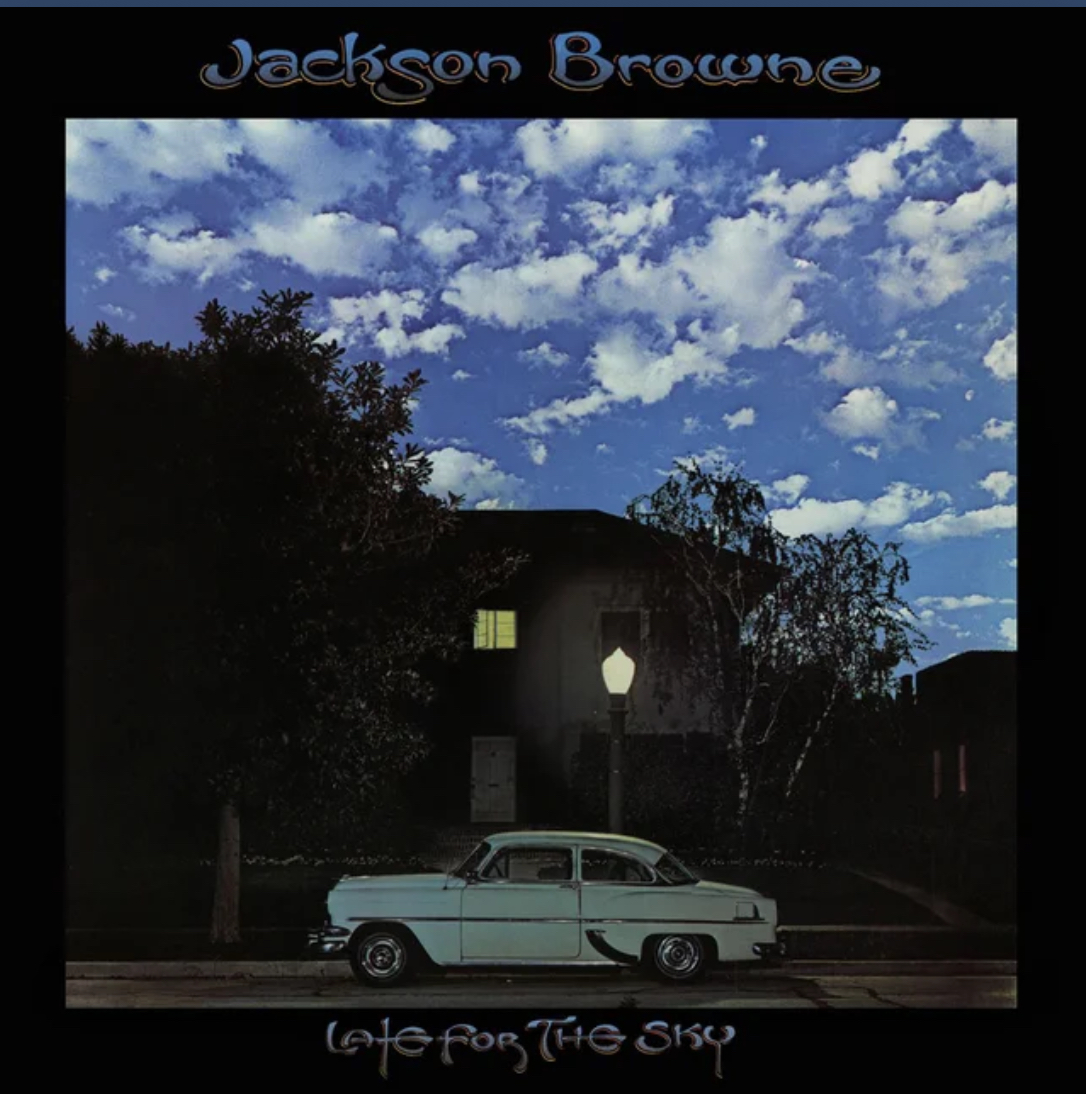
Jackson Browne – Late for the Sky

I’ve never been able to wrap my brain around the love that critics once had for Jackson Browne, and listening to “Late for the Sky” three times hasn’t gotten me to the point where I’ve solved this particular puzzle. Like most early 1970s soft rock, it makes for a great accompaniment to those mundane tasks of daily living, like laundry or emptying the dishwasher. It rarely challenges you, rarely forces you to listen carefully. It’s background music, and dear lord we certainly need that: the world is just a better place to be in when it has a soundtrack. But other (mostly) White guy bands like Chicago and the Doobie Brothers were also doing a damned fine job of that, and critics weren’t building temples to them. So, why the love for Mr. Browne?

I sometimes like to think of Browne as Eagles-lite, with both frolicking in that same soft rock playpen, and you would think critics, who often seem to be in the business of jerking off their musician friends, would have been all over that band, yet you would be wrong. “Hotel California”, the 118th ranked album of all time in the last Rolling Stone poll and #108 at Acclaimed Music, could not crack the Top 30 of the Pazz and Jop in either 1976, when it was released, or 1977, when it had dominion over our airwaves. I am no fan of the Eagles, but that is just whack. What the fuck were they listening to? A lot of Graham Parker, for one thing and, in 1977, more Jackson Browne.

So, what of this album? There’s a real lethargy to a lot of it, a laid back California cool that lacks the dirty passion of truly great rock. No one here seems to be breaking a sweat: it sounds pristine, the musicianship is sharp and precise, and with every perfectly bland note you can sense the early punks gritting their teeth.

There are two exceptions. “The Road and the Sky” is a honky tonk rocker, and you can almost hear his band saying, “Hell, yes”, as they dive in, with great piano and some slick shredding. But Browne’s heart isn’t really in it: he seems uncomfortable with the pace, his vocal showing no more fire than when he’s singing about another beautiful sunset. He gives the band 3:07 to have some fun, then it’s back to our regular programming. He feels more committed on “Walking Slow”, an almost danceable tune with some funky bass notes, a nice guitar solo and joyful handclaps.

A few of the slower tunes stand out, at least in some of their elements. The title track is lovely, a meditation of sorts with a real sense of loss and wonder, and a tune out of a contemporary western. There is lots of pleasing piano on “The Late Show”, and a melancholy beauty to what I think is fiddle on “For A Dancer” and “Before the Deluge”.

Maybe the fourth listen, or the fifth, will be the one when the light turns on. I’ll be spreading peanut butter on a piece of toast, the sliced up banana and Nutella off to the side, when Browne will sing “When the light that’s lost within us reaches the sky” (a lovely line, to be sure), that beautiful fiddle will play us out, and I will stand at the kitchen counter, stunned, while the toast turns cold and dry and the banana ages out of my eating range. I felt that just a tiny bit right now, so I know it can happen. I’m rooting for you to get me there, Jackson.

Cover Version Showdown #4

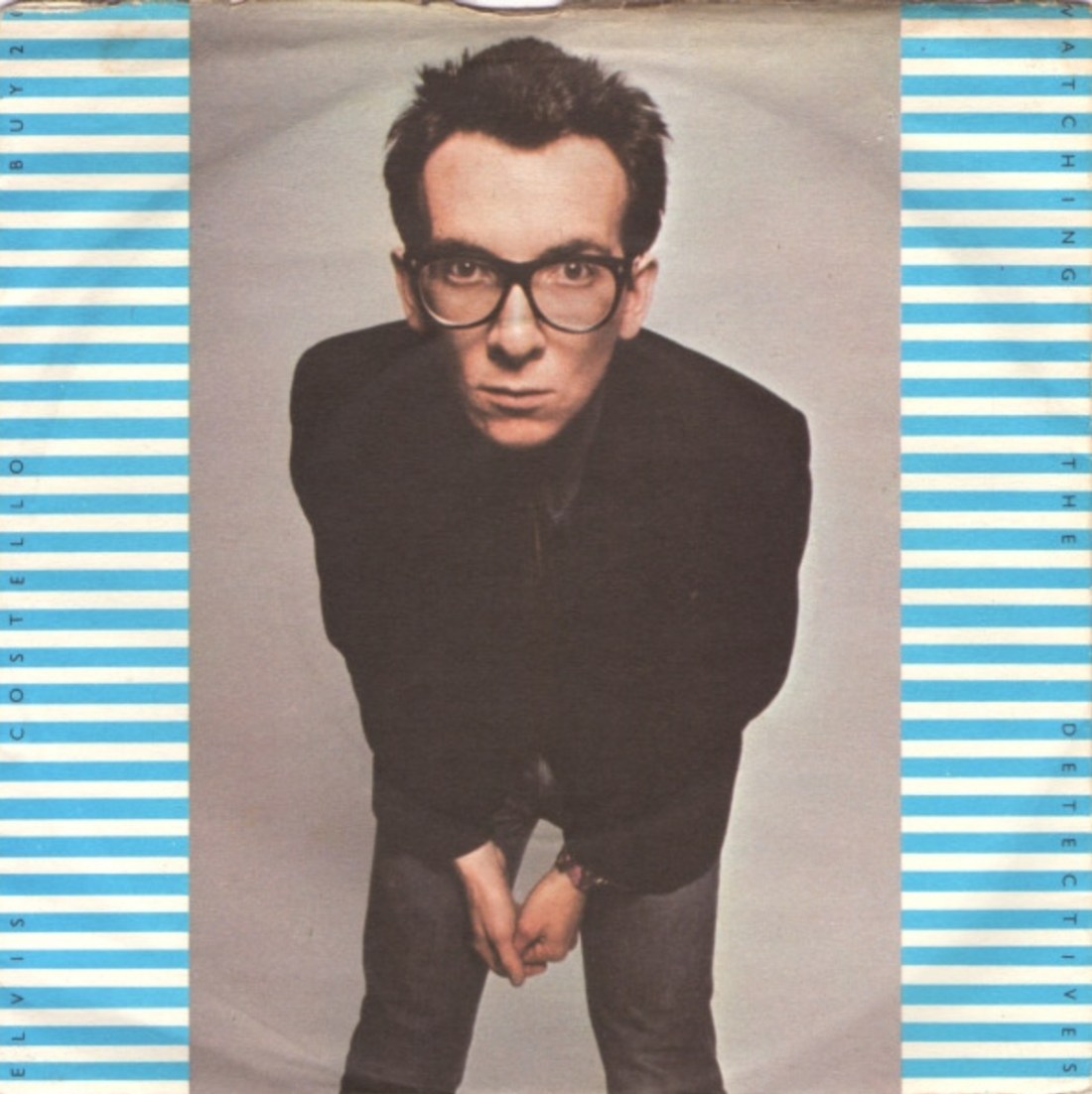
Elvis Costello, “Watching the Detectives” – Duran Duran v The Henry Girls

It’s kind of amazing to me that I’ve made it this far without writing about Elvis Costello, who, more recent disappointments aside, is my all-time favourite musical artist. He came along too late for Pazz and Jop (that’s going to change big time once we reach 1977), and none of his individual tunes fits with Classics Revisited. I didn’t think there were enough noteworthy cover versions out there – my apologies to Linda Ronstadt – for this space. And then I heard The Henry Girls sing “Watching the Detectives”.

But first, let’s go back to the original. It wasn’t a hit in North America – it fell outside the Billboard Top 100 at 108, and peaked at 60 in Canada – but it was certainly one of the songs that EC was known for in his late ‘70s heyday, when his albums were selling over a million copies each and everyone kept waiting for that hit single that would put him on the same level as contemporaries like Joe Jackson. That hit never came, but he made great album topped by (maybe) greater album year after year, and that has pretty much sustained him through 40 years of musical adventurism. Every record is a surprise – I’m a big fan of “Painted from Memory”, his collaboration with Burt Bacharach, and there is a crazily diverse palate of albums with The Brodsky Quartet, Anne Sofie Von Otter, Allen Toussaint (I own all of these) and, as the proof of my theory that a great musician can work in any genre (see Hartman, Dan), Wendy James. I finally checked the latter record out recently, and it might be the most fun I’ve had listening to an album he was involved in. I hope he enjoyed writing it.

Elvis’ original is a menacing little thing, with booming drums and throbbing bass with a staccato reggae-lite beat. The entire thing is sung with a sneer and a rising sense of danger, the score to a film noir that ends with the protagonist wondering how the fuck did he get so turned inside out. Written in a fever after a night spent slowly falling in love with The Clash, it is certainly among the punkier of his recordings, in attitude at least.

Our first competitor is Duran Duran, and I am very surprised to be writing about them again. They were a band I paid as little attention to as possible, which was pretty darned challenging from 1982 to 1988. Lots of hits, very few of them memorable, yet so tinged with nostalgic value that they now give me great pleasure to revisit. They tackled “Watching the Detectives” on an album of cover versions released in 1995. There are versions of songs from Bob Dylan, Lou Reed, Sly and the Family Stone, Public Enemy, and, holy shit, how can I be sitting here writing when that record exists in the world and I still haven’t listened to it 27 years later. It’s lush and jittery, a haunted doomscape out of Godard’s “Alphaville” nightmares. It practically vibrates, Simon Le Bon’s breathy vocal laced with faux sexiness, the messy backing tracks digging under your skin in about a dozen different ways.

And then we come to The Henry Girls. If, like me until recently, you’ve never heard of them before, then you’re in for a treat. Three sisters from Ireland, their music has been described as a blend of Irish roots music and Americana. Their melodies are a thing of genius. This is the record that would’ve been created if the “Rum and Coca Cola” version of The Andrews Sisters had met 1977 Nick Lowe (Elvis’ producer) on 1967 Carnaby Street right after Nick had completed a fellowship with Phil Spector and then rejected everything Phil taught him except for the stuff about harmony, and if you understand that I loved writing that sentence, then you get me, and I thank you. It’s sort of goofy and so personal and unique, and highlights Elvis’ intricate wordplay in a way his own singing never does. 

The Winner: Duran Duran

I had this locked and loaded for The Henry Girls from the first listen, but then a weird thing happened. With each play, Duran Duran’s version revealed new layers, while The Henry Girls remained the same piece of wonder it was from the beginning. And that gives the Brits the edge over the Irish right now. This could easily switch in another day or two, and then back, which is sort of fantastic. Each artist put their personal mark on the song, and I love both, and how they respect Elvis and sort of piss in his eye at the same time. I’m pretty sure he’d be good with that, and so am I.

Favourite “New” Music – November 2022

Well, it’s December, and that means Christmas music everywhere you turn: on your television, in the shops you attend, at your doctor’s office, on your cab driver’s Sirius XM device. Even in this age of being able to have almost complete control over programming your listening life, it’s entirely unavoidable, which is unfortunate if, like me, you don’t much care for the stuff.

Let’s be honest, okay? A lot of the holiday’s music sucks. It’s saccharine and simplistic and preachy and waaaay too Christian. Yes, I know whose theoretical birth we are meant to be celebrating, but I’ve read a good chunk of the New Testament, and most people calling themselves Christian don’t seem to do a very good job of emulating the big kahuna. For the rest of us, the season is really just an excuse to overeat/drink, sleep in a few times, and have people buy us stuff, which is pretty awesome, but hardly worthy of a whole musical cottage industry.

And everyone sings the same damned songs over and over and over again. You could get from Christmas Eve to New Year’s Eve just listening to “Silent Night! Holy Night!” (What’s with the exclamation marks?) or variants thereof. That isn’t hyperbole: Second Hand Songs lists 3880 versions (and that’s probably gone up between writing this sentence and posting it), including from such luminaries as Chet Atkins, Booker T. & The M.G.’s, Nana Mouskouri, Can, David Hasselhoff (in German, of course) and the Queen of Christmas herself, Mariah Carey. Another Mariah cover, “O Holy Night”, has 2037 versions, including efforts from Petula Clark, Joan Baez, Andrea Bocelli and Skydiggers. I could go on and on – just like Christmas music does.

My wife, though she may protest a bit as to what degree, loves Christmas music. She isn’t a zealot or without discernment: she knows shit when she hears it. But she could not imagine going through the holiday season not listening to it, while I will likely start Christmas morning this year listening to something like Nirvana or the Sex Pistols.

We needed a compromise playlist, and to that end I offer my year-ending gift to those who are closer to my end of the Christmas music enjoyment level spectrum. Christmas Songs That Don’t Suck is (at this moment) roughly 7 hours of tolerable and sometimes even enjoyable holiday-themed songs. (My definition of a Christmas song may not always match yours.) It’s length varies from season to season, as I get sick of songs or find new ones that I like (I recently added 8 tracks from the Guardians of the Galaxy Christmas special – and, yes, that’s a real thing), and while it is a Mariah-free zone, it includes songs from Boyz II Men, Queen, Tom Petty, Dolly Parton, Fountains of Wayne, Carrie Underwood and – shiver – the Biebs, plus lots more. It isn’t all G-rated – you may choose to usher the kids out of the room when “Homo Christmas” starts up – but it’s a more diverse celebration of the season than what you can find on your usual radio station or Spotify playlist.

My 5 favourite songs on there, in no particular order, are probably:

  • Bare Naked Ladies – Elf’s Lament
  • The Pogues – Fairytale of New York
  • The Waitresses – Christmas Wrapping
  • Run-DMC – Christmas in Hollis (To paraphrase Argyle, this IS a Christmas song and “Die Hard” IS a Christmas movie.)
  • Lydia Liza & Josiah Lemanski – Baby, It’s Cold Outside (#MeToo)

Merry Christmas!

Now, on to my favourite listens of the month just passed.

  • The Moody Blues – Days of Future Passed (1967)
  • Sly and the Family Stone – A Whole New Thing (1967)
  • Omega – 10000 lépés (1969) (The most successful Hungarian rock band ever. How could I not check them out?)
  • Curtis Mayfield – Curtis (1970)
  • Jimmy Cliff – The Harder They Come (1972) (My continuing search to discover reggae that I enjoy finally struck oil.)
  • John Lennon – Walls and Bridges (1974)
  • Journey – Journey (1975) (Never much of a fan during their chart-topping heyday, this rookie outing was a very different-sounding band.)
  • The Kings – The Kings Are Here (1980) (Good old Canadian new wavey rock.)
  • Was (Not Was) – Born to Laugh at Tornadoes (1983) (Yet another record that I owned, never played straight through, and now celebrate.)
  • Los Lobos – How Will the Wolf Survive? (1984) (On which I discovered that Mexican polka is a thing, and a pretty amazing thing at that.)
  • Cameo – Word Up! (1986)
  • Front 242 – Front by Front (1988)
  • Wendy James – Now Ain’t the Time for Your Tears (1993)
  • Guster – Ganging Up on the Sun (2006) (I loved the two albums before this one, but for some reason stopped paying attention to the band, which was clearly a mistake.)
  • Donnie Trumpet & The Social Experiment – Surf (2015)
  • The Ballroom Thieves – Unlovely (2020)
  • JOSEPH – The Trio Sessions: Vol. 2 (2021)
  • Pool Kids – Pool Kids (2022)
  • Armani Caesar – The Liz 2 (2022)
  • Fousheé – SoftCORE (2022) (A delight from start to finish. Already a Grammy nominee as a songwriter, if she doesn’t become a major star, it won’t be for lack of talent.)

Photo by freestocks on Unsplash.

Classic Songs of My Youth Revisited #27

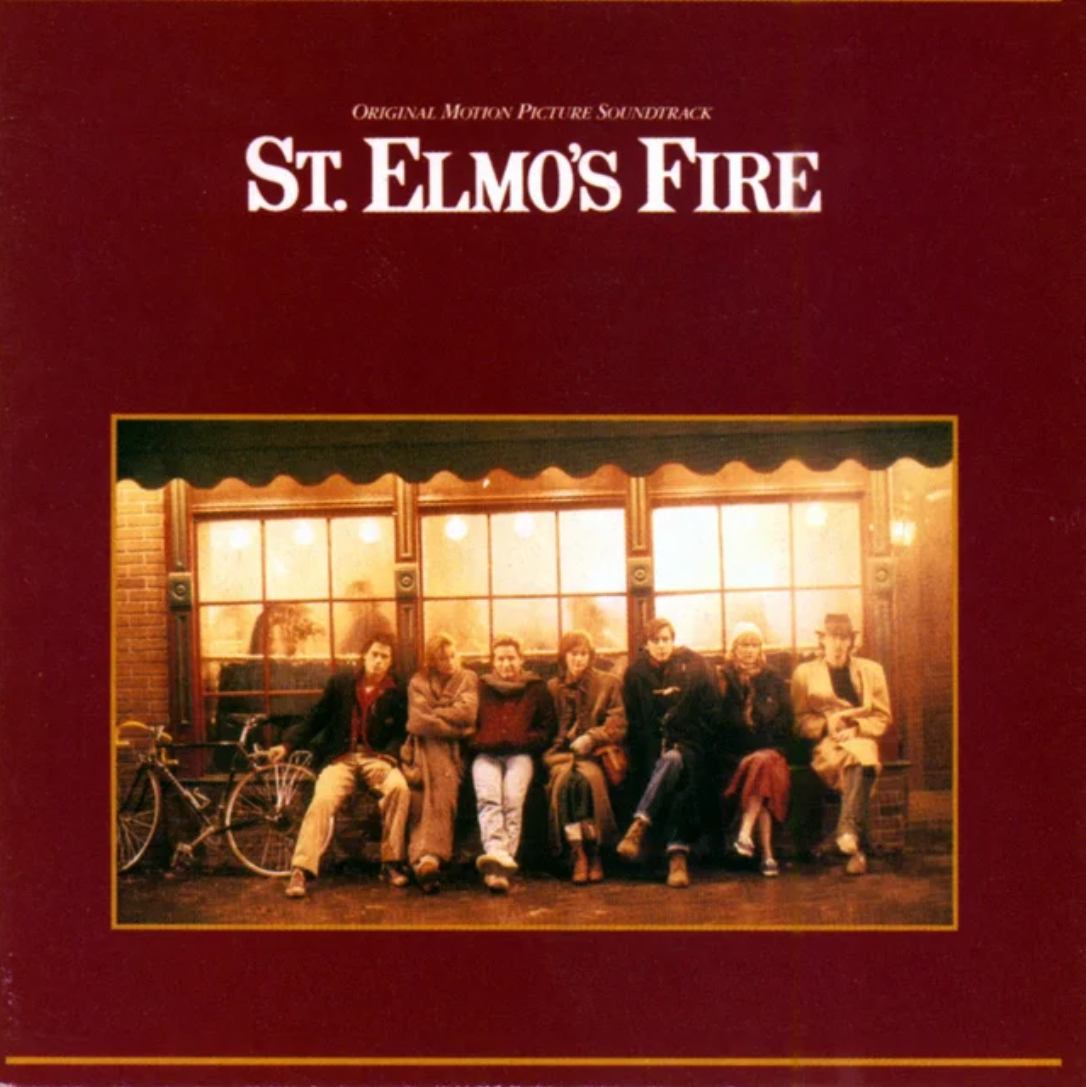
John Parr – St. Elmo’s Fire (Man in Motion)

I think that the artists and entertainers that we form an attachment to at a critical stage in our lives never stop being important to us. That has to be the case, because it’s the only way I can find to explain my lifelong interest in the career of Andrew McCarthy.

In the 1980s, I saw, relative to the total count of movies I attended and the small tally of those he appeared in, a disproportionate number of films starring McCarthy. “Class”, “Heaven Help Us”, “St. Elmo’s Fire”, “Pretty in Pink”, “Mannequin”, “Weekend at Bernie’s”: for all but the first of these, I laid down a part of my limited cash in exchange for the privilege of watching McCarthy act – sometimes poorly (sorry, Andrew!) – in some often fairly awful but always entertaining films. Why? Because something about McCarthy – or at least the characters he played – appealed to me. He seemed like an outsider to the Brat Pack (confirmed in his recent memoir about that era), and therefore more relatable. Who else was a young wanna be novelist going to identify with but the fairly normal looking actor playing a young wanna be novelist saying overwrought things about art and life in a film about trying to get your shit together after university? The rest of the male “St. Elmo’s Fire” cast couldn’t fit that part: Emilio Estevez was too much a try-hard, Judd Nelson was either intimidating (“The Breakfast Club”) or a dick (“St. Elmo’s Fire”), and Rob Lowe was (is!) too painfully beautiful for mere mortals such as I to look to as a model for living. Which left McCarthy.

If you’ve forgotten the film, then you are blessed. My friends and I made fun of it even when we were watching it pretty much every week on First Choice. Since it isn’t on any of the 38 streaming services that I pay for and I didn’t feel like laying out another $4.99 to torture myself, I checked out some of the available clips on YouTube, and it was every bit the overwritten and overacted horror show that I remembered. It’s like Strindberg or Ibsen as interpreted by 12-year-olds, all drama without depth of feeling. There is casual racism (the single minority character of note is a stereotyped Black streetwalker) and a disdainful mockery of outsiders. Maybe accurate for the world of baby yuppies that it purports to show, but hardly a fun day at the movies.

And yet, at 21, I loved it even while knowing what bullshit it was. McCarthy’s Kevin was who I wanted to be. I wanted to be that clever, that attractive (a reachable goal, I thought, before “Pretty in Pink” turned him, ever so briefly, into a heartthrob), and, as he is by the end of the film, a published writer. Plus, I would get to sleep with Ally Sheedy in her super-cute phase. Not a shabby life, really.

I don’t recall where in the film the song shows up, but its synthy pop-rock sound and extremely generic lyrical content don’t match the movie’s vibe at all. That isn’t John Parr’s fault: he hadn’t seen the movie, so co-writer David Foster showed him some video of CanCon superstar Rick Hansen’s world tour via wheelchair for inspiration. The ridiculous music video showing Parr interacting with the actors in character at the burned-out bar that serves as their hangout in the film (their decision to stop going there at the movie’s end is supposed to signal to the viewer that they are now adults) has nothing to do with the film’s narrative. It sounds like a bunch of other songs that were popular in the first half of the 1980s, and somehow – likely thanks to the boost from the movie – jumped past those songs to reach . I owned the 45 and played it frequently, finding the overall positivity of the song to be aspirational and inspirational. But before now, I can’t remember the last time I played it with intent. After a few plays, each of which left me with that old pumped-up feeling, I still can’t see it breaking into my nostalgia rotation.

Anyway, despite wanting to model myself on McCarthy’s character, that wasn’t who I was, and Kevin’s future wasn’t my future, or McCarthy’s. And as I have travelled through life, I have periodically checked in to see what McCarthy was up to. His acting career seemed like a wasteland for a long time, but I knew he ended up as a successful television director. His memoir filled in the gaps, including overcoming alcohol addiction and building a second career as a travel writer. He sounds fulfilled, and as surprised as anyone might be about where he ended up. I get that. I learned long ago that writing The Great Canadian Novel was beyond me, but I know, too, that I wouldn’t want that at the price of what I have. You may not get the life you want, but, if you’re lucky, you get the life you need.

Pazz and Jop 1974 #7

Roxy Music – Stranded

Every time I listen to early Roxy Music, all I hear is a band that’s trying too hard to – well, what they want to accomplish is the mystery, but it definitely isn’t about entertaining the listener. Yet again, they seem to be trying to straddle a non-existent line between art band and pop band, never realising that the latter is worthy of being art on its own terms. What they end up with manages to accomplish, well, not much worth listening to, for my money.

Oh, it isn’t horrible: they are talented musicians and songwriters, and that has value, but somehow it all just feels horribly flat when the whole package comes together in the grooves. When I look at the track listing, not a single title comes back to me in my imagination. I make notes (because I’m a non-professional, damnit), and from those I can tell you what stood out. But even if my future non-professional music writer status was on the line (it could happen), identifying without prompts what I liked about this album would tax me beyond recovery.

From those notes, I can tell you that Bryan Ferry’s odd vocal style sounds at times like an alien trying in vain to master the local tongue. That the songs are mostly too busy, with jarring tempo shifts and a wilful opposition to allowing anything that pleases the ear to continue unassailed. That a lot of this feels like progressive rock without the label.

As for the individual songs, I like the warped funk opening of “Amazona”, the interplay of drums and piano on “Just Like You”, the piano opening on “Sunset”. Besides these snippets, the powerful “A Song for Europe”, with its “Berlin”-era Lou Reed vibe, beautiful tinkling piano and tempo shifts that are not merely ornamental but increase the song’s drama, is the one track that feels like it finds a balance between whatever artistic statement the band is trying to make and actually giving pleasure to the listener.

I won’t escape Roxy Music anytime soon – two of their albums made the top 20 of the Pazz and Jop in 1975 (a year full of pairs). My hope is that even the embryo of the band that made “Avalon” had shown up by then. Otherwise, I may just recycle this post and change the names where appropriate.

SoundTracking #1

“Bond . . . James Bond”

I love James Bond movies, and there is nothing quite like a classic Bond theme song. The best of them tie the familiar John Berry motifs from the score to a pop sensibility that sounds fresh while holding lingering echoes of another era. They feel both of the ‘60s when Bond first stepped onto our screens, but also very much of the moment when a given film was released. 

There really isn’t any sort of consensus about the “best” Bond song, though there are certain tunes that are consistently high on individual lists. This is my personal top 5 – and, no, it does not include Adele.

No. 5 – Carly Simon, “The Spy Who Loved Me

The first Bond song that I knew of in real time, I finally saw the movie about a year ago and was floored by what an epic cheese fest it is. The song matches it, step by step, Gruyère by Parmesan. From swelling strings, heavily-banged-on piano keys and that guitar sound that was endemic to ‘70s AOR tracks, you could easily dismiss this as pop pap. Yet, what saves it, what elevates it to art, is Carly’s measured vocal, the straightforwardness of her declaration about the man the singer loves but really doesn’t trust (he is not just a spy after all, but THE spy). The song as written isn’t worthy of her, but she redeems it anyway.

No. 4 – Duran Duran, “A View to a Kill

The Roger Moore Bond flicks were often barely watchable within a year or two after their release (see above re “The Spy Who Loved Me”), and this was easily the worst of the lot. Other than Grace Jones being in it and this song, I remember zilch about “A View to a Kill”, the motion picture. And when it came out in 1985, I was to that point generally unimpressed with Duran Duran’s contributions to the music world. (That’s evolved over time – “All She Wants Is” is an all-time favourite tune, and those old singles always give me a jolt of nostalgic pleasure.) But this song grabbed me right away – I bought the 45 – with its mix of second British Invasion new wave pop and retrograde funk. The lyrics are completely nonsensical, which adds to the fun.

No. 3 – Sam Smith, “Writing’s on the Wall” (from “Spectre”)

Have you ever hated a song at first, then slowly grown to love it, and maybe love it more for the journey? That’s this song. And the journey is even more noteworthy for the song having been chosen over a hauntingly beautiful and sort of terrifying Radiohead tune. Somehow, this song sums up everything a Bond ballad should be – sensual, epic, vivid and, yes, a bit over-the-top. If you don’t get chills when this plays, you need to see a neurologist, because something in your nervous system isn’t working properly.

No. 2 – Paul McCartney, “Live and Let Die

So, here we are: the alpha and omega of Bond theme songs, it falls to no. 2 only for the more contemporaneous nature of my experience with the song listed below. Obviously, McCartney knows how to write a great pop song, and this doesn’t let you down. (I was going to make a rude comment about it losing the Oscar in 1973, but having just listened to “The Way We Were” for the first time in about 500 years, I have to admit it’s a pretty potent record, even though the only part of it worth saving for posterity is Barbra’s vocal – the rest gives 1970s cheese a bad name. Hmm, I guess I have made a rude comment.) He changes tempo about 86 times, and, like a great Bond movie, it’s a thrill just to try and keep up. Killer Guns N’ Roses cover, too.

No. 1 – Chris Cornell, “You Know My Name” (from “Casino Royale”)

It’s hard to top McCartney, but Cornell does it for me. Daniel Craig is my utopian ideal of what Bond should be – pity the poor bastard who is going to replace him sometime soon – and I have loved the movies (yes, even “Quantum of Solace”). After a cold open that establishes how Bond earned his 00 status, we are thrown into the title sequence. Cornell truly had one of modern rock’s great voices, and him showing up here tells the viewer, if the black-and-white opening didn’t make that clear, that this is not your dad or older brother’s Bond. It’s gritty, and loud, but that voice, that magnificent howl, reveals the grace and poetry that will also follow. The lyrics, too, are ruthless, a window into the soul of a (possibly) irredeemable killer. Now, after five films, with Bond having (spoiler alert) made the ultimate sacrifice, the song feels even more potent for showing the “blunt instrument” (Judi Dench rules) who grew into the man who saved the world and, finally, himself.

Pazz and Jop 1974 #6

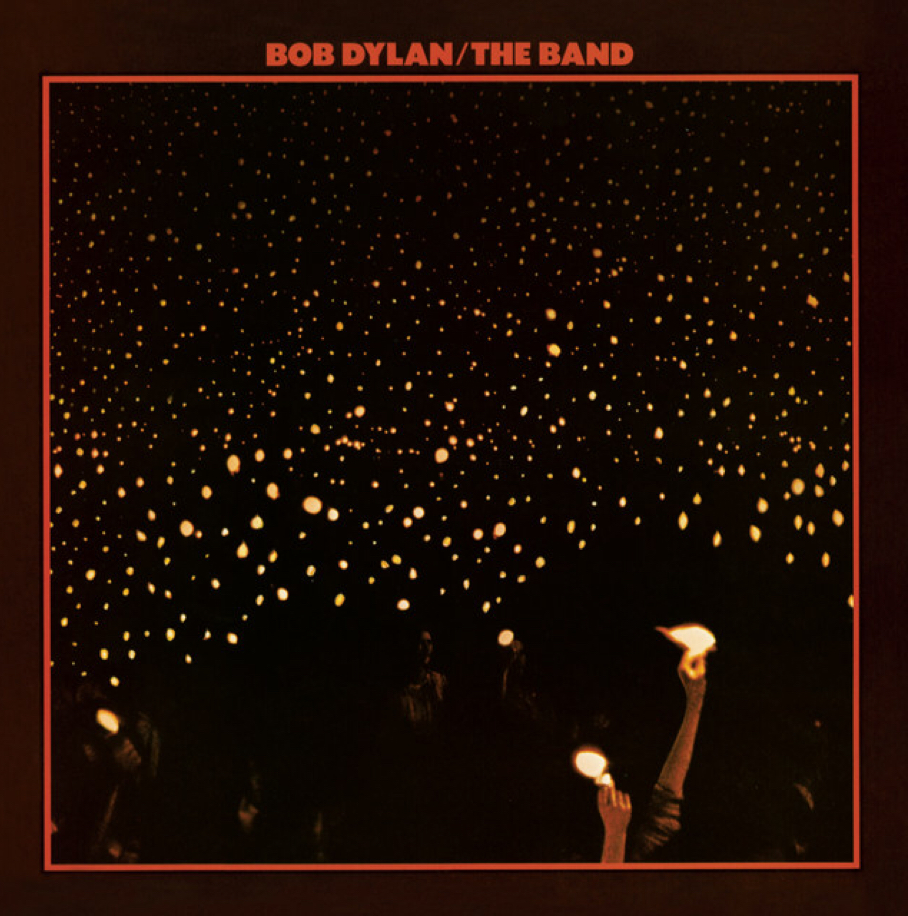
Bob Dylan & The Band – Before the Flood

When I was a boy, like many children of the 1970s, I took cod liver oil in capsule form. An earlier generation had taken the oil straight without the benefit of a digestible jelly hiding the taste. Because I was a boy, and therefore 95% idiot and 5% explorer, I naturally decided one day to bite into the capsule until it popped. My mouth was flooded with a taste of the sea so intense it was like mainlining a fish processing plant. And on that day, I learned that sometimes it’s best not to go below the surface of things: only disappointment – and a lifelong aversion to fish that tastes like, well, fish – will follow.

I don’t want to suggest that Bob Dylan is cod liver oil in this parable. But I also don’t want to not suggest that. My whole life as a consumer of music, and, relatedly, a reader about music, I have been told how great Dylan is. And when something is presented as being good by pretty much everyone, it is very hard to form your own opinion about it. If I like Dylan, am I really just being a sheep and not giving proper consideration to what I’m actually hearing? But if I don’t like him, who the hell am I to reject a Nobel laureate and Academy Award winner? Is it a good idea sometimes to just trust that something is good (for you), rather than have to find out what it tastes like for yourself? It’s the kind of conundrum I grapple with when I offer up these little opinion pieces.

The early 1970s were a (comparatively) fallow period in Dylan’s career, the first such period really, which is why we are now here, over 60 Pazz and Jop pieces in, finally encountering his music. And, man, did I luck out. Because instead of having to assess what I think about a bunch of unfamiliar tunes, I get to dip my toes in with a batch of old hits in a live setting. It completely gets me off the hook: it’s not like I’m going to come up with anything new to say about “Like A Rolling Stone”, and if I did stumble into something new, it wouldn’t be in writing about a live album where he plays a bunch of songs the world already knows.

Or maybe the world doesn’t know them as well as it thinks, because Dylan goes out of his way to twist things up here.The better you think you know a song, the more effort Dylan seems to take in rendering it just a hair unfamiliar. Everything feels fresh, poppier, more contemporary. There is a blues feel to parts of the record, and for a reprobate folkie, this album seriously rocks, although the notion of Dylan as a folk artist should’ve been put to bed long ago.

Dylan has famously pissed off – and existentially on – his audience, so one wonders how some fans responded to some of his reconsiderations on this record. For casual fans such as myself, it’s a revelation. His voice, like Joni Mitchell’s, has always weakened my appreciation of the artistry. But Bob sounds pretty good here. I mean, he’s still Bob, but there’s an energy and passion that is missing from the studio versions of some of these songs. He’s laying it out there, abandoning any notion of cool storytelling detachment. None of these songs are stripped down, with Dylan fully embracing the possibilities that come with having The Band behind him. He’s playing before large crowds, yet the record has the feel of a really dedicated cover band blowing through the middle set – always the best, with the crowd settled in and the band at peak energy, before the end of night lethargy sets in – at a small town bar on a sweaty Friday. The Band acquit themselves well – they were obviously more than a supporting act – but it still feels like Dylan’s show. But when they take centre stage partway through the record, it’s a welcome change of pace.

Favourites are the high energy opener, “Most Likely You Go Your Way (And I’ll Go Mine)”, and a bouncy version of “Don’t Think Twice, It’s All Right”. “Knockin’ on Heaven’s Door”, always a powerful song, is richer for having a less ragged vocal, and “Just Like A Woman” likewise benefits from sounding less cynical. Finally, this version of “All Along the Watchtower” leans into ‘60s psychedelic, and feels like a record The Doors would’ve made if they had actually been smart as opposed to trying to sound smart.

One of these days – and I can see it in my headlights – I will have to bite the capsule and find out what I think about a batch of unfamiliar (to me) Dylan tunes. For now, I can enjoy the simple comforts of known truths.

Pazz and Jop 1974 #5

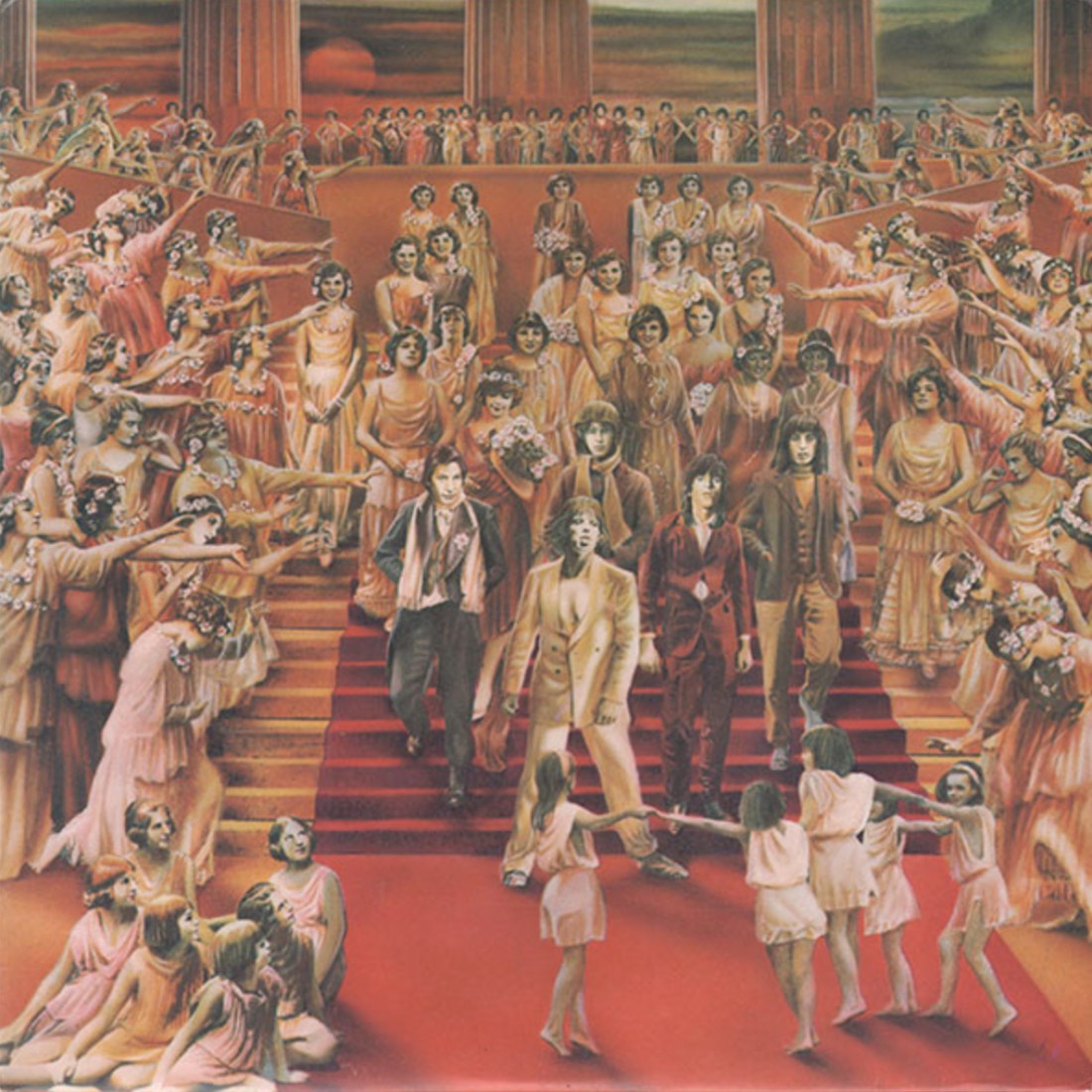
The Rolling Stones – It’s Only Rock ‘n’ Roll

I’ve never been comfortable with the notion that The Rolling Stones are the greatest rock and roll band in the world. It comes off as nothing but hype, the kind of thing dreamed up to get some press. There is a very good argument to be made that in 1969, when this tag was first given to them by the announcer at the outset of one of their shows (and not immediately disavowed by the band), they weren’t even the best band on their home island: The Beatles were still very much a thing, and The Who and Led Zeppelin were staking their claims to greatness. The arrogance of that moniker, especially in view of the diminishing returns of their 1970s records, contributed to the rise of punk in mid decade. And “It’s Only Rock ‘n’ Roll” seems to have played a big part in this.

As I have readily acknowledged previously, I am by no means an authority on The Rolling Stones (or anything, really), so I could be completely off base here, but this feels like the most rock album that I’ve encountered from them so far. It still has bluesy rhythms and the other genre-hopping markers that the band liked to play around with. But there is also a real commitment to pre-power ballads and excessively long songs for no apparent purpose other than to include extended guitar solos. You know – a rock record, as opposed to a more free-wheeling and uncloistered rock ‘n’ roll record.

And that excess and some weird experimentation, it seems, may have been the problem for the folks who were in the vanguard of punk. For them, the Stones weren’t a rock and roll band anymore. They were a rock band, and that signified a bunch of unattractive elements that just called out to be rebelled against. Rock was corporate, and took itself far too seriously: rock and roll was dirtier, and way more fun. And a lot of this album just isn’t much fun.

It sure starts out great, though. “You Can’t Rock Me” explodes out of the gate. It’s a real toe-tapper, with great work from Charlie Watts on the drums, and its failure to be released as a single further convinces me I would have just killed had I been making such decisions in the early ‘70s. The title track is justifiably legendary, even if the guitar sound feels like the shy cousin of Marc Bolan’s chug on “Get It On”. Keith Richard does some fantastic playing heading to the three-minute mark, and the song is a true anthem, with an amped-up country-blues feel. “Dance Little Sister” is another good one, a rollicking stomp with a heavy backbeat, honkytonk piano and a blistering guitar solo.

The forays into non-rock elements show up early, with a funky break 1:30 into the opening track. The sounds of Black artists seem particularly attractive to the lads. They include a cover of “Ain’t Too Proud to Bed” that offers nothing new but scuzz on the guitars and a bit of volume: Mick Jagger is great, but he can’t equal David Ruffin on the original. There’s a bizarre attempt by Mick to sound Jamaican on “Luxury”, they brought in Blue Magic to provide backing vocals on “If You Really Want To Be My Friend”, and “Fingerprint File”, which feels like it belongs on a different record, has a Sly Stone electro-funk vibe with the edges sanded down.

The peaks though are those ballads, highlighted by some all-world piano from Nicky Hopkins. “Til the Next Goodbye” has great cinematic images (“snow swirl around your hair”), pairing delicate beauty with an air of heartbreaking desperation. But it pales next to “Time Waits for No One”, a tale of loss and regret (“hours are like diamonds, don’t let them waste”) which goes on way too long initially then feels like it ends too soon. Hopkins again, subtle until he starts slamming on the keys over the last minute. A consistent, unobtrusive back beat from Watts. Deliciously melancholy guitar from Keith that deepens around 3:00 and becomes virtuosic after 4:00, and our reward for sticking around is Keith playing us out.

It’s a (mostly) good record, but, no, it’s not a fun one. There’s just way too much melancholy, too much self-important seriousness and experimentation for experimentation’s sake to be purely enjoyable. The peaks are marred by some overly long tracks and a few cringe moments (“Short and Curlies” is both), and, again, WTAF is Mick up to on “Luxury”. It feels a bit like a band trying to figure out its future, and relying on trickery to sustain it. That future had one last great record in it, but that was four years away, and the mid ‘70s found the Stones flailing a bit. No wonder the punks felt the crown was theirs for the taking if this was the best the world had to offer.

Favourite “New” Music – October 2022

I think it’s important to know what kind of nerd you are. Nerddom can be very arcane, a subculture with shared codes that is impenetrable to those not in the know, or more expansive, a mass culture experience that brings together people whose only commonality is, say, a love of manga or “Lord of the Rings” or old Sub Pop cassettes. (I made that last one up, but I bet it exists.) And while I have my attachments to the broader nerd world – music, of course, but also superhero movies – what I really am is a data nerd.

So, what does that mean? Well, I love numbers. I am in thrall to things with a quantifiable value. That means, of course, that I have a Fitbit, and have at times been obsessive about hitting my targets. I can get lost in sports reference books and websites – basically long lists of numbers detached from context. I have similarly wasted considerable time reviewing movie box office receipts and television ratings.

In music terms, it means I have a serious attachment to where songs rank on the hit charts. I bought RPM regularly in the ‘70s and ‘80s and Billboard in the ‘90s and ‘00s, and it was totally for the weekly charts, not the articles. The pleasure I got from seeing how long a song was on the chart, or what was rising with a bullet, or if a favourite song entered the chart, is inexplicable, and, yes, kind of weird. But I have always loved numbers and their cold objectivity.

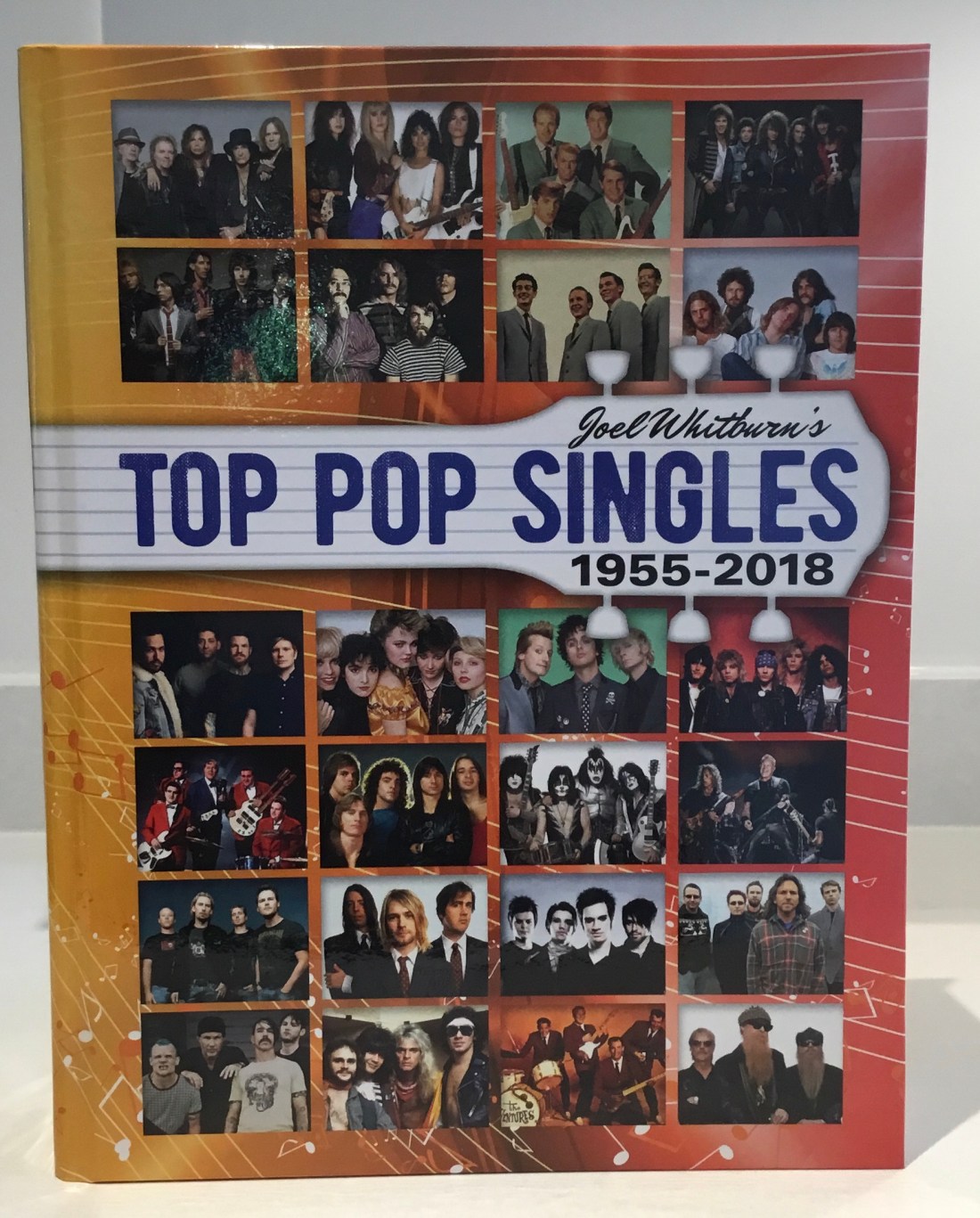
The ultimate music data nerd was Joel Whitburn, who passed away in June 2022 at the age of 82. Whitburn started analyzing Billboard’s charts in college, then put his knowledge to work at RCA in the ‘60s before starting his own company, Record Research, in 1970. Since then, Record Research, through a deal with Billboard, has published a seemingly endless series of books for other music data nerds telling us what is in those charts.

When I started this blog, I quickly realized that if I was going to reference chart performance by a song, I needed a better source than Wikipedia, and naturally thought of Whitburn. I had owned one of his books forever ago, a compilation of Top 40 singles through 1984, and it was heavily thumbed until it finally fell apart and was discarded. There are lots of his books available in stores or from places like Amazon, but for a true nerdgasm, you need to order from the company directly, and pay a serious premium to get the 1,200-page monstrosity pictured above shipped to your home. It’s been worth every penny. Browsing its pages, I see the names of bands and songs that I had long forgotten, and it’s been a joy to revisit oddities like the whispy soft-core pop of Christopher Atkins’ “How Can I Live Without Her” from “The Pirate Movie” soundtrack. It is not a good record, but I liked it enough in the summer of 1982 to record it off CJCB for a mixtape, and was so very glad to experience its horribleness again. Only a true music nerd, a Joel Whitburn, would understand.

And with that, here are my favourite “new” albums from last month:

  • Faces – A Nod Is as Good as a Wink … to a Blind Horse (1971) (I am yet to have a bad experience listening to a Rod Stewart record, and, yes, that includes “Blondes Have More Fun”.)
  • Tom Petty and the Heartbreakers – Tom Petty and the Heartbreakers (1976) (Yeah, I know – I should’ve listened to this decades ago.)
  • Nick Lowe – Labour of Lust (1979) (See Tom Petty, above.)
  • Steve Miller Band – Abracadabra (1982) (I have always disliked the title song, but the album is a soaring meeting of power pop and new wave that feels like the soundtrack to a John Hughes movie, which is high praise in my book.)
  • The Three O’Clock – Sixteen Tambourines (1983) (1960s Britpop/psychedelica filtered through an indie pop sensibility.)
  • Public Image Ltd. – This Is What You Want … This Is what You Get (1984) (I think the widespread dislike of this record is about the audience’s expectations for what John Lydon would give them instead of a comment on the great brooding pop record that he delivered.)
  • The Screaming Blue Messiahs – Bikini Red (1987)
  • The Posies – Frosting on the Beater (1993)
  • Nerf Herder – Nerf Herder (1996) (This is the band that would result if first cousins Bowling for Soup and blink-182 had a baby.)
  • Sloan – Action Pact (2003)
  • Ratboys – Happy Birthday, Ratboy (2021) (A strange blend of folk/country-tinged pop and early ‘90s female-fronted indie rock.)
  • Julia Jacklin – PRE PLEASURE (2022)
  • Sofie Royer – Harlequin (2022)
  • Sudan Archives – Natural Brown Prom Queen (2022)
  • Melt Yourself Down – Pray For Me I Don’t Fit In (2022) (Jazz-funk with elements of Afrobeat, punk and hyperdriven ‘90s indie pop.)
  • My Idea – CRY MFER (2022) (Lily Konigsberg can do no wrong in my eyes.)
  • Shygirl – Nymph (2022)
  • BODEGA – Broken Equipment (2022)
  • Steve Lacy – Gemini Rights (2022) (Neo soul smashes up against psych pop and comes out the other side as its own distinct thing.)
  • Sorry – Anywhere But Here (2022)