
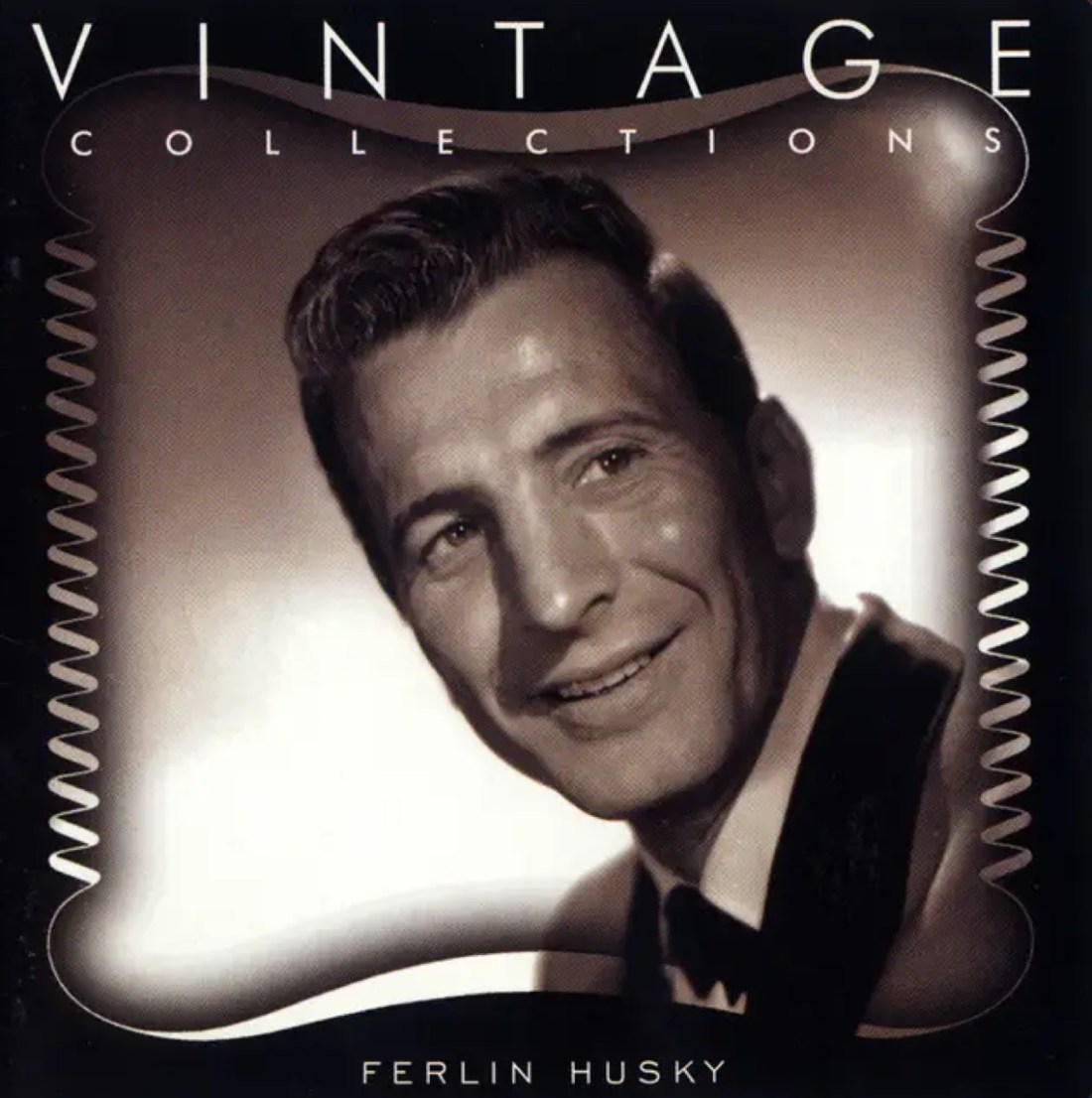
Ferlin Husky (probably) – Wings Of A Dove
The 1970s were boom years for promoting physical activity in Canada. A government study discovered that all that time spent eating poutine while watching “Hockey Night in Canada” on the CBC was putting us at risk of looking like crap as the world got to see us on their own television screens when the summer Olympics reached Montreal in 1976. The solution was ParticipACTION (which I was surprised to discover still exists), which sought to encourage exercise by such measures as shaming us when compared to a typical Swede twice our age, or later going the glitz route by recruiting national treasures Al Waxman and Jayne Eastwood to awkwardly shill for the cause. Around the same time, another wing of the government came up with the Canada Fitness Award Program, which enabled some school age children (me, for one) to confirm their tacit understanding of how woefully unfit they were compared to certain of their classmates. Yes, it was dystopian (but then so is elementary school); however, it was also, in the words of the legendary Oscar Leroy, possibly “the last great thing this country ever achieved”.
I have no way of knowing if they were connected, but it couldn’t have been a coincidence that the local school board added formal physical education to the curriculum when I reached Grade 5 in the fall of 1974. More importantly to me, during one of our elementary school winters, we began making regular (I’m thinking monthly, though it could have been more or less frequent) excursions during the school day to our local arena for ice skating. And that was a glorious thing.
I was never a particularly good skater, but I loved doing it, whether at an arena or on one of the many patches of ice in the tiny metropolis of Little Pond, Nova Scotia. When I played hockey, I was sufficiently inept to be the third best goalie in a community with – you guessed it – exactly three goalies. My skill set was at the “I can get around the ice without falling most of the time” level, and that was good enough. I avoided going too fast, tried to stay away from the kids who were much better than me, and therefore dangerous, and generally could get through an outing without being injured.
It wasn’t just about the skating: time at the arena was where romances could blossom (not for me, you understand, but I saw friends seize the chance to spend time on a hoped-for love match). Or grand schemes could be cooked up: it was on a break from the ice that I teamed with a few friends and came up with a plan to launch a school newspaper, and, amazingly, we went on to publish two glorious issues of the Elementary Herald that school year.
There was, of course, music playing to accompany our efforts in circling the ice. I have been assured by my friend Robert Barrie that lots of current pop hits were in rotation, but those aren’t the numbers that have stayed with me over the years. I was the child of two country music lovers, so that kind of music was almost like comfort food. Sure, by 1974-75 I was definitely trying to manifest my own musical destiny, but it didn’t mean I couldn’t still appreciate a finely honed country ballad. My relationship with the genre has been up and down, but I always seem to find my way back.
Two such songs stick in my memory from those skating days: “A White Sport Coat (And A Pink Carnation)” by Marty Robbins and “Wings Of A Dove”, probably by Ferlin Husky. I say probably because I didn’t know then and because the Charley Pride and George Jones versions sure sound familiar, though both were also artists who got a fair bit of play in our house. The Husky version is closer in time to the Robbins tune, and I’m going to bet our DJ enjoyed this music during a narrow window in his life – just as I had – and indulged his yen for era-specific nostalgia. That’s all I’ve got since my ears aren’t reliable on this point, and it’s more interesting to me to write about Husky than the two bigger stars.
Ferlin wasn’t supposed to be his name, but there was a typo on the birth certificate so that’s what he became. Apparently, in those days you couldn’t complain about such a thing and get it fixed: “I guess you ain’t gonna be named after yer grampa after all.” (That’s how they speak in Missouri, right?) Before becoming a country music star, he’d served in the marines and his ship may (it’s weird that there aren’t better records of this) have participated in the D-Day invasion. His career peaked with “Wings of a Dove” – it topped the country charts for 10 weeks in 1960 – but he was a regular presence on the country top 40 from 1953 to 1975, and even made it to no. 4 on the pop chart with the mournful ballad “Gone” in 1957.
If you know “Wings of a Dove”, you may think me an idiot for not realizing how religious the song is. In my defence, I was 10 when I first heard it, and I honestly don’t think it made its way to my ears even once during the many years between the end of those skating trips and listening to it for this writeup. Look at the lyric sheet and you will see every “he” is capitalized, plus there is a whole verse about Noah and the end of the flood. I love the quiver in Husky’s voice when he sings “A sign from above” in the chorus, and the song uses a super efficient 2:19 to get its (alright, kind of preachy) point across. It’s pretty uptempo, and the beats hit at just the right moments, as if it were designed to accompany moving gracefully across a slick surface – and I sometimes get a weird muscle memory tingle in my legs when it plays, as if I’m about to clumsily go around the ice with my friends one more time, all of us healthy and carefree Canadian youth, living the ParticipACTION dream. That 60-year-old Swede had nothing on us.
 PopNotes