Classic Songs of My Youth Revisited #63

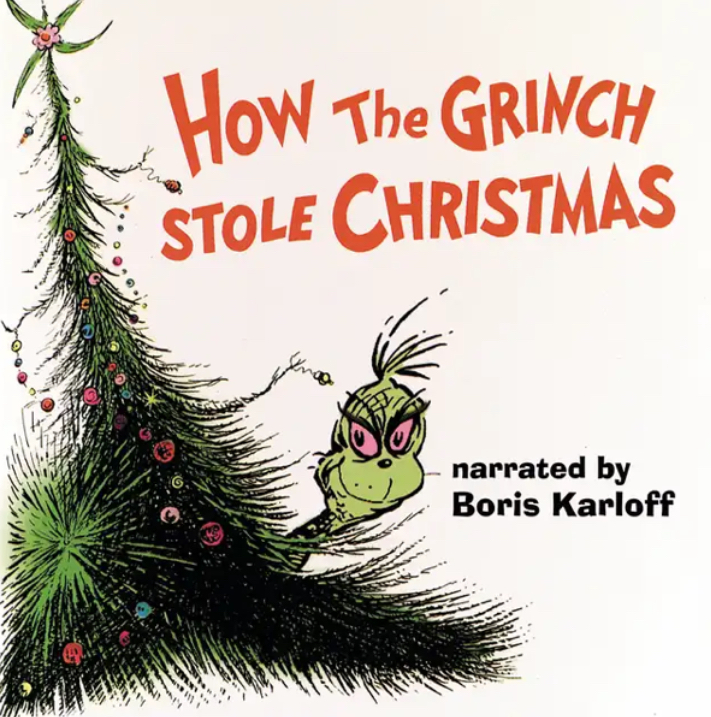
Thurl Ravenscroft – You’re A Mean One, Mr. Grinch

I can’t remember a time when I liked Christmas music, though surely as a child I couldn’t have felt the antipathy that I later developed towards the genre. Growing up in Cape Breton, with limited radio stations to choose from, it was never a good thing to find the airwaves dominated by old white guys like Bing Crosby, Burl Ives or Andy Williams for most of December each year. CJCB was less in thrall to such a takeover than CHER, the other main local station, so it got even more of my listening time in December than other months, when I thought CHER sucked generally, and not just because it played “The Little Drummer Boy” too many times for my liking.

I did, however, love watching Christmas specials on television. I may be remembering this wrong, but it seemed that the arrival each year of “A Charlie Brown Christmas” was evidence that the holiday season was upon us. This would be followed over the next few weeks by the likes of “Frosty the Snowman”, “Rudolph the Red-Nosed Reindeer”, “Santa Claus is Comin’ to Town” and the way too preachy adventures of Davey and his stoned-sounding dog Goliath. And right near the top of that list was the, somewhat unexpectedly, most Christmasy of them all, “How the Grinch Stole Christmas”, the tale of the ultimate curmudgeon who learns the true meaning of the holiday and finally gets out of his own way to have a good life experience.

The special’s theme song was written by Albert Hague, and maybe that name doesn’t mean anything to you, but I jumped up (well, I would have if it wasn’t feeling so comfortable in my chair) when I read that. Hague, you see, was very much a part of my later teen years as the grumpy but supportive music teacher Mr. Shorofsky in the film and related television show “Fame”, a cultural experience which, coupled with appearing (partly in blackface!!!) in my high school’s musical production of “Finian’s Rainbow” (a non-singing part – no one needed to suffer through my warbling), drove me toward a misbegotten and in many ways life-altering decision to study theatre at an Ontario university instead of English at a school located in New Brunswick. Hague wrote a lot of other songs, mostly for musical theatre, and none of them rang even the tiniest bell with me. But “You’re A Mean One, Mr. Grinch” is eternal.

The version that my generation grew up with was sung by Thurl Ravenscroft, whose lengthy resume included roughly five decades as the voice of Tony the Tiger. I’ve seen it described as a dis song, and you can’t really argue with that: among the unpleasant things that the Grinch is compared to (usually unfavourably) are eels, rotting banana peels, termites, nauseous reptiles, skunks, arsenic and unwashed socks. Kendrick calling Drake a white slaver seems almost quaint in this context. The song is three minutes of attacks on his character, sung in a throaty bass over a bouncy orchestral track.

I haven’t watched the original show in many years – the Whos just leave me gritting my teeth with their unnatural sweetness – and I found the Jim Carrey-starring live action version too awful to even consider revisiting, but I am a big fan of the 2018 animated remake, with Benedict Cumberbatch as the titular character. My wife and I rewatched it on Christmas Day, and I enjoyed the movie as much as ever. I love physical comedy, and animation can absolutely brutalize characters with zero consequences for their overall well being (see: Wile E. Coyote, Scratchy, etc.), which, truthfully, makes things a whole lot funnier. But my favourite bit by far is the goat that shows up a few times and makes the most God awful sound that’s ever come out of one of its species. Just anticipating the goat’s arrival on the screen makes me giddy.

The song, though, remains a reliable bit of snark in the unabashed positivity of the most frequently played Christmas songs. There are a lot of cover versions, though most don’t really make much effort to mix things up. To my surprise, the lighter than air approach of the usually (to my ears) painful Pentatonix is a perfect match for the song. RuPaul’s version is almost sultry, a kittenish croon over a glossy synth backing track with soulful backup singers, like she’s flirting with a bad boy, not insulting a monster, before turning into a giant kiss off. And then there is violinist Lindsey Stirling (why has she been all over my Facebook feed the past few weeks?), who successfully enlisted a pre-superstardom Sabrina Carpenter to add some vixenish sass to her usual high-energy brand.

I have a 15-hour playlist of holiday/winter tunes that don’t suck, and there are lots of dark tracks on there, but you aren’t going to hear them on your local radio station nestled in between Dean Martin and Mariah Carey. You may, however, experience that juxtaposition with the Grinch. It isn’t my favourite holiday tune – that remains, for the fourth consecutive year, Carrie Underwood’s “Stretchy Pants” – but it is one of the few classics that doesn’t make me feel like canceling my Spotify account and throwing my Sonos system in the garbage. That’s no mean accomplishment this time of year.
Cover Version Showdown #6

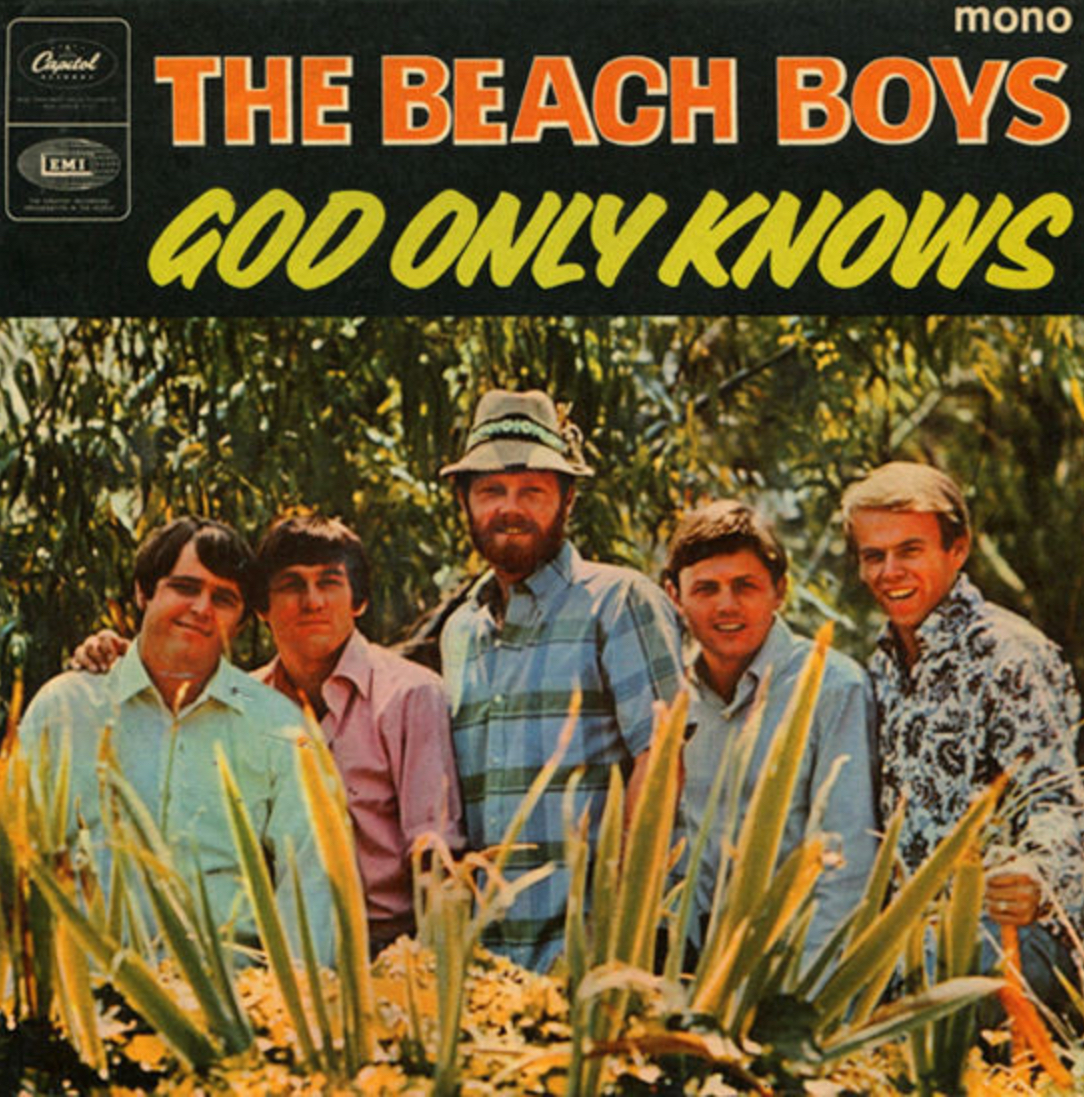
The Beach Boys, “God Only Knows” – David Bowie v Claudine Longet

Probably the first Beach Boys song that I have a clear memory of hearing is “Surfer Girl”, which turned up on “Flashback Fever”, a 1975 K-tel compilation of 1960s songs that also included such classics as Jan & Dean’s “Surf City”, Ronettes’ “Be My Baby” and Bee Gees “(The Lights Went Out in) Massachusetts”, which is also possibly the first Gibb brothers track that made a real dent on my attentions. Over the nearly 50 years that have followed, I have heard a lot of Beach Boys music and saw them live a few times, though I never really got on board with the idea that they were anything special. They had a lot of really good singles, but it wasn’t an output that could stand comparison to the Beatles or Stones, and anyone that said otherwise was delusional.

After starting my Pazz and Jop project, I finally began listening to their albums, and my appreciation blossomed. This included “Pet Sounds”, which, while brilliant, also has a bit too much of a “Look at me, Ma, look at me!” vibe. Sure, it’s cool that you can do all this interesting stuff, but should you? It has “Wouldn’t It Be Nice?” and “God Only Knows”, which are two of my three favourite Beach Boys songs (“All Summer Long” is the other), “Caroline, No” and “Sloop John B” are also classics, and there really isn’t any dead air. It’s just very busy.

God Only Knows” certainly isn’t free of Brian Wilson’s artistic fever dreams, but it’s the lyrics that have always pulled me in anyway. Though the opening line is “I may not always love you”, it’s framed in such a way – immediately followed by “But as long as there are stars above you / You never need to doubt it” – that you know instantly that it’s a lie, that the narrator is so besotted that there is no coming back from this. When he sings “God only knows what I’d be without you” it is both a declaration and an entreaty: please don’t let me find out. It is a song of undying love, and though he will carry on if she leaves, he will be a shell. It’s also a song that is deeply personal for me. I felt lost when I met my wife, not knowing what was coming next, and every time I hear this song – which was about 50 or 60 times today – I think of her and feel like she rescued me from an unknowable darkest timeline. So, of course, it’s not only my favourite Beach Boys song: it’s probably one of my 5 or 10 favourite songs period. Thus diving into cover versions was not without some risk, though I felt confident that my love of the original would preserve me in the face of whatever fuckery people got up to in the name of artistic expression.

Sometimes, finding two distinctive and listenable cover versions can be a struggle, but when it comes to “God Only Knows”, there are riches beyond the dreams of avarice. Not that all are created equally. Too many versions – Captain & Tennille (the Captain should have known better given his history with the Beach Boys), Neil Diamond, Michael Buble, Bryan Adams, Holly Cole, Joss Stone – slow it down and by doing so suck all the life out of the song. Yes, it’s a love song, but it’s celebratory, not the mourn-fest that these artists seem to think it is. Similarly, John Legend and Cynthia Erivo have lovely voices, of course, especially hers, but the orchestration is a complete slog. Other versions miss for different reasons: Andy Williams’ mannered and melodramatic singing ruins some lovely piano; Glen Campbell’s is pure cheese (though the opening appears to have been ripped off in 1978’s Superman movie tie-in “Can You Read My Mind”); Joey Hetherton is too bombastic; and Edith Whiskers is painful to listen to (though at least it’s sort of intentional). The backing track on Olivia Newton John’s version is annoying, and she seems to be trying to be sexy when that was definitely not the brand of pre-“Grease” Olivia. Brandi Carlile’s version is guitar forward, but it sounds like a guy in the corner at a party fiddling around with an instrument he’s still learning how to play. And, finally, Pentatonix are, well, Pentatonix, and you either like this overwrought a capella or you don’t, and I do not – it’s exhausting to listen to, all mannerisms and no subtlety, and no joy. Hard pass.

There are also a lot of whimsical versions, picking up on the baroque side of “Pet Sounds”: She & Him’s version is lighter than air, and just what you would expect from a manic pixie dream girl; Imaginary Future slow it down but still have some bounce, and it feels like the husband and wife that make up the band are singing to each other; and Lilia Tracie gives it a sort of tinkly bossa nova take. There are also some versions that don’t try to reinvent the song but just do a stellar job of showing their respect and love for it: Dale Earnhardt Jr. Jr., Avenged Sevenfold (which starts out quietly, and sort of low energy, like they aren’t really sure why they’re even playing this particular song, until the tempo picks up and they rock out the rest of the way), Jars of Clay (as wholesome as you would expect from a Christian band, but unexpectedly one of the more purely enjoyable listens), and Dr. Teeth and the Electric Mayhem, which is faithful, but with The Muppets, which has to be worth something. 

Finally, before we get to our contenders, three unique versions that stand out. The Nylons bring a joy to a capella that Pentatonix lacks, and while the song works well in this style, it does go on much longer than it should considering how repetitive it is. Although I love Elvis Costello, classical music is not my thing, so I rarely revisit his work with the Brodsky Quartet, and while their version of this, as Elvis says, old California folk song is lovely, I just cannot get into it. Finally, we have Daniel Johnston, whose singing voice is a taste I have not yet acquired, but it’s still charmingly minimalist, which is a real challenge with a Brian Wilson composition.

The first of these covers that I listened to was from David Bowie, who quickly established himself as the front runner. Bowie never waters things down: to call it epic may not do it justice. It’s like the centrepiece of a gothic musical: the Phantom crying over his Christine, a tortured soul howling into the darkness. He stretches the song out, slows it down, accentuates the pain and fear at its heart. Swelling strings, heartbeat drums, a gloom-inflected vocal that rises to despair. But, like the Phantom, a dark lord obsessing over an unreachable desire, there is certainly an air of creepiness, which Bowie also excels at. There is something of the stalker to its presentation, like a guy watching someone through slightly parted (stage) curtains.

So, who is he watching? Well, how about Andy Williams’ ex, Claudine Longet. Full disclosure: I did not know she was a “singer”, and the quotes are entirely in reference to this recording. What I knew about Longet came down to two men: Williams and Spider Sabich, the boyfriend who she may have murdered but escaped justice thanks to some dreadful police work. And while this is really talking musically instead of singing, it has the kind of breathless sexiness that never fails to charm (well, men, at least). Maybe it’s the accent, like a druggy “Zou Bisou Bisou”. The baroque feel of the original is retained, though subtly: you certainly would not have heard this playing in the court of Louis XV while Rousseau stood by waiting for his monarch’s response. The only problem is that you never really believe what she’s saying: you’d be fine without him, Claudine, but he’d be a mess. But the whole thing somehow works, drifting on a cloud of Gallic grace and charm.

The Winner: David Bowie

This was never a fair battle. While Longet’s version is a lovely distraction, Bowie’s has gravitas, and is a more worthy descendant of the original. If both songs were encountered without foreknowledge, I think it would take you longer to recognize the Bowie track as a cover, and that matters to me. But both are honourable, neither tied to the past nor neglectful of it, original without being destructive. 

The end of Brian Wilson’s time as a creative force seems to be close based on recent reports that he is suffering from dementia and being placed in a conservatorship. He has been part of that decision making process, so more music may yet come, but those days are certainly numbered. He has given the world a body of work that is breathtaking in both volume and quality, especially in view of the many interruptions to his career from challenges with his mental health. And his California folk songs will continue to brighten many a day in gloomier climes.

Classic Songs of My Youth Revisited #42

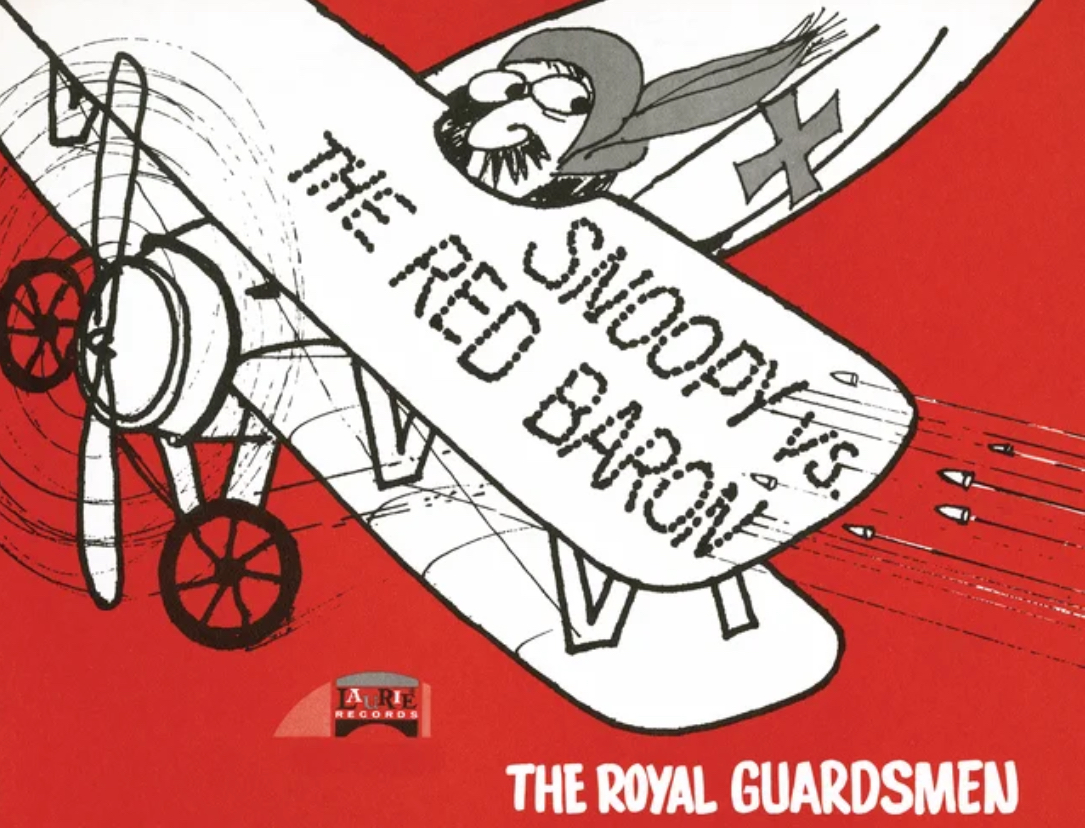
The Royal Guardsmen – Snoopy vs. the Red Baron

The 1960s was probably the era in musical history that the word “goofy” can best be applied to. It was the glory days of the novelty song, when a weird record might be followed by an even weirder record, and none of this weirdness could stop both of them from climbing into the upper reaches of the singles chart. This included acts like The Singing Nun and The Irish Rovers – just those names tell you something about what you’re going to be listening to – but these were mere glimpses of the nuttiness of those years. There was Larry Verne’s “Mr. Custer”, which might get him cancelled today, with “Injuns” and “redskins”, whoops and scalping. The Trashmen’s gloriously obnoxious “Surfin’ Bird” (which wears out its welcome about 30 seconds in), The Hollywood Argyles’ comic strip-inspired “Alley Oop”, and other oddballs like “Simon Says” and “Yummy Yummy Yummy” were all hits. Ray Stevens made a career out of novelties, with two songs that I can recall the lyrics to today almost in their entirety in “Ahab the Arab” and “Gitarzan”. Even some acts that were very serious about the music they were making, like The Monkees, had a decidedly non-serious image.

Novelty songs didn’t have much staying power on radio, as listeners would soon tire of them and move on to the next strange thing. Luckily, for a child in the 1970s, there was K-tel. The discount record label would, as it did with all the popular music it could get hold off, repackage these tunes in collections of 20 tracks, and deliver them to our ears with teasing television commercials that lured us to the bins and racks of our local record store. My family owned several of these compilations, but the only one I can remember by name is “Goofy Greats”. The tracks listed above save “Gitarzan” were included, along with a dozen-plus more. And starting it off, in keeping with its cultural might, was The Royal Guardsmen and “Snoopy vs. the Red Baron”.

Snoopy, of course, is the pet beagle of Charlie Brown, the protagonist of the “Peanuts” comic strip. Like most kids of that era, I would read “Peanuts” and other comics in the daily paper, skipping over more adult offerings like “Mary Worth” (while also bemoaning the space being wasted on them), and my family’s book offerings included some paperback collections of older strips. Snoopy was the breakout, the supporting character who became the real star: the Steve Urkel of his day. He had a rich interior life full of bold adventures, sometimes accompanied by his bird friend Woodstock. And most prominent of these was his long-running feud as a World War I fighter pilot with the dastardly German flying ace, Manfred von Richthofen, a.k.a. the Red Baron. So, in the spirit of the era, it was logical for the writers of a tune about the Baron to add some new lyrics – the inevitable litigation to come be damned – after failing to capitalize on the vogue for historical songs to try and instead take advantage of this helpful new attention being paid to their very old subject. That lawsuit meant that the songwriters had to give up the publishing revenues from the tune, but the song got out into the world, and eventually hit #2 on Billboard, losing out on the top spot to the non-novelty Monkees and “I’m A Believer”.

The song is definitely worthy of the label “goofy”. There’s lots of psychotic-sounding German – the opening spiel calls Snoopy pig-headed – along with machine gun fire and the sound of airplanes falling out of the sky. Snoopy, after initially failing to take out the Baron, consults with renowned military strategist the Great Pumpkin (Linus is redeemed!), forms a plan and shoots down his foe, stealing glory from the soldier – whose identity has never been definitively agreed upon, but may have been a Canadian pilot – who actually did the deed. The backbeat feels like a sped-up march, and there’s a pseudo sample of “Hang on Sloopy” that almost resulted in a second bit of litigation for this little tune. Musically, there is nothing much happening here, but it has the virtue of a taut narrative: it just races through the entire tale in a crisp 2:40. That precision has another benefit: you can listen to it several times in a row without wanting to throw yourself out of the nearest Sopwith Camel in mid-flight.

This is possibly the greatest novelty tune of all time for several reasons. First, The Royal Guardsmen didn’t just disappear like so many bands after their moment of oddball chart glory passed: they later had some minor non-novelty hits, and with some interruptions and changes in personnel, remained a functioning act as recently as 2011, and possibly beyond. Second, it spawned numerous (and occasionally successful) sequels, including “Snoopy for President” (my wife owned the album), “Snoopy’s Christmas” and the absolutely nutbar 2006 release “Snoopy vs. Osama”, in which our beloved beagle seems a tad bloodthirsty (while suggesting that “Zero Dark Thirty” is as true a tale as the Apollo moon landing). Third, the song itself has had surprising longevity: Quentin Tarentino even used a snippet in “Once Upon A Time in Hollywood”. Finally, and most importantly, there are covers: in Spanish, Italian and Finnish, and ska and punk-ish versions, too. The last two are kind of fun, but the others are just the same song in a different language. But that, too, is a triumph because someone thought it was worth the trouble to do that.

There is, however, a clear winner for the weirdest version of this song. Fearful of litigation, the Canadian arm of The Royal Guardsmen’s record label refused to release it as written, so the band re-recorded it with new lyrics under the name “Squeaky vs. the Black Knight”. It actually got some traction on Canadian airwaves before the legal issues were sorted out and the original began its journey to becoming the most popular song in the country. The song is identical in almost every way but for a few changes in the lyrics, but those changes make it completely nonsensical, entirely detached from any context that would help you enjoy it: only here can you find a buck-toothed beaver keeping the skies over Europe free from German tyranny. It’s a true novelty song: horrible, but not so horrible that you won’t be tempted to hit “repeat” at least once to make sure of what you thought you heard.