Classic Songs of My Youth Revisited #61

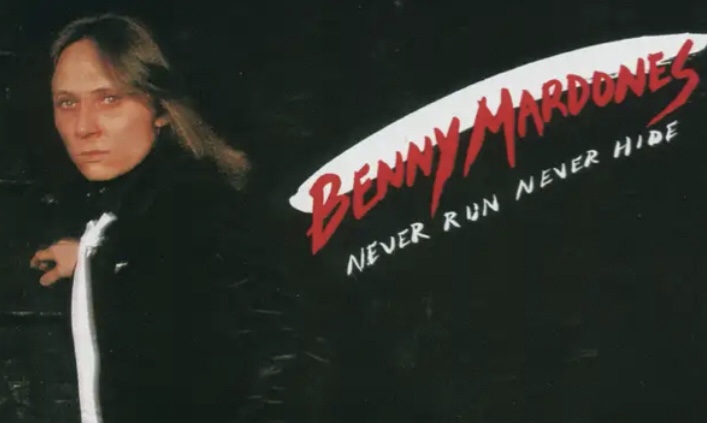
Benny Mardones – Into the Night

In the glorious history of pop music, there may be no more unsettling collection of songs than those that are dedicated to exploring the wonders found by males aged 21 and (often much) older in the arms of females who are, umm, not yet 21. Like, a fair bit not 21. Okay – sixteen-year-old girls.

There is no question it’s creepy, yet somehow not nearly as creepy as a song about a fifteen-year-old girl would be. The age of consent in Canada and 60% of the United States – where most of these tunes originate – is 16, so there is nothing legally wrong in these jurisdictions with, for example, 27-year-old Gene Simmons observing that “Christine Sixteen” is “hot every day and night”, or for 33-year-old Ringo Starr to know what his beloved’s more-than-half-as-old-as-his lips tasted like. Disturbing, yes, but neither of these gents were at risk of doing hard time for these predilections.

A defence can be made out for certain songs, like Sam Cooke’s “Only Sixteen”, which is clearly from the perspective of someone of a similar age (although the Dr. Hook version still makes me feel a tiny bit off). But then you get into the leather-booted fantasies of Iggy Pop, and you know there’s a good chance the singer is going to hell. However, if you crawl far enough down the “sixteen” musical rabbit hole you’ll also encounter the droll delights of the table-turning Ayesha Erotica, so the journey is definitely worth the trouble.

Among these anthems we also find “Into the Night”, Benny Mardones’ top 20 hit from 1980. The song itself leaves open the possibility that these are just a pair of star-crossed teens, a Bronx or Brooklyn Romeo and Juliet. Sure, the opening line says “She’s just 16 years old / leave her alone, they said”, but it’s not outside the realm of plausibility that this could just be a protective parent trying to chase away a local ne’er do well of similar age, like Sandy’s dad would’ve felt about Danny, or Virginia’s about Billy Joel. The video, unfortunately, removes all doubt.

It starts with 33-year old Benny, looking maybe a decade older (fighting in Vietnam will age a guy), rolling down the street in his prison-issue tee shirt and jacket with pushed up sleeves the way all the cool guys wore them back then. After his beloved’s Amish dad turns him away at the front door to her house, Benny offers up a diva eye roll, then slides around to her bedroom window in best stalker fashion and watches as she morosely contemplates her inexplicable attraction to a guy who thinks a wife beater is a good fashion choice. The two-shot leaves no doubt about how really, really young this girl is, all fresh-faced innocence, compared to smoker Benny’s under-hydrated countenance. Following a fairly static shot where Benny sings to her over a pay phone (strategic misstep by her dad in not taking her phone privileges away) and another shot where he’s still on the phone but with weird blue-tinged stock footage of a cityscape in the background, he makes his big move. He sneaks in through her window (Amish dad, can we talk about why your teen daughter has a room on the ground floor?), rolls out a tiny carpet, then Aladdins her into a flight around nighttime New York City against the best green screen effects that can be pulled together on a budget of $1.75. And, of course, they kiss, and if that doesn’t make your skin crawl even a little while wishing for an officer of the law to be waiting when they land, then you and I are not watching the same video.

And yet, as awful as the video is – and it is really, really awful – and the pure ick factor at the song’s core, I will never stop loving “Into the Night”. Take away the sleaze, and you’re left with a bombastic declaration of love, which hit my hormone-flooded 16-year-old body hard back in 1980. The key lyrics – “If I could fly / I’d pick you up / I’d take you into the night / And show you a love” – are simple, yet touch on that universal feeling of wanting to escape from the world’s restrictions with the person who touches your heart most deeply. The music is deep and bold with subtly booming drums offset by delicate piano and twinkling synth notes. Benny occasionally slips into a limp falsetto that is perfect for capturing the desperation that he feels over the efforts being made to keep him from his true love. It’s a powerful vocal, passionate and tortured, melodramatic, yes, but it’s an earned melodrama. Like all the best love songs, it can feel personal to anyone who sings it. Try singing along – really singing, like when you’re alone in your home and no one else can hear you – and not have a catch in your throat, and maybe a bit of eye sweat. I’ll wait.

Like a lot of artists, Mardones didn’t stop making music just because most of us stopped paying attention. Over the next 35 years, he released another 10 albums, and even had a second run into the top 20 with the same song in 1989. Despite a Parkinson’s diagnosis in 2000, he remained active until at least 2017, with the disease finally claiming him in 2020. His hands were very shaky in December 2017 when he performed the song for what he claimed would be the last time in a New York casino. He asks the crowd to help him sing, and they meet the challenge. When the camera pans across the audience, what you see is not only oldsters like me, but also a number of people who wouldn’t have been around to hear “Into the Night” on their radios in 1980, or probably even 1989. Somehow, in this fragmented musical ecosphere, where you can listen to almost anything whenever you choose, the song found its way to them, and they fell in love with it just like I did 44 years ago. I suspect it will continue to make new fans as long as they exist to discover it.
Classic Songs of My Youth Revisited #39

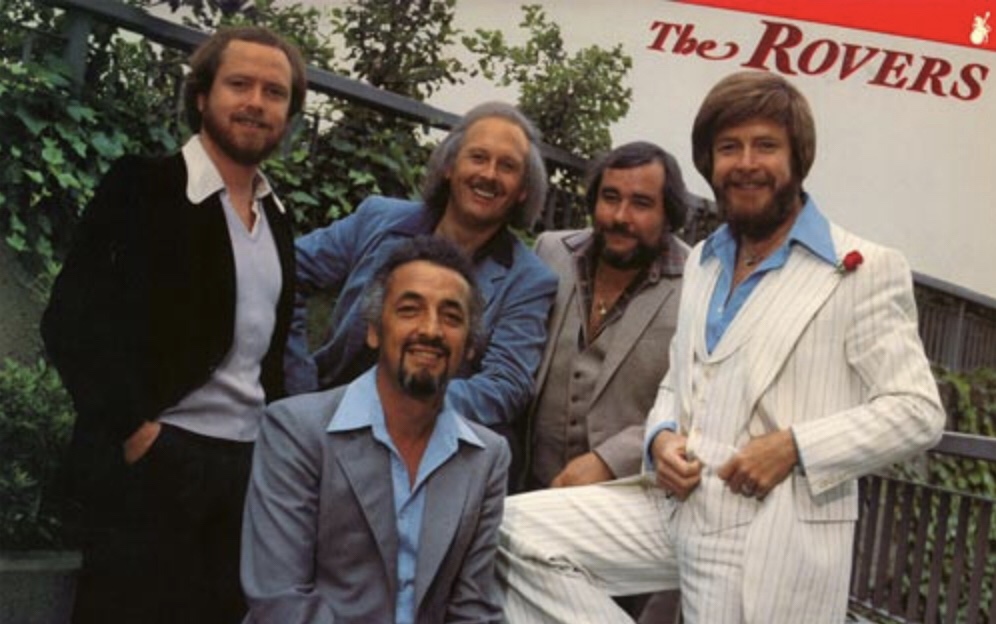
The Rovers – Wasn’t That A Party

Growing up in Canada in the 1970s, I was not a fan of our national television networks. They were great for sports and, to the extent I was paying attention, news, but our scripted programming left much to be desired. There were such short-lived “classics” as “The Trouble with Tracy” (which I mostly remember now in connection with co-star Steve Weston’s tragic early death) and “Excuse My French”, and long-lived but mostly not-much-better shows like “The Beachcombers” and “The King of Kensington”. I did love some of the children’s shows – “The Waterville Gang” stands out in my memory (it’s crazy that almost 50 years later I can remember character names and what their voices sounded like) – and there were smart quiz shows, like “Headline Hunters”, “Front Page Challenge” and my beloved “Reach for the Top”. But all of the musical and variety shows were pretty old fashioned, with such gems as “The Pig and Whistle”, “The Bobby Vinton Show”, “The Tommy Hunter Show” and the stars of today’s missive, The Irish Rovers, and their eponymous series.

I had nothing against The Irish Rovers, or anyone else on these shows. But their music had nothing to offer me when, for example, Don Cornelius and “Soul Train” were airing on Saturdays (which I foolishly almost never watched because I didn’t know the songs – soul music didn’t have a big presence on our local radio band waves). I knew there were other great shows being denied to me – like “American Bandstand” and “Don Kirshner’s Rock Concert” – from reading “TV Guide” and other print media. Instead, I was being served up traditional Irish music, country and soft pop. My ears were not interested.

Then, in 1980, The Irish Rovers went rogue. They rebranded – punting the Irish part of their name – and made a stab at the pop charts. They’d been there before, but 1968’s Top 10 “The Unicorn” was one of those freak occurrences that could only happen in the pop folk environment of the era. It wasn’t a half-hearted effort either – they appeared on frickin’ “Solid Gold”. (I offer this fake but oh-so-accurate clip from “The Boys” as some evidence of how truly bonkers that show was.) And it worked: it got them back into the American top 40, and to #3 in Canada, which seems somehow factually wrong to me even though I remember it happening.

What I have trouble understanding now is why this song was a hit at all: it should’ve been a tune that got a few plays, was rewarded with some earnest chuckles, and then consigned to the musical dustbin other than being hauled out now and then at evening’s end by a not-as-clever-as-he-thinks-he-is dive bar deejay. (On the other hand, Joe Dolce’s “Shaddap You Face” was an even bigger hit the following year, so it’s possible we were all just idiots back then.) It’s a fun song, but it’s not a good one. How do I know it’s not good? Because good songs reward repeated plays. There are songs that compel you to play them again, and again, and maybe again, only to reveal more depths over time. That’s not “Wasn’t That A Party”. The lyrics have a few cute lines (you won’t go wrong with me by throwing in references to cats and the law), but the music is simple and repetitive, save for some honky tonk piano and horn bits. On the first replay, I was bored after two minutes, and there is really no reason for this recording to last longer than 2:30 – almost everything after that simply repeats what came before, so that a cute little ditty becomes something you have to survive. And survive is what I did. On the second play, my ears began to hurt. On the third, blood began to flow from my eyes. I stopped there, fearing one more would put me in “Scanners” territory. (I may be exaggerating a bit here.) If you can get to four, you are clearly made of tougher stuff than I, and probably also way too drunk to be on your phone right now.

As it turns out, this was a cover of a song by a fellow named Tom Paxton, whose version is vastly superior. Gentler, more melancholy, remorseful as opposed to boasting, and, though some 33 seconds shorter, not at all repetitive.

Anyway, I hadn’t thought of the band in years, save for every Christmas season when “Grandma Got Run Over By A Reindeer” turns up again. I can’t even say why I thought of them now. So I was surprised to learn they are still very much an active concern, 38 years after they last had a song on the charts. (That would be 1985’s “Everybody’s Making It Big (But Me)”, also a cover and, yes, also not even close to as interesting as Shel Silverstein’s drunken piano bar blues original, or Dr. Hook’s goofily strained version.) They toured from Sarnia to Victoria in March and April 2023, supporting the January 2022 release of their latest album, “No End in Sight”. The title song is an original in the traditional style, and I like it a lot. 10-year-old me would be shaking his head at the codger I’ve turned into.


Classic Songs of My Youth Revisited #28

John Lennon – “(Just Like) Starting Over”

From December 5 to 7, 1980, I had what was to that point probably the best weekend of my young life. The following day, December 8, John Lennon was murdered. The two events, of course, had nothing to do with each other (as far as I know, anyway), but their temporal relationship has always meant that I don’t think of one without the other.

Let’s start with Lennon. The Beatles were my first band, so I naturally loved John. But he was barely on my listening radar in the late 1970s while Paul McCartney still churned out hit after hit, so I by default fell on the Paul side of that particular dispute. John hadn’t had a hit single in over half a decade when “(Just Like) Starting Over” was released in late October 1980, and while it was doing well in the United States, it seemed like his recent fallow stretch was going to continue north of the 49th parallel: the song wasn’t even on RPM’s national chart when it came out on December 6. That quickly changed: it debuted at number 28 a week later, then hit number 1 on December 20. That momentum continued into the new year, and it ended up as the biggest song in Canada for 1981.

So, what was I up to that was so great that first weekend of December?

A regular part of my childhood Saturday evenings was watching “Reach for the Top”, a national quiz show that matched teams of four high schoolers in a battle to prove who knew the most stuff. I had always loved trivia – I was an incessant dabbler in “The World Almanac” with its lists of highest mountains and Olympic gold medalists, and by 1980 owned the first two editions of both “The Book of Lists” and the endlessly fascinating “The People’s Almanac” (which I still have, their condition evidence of heavy use) – so getting onto my high school’s “Reach” team was a life goal. Schools in Nova Scotia only competed every second year, so my Grade 11 year of 1980-81 was my one shot, and I made it. We had a magnificent and balanced team, with Sandy Nicholson, Nelson Rice and Doug Campbell joining me, and it could be intimidating to be around such smart people. I was beginning to understand that maybe this was my tribe.

The fun started on the night of December 5 when, after getting set up in our hotel following a long drive to Halifax, my uncle picked me up and brought me back to his apartment, where I ate pizza, played with his infant daughter, watched American sitcoms on channels I didn’t have access to at home and, yeah, after his wife arrived and said child was put to bed, smoked black hash out of a bong he made using a toilet paper core and some tinfoil. Good times.

Anyway, even with my less than stellar contribution, on December 6 we won our first two games (including a particularly satisfying defeat of a private school in their matching outfits whose number included a boy who less than two years later was in a New Jersey jail for his role in the murder of a classmate’s parents), and our teacher chaperones, two lovely women named Pat, got permission from our principal to take us out for a fancy celebratory dinner at a Mexican restaurant called Zapata’s. I doubt said permission included alcohol, but a pitcher of sangria was ordered, and, in a misjudgment that could have had disastrous consequences with a less law-abiding group of boys, we cajoled them into ordering a second. Left to our own devices the rest of the evening, we retired to the poolroom, where we would alternate between heating up in the sauna then racing to dive into the pool before our body temperatures dropped. Another school who had lost earlier that day were in the same hotel, and we hung out with them a bit, failing to make any headway with two pretty girls that were in their number. After the pool closed, we watched “Monty Python and the Holy Grail” in one of our rooms, then crashed, getting up the next morning to take care of business and earn our spot in the final round. Somewhere along the way, I bought Kurt Vonnegut’s “Player Piano”. A magnificent weekend.

Two days later, I was among the tens of millions watching tribute after tribute to Lennon on television, where it seemed to own every channel the night of December 9. And “(Just Like) Starting Over”, a song that I already liked but hadn’t given a heck of a lot of thought to, was soon everywhere, the tragedy a grimly ironic thumb in the eye to Lennon’s positivity about new beginnings.

It is a song out of time, more at home in the 1950s than 1980, which may explain the rather muted response initially: post-punk and post-disco, music was trying to look ahead to the next big thing, and not to a relic from the 1960s drawing inspiration from a decade before that. Light taps on a triangle, gently strummed guitar, then a heavenly chorus of “ooooo” and “aaaah”, followed by a vocal that I’ve always thought of as John’s attempt to resurrect Elvis Presley, as, again, a 1950s piano bangs away while a stubbornly subtle bass line rolls along underneath, with drums that sound at times like handclaps. The lyrics are a mature declaration of love to a partner who has been with him through much, and the hope of more to come. It’s far more honest and romantic than the more traditional dreck of “Woman” that followed later on the same album, and whatever you think of Yoko Ono (as time passes, I am more and more impressed by her), you can’t deny John’s love for her. The song is blissfully sunny without being Pollyannaish, and not many of those can get you on the dance floor, too. Pretty damned impressive.

Our return trip to Halifax for the final round a few months later was far less fun – the Pats had learned better. And, as it turned out, having four really smart guys was not enough against the buzzsaw that was Hans Budgey, who ran the table in the rapid-fire last two minutes of the title game to turn a close match into a blowout. Hans and company went on to win the national championship, and no one will ever convince me (and I defy them to try) that we weren’t the true national runners up. I still love trivia (yes, I did try to get on “Jeopardy”, which is a good way to learn that maybe you don’t know nearly as much as you think you do), and, over the last year or so, I’ve listened to a lot more of John Lennon’s music. Two days ago, I heard “(Just Like) Starting Over” in a grocery store, and for all the nostalgia in its sound, it remains a fresh and invigorating piece of pop music. I still think Paul won the 1970s, but John was definitely gearing up to take a run at him in the 1980s, which leaves us with one of the great “what if”s of pop music.

Classic Songs of My Youth Revisited #23

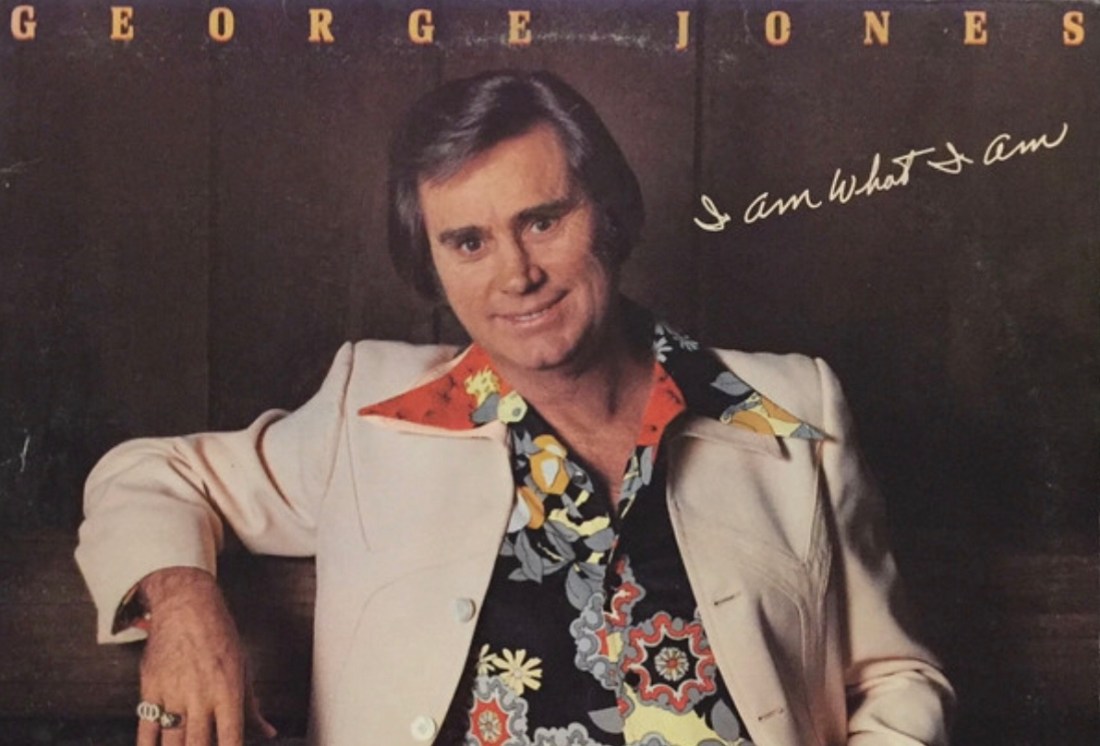
George Jones – He Stopped Loving Her Today

Every time I see a photo of Johnny Cash, I think of my father. For the longest time, I couldn’t figure out why. If I look at the right photo at the proper angle I can see a physical resemblance, but that isn’t it. No, I think of my father when I see Johnny Cash because of who Cash isn’t. It’s because he isn’t George Jones.

I grew up around country music because that’s what my parents mostly listened to. (My mother also played the shit out of Helen Reddy’s “I Am Woman”, and her album collection included such pop-folk wonders as Dan Hill’s “Longer Fuse”.) I know there was some Cash in there, because how else would I have heard it, and there was Merle Haggard and Don Williams (I think that was my mother’s pick) and the Statler Brothers and lots of others. And there must have been some Jones, because I knew “The Race is On” and “She Thinks I Still Care”, though the latter at least is a song that my dad also played.

I loved my father and I believe he loved me, in his own fashion, but I don’t think he liked me, and most of the time I didn’t much care for him either. We were just two very different people who could never find much common ground. We both loved hockey when I was younger, but that only took us so far (and still managed to be a source of conflict between us most of the time). Other than being someone I didn’t wish to emulate, I can’t say he played much of a role in who I became. (My mother is a very different story.) If he was still here, he’d probably agree with that statement, and be okay with me saying it – he likely wouldn’t want people thinking I was too much like him either.

In the early 2000s, I bought my father a Johnny Cash songbook for Christmas. He was underwhelmed, which is how I learned that George Jones was his favourite singer. (Merle Haggard was right up there, too.) Me being wrong about Cash and Jones’ places in my dad’s musical hierarchy is just another measure of the closeness of our relationship.

“He Stopped Loving Her today” (yes, this piece is still about a song, smartass – but thank you for sticking around this far into my therapy session) came out in April 1980, and I am absolutely certain that soon-to-be 16-year-old me did not have the song on his radar. By then, I had been fully emancipated from my parents’ musical tyranny, and likely had Billy Joel’s “Glass Houses” on repeat that spring and summer, along with Elvis Costello’s “Get Happy” and Pete Townshend’s “Empty Glass”. It wasn’t until sometime in the 1990s that I became aware of the song. The hows and whys don’t matter – it’s the discovery that counts. Because I am completely in agreement with those who rank it the greatest country song ever.

For a song about a life-altering love, there is a surprising amount of dark humour. The opening line – “He said I’ll love you ‘til I die” – immediately alerts you in its answer to the title that this is not a love song in its traditional form. There is also the mention a bit further on of “First time I’d seen him smile in years”, that rictus grin being a gift from death itself. Gently strummed guitar is paired with chill-inducing harmonica and slide guitar, leading into the operatic chorus. Jones’ vocal is impassioned and heartfelt: it’s a song that only a mature voice can do justice to, a voice that is a tiny bit shaky but still holding most of its former abundance.

After someone is gone, you don’t get do-overs, and I’ve never wanted one when it came to my father: I think we could have lived a thousand lifetimes together and never bridged the gap between us. In this case, biology is destiny. But I do wish I had embraced country music sooner: it would have at least given us something to talk about that (probably) wouldn’t have us butting heads in mere minutes. As for what happened after he was gone, a different version of us both may have found a way to bond over a song like George Strait’s “Give It Away” when my life was falling apart and I turned to music again and again for sustenance. That was something that he understood very well, and it makes me sad that we missed out on that opportunity: I think it would have done us both a world of good.

Classic Songs of My Youth Revisited #4

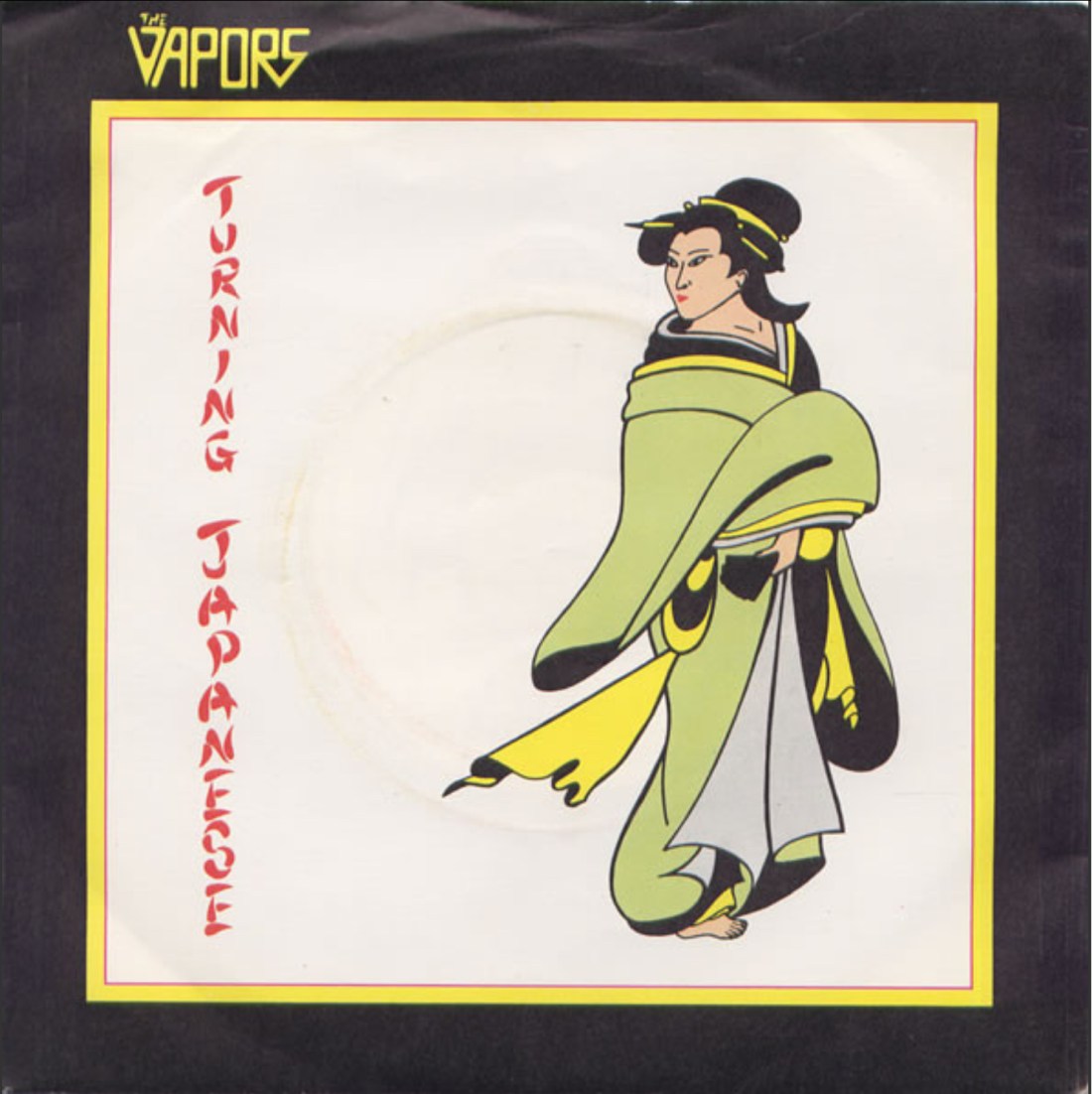
The Vapors – Turning Japanese

If you had the good fortune to attend a Friday night dance at Memorial High School during the 1980-81 school year, you might have witnessed me having what could best be described as a spasm whenever “Turning Japanese” was played. I don’t remember if it was my favourite song of that year – though I’m pretty sure these trips down memory lane will inevitably answer that question – but it was definitely the song that gave me the most joy. Never the most graceful of dancers – ask my wife and children if you doubt the accuracy of that statement – this song somehow made me worse, all flailing arms, spastic legs and, oh regret, a racially insensitive bow or two. My friend Sandy Nicholson, who always had an air of chill about him, was definitely embarrassed for me for my gyrations. And I gave zero fucks, which might have been the only thing in my life then that made me feel that way. I wasn’t a good dancer, but I was a committed one, and giving in to a song and just moving was a source of immense joy.

I thought it might have been a Cape Breton novelty, a song that some local DJ fell in love with, but it was actually a pretty big hit across the country, getting to #6 on the RPM chart and ending up as one of the top 100 songs of the year in both 1980 and 1981. It barely made the top 40 in the U.S., but the Aussies loved it even more than we did, and it did well in other parts of the waning British Empire. There is a pretty cool video – David Fenton’s dancing isn’t much better than mine, and he also went on to become a lawyer, so maybe it’s a lawyer thing – and the critics at Pazz and Jop knew a good thing when they heard it, ranking it the 8th best single of 1980.

The band was confident this was going to be a hit, but were concerned it would doom them to be one-hit wonders because it was such a novelty. Which is rather unfortunate, because the album it came from, “New Clear Days”, is pretty fantastic, a great example of the New Wave of the era, bleeding into power pop, sounding often like The Jam on speed, which was probably not an accident, since Paul Weller’s dad was their manager.

The song is either (depending, it seems, on Fenton’s mood when you ask him) about masturbation or just regular teen boy angst, which, if we’re being honest here, is probably the source of more teen boy masturbation than actual lust is. It, of course, starts with that stereotypical Oriental riff, telling you this isn’t like anything you’ve heard before on pop radio, and it keeps coming back throughout. It is propulsive, a high energy rush from end to end, and if you don’t end up bouncing around your kitchen as it plays, I’m not sure I want to know you. It easily remains one of my all-time favourites. Kirsten Dunst loves it, too.

And The Vapors are back, baby! They released an album in 2020, and had a few songs on the lower end of this very British thing called the Heritage Chart. It’s more power pop than New Wave, and a pretty good listen, proving that lawyers can rock, even in their 60s. The bar thanks you, David Fenton.