Classic Songs of My Youth Revisited #47

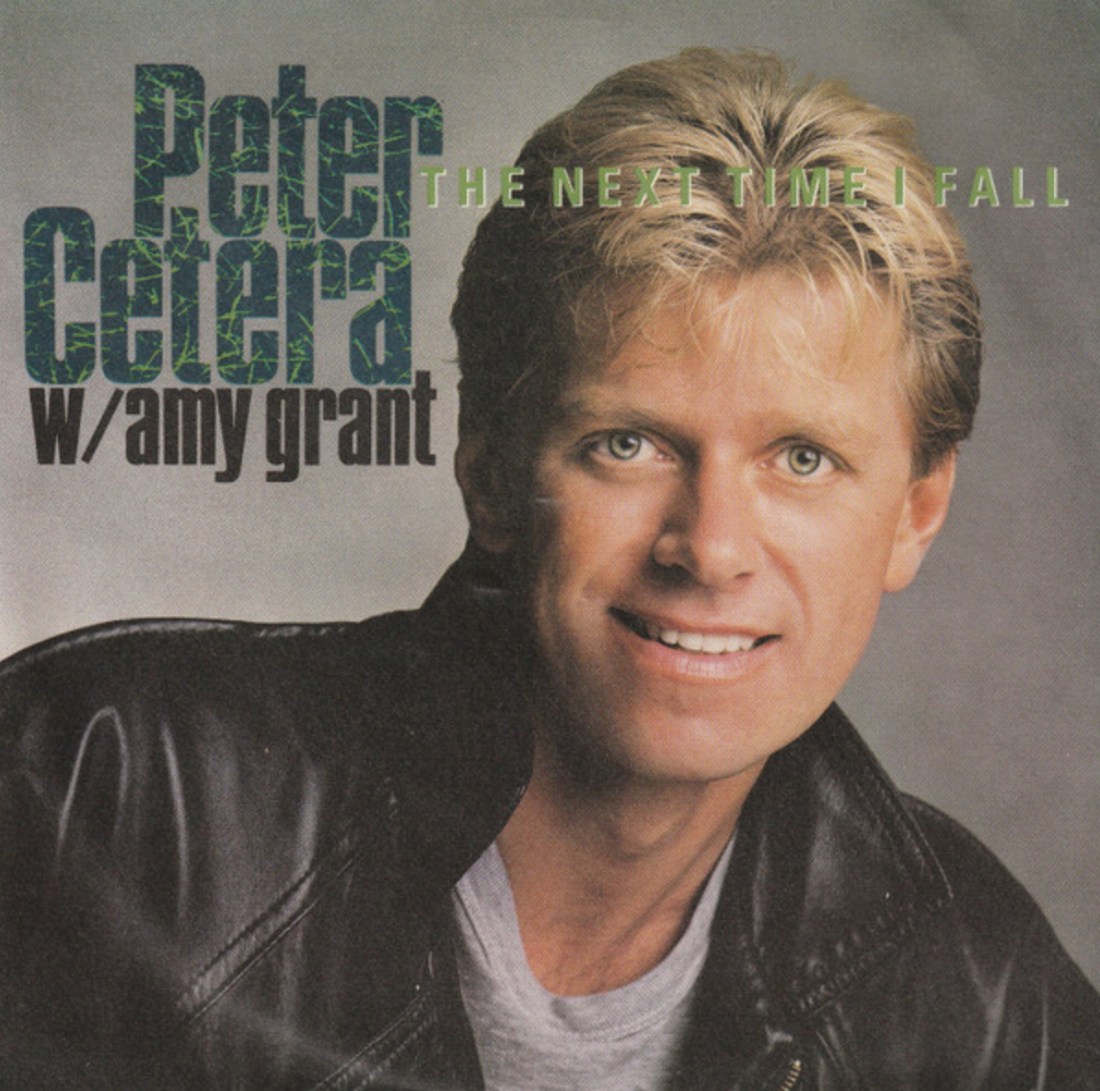
Peter Cetera with Amy Grant – The Next Time I Fall

I don’t remember what music was playing when I lost my virginity. (TMI, I know, but most of us get there eventually so settle down.) It was definitely something from the ‘60s, because my college girlfriend hated modern – that is, 1982 – music, and had reacted by becoming a big fan of a local oldies station. This lead to her calling in one night to speak with The Monkees’ Peter Tork, who earned my eternal enmity by making a lame joke (I have purged my memory of what he actually said) about her boyfriend – that is, me. Screw you, Peter Tork. (And you, too, Janice, for not verbally bitch slapping him in response.) (Blogs are apparently designed for score settling.)

Anyway, that’s my “first time” story. I don’t remember what was playing over my first real kiss either (or exactly when it was), but I remember the who and the where, and that means the song would’ve been a pop ballad from the 1970s. And that means there is at least a slight possibility that the vocal stylings of Peter Cetera were in the air. 

Outside of Lionel Richie, and later Phil Collins and George Michael, was there a more reliable guy to turn to in the late ‘70s or most of the ‘80s for a romantic ballad than Cetera? Whether on his own, in Chicago or teamed with a female partner, Cetera always brought it. Not the prettiest voice by far, but definitely distinctive. How many of us had our first kisses on a sweaty gymnasium floor as Peter crooned over the not-designed-for-music speakers? How many others lost their sexual innocence cuddled on a basement chesterfield or the backseat of a car under his guiding voice? And how many more, after the kisses and lovemaking inevitably ended in heartbreak, turned to him for solace and a good cry before getting back in the game?

It’s a challenge to decide which of his tunes is the highlight. (Not really, but anyway . . .) With Chicago there was “If You Leave Me Now”, the “Hard” duo of “… to Say I’m Sorry” and “… Habit to Break”, the first dance sappiness for a million newlyweds of “You’re the Inspiration”, and a half dozen other songs whose names mean nothing to me because either (1) I stopped paying attention or (2) they all sound the same. His Oscar-nominated movie tune “Glory of Love” is great, but in the end, the only choice for me is his duet with Amy Grant on “The Next Time I Fall”. It’s the only one that I laid down cash to own my own copy of when it came out, and the only one that I still listen to on purpose years later.

It was an odd pairing: Grant was (is?) so Christian that she had to vet even the songwriters before agreeing to make the record. And without casting aspersions, Cetera had been the frontman for one of the biggest rock bands in the world for 20 years, and I think I’ll stop right there. But Grant wanted to expand her dominance in the gospel and contemporary Christian music worlds into pop, and there were few more reliable partners to be found than Peter. And off they went.

With a faux orchestral swell to open, then tinkly synths and guitars, it announces itself as a song of the mid 1980s, with all the big hair, shoulder pads and “Miami Vice” pastels that the world could muster. Is it cheesy? God, yes. But that doesn’t have to be a bad thing. Cheese happens to be probably my favourite eat-without-cooking food, and I bet a lot of people feel the same way, so why do we use the word to signify something negative? It’s a hopeful song, of two people who’ve loved and lost, but stubbornly persist, in the belief that the bad experiences of the past have finally prepared them to make love work this time. Their voices go well together, Cetera’s slightly nasal, almost synthetic sheen contrasting with Grant’s natural country girl sweetness. The song is lush, comforting – it washes over you like the best pop of that era, embracing you in an aural blanket. My favourite part comes after the second run through of the chorus, at around 2:21. Grant sings them out of the chorus with “It will be with you”, Cetera smooths the edges off his voice while Grant croons behind him, then they sing the next line together, newly committed to the plan of, you know, falling in love. I still get chills during this section, and those carry through the rest of the song, and if I could explain why that happens to me I am sure I could earn an insane fortune making pop music. 

The video for the song seems odd initially, because at no point do Grant and Cetera appear together. They are shot mostly around the edges of a room of people either rehearsing for or performing a dance. Shots are in black and white, washed out colour, oversaturated with sunlight, in low resolution, jittery handheld – there’s barely a clean shot in the entire video. The visual effect is to give the impression of two emotionally unsettled people moving closer together, and the last part of the video would have you believe the singers are looking at each other through gaps in the dancers, furtively, maybe – at least on Grant’s part – flirtatiously. Other than one shot where the demonic look in Cetera’s eyes completely took me out of the moment (it’s at 2:43 of the video), it’s a pretty decent marriage of song and visuals.

One of the songwriters was Bobby Caldwell, who had a top 10 hit of his own with 1978’s lounge jazz come-on “What You Won’t Do For Love”. He did his own version of this song a few years later, retitling it “Next Time (I Fall)”, and while I don’t want to speak ill of a talented artist who is no longer with us, the difference between Caldwell and the superstar power of Cetera and Grant is obvious in the grooves. Maybe that stereotypical momma was right: for all the bedroom eyes of most of his hit ballads, Peter just needed to settle down with a good Christian girl to find true musical happiness.
Classic Songs of My Youth Revisited #43

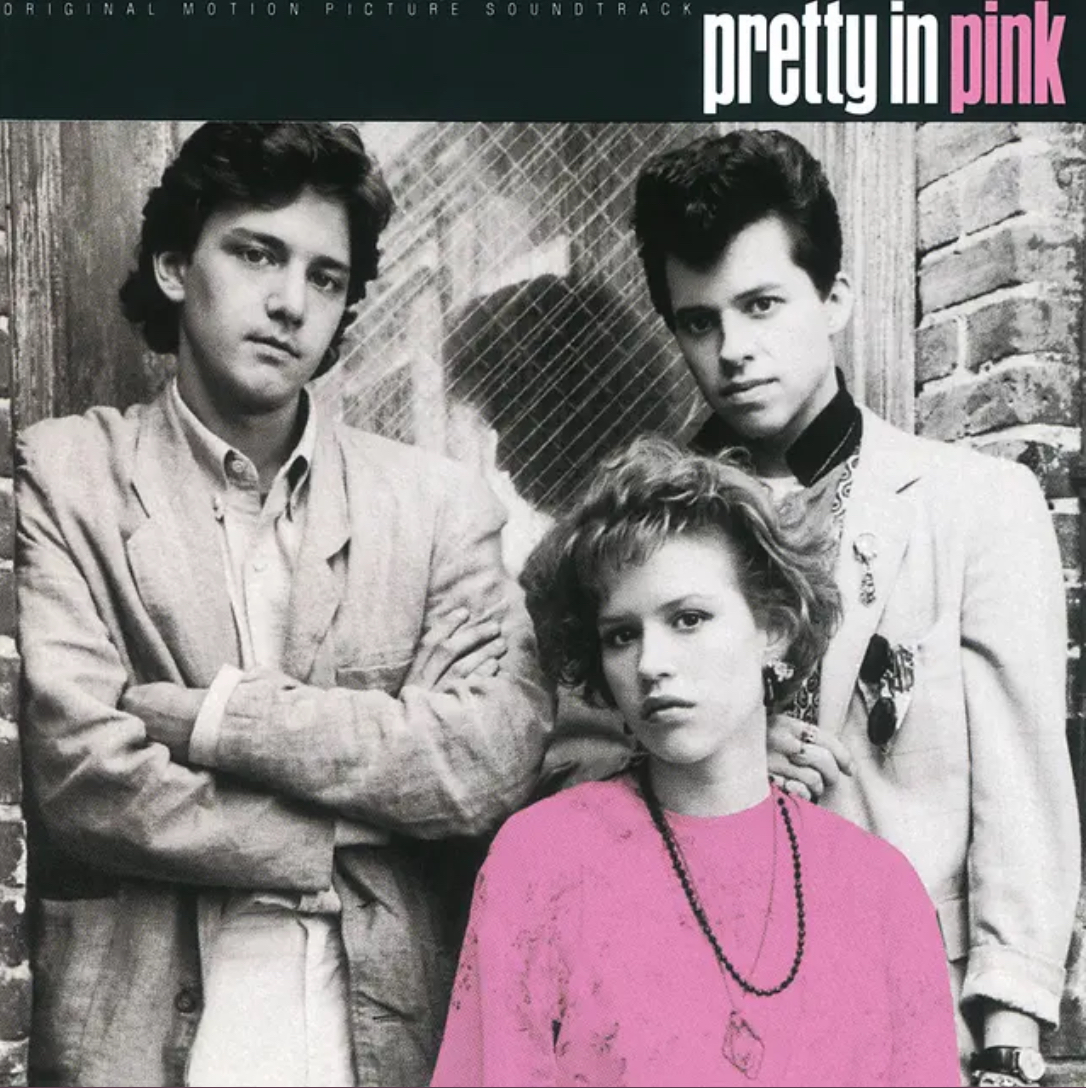
The Psychedelic Furs – Pretty in Pink

One of the worst things a music fan can say about a favourite artist is to call them a sellout. It’s such a dirty word: it implies a corruption of intent, a sacrifice of one’s true artistic identity in the pursuit of something crass. We almost never say it about people who are already stars: whatever you may think of the latest Taylor Swift or Drake record, you can’t really sell out when there is already a massive crowd ready to spend money on whatever musical grievance settling you choose to release. I’m not even sure the word was used when folks like Rod Stewart and The Rolling Stones dabbled in disco beats in the late 1970s. No, it is generally reserved for so-called independent or alternative artists who change their sound or image in some way, and then become more commercially successful. Whether there is a connection between the change and the increase in sales seems besides the point.

My friend Shelley thought The Psychedelic Furs sold out when they released their 1987 album “Midnight to Midnight”, saying it was too commercial. I was not much of a Furs fan at the time – my appreciation for them developed later – so I didn’t really hear that big of a change from their previous records. Yes, “Heartbreak Beat” was definitely more upbeat than its predecessor singles, which were in continuous rotation on CFNY, and the record is more cleanly produced and upbeat. But it’s not like Richard Butler changed his singing style, which is one of the things that made the band stand out. And if they were selling out, it had happened the year before, when they re-recorded their 1981 release “Pretty in Pink” for the soundtrack to the movie of the same name.

I loved John Hughes’ movies in the mid-1980s (though not all have aged well, with their sexualizing of teen girls and questionable racial attitudes among the issues), but “Pretty in Pink” (which he wrote but did not direct) did not move me like others had. I guess in part it was because I was ageing out, and didn’t really share the concerns of the main characters, with first loves and prom night micro dramas. Hughes was starting to repeat himself, too, with diminishing returns: Jon Cryer was fantastic as the lovelorn Duckie, but his lip syncing to Otis Redding’s “Try A Little Tenderness” is too much in the vein of Matthew Broderick’s iconic “Twist and Shout” from “Ferris Bueller’s Day Off” the year before. (Both are also bits that neither advance the plot nor tell us anything about the two teens we couldn’t figure out on our own, but let’s skip past that part for now.) But the soundtrack? For my money, it’s the best of Hughes’ teen films: The Smiths, Joe Jackson, Suzanne Vega, INXS, Orchestral Manoeuvres in the Dark, New Order, Echo & the Bunnymen. I owned it on cassette, and played it and played it over and over for the next several years, and even now I sometimes call it up (minus the New Order track and one other for some reason) on Spotify. It’s just one great tune after another.

The centrepiece – and my favourite – is the Furs with the title track. Unless you listen to the two versions back to back, you might not pick up on the difference. What they mainly did for the movie version is clean up the song, like wiping the grime off something so that it shines a bit more brightly. That’s it: less scuzz on the guitars, less muting of the drums, putting the vocals near the end higher in the mix so you can actually hear (sort of) what Butler is mumbling about. The only substantive change comes towards the end, when they tack on about 45 seconds to wind down with a horn section, more Butler mumbling, and a bit more horns. Hardly such a massive corruption of their talent to be labelled a sellout.

Either way, it’s a great tune, though I do favour the cleaned-up version: I like to (sort of) hear what singers are going on about. The meaning of the song is far removed from the film: unlike the chaste Andie of the movie, the Caroline of the song is a girl who, in Butler’s words, “sleeps around a lot and thinks that she’s popular because of it. It makes her feel empowered somehow and popular, and in fact, the people that she’s sleeping with are laughing about her behind her back and talking about her.” And while I am loath to disagree with a creator about his own work, I’ve never felt that was true. Caroline just seems to be looking for someone to love her, and is unfortunately aiming that desire at a lot of undeserving people. But take away the sex, and the experiences of Caroline and Andie – being treated poorly just for being true to who they are – aren’t all that different, and you can see how the song could have been a beacon for Hughes. I always feel sad for Caroline, and am hopeful that she found a way to move past the douchebags in her life and find love with someone who appreciated her. Unlike poor Duckie, who is matched with future vampire slayer and Trump supporter Kristy Swanson in the film’s closing moments while his true love Andie goes off with the boring “major appliance” that is Blane. It’s a bittersweet ending, but it was the one that test audiences demanded. Now, that’s a sellout.

Classic Songs of My Youth Revisited #35

The Outfield – Your Love

From September 1984 to the spring of 1986, my main source of new music – and primary viewing pleasure – was MuchMusic, Canada’s only 24-hour music video channel. That was sort of a lie – they initially had eight hours of programming that was then repeated twice – but in that lie was also the knowledge that if they played, say, “Like A Virgin” at 1:38 p.m., you could safely tune in at 9:38 that night and 5:38 the next morning for another Madonna fix.

That all came to an end in the spring of 1986 when I began renting a room in the home of a lovely lady in her 90s who was known to all in her circle (regardless of actual blood affiliation) as Granny. Granny controlled the television with occasional jokey (though I never tested this) threats of lethal force, as I had enough problems right then without adding “fistfight with a near-centenarian” to the list. Granny had her shows (I wish I could say for certain that “Murder, She Wrote” was one of them, but let’s just agree that it was) and I could either watch with her or do something else. The one concession was that I convinced her to check out “ALF” when it debuted in September 1986, and it soon became our weekly ritual to watch together, even past the point when I had tired of the show, because it seemed to make Granny happy to do this one small thing together.

Because I no longer had a television or reasonable access to someone else’s, I rarely saw music videos between May 1986 and spring 1990, when I moved in with my then-girlfriend and her Panasonic. As a result, I had no awareness of the video representations of most of my favourite songs of that era (and still don’t, really) unless they became ubiquitous in the culture, like Peter Gabriel’s “Sledgehammer”. Which meant that when I finally watched the video for The Outfield’s “Your Love”, more than 37 years after its release, I was, umm, a little confused.

I have been hooked on “Your Love” since I first heard it in early 1986, so I don’t know why I missed the video initially. I bought the album on cassette and regularly listened to the entire thing – it’s just one pop gem after another. The lyrics to “Your Love” always seemed pretty straightforward to me: the narrator’s girlfriend Josie is out of town and he’s hooking up with his slightly older and very secret side piece who he’s more attached to than he’s prepared to admit. But there are other theories. That Josie is the older girl, and he’s hooking up with someone too young for him. (Creepy.) That Josie is a man and he’s sneaking around with his friend’s gal. (Plausible – though there aren’t a lot of male Josies.) Who expected such worlds of possibility in a humble pop song?

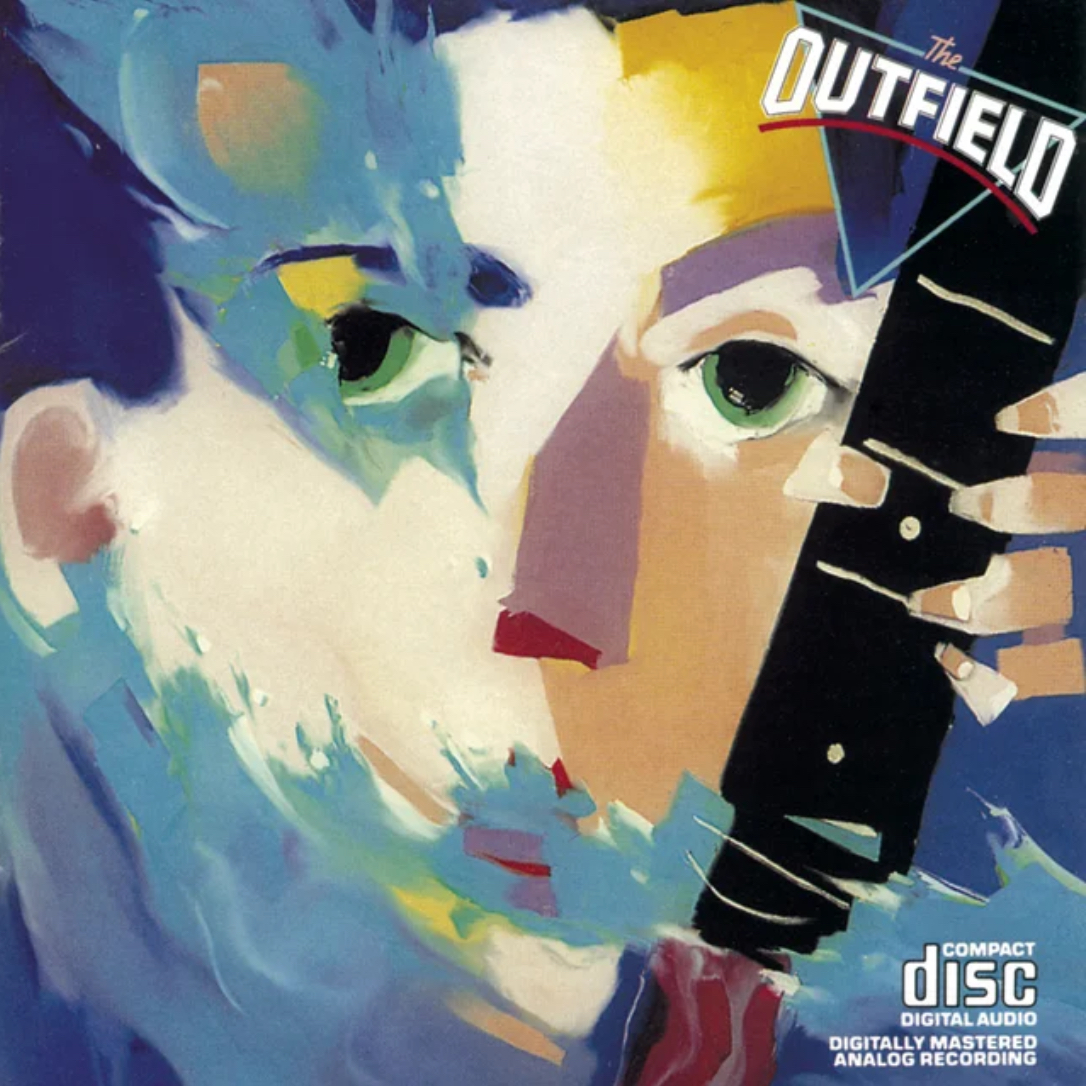
But that video? There is some conceptual weirdness going on here. Why is the woman painting the album cover during the video shoot? Is she supposed to be drawing inspiration from being with the band? There is a sort of flirtation with chipmunk-cheeked frontman Tony Lewis and then that out of left field check in from guitarist John Spinks (R.I.P. to both men), but it’s also clear she isn’t even looking in their direction while they perform, despite some shots through the glass she is painting on that suggest otherwise. And do Spinks and his fellow guitar player think they’re in a different band? A power stance? This isn’t metal, fellows: it barely qualifies as rock. And just a style question: is there a rule somewhere that blind keyboard players have to wear shades? (See Milsap, Ronnie, and Charles, Ray, and Wonder, Stevie, and – oh, you get the point.) Then there is the paint dripping down the screen, suggesting a connection between the song and the painting that doesn’t really exist. And, finally, she just ups and starts to leave halfway through the song. Sorry, boys – at least you’re going to get a pretty cool album cover out of it.

“Your Love” isn’t exactly unique: the strain to connect the visuals to the song was a constant in that era, though considering that this song actually tells a story, the effort really should’ve been saved for some other tune. And let’s face it: some bands are just meant to be heard and not seen, and the era when videos were the key promotional device threw that reality out of whack. I’m not saying The Outfield were such a band, but not everyone could fit as smoothly into that box as, say, Huey Lewis & the News, with their strong-jawed but obviously goofy frontman and his super cool and very game band mates.

In the end, though, it’s the song that perseveres. It’s a fantastic power pop record, a little more new wave influenced perhaps than others of that ilk, and with a great opening guitar hook that draws you in (and different hooks later that keep you listening – the guitar has three different motifs by my count, which come and go throughout). There’s an echoey effect to the whole song, and I’ve always loved the drums, which have a subtle boom that serves as a nice counterpoint to the texture of Lewis’ voice (which I like best when he goes low about a third of the way through) and the shift to more tinny guitar in parts (and the song doesn’t really kick into gear until drummer Alan Jackman shows up 29 seconds in). It’s a song that doesn’t overstay its welcome, a mere 3:36 of boy meets girl/boy cheats on girl with another girl or on his best friend with girl/boy feels deep regret and shame but knows he’s going to do the whole thing all over again the first chance he gets. You know: a pop song.