Classic Songs of My Youth Revisited #55

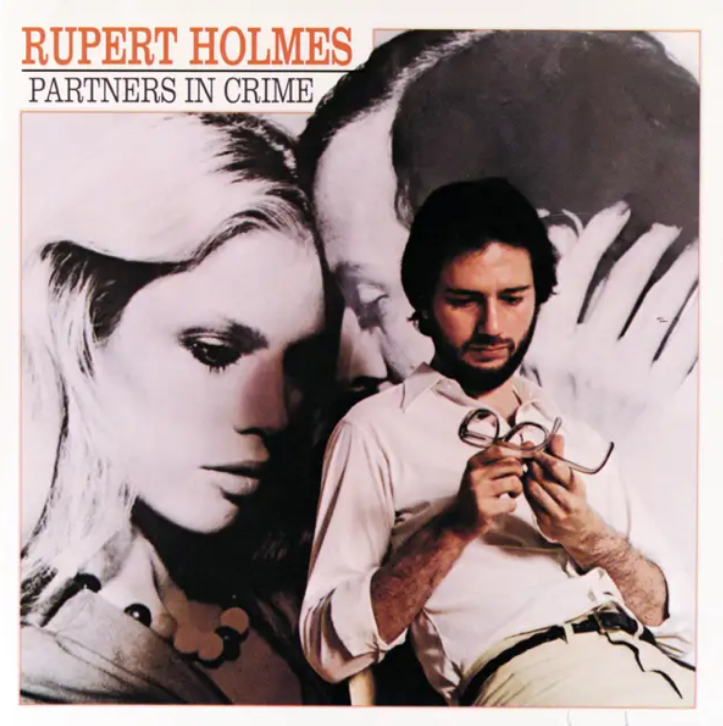
Rupert Holmes – Escape (The Pina Colada Song)

I don’t have a personal story about “Escape (The Pina Colada Song)”. I just want to talk about how completely bonkers this song is.

Not that writing bonkers songs was new to Rupert Holmes: in 1971, he made the Top 20 (and the Top 10 in Canada, because we are more comfortable with weirdness than our American cousins) with a song about cannibalism. After reaching the Top 40 for the first time in 1969 as part of The Street People with the very catchy “Jennifer Tomkins”, Holmes moved on to a band called The Buoys, for which he wrote the aforementioned song, called “Timothy”. The tale of three men (or two men and a duck, according to one sketchy theory) trapped in a mine, we aren’t told exactly how Timothy became an entree. (Peking duck, anyone?) We hear that Joe “would sell his soul / For just a piece of meat” and that there is only enough water for two. When Joe and the narrator are finally rescued, the narrator notes that his “stomach was full as it could be”, and poor Timothy was never found. The song was banned by some radio stations, of course, and it didn’t matter, because the popular will wanted to hear it on their airwaves.

It would be eight years before the public at large paid much attention to another Holmes song, though he kept busy in the interim, writing and producing for others (including Barbra Streisand) and releasing four barely noticed albums under his own name. Then came September 1979 and the release of “Escape”, which became the final song of the decade.

You know the broad strokes of the story: the narrator is bored in his relationship, goes looking for some side action in the personal ads, and discovers his partner (Wife? Girlfriend? He never really defines the nature of their connection.) has the same plan. In fact, she had the idea first: the personal ad that he answers was placed by her. Hilarity ensues. It could be the plot of a particularly weak episode of “Three’s Company”: You just need to work in a character misunderstanding a conversation on the other side of a closed door.

I trust my memory that when the song first came out, people for the most part thought it was adorable. (Later, when it was everywhere, it became annoying, but that’s true of many hit songs eventually.) How sweet: they don’t realize that they’re perfect for each other. 

But hold on. Both of them were ready to cheat on the other. (Holmes has said the narrator is supposed to be the bad guy in this story, since at least the woman is trying to do something. Yeah, “something”.) How do you come back from that? “Oh, hi, honey. Fancy meeting you here at the place of my planned infidelity.” And they both immediately admit what they’re up to. I know that neither has any reason to be upset with the other at this point – they’re both cheaters – but people aren’t always rational. Did either consider the possibility of pretending it was coincidental that they both went to O’Malley’s at the same date and time? Of not owning up to what was going on, thus leaving the other wondering if this boring old ball and chain was screwing up their chance at finding true love with an exciting new partner? “How do you know O’Malley’s?” “Oh, I just saw it mentioned in the newspaper and thought it would be worth checking out.” We’re talking 3D chess level mindfuckery.

Anyway, that’s not what happens. Over a gussied up tropical beat (the whole album that it came from, “Partners in Crime”, is classic late 1970s AOR, with elements of light disco, blue-eyed soul and piano bar), they laugh at how little they know each other, and – I guess – start down a path of rediscovery of what drew them together in the first place. (Let’s assume that both can set aside the sour truth that neither can be trusted.) Or – hear me out – nothing changes. Oh, they try. But he finds piña coladas too sweet and they give him monstrous hangovers, so he goes back to champagne. They both catch pneumonia after being caught in the rain, and neither cares much for the scratchy feel of sand against their genitalia when they make love “in the dunes on the cape”. Eventually, they understand that what was wrong with their relationship wasn’t how they spent their time together, it was who they were spending that time with. And they part over one last drink at O’Malley’s, which they very civilly agree is “his place” going forward since he discovered it.

Though this was the bigger hit, my favourite song from “Partners in Crime” was the second single, “Him”, which also made the Top 10. This is another song about infidelity, and I love how the narrator learns he’s being cheated on: a package of cigarettes that aren’t his lover’s brand. It’s a sweetly melancholy song about being part of a triangle and wanting no part of it, even if the cost is losing the one you love. 

Holmes hasn’t charted a song as a recording artist since 1982, but he’s never stopped working. He’s released more albums, wrote hits for other folks, created a television show and wrote its music, and wrote a novel, but mostly he’s worked in musical theatre, even winning a pair of Tony Awards in 1986. “Escape” is a bit inescapable – Holmes figures, likely correctly, that it will be the lead line in his obituary no matter what else he might do in life – and it had a nice nostalgia boost in 2014 from the first “Guardians of the Galaxy” movie. My guess is that there are still an awful lot of people who love hearing this song. I recognized how ridiculous it was a long time ago, but when that opening drum kicks in, I know I’m in for four minutes worth of comfort food. Just like Timothy was for his friends.
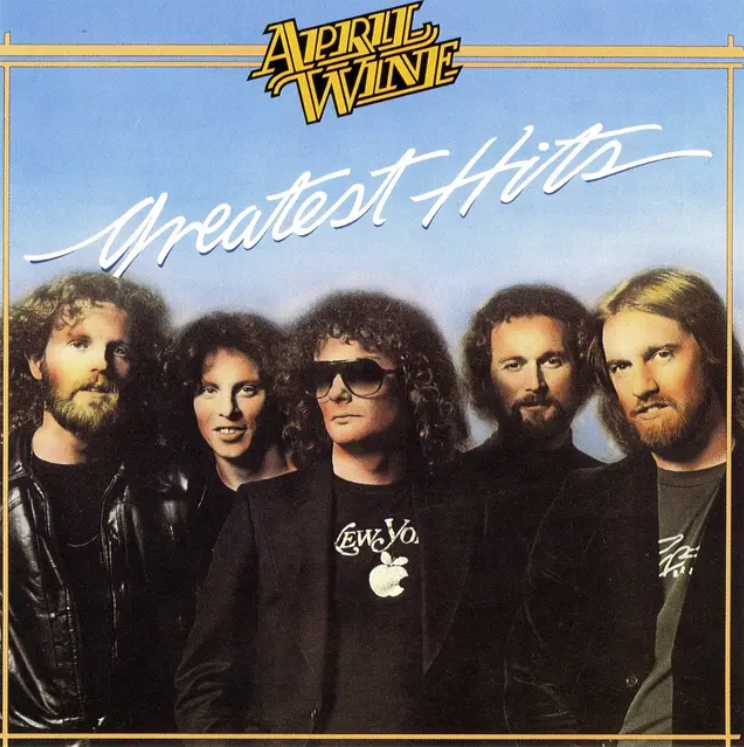
Classic [Band] of My Youth Revisited: April Wine

As much as I love music, I haven’t been to a whole lot of concerts in my life. There are a lot of reasons for this, which have varied depending on my current circumstances: financial limitations, parental responsibilities, time constraints, divided interests (a night out is six hours not spent reading, writing, watching a movie or television show, or listening to other music). I also am not a fan of crowds, and have had instances where I suffered panic attacks, or practically shut down from social anxiety. Those occurred without any warning (and on one occasion with the latter was not even in a large group) so they haven’t exactly led me into avoidant behaviours, but they are another reason why I lean towards a peaceful night at home with my favourite person over a jaunt to hear some live music.

Growing up in Cape Breton, missing out on live music was not a real concern since very few major acts came our way. I know I saw Dr. Hook in 1980 – I can date this more or less exactly because the opening act was Graham Shaw and the Sincere Serenaders, riding high on their #15 Canadian hit “Can I Come Near” – and since Dr. Hook were still churning out top 10 American hits (“Sexy Eyes” reached #5 that year), I cannot even imagine how they ended up playing the Sydney Forum. What we got in their place were a lot of Canadian bands, and probably none played our local arenas more frequently than April Wine.

With the recent passing of the band’s frontman Myles Goodwyn, lots of friends and acquaintances are posting stories on social media about meeting him and how he came across as a solid, friendly guy. I never had that pleasure, but his band’s music was still a big part of my growing up. April Wine were not just Canadian, they were Maritimers, though I don’t think I knew that back then. They were also prolific, releasing 10 albums between 1971 and 1982, with at least one song in the Canadian top 40 each of those years. Although their biggest success was at home, the band also made an impression south of the border, with 1981’s “The Nature of the Beast” selling over a million copies and reaching #26 on the Billboard albums chart. They also landed three top 40 singles there over the years, with the biggest of those being that record’s “Just Between You and Me”. 

Though April Wine released their share of rockers, it was on the ballads that they really excelled. I think you would be hard pressed to find another band of that era with a better collection of power ballads, and junior high school dance floors were filled with boys and girls experiencing their first serious hormonal stirrings to Goodwyn’s words and voice. 1974’s “I Wouldn’t Want to Lose Your Love” was a favourite of the disc jockey at my earliest Friday night dances at the Catholic Church hall in Florence circa 1975/76, and I am confident I felt my chest crack open and watched my heart tumble onto the dirty floor at least once while Myles sang “I couldn’t stand the pain / You know it’d drive me insane”, and it absolutely did just that.

I don’t have a particular favourite of their tunes, but there are a good dozen or more that pull me back to that time. Listening to “The April Wine Collection”, I see titles that make me think, “I should know this”, and then I play something like “The Whole World’s Goin’ Crazy” and I’m 12 or 14 or 17 years old again and listening to CJCB in my bedroom. April Wine never won a competitive Juno Award (Graham Shaw, on the other hand, does have one), they don’t seem to show up on critical appraisals of the top acts of their era, and even lists by Canadians of the best songs that have come out of our country mostly neglect them. This, strangely, seems right, because what made them good can’t really be summed up in one song. What they had instead was a body of work that was consistently catchy and musically diverse. From the ‘50s-esque singalong “You Won’t Dance With Me” (it stuns me that no retro crooner has ever covered this) to the electrifying train-crossing bells of “Oowatanite” (written and sung by Goodwyn’s band mate Jim Clench), the sly percolating funk of “Say Hello” and the jittery ass kicking fuzz of “I Like to Rock”, they were not a band that could be easily boxed in.

There are covers from Canadian artists that probably grew up loving them: fellow east coasters Sloan and Melanie Doane lovingly served up live versions of “I Wouldn’t Want to Lose Your Love” (complete with hand claps) and “Oowatanite”, respectively, Sebastian Bach gives us a fired up “Rock n Roll Is a Vicious Game”, and Treble Charger did a grimy version of “Roller” for the “FUBAR” soundtrack. More fun is to check out the originals of some of the artists they covered, from Elton John to Muddy Waters to King Crimson. They serve all well, but nothing tops their reinvention of Hot Chocolate’s funk jam “Could’ve Been A Lady” (which is maybe better than 1971’s original, but can’t quite match the British band’s much funkier 1976 reimagining of their tune).

In August 2022, I played their greatest hits record. It was probably the first time I had listened to April Wine in close to 40 years, and I wrote my friend Robert Barrie to say I thought it held up better than most of their domestic contemporaries. He told me in response that Goodwyn had once said he always made sure there were hits on the albums so they would get airplay and people would know the band and come out to see them play when they came to town. Goodwyn understood that a band needed to connect with its audience, and the best way to do that is to give them songs to love, and then they’ll love you back. The power of a song that you love – which I relive in this space again and again – is that it never loses that hold over you, connecting you to another time and the person you were then and the people you shared those days with. I don’t have that pull from April Wine to the same degree as I do with many other artists and songs, but I know a lot of people who probably do. For them, and the people they once were and now are, I pour one out for Myles Goodwyn, a CanCon legend, and a man who knew how to make music that touched your soul.