Classic Songs of My Youth Revisited #56

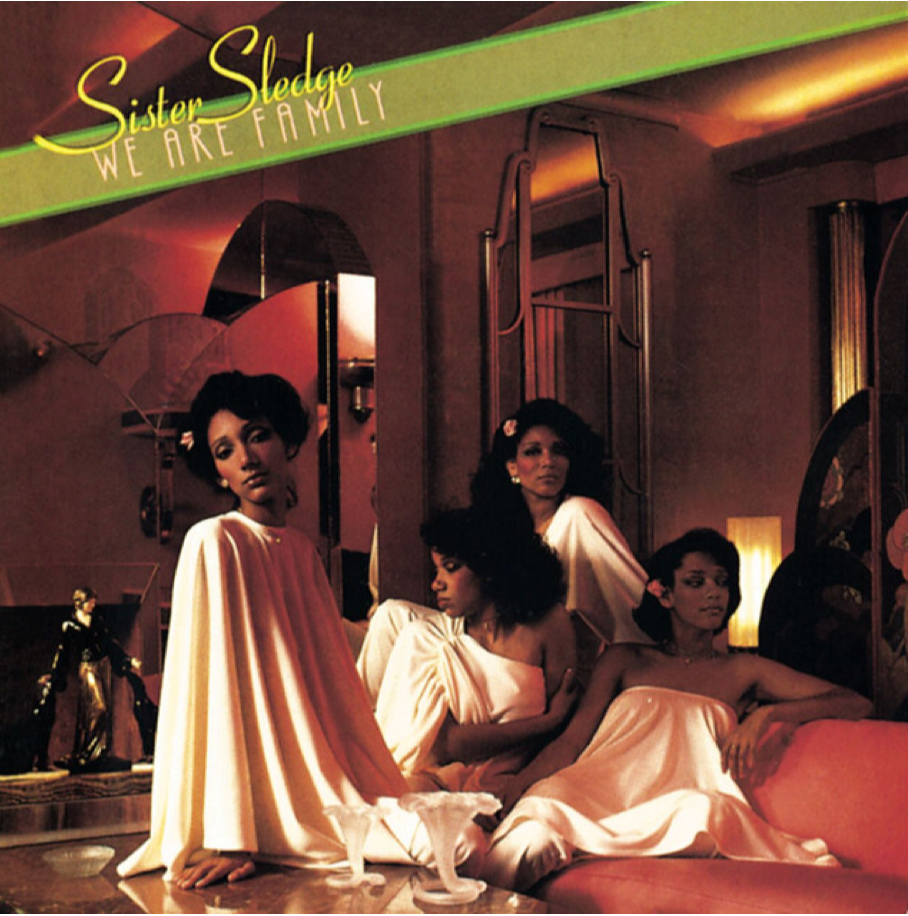
Sister Sledge – We Are Family

There are lots of good reasons to dislike a song. I don’t need to list any of them here, especially since there are more good reasons than songs, as two people can dislike a song for equally valid and entirely personal bases. I am firmly in the “there is no bad music” camp if someone – anyone – likes it, so I stand just as firmly with you when you don’t like something. Without being guided by our own taste, what’s the point of art?

But I do know one objectively dumb reason to dislike a song: Because of a baseball team.

Let me explain. I first started following baseball in 1972, which was the year I turned 8. My team was Canada’s one major league entry, the Montreal Expos, and I was soon religiously watching their nationally televised Wednesday night matches. This was not a good time to be an Expos fan: it was their fourth year in existence and the team was not very good. After a brief flash of relevance in 1973, they took a step back, and by 1976 were again the worst team in baseball. 

But in this mess, there was hope for the future. That 1976 team included a bunch of youngsters – most notably future Hall of Famers Gary Carter and Andre Dawson – who would be among the leaders of the organization’s first great team in 1979. And when that day came, I was even more glued to my television. When they entered September in the hunt for a playoff spot, our local FM radio station started broadcasting all their games, and I ended up watching or listening to 34 games in 30 days – basically, four days of my life spent drinking tea, eating buttered popcorn (yes, I had rituals) and keeping my own box scores. The Expos ended up being the third best team in all of baseball that year. Unfortunately, the best team was in the same division, so they fell short of the postseason. And I hated that other team. The team was the Pittsburgh Pirates, and they had a theme song: “We Are Family” by Sister Sledge. So, naturally, I had to hate the song. That’s just how these things work.

I had nothing against Sister Sledge before this. Earlier that year, “He’s the Greatest Dancer” had been a disco hit for the four Sledge siblings, and while I have no specific recall of how I felt about the song at the time, hearing it now causes no bad vibes to resurface from my subconscious. It’s actually the opposite, since a pre-cuckolded, Chris-Rock-slapping Will Smith built the verse of “Gettin’ Jiggy wit It” around a sample from the sisters’ first hit, and who wouldn’t be happy to get jiggy?

But “We Are Family” causes a form of PTSD, as I remember one of my first truly intense sports fandom disappointments. Sports was incredibly important to me at the time, and my sense of self worth was ridiculously tethered to some degree to the success or failure of the teams I rooted for. (It was absolutely my father’s fault that this was going on, and I’m not going to let him off the hook just because he isn’t here to defend himself.) Any threat to my team’s winning was an existential threat to myself, and if our rivals drew inspiration from a song, then that song was on my no-play list. It was that simple.

But I did it: I listened to “We Are Family”, and then I listened to it again, and again. It was more than needed for the music, as it isn’t a very complex song, but it may have been good as exposure therapy. Written and produced by Nile Rodgers and Bernard Edwards of Chic, it’s like a less interesting Chic record. A syncopated disco beat underlain with metallic piano and a subtle bass line from Edwards, with equally unobtrusive drumming from his bandmate Tony Thompson. It’s a pretty relaxed beat for a dance hit, but that was not unusual for disco tunes: Chic’s own “Good Times” has a drugged-out sluggishness. Yet, despite there being nothing particularly unique about this recording, music critics have regularly ranked it among the best songs of its year (#4 on the Pazz and Jop), decade (some guy named Steve Crawford has it at 101) and all-time (currently ranked at 967 at Acclaimed Music). I don’t hear it, and it can’t just be leftover petulance from 15-year-old me. There’s nothing wrong with the record, and it’s even sort of grown on me since starting to write this post: I just don’t hear greatness anywhere.

My Expos remained a good team for a few years but never managed to win a championship before falling apart over drugs and money, and the stars fell away one by one. After a decade of mostly average and occasionally bad play, they were the best team in baseball in 1994, but a players’ strike ended those hopes, and the franchise never recovered, relocating to Washington after the 2004 season. I remained a loyal fan to the end, but I couldn’t follow them to their new home: my heart had been broken too many times. I had also learned long before then not to get too tied up in things I had no control over, like sports, and to let go of those grudges. That reckoning had come at the hands of a New York Yankees catcher named Butch Wynegar, whose team didn’t have an obnoxious theme song, so that’s all I’m going to say here about that son of a bitch.
Classic Songs of My Youth Revisited #54

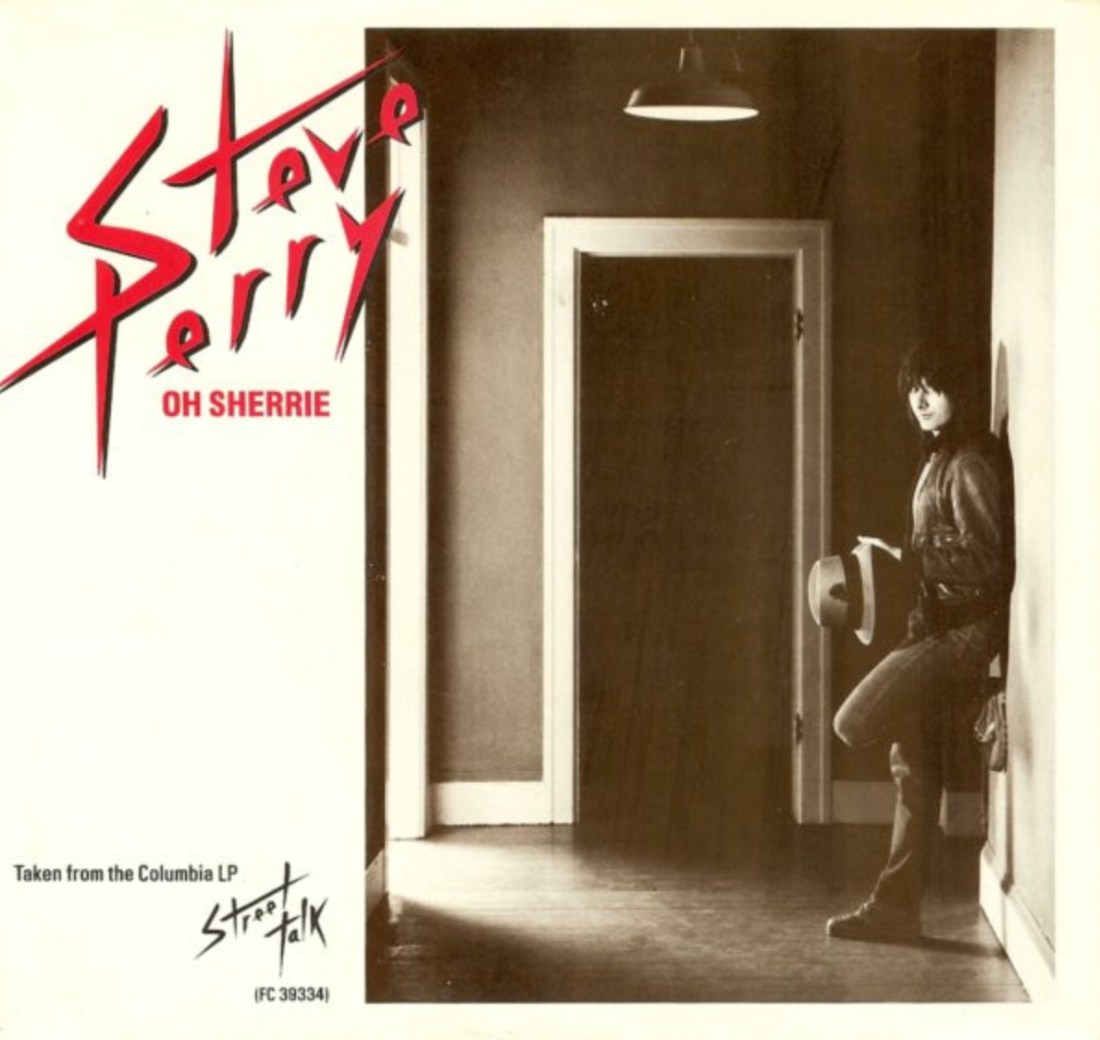
Steve Perry – Oh Sherrie

Starting in June 1979, when the ridiculously titled “Lovin’, Touchin’, Squeezin’” (a perfect stripper song musically, though lyrically problematic if a patron tried to test that invitation) began its climb up the charts, to the late spring/early summer  of 1987, when “Why Can’t This Night Go On Forever” sputtered to its peak at #60, there were few voices that we heard coming out of our radios more often than that of Journey frontman Steve Perry. 

Despite owning two of their albums thanks to Columbia House, I was never much of a Journey fan. They certainly sounded pleasant enough, a sort of mushy guitar-forward AOR. They were making power ballads before those were really a thing: I slow danced with a succession of failed hoped-for romantic partners to hits like “Open Arms” (a childhood friend told me she lost her virginity to this song, so at least it worked out for someone) and “Faithfully” (which, listening to it now for the first time in years, is quite a lovely tune – it gave me chills). And their rockers, like “Any Way You Want It” and “Don’t Stop Believin’” (which remains a damned good song despite becoming a pop culture cliche), were made for being blasted from a car stereo by restless teens on the make on a warm summer night.

I had stopped paying attention to the band before its run came to an end, so while I have a hazy familiarity with their 1986 hit “Be Good to Yourself”, the last of their singles that I clearly remember hearing in real time is late 1983’s “Send Her My Love”. It was at that point that Perry decided he needed to spread his wings and make a solo record. Working primarily with songwriter Randy Goodrum, in April 1984 he released “Street Talk”, which showed enough new tricks that you can get why Perry wanted to play in a different sandbox for a bit. But it was preceded a month earlier by the lead single “Oh Sherrie”, and that had to have caused some doubt: why go solo if you’re just going to make a record that sounds like the band you’re already in?

I have a fixation with what I like to call “good bad songs”. That is, songs that are, well, not bad, because I don’t really believe there is such a thing, but not good, in the sense that if you looked at them on sheet music, you would shrug or worse. “Oh Sherrie” is such a song. There isn’t a single quote-worthy lyric, and that it sounds so much like a Journey record shows that no boundaries were being broken with the music either. Yet, I loved this song from the first time I heard it, and still do almost 40 years later. What’s up with that?

The song opens (and eventually closes) with a synthetic baroque vibe, leading into Perry singing the first few lines a capella. It’s basically about a couple who keep hurting each other, but they have a love that always comes back stronger after those wounds heal. It’s a nice sentiment, the idea that bad times can preserve a love rather than destroy it. But I have listened to this song over and over and over while writing this, and I still really have no clear idea why I love it so. It has a nice backbeat that gets my foot tapping, but nothing else really stands out, and the guitar bits are nothing that anyone (other than Perry in the video) even once considered air guitar worthy. The thing I keep coming back to is the chorus: every time my interest starts to lag, the chorus kicks in, and, almost against my will, I find myself singing along – “Oh Sherrie, our love / holds on, holds on” – making rockstar faces (you know the ones) at this affirmation of commitment. I’ve always been a cheap romantic, and music that pushes those buttons will usually have its way with me. (I just did a test on this point, and, yes, “My Heart Will Go On” still guts me.)

It’s hard to separate the song from its ridiculous music video. The ridiculousness is initially intentional, with the opening two minutes a prick to the bubble of the video excesses of the era, with hip British directors, often from the world of commercials – John Self, the loathsome hedonist at the centre of Martin Amis’ 1984 novel “Money”, is maybe the worst case scenario of the brand – turning simple pop songs into treatises on contemporary society and culture. Perry wanders off to get his bearings amidst the set’s turmoil, and then we get other bits of ridiculousness – air guitar with a broom, an awkward walk down some stairs – mixed with neat bits like the shot of a young actress in Elizabethan garb puffing away on a cigarette. The stuff with Sherrie (a real person who plays herself in the video) is confusing: she’s initially happy to see him, then seems sheepish, then laughing, then sheepish again. (Hmm, maybe she’s the problem in this relationship – give poor Steve some clearer signals, lady.) In the end, the couple united, Perry blows off the video shoot, leading to off-camera recriminations and possibly litigation, while the director goes on to become an even bigger dick who makes every set a horror show until he finally returns to England and takes his rightful place in the House of Lords.

In a way, songs like “Oh Sherrie” are the most fun, because they don’t need context to be appreciated. I can’t remember the last time I encountered it in the wild, but if I heard it in a retail setting or a bar or even from a car driving by, I would be happier for the encounter, and would absolutely sing along for a moment before moving on to the next thing. Just a little blast of endorphins to give you a lift as you go about your day, like all the best pop music does. The “why” is never less important than in such moments.

Classic Songs of My Youth Revisited #53

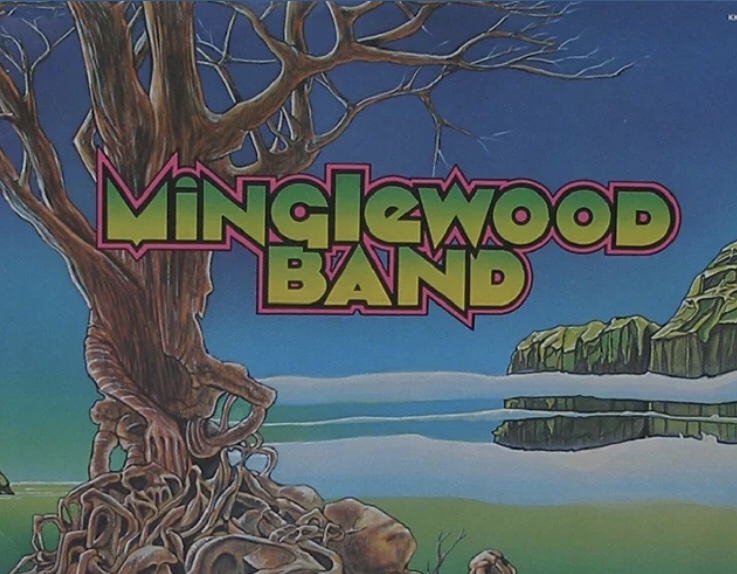
Minglewood Band – Can’t You See

For music lovers of my generation living in Cape Breton, Nova Scotia, there may not have been a more important artist than Minglewood Band. While there were other bands in the area experiencing varying degrees of success – I remember Road (we owned the 45 of “Song for Noel”) and Sam Moon, among others, getting a fair bit of local radio play – Minglewood were the band that stood out, not only for their crisp country-tinged blues rock sound that played equally well in high school gyms, church halls and bars, but also for the fact that someone outside the Maritimes was paying attention: they earned a Juno nomination for most promising group in 1980.

But I have a slightly more personal attachment: every time I hear one of their songs, I think about the night that one of my closest friends stole my prom date.

Calvin Hood and Doug Maxwell were both a year ahead of me in school, as were several others in my circle of friends, and I really wanted to celebrate their prom with them. I was, however, as per my usual high school status, very single, and not exactly gifted with the skill set needed to end that. Calvin’s solution was to have me escort his sister Nadine, who was several years older than me and out of school already, but more importantly a super sweet girl who I was thrilled to have the chance to awkwardly (because awkwardly is how I rolled back then) hang out with. We would go on to become really close friends, and I spent as much time socializing with her as anyone over the next year or so before I headed off to university. But first we had to get through June 1981 and prom.

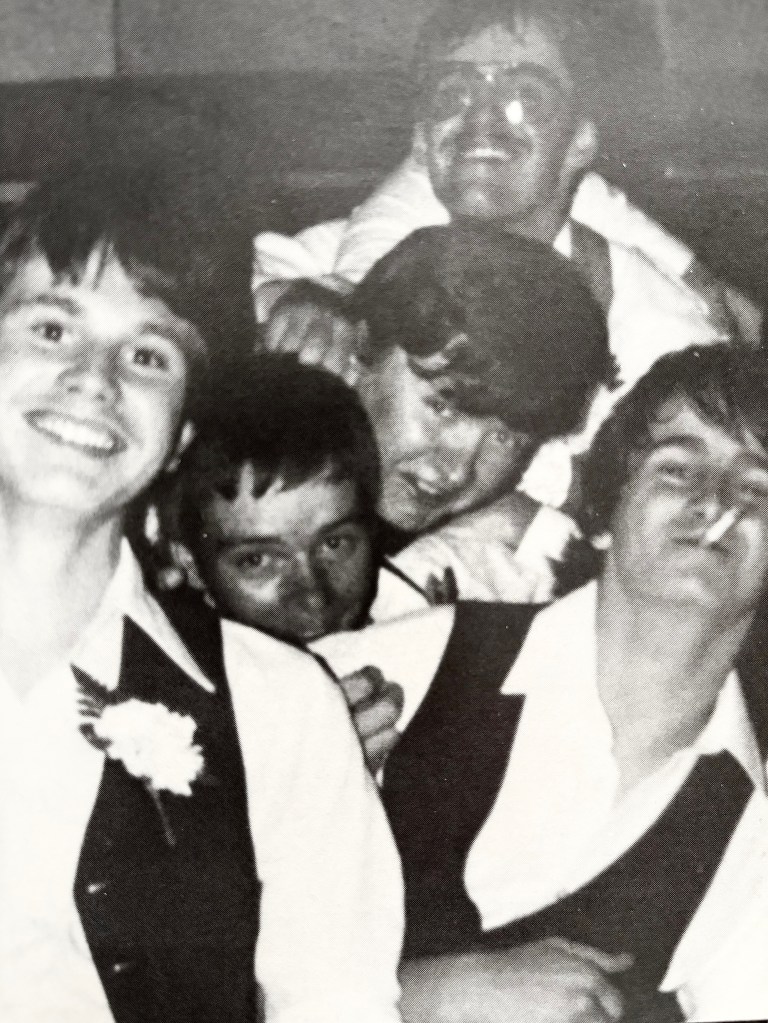
(This might be a good time to point out that I wasn’t entirely without swagger, as this photo taken that night will hopefully prove:

That’s me at the bottom right, with Doug at the top and Calvin directly below him, Robert Garnier on the left and Steve Horton in the middle fighting for breath.) (See! These people that I write about are real!)

And then there was Doug, who was also at prom with a friend who was not a potential romantic partner. And Doug fell hard for Nadine.

Doug knew there was nothing romantic going on between me and my date (as I recall, Steve was the only one in our crowd who was at prom with his actual girlfriend), but he was ever a gentleman and a righteous dude. Prom ended, and we retired to a small gathering at our pal Darrell Clarke’s house, where we ate lobster that I had procured earlier that day, impressing my friends by attacking the little creatures with such gusto that crustacean juice was splashing everyone at the table. We also became progressively drunker, and at some point Doug and I ended up alone when I found him waiting in the hallway as I exited the upper floor washroom. (Yes, it was a setup.) Leaning close in like conspiratorial stupid boys will do in such cases, he told me he had a crush on my date. This wasn’t out of character for Doug: of all my friends of that era, he was probably the most heart-on-his-sleeve type. I affirmed his belief that I was not a barrier to him acting on those feelings, and we parted.

Having been third-wheeled by my pal, I ended up at the stereo, where Minglewood Band’s self-titled 1979 album was playing. And for the rest of the night bleeding into sunrise, I did three things. I would travel to the fridge for another drink. I would flip the album over to the other side. And I would lie on the floor drinking beer and listening to Minglewood Band.

The truth was, I had never been much of a fan. I hadn’t seen them live at that point (that came a few years later, and they were pretty awesome). I was a committed top 40 kid in an era when – and I am surprised now to be reminded of this – Styx and REO Speedwagon spent four painful months moving in and out of the top spot on the best selling albums chart. Minglewood did not play the kind of music I was listening to. But there is something about being 16, hammered out of your ever-loving mind and filled with the glow of having done a solid for a friend that can bind you to the music of that moment, and that was Minglewood, and especially “Can’t You See”.

What’s amazing about “Can’t You See” is that they turned it from a southern rock classic (I didn’t know until years later that it was a cover of a Marshall Tucker Band record) into a tune that is as Cape Breton as pogey, cod fishing and bagpipes. The key lies in the narrative that frontman Matt Minglewood reels out at the beginning: the tale of a small town boy in the big city whose life is falling apart but he just can’t bear the thought of heading back home a failure. Leaving and coming back no better off than you left – whether materially or personally – is the classic Cape Breton journey. Succeeding means staying away, whether it’s for weeks at a time, or years. When my children were relocating to Cape Breton after their mother and I split up, my Ontario friends said I shouldn’t let them go, that they needed to see me all the time. I wasn’t concerned. My father was a fisherman, and he’d be away weeks at a time in summer. Some friends had it worse (or better?), with fathers off in Ontario for month-long turns on the boats that worked the Great Lakes, or longer as they toiled in the oil fields of Alberta or the frozen north. Absent fathers is the Cape Breton way, and I had turned out fine, right?

It’s a gentle opening, subtly evoking the loneliness of the open country, then a mournful guitar kicks in. Matt starts talking at 51 seconds, and right away tells you that “this is definitely a song about loneliness”. In two minutes, before singing even one of Toy Caldwell’s words, he spins the classic East Coaster’s tale of success and failure in the big city, culminating in the dread of “that long anxious walk down that short corridor” that soon leads to him waiting for a train to God only knows where at 4:00 a.m., wanting home but feeling like he can’t go back there, not now, not like this. When he starts to sing, all the pain and anguish of lost love and the migrant’s feeling of dislocation comes through, of feeling that no one would care if you just disappeared. There’s tinkly piano, tear-jerker harmonica and keyboard, and over it all is Matt, leaving every emotion, every bit of himself, in the grooves. The final minute is a tour de force of duelling instruments, conveying the confusion in the young man’s soul. And it ends where it began – with the small town boy going back home. A song of the south was never more poignant than when in the hands of a bunch of Cape Bretoners. 

As for other higher profile cover versions, The Charlie Daniels Band do a good job, but without quite the same depth as Minglewood, and my second favourite version might be from Black Stone Cherry, who dispense with the sentimentality and turn it into a howling rallying cry for a beaten down man. Hank Williams Jr.’s version is too loose, Waylon Jennings’ too mannered, Gary Stewart’s an abomination (this song is not a romp!). Many versions are too up-tempo, as if not trusting the pathos at the song’s heart. Minglewood Band didn’t miss that, and if they skirt the line of becoming maudlin, they don’t cross it. Maybe I only feel that way because the song is personal to me, to my experience, but what’s the point of making and enjoying art if that doesn’t happen?

Doug and Nadine dated for a few years, but their destinies lay elsewhere. I eventually reconnected with both for a time over Facebook, but those kinds of relationships aren’t real and can’t last. Doug is gone now, and it seems he remained a stand-up guy to the end, which would surprise no one who ever met him. I’ve been listening to “Can’t You See” on repeat and feeling sad over Doug, but in the end, the song is about a triumph, about having a home to return to even when you are at your lowest. If you’re from Cape Breton (or anywhere that you call home, really), you understand what that means. And if you’re not, you should go there anyway. As my wife could tell you, you’ll be warmly welcomed by people like Doug: decent, honourable and a good hang – even when they’re stealing your date.

Classic Songs of My Youth Revisited #52

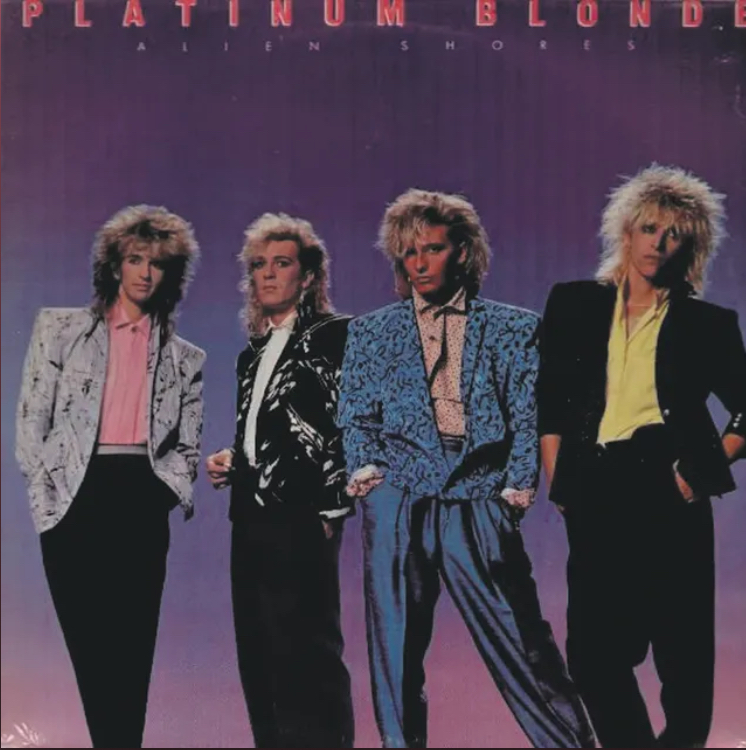
Platinum Blonde – Crying Over You

As I was growing up in the 1970s and early 1980s, internationally successful Canadian pop and rock acts were rare. Artists like Neil Young and Joni Mitchell were superstars but their album-oriented music didn’t get a ton of play on our local radio station, and others like Anne Murray and Gordon Lightfoot had lots of hits but were, well, lame. The Guess Who was long gone, and Bachman-Turner Overdrive peaked before I paid them much attention. There were outlier tunes like Nike Gilder’s “Hot Child in the City” and Dan Hill’s “Sometimes When We Touch”, and soon Bryan Adams would come along to spend the better part of two decades interchangeably yelling or growling at us.

But we had lots of bands with hit after hit within our borders. Because of government licensing requirements, Canadian radio stations had to play 30% domestic recordings, under a formula that eventually reached its nadir when it decided Adams – or at least his music – wasn’t Canuck enough to fit into that 30%. For better and often worse, these rules gave a lot of homegrown acts an opportunity, and that radio play helped them develop a following. This was joined in 1984 by the MuchMusic video channel, giving us a look to go with the sound. And possibly no domestic band took better advantage of the power that video had to offer than Platinum Blonde.

As the band name would suggest, yes, they were sort of ridiculous, and I also owned their first three albums, played them a lot, and make no apologies for that. Their biggest hit by a fair margin was “Crying Over You.”, and the video is a glorious mess of big (probably dyed?) hair and slick New Romantic styling, all glossy surfaces and flashy colours. (I wonder, too, if they ran out of money during the shoot: an awful lot of shots seem recycled. Lead singer Mark Holmes would later say that drug use played a part in the band’s demise. Just sayin’.) The four band members are styled so similarly and the video shot so allusively that it took my second reviewing before I remembered – I had to have known this in 1984/85, right? – that the point of the video is that the female subject is dating ALL of them at once, and only her inscrutable manservant is wise to her shenanigans. The premise seems to be a dudes only powwow where they share how they each were betrayed – and, umm, how they betrayed each other – ending with begrudging acceptance that they are done with her, though her wink just before the closing shot suggests that this game is far from over.

But this was of course a song before it was a video, and it happens to be my favourite of their tunes. Their early sound was post-new wave nu glam, and when I was introduced to The Cure a few years later, I recognized echoes of Platinum Blonde, so I was thrilled to hear Cure leader Robert Smith cover the band’s “Not in Love” with Crystal Castles. (Images in Vogue is another great Canadian band that fits with that group, and their “Call it Love” is overdue for the Smith treatment.) As they evolved, the guitars became more forward, and they also started pulling in shades of funk, which they would dive into headfirst on their next album and its eponymous lead single “Contact” (the other leading contender for my fave PB track). “Crying Over You” sort of catches them in the middle of that evolution: there’s a solid bass line from Kenny MacLean on the chorus (based on how into it he seems in the video, MacLean really liked this song) and nice shredding on the guitar solo (from guest player Alex Lifeson of Rush), but the main sound is a sort of jittery funk-lite groove meets pout rock on the verses. Together, they make not what I would call a dance tune, but definitely something with a hip swinging vibe (and not the borderline sashay seen in the reverse shot of Holmes that flashes across the screen at the 20-second mark of the video – I can’t be the only one who thought of Pete Burns of Dead or Alive). I don’t remember it getting club play back then, but it would have been a solid early evening entry to get the crowd warmed up.

“Crying Over You” hit in Canada and the album it came from, “Alien Shores”, got to #3, both marking the band’s commercial peak. They broke up a few years later but remained pals, with the original threesome of Holmes, guitarist Sergio Galli and drummer Chris Steffler reuniting to honour MacLean’s wish after his ridiculously early death. They haven’t released a record in over a decade but are still around (and newly inducted into Canada’s Walk of Fame), minus Steffler, who had to retire for the very rockstar reason of having developed tinnitus. Their music, which was very much in the style of the moment, holds up better than I expected, just like some of the other bands of that era, like Duran Duran (to which they were often compared), that were dismissed by many as bubblegum but were in reality masterful sugar confections. More bonbons than bubblegum, let’s say. But there’s nothing wrong with bubblegum either.

Classic Songs of My Youth Revisited #51

Murray Head – One Night in Bangkok

What do you do after selling a few hundred million records? Well, if you’re the guys in ABBA, you write a musical about chess. (Sure you do.) Actually, they did.

So, a confession here: I have never liked ABBA. By that I mean that I don’t think I had ever, with intention, played one of their songs. I would let them play on when they came on the radio, or as part of a compilation, or on a playlist. I have probably even spontaneously sung along, and I’m certain I danced to some of them. But I had never once said to myself, or to anyone else, “You know what would sound great right now? How about a little ‘Knowing Me, Knowing You’?” They never created music that appealed to me. It’s okay: they did just fine without my support.

After the band split up in 1982, the two female members, Agnatha Fältskog and Anni-Frid Synni Lyngstad (under the name Frida), had minor pop hits – “Can’t Shake Loose” and “I Know There’s Something Going On”, respectively – that I sort of liked, or at least wasn’t super irritated by, possibly because they didn’t really sound like ABBA. Meanwhile, the male band members, Benny Andersson and Björn Ulvaeus, moved on to, among other things, “Chess”, on which they teamed up with Tim Rice, who’d made his name with Andrew Lloyd Webber on such musicals as “Jesus Christ Superstar”, “Evita” and, my favourite from the duo (thanks to my amazing junior high school music teacher, Miss Beaupre), “Joseph and the Amazing Technicolor Dreamcoat”. Before mounting an expensive stage production, as both a fundraising device and sort of proof of concept, the decision was made to release an album of the songs that would likely be in the show. And to sing one of the lead roles, the call went out to Murray Head.

This was not new to Head: he’d been part of a similar approach with “Jesus Christ Superstar”, on which he sang the part of Judas Iscariot. For “Chess”, he was cast as the Bobby Fischer-esque American grandmaster. Early in the second act, the former champion, who lost his world title in act one, takes in the nightlife of the next host city as a journalist. And he celebrates this in “One Night in Bangkok”.

I can’t really say Head sings “One Night in Bangkok”, nor do I want to equate it with talk singing, because what he is doing here is really talking musically. (Wikipedia calls it a rap, and whoever wrote that should have their editing privileges revoked.) It isn’t because Head couldn’t sing: just check out “Superstar” for solid evidence to the contrary. So this was an artistic choice, and it absolutely works, giving a sardonic creepiness to the performance. Rice delivers some great lines – I would give even money that I could sing the whole thing from start to finish, and that’s because zingers like “the queens we use would not excite you” are lodged in my brain. It’s a Thai pop culture journey, with nods to “The King and I”, Buddhism, martial arts and ladyboys. Over it all stands Head, commenting on the corrupt and disreputable setting for “the ultimate test of cerebral fitness”. All of this is to an upbeat tempo – this was a top ten dance hit – that has the synth sheen that was found on 95% (my non-authoritative and unverified guess) of the pop music released in that era. And the video is pretty slick, too: Head has the kind of cool that doesn’t look ridiculous in a white suit.

So, yes, I still love this song, and can’t see that changing anytime soon. But this brings me back to its co-writers and ABBA: why didn’t I care for them? Outside of the music, I was definitely irritated by the suggestion that they were even more successful commercially than my beloved Beatles. But I also never gave them a serious listen either.

So I checked out one of their albums, 1976’s “Arrival”, which is the only one in Acclaimed Music’s top 3000, at #852 (though four singles off the album are also ranked in the top 10,000 songs). A few of the unfamiliar tunes were slick and didn’t really distinguish themselves in any way. But there was much to like here. I caught myself bumping my hip to “Dancing Queen”, some sort of muscle memory from my barely pubescent earlier self let loose on a sweaty junior high school gym turned Friday night dance floor. And now that I’ve really listened to it, “Knowing Me, Knowing You” is pretty cutthroat when it comes to what happens at the end of a relationship, and damned heartbreaking. “Dum Dum Diddle” is silly fun, and “Money Money Money” shows that Andersson and Ulvaeus were writing stage-worthy songs long before “Chess”. The title track is an instrumental save for some aggressive humming, and it had me imagining a “Braveheart”-esque race across an open field to battle. And “Happy Hawaii” ends the record with a fun tune that wouldn’t have been completely out of place on a pre-“Pet Sounds” Beach Boys record (and also feels like a bit of counterpoint to First Class’ 1974 hit “Beach Baby”).

So, my final conclusion is that I should maybe listen to more ABBA. And maybe more Murray Head, too. (“Superstar” is pretty awesome.) The lesson I take away from this is that I need to keep an open mind. Now, if you’ll please excuse me, I think I need to go listen to “Knowing Me, Knowing You”.

Classic Songs of My Youth Revisited #50

Patrick Swayze – She’s Like the Wind

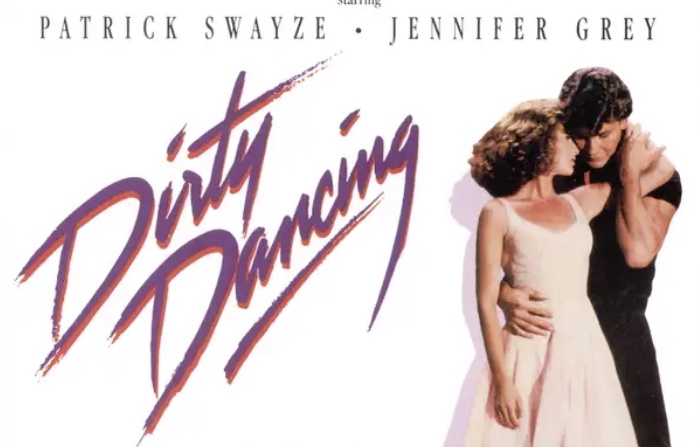
I’ve never seen “Dirty Dancing”. I have no plans to watch “Dirty Dancing” in the future. From what I know about “Dirty Dancing”, which is very little, but still far more than I should know for never having seen it, I am confident that my life is not less satisfying by its absence. I’m not judging those who love it: I just know there are a lot of things I would rather do with 100 minutes than spend them in the company of Baby, Johnny and the rest.

The music from the movie was a little more difficult to ignore, since it was all over the airwaves in 1987. There were three hit singles (four if you count the revival of Maurice Williams and the Zodiacs’ “Stay”), and not one of them sounds like it could have been in the air during the early 1960s when the film was set. It was obviously the right choice to get radio play and record sales, and I just as obviously have no idea how the songs were used in the film, but it just feels wrong. This isn’t anachronistically using rock music because it’s fun as in the awesome “A Knight’s Tale”: it is cynically rejecting the sounds of 1963 – which were, I must admit, pretty awful in a lot of cases – for a pure cash grab that would play well in 1987.

One of those hits – “She’s Like the Wind” – was sung by the film’s male lead, Patrick Swayze, who also co-wrote it. Though he was a beloved romantic hero in “Dirty Dancing” and “Ghost”, and a tough guy in “Point Break” and “Road House”, Swayze did some of his best work as an actor when he got weird. In “To Wong Foo, Thanks for Everything! Julie Newmar”, he was one of three drag queens (with John Leguizamo and (!) Wesley Snipes) stuck in a hick town for the weekend. Even better was his dark turn as a paedophile motivational speaker in the absolutely demented “Donnie Darko”. I don’t think I could bear to watch even five minutes of “Ghost” now, but would gladly rewatch those last two anytime. And let’s not forget his brilliant straight man work alongside Chris Farley as they both auditioned to become Chippendale’s dancers, while a less celebrated dancing moment comes when he gets very up close and personal with another male dancer at 4:24 of the video to Toto’s hit “Rosanna”.

What Swayze wasn’t, really, was a singer. As best I can tell, he only sang for the soundtracks of movies he starred in, which was probably for the best. (True fans lack any sort of objectivity about the artists they love, and this is no clearer than if you spend some time in the YouTube comments section of his tune “Raising Heaven (in Hell) Tonight” from “Road House”.) And yet, of the three hit songs from the movie, his was easily the one I liked best, and, yes, I owned the 45.

It’s a synth-heavy track – again, that lack of fealty to the sound of 1963 – with the same four notes repeated over and over, and frankly the whole thing could be synths and I doubt anyone would notice. Drums are an afterthought, the occasional rich bass notes are quickly forgotten, and while there are a few saxophone sections, they are blunt, not sensual. The lyrics are unbearably cheesy (“Can’t look in her eyes / She’s out of my league”) and clunky (can you be a “young old man”?), and the guitar, such as it is, is mostly a gummy mess, low in the mix. Swayze, so charismatic on the screen, offers none of that magnetism in his voice.

So, yes, I don’t think it’s a very good song. And yet, I still sort of like it, and that’s one of those weird alchemical things that happens with pop music, where the complete work is greater than the sum of its parts. There’s definitely nostalgia involved: we can easily convince ourselves that nothing beats the things we loved when we were younger, like your mom’s pot roast, even though we now know that the grey overcooked protein that she covered with a heavy handed amount of artery-clogging gravy is a culinary offence worthy of being banned from the kitchen. But it’s also good to be reminded that I was a lot more committed to my music back then. I might have been embarrassed by some of the things I loved – cough, Wham, cough – but I still went out, invested my limited income in those records, and played them. 23-year-old me loved “She’s Like the Wind” enough to choose it among all the possibilities to add to my curated record collection. It only took a toonie and a trip to the mall, but that is still worth celebrating in an era when finding a favourite song requires no more effort than a few clicks on your phone, and when there are millions of other readily accessible other songs competing to replace it in your heart.

Classic Songs of My Youth Revisited #49

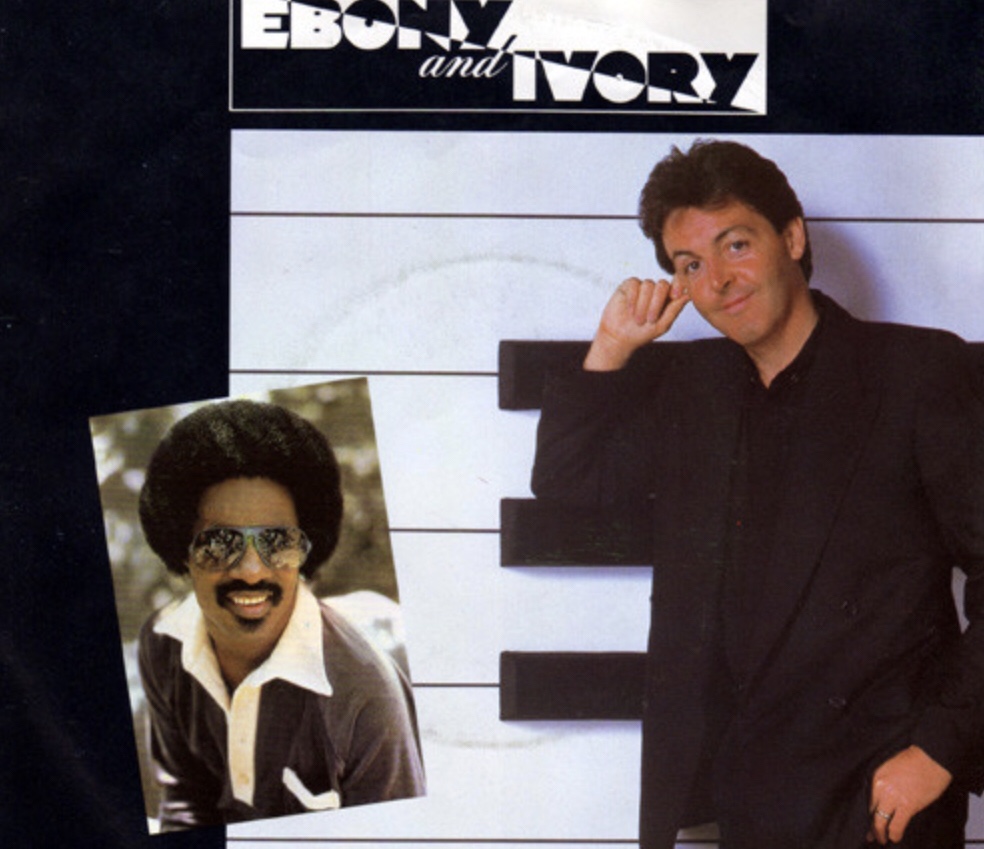
Paul McCartney featuring Stevie Wonder – Ebony and Ivory

It’s not surprising that our tastes change over time. When I was a teenager, I loved the novels of Irving Wallace. They were big books full of facts about fascinating topics: the Bible, the Nobel Prizes, American politics. Wallace was a capable but not particularly dynamic writer, and eventually I moved on to more challenging reads.

Those earlier loves can be enduring for nostalgic reasons even if our aesthetic sensibility no longer finds them pleasing as art. I recently listened to an album from The Ravyns, an early ‘80s band that had a minor hit called “Raised on the Radio” off the “Fast Times at Ridgemont High” soundtrack. The entire time it was playing, I just kept thinking that it was a perfect example of the overproduced faux rock of that era. I was trying to figure out what artist their sound most reminded me of, and then it hit me: Rick Springfield. Who I owned five albums by and listened to regularly into the early ‘90s without even once thinking that it might be shite. Who I still sort of love, but am now a little anxious about listening to very closely given my realization that his music may be sort of garbage and I think I’d rather not confirm that. Awareness can be a burden.

I mention all this because I am grappling with a question: why did 17-year-old me love “Ebony and Ivory”? Because 59-year-old me, and most intervening versions, wants all physical and digital traces of this song to be locked in a vault, dropped into Marianas Trench, have an anvil land on it Wile E. Coyote style and then blow the whole thing up for good measure. I don’t understand why we didn’t think it was awful at the time. I remember having a conversation about the song with my friend Alan Sutherland, who took his music very seriously, and he neither mocked it nor mocked me for liking it (and Al was always up for a good mock when circumstances called for it).

I had not really paid attention to it in years, and then suddenly there it was, in my poor ears, as the third track on a Paul McCartney compilation called “All the Best”. No, not even close to one of his best (though when “Silly Love Songs” also makes the cut, you know the bar is limbo champion low). Not when that record did not include “Helen Wheels”, “Maybe I’m Amazed” or “Mull of Kintyre”. Not when it could have been replaced by pretty much any omitted track from “Band on the Run”. No way.

So, why do I – the “there is no bad music” guy – think this song is so awful? First, is there a more treacly song out there? Yes, of course – the musical excrement that is “Butterfly Kisses” immediately comes to mind, and the name Bobby Goldsboro can give me hives. (I won’t link to them – if masochism is your game, you can easily find them yourself.) Neither of them, however, topped Messrs. McCartney and Wonder on Blender’s list of the 50 worst songs ever, where “E & I” ranked 10th. (“We Built This City” topped (bottomed?) the list, and I think everyone can agree – even, as it turns out, the woman who sang it – that it truly blows. (Aside: I just learned this was co-written by Bernie Taupin. How is such a thing even possible?))

Not a moment in the song isn’t sparkly clean, honed to a version of perfection that overlooks the part where a song should maybe be a bit dangerous to be actually fun. It’s all so artificial, a synth heavy soundscape that feels very lush, like lying in an aural down bed. There really isn’t much happening here: the only musically interesting bits are coming from Paul’s bass. It’s music for washing the dishes, not listening to, and thus is more akin to what is happening now than to an era where you still had to pay attention to the music coming over the air lest you miss something great and never have a chance to hear it again. “E & I” is musical wallpaper, and, like all wallpaper, if you look too closely you’ll notice the torn edges, the parts that don’t line up quite right and the soul crushing blandness of the thing. That’s this song in a nutshell.

I don’t doubt that Paul and Stevie believed in their message, limited as it may be to the confines of a chorus and a single repeated verse. The song’s notions about racial harmony were belittled on release as simplistic, and it’s not like another 40+ years of people trying to destroy each other on the basis of ethnic differences has redeemed their poptimism. But that never really concerned me: I knew exactly two Black people, and while race may have been something the two of them were highly conscious of, I wore blackface in our high school musical “Finian’s Rainbow” and never gave it a moment’s consideration. (I was 17 and living in a less enlightened time and place – the adults in the room maybe should’ve thought a little more carefully about the show they selected that year for a bunch of white kids to perform. Those photos could damage my political career!)

McCartney and Wonder made tons of music that I love, but very little of it came after this team-up: Stevie’s last widely acclaimed album was 1980’s “Hotter Than July”, and some feel this song marked the point where Paul began to lose credibility as an artist. You have to give them credit for one thing: it takes a lot of confidence to make a record this earnest, although no one ever went entirely wrong recycling lame messages about humanity’s inherent goodness. The lyrics were made for a United Nations banner, not the top of the charts, yet somehow that’s where they ended up. I guess we were just really boring in 1982.

Classic Songs of My Youth Revisited #48

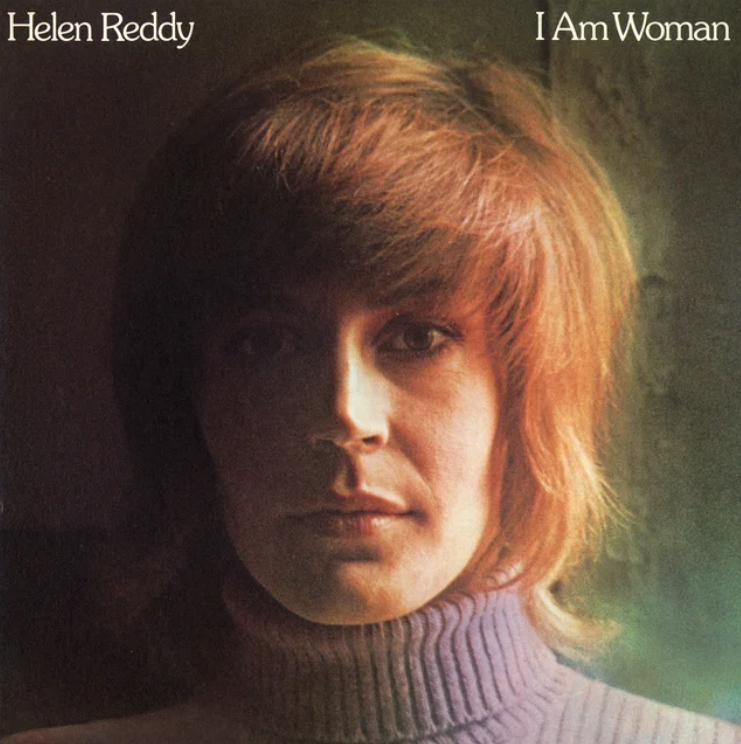
Helen Reddy – I Am Woman

Even though I write about music and give my opinion about it, I don’t consider myself a critic, mostly because an enormous percentage of music critics appear to be massive tools. I cite as exhibit “A” one asshat of a writer named Paul Cooper, who, in giving her album (they call it an EP, but it really isn’t) “Kelly’s Locker” a 2.4 on Pitchfork, seemed to believe that Sarah Cracknell owed him a personal apology for simply daring to exist and create. Cooper wrote 120 reviews for the site between March 1999 and December 2002, and consistent with Pitchfork’s place in the musical ecosystem at that time, I’ve heard of maybe 10 of the artists and listened to none of the records. I can’t find any clear trace of Cooper after 2002, so presumably he went back under the snarky rock he had crawled out from three years earlier.

I mention this because I have concluded that I don’t much like “I Am Woman” by Helen Reddy, and I want to make clear it is not personal. No one owes me an apology.

I came to write this because I was thinking about my mother, who is dealing with some medical issues right now, and how I’ve never really written about her except in connection with my dad, who’s had one write up so far and has another one coming down the pipe. This reminded me of Tolstoy’s justifiably famous opening line to “Anna Karenina”: “Happy families are all alike; every unhappy family is unhappy in its own way.” For a writer, unhappiness means conflict, and that is inherently more interesting to both the writer and their potential audience than people who love each other talking about how nicely everything is going. I write about my dad because I’m working through almost 43 years spent at loggerheads. I have no such issues with my Mom, who was the single most important person in shaping whatever bit of good I have in me.

The one song I always associate with my mother is “I Am Woman”, and I truthfully have no idea if she even likes the song. I know she owned it, and she definitely played it in our home, but was it for aesthetic reasons or for empowerment? The latter doesn’t actually require that you like something: my workout mixes have some tunes that I think are objectively awful, but they get me pumped up and ready to push for a new personal best on the leg press machine. In that mix, I found a home for “You Give Love A Bad Name” (which I must sheepishly admit to having owned on 45 at one point).

I usually listen to the songs I write about under this series 10 or more times to really get a feel for the song and to see how it holds up as a listening experience as compared to my memory of it. I just couldn’t do that with “I Am Woman”, breaking down at around the sixth or seventh play. My quibble isn’t with the message, which is no less necessary now than it was over 50 years ago when it was first released. But the song is an example of everything that was wrong with pop music at the time: a wall of mushy sound (other than some weirdly misplaced pseudo southern rock-lite guitar) surrounds lyrics that are all surface, no subtext. And I don’t much care for her singing: it feels like she’s yelling at me (and maybe she is – I am so not the demographic being targeted here). And yet, yes, I do feel a bit strong, maybe even invincible, as Reddy sings the chorus. It’s very easy to understand why the song was embraced by many (though not all) in the women’s liberation movement, and I am more than a bit surprised that it never really had a second life on the charts (and even then only in her home country Australia) until after Reddy’s passing in September 2020.

I’m not completely anti-Reddy. I remembered liking the song “Angie Baby” (written by future “Undercover Angel” hitmaker Alan O’Day), and while it has many of the same production tics that dogged much of 1970s soft pop/easy listening – space age keyboards, soulful female backup singers, barely a wisp of backbeat – it holds up much better to my ears than “I Am Woman”. It has a very spooky feel, almost like a slowed down take on Eagles’ “Witchy Woman”. The vocal is more understated, and the compelling tale of a mentally ill young woman draws you in. 

So, Mom – and everyone else out there who once loved or still does love “I Am Woman” – I see you, and I respect your taste. Because I appreciate that not all music is made for my ears, and because I’m not a jackass. You know – like Paul Cooper was.

Classic Songs of My Youth Revisited #47

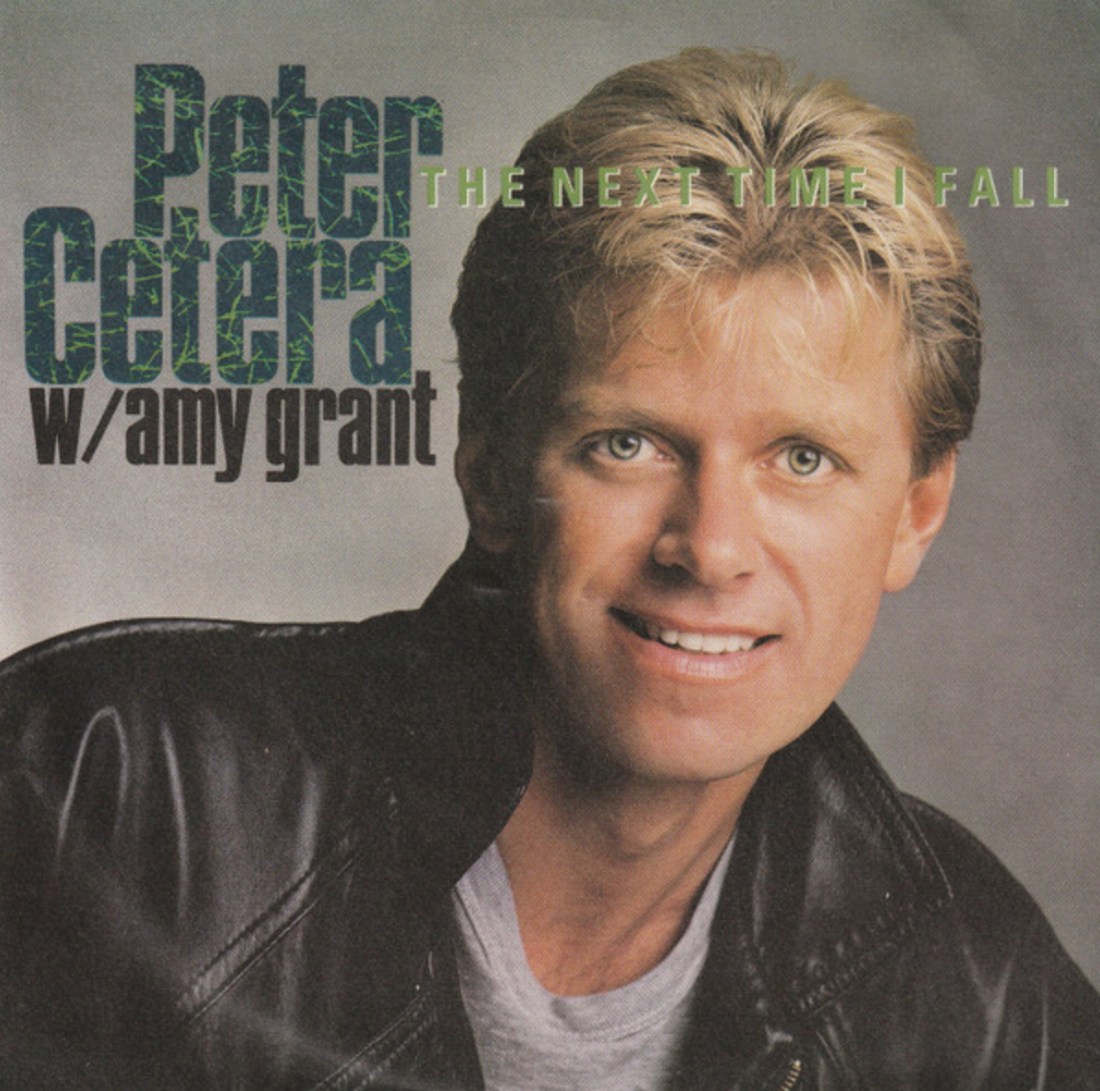
Peter Cetera with Amy Grant – The Next Time I Fall

I don’t remember what music was playing when I lost my virginity. (TMI, I know, but most of us get there eventually so settle down.) It was definitely something from the ‘60s, because my college girlfriend hated modern – that is, 1982 – music, and had reacted by becoming a big fan of a local oldies station. This lead to her calling in one night to speak with The Monkees’ Peter Tork, who earned my eternal enmity by making a lame joke (I have purged my memory of what he actually said) about her boyfriend – that is, me. Screw you, Peter Tork. (And you, too, Janice, for not verbally bitch slapping him in response.) (Blogs are apparently designed for score settling.)

Anyway, that’s my “first time” story. I don’t remember what was playing over my first real kiss either (or exactly when it was), but I remember the who and the where, and that means the song would’ve been a pop ballad from the 1970s. And that means there is at least a slight possibility that the vocal stylings of Peter Cetera were in the air. 

Outside of Lionel Richie, and later Phil Collins and George Michael, was there a more reliable guy to turn to in the late ‘70s or most of the ‘80s for a romantic ballad than Cetera? Whether on his own, in Chicago or teamed with a female partner, Cetera always brought it. Not the prettiest voice by far, but definitely distinctive. How many of us had our first kisses on a sweaty gymnasium floor as Peter crooned over the not-designed-for-music speakers? How many others lost their sexual innocence cuddled on a basement chesterfield or the backseat of a car under his guiding voice? And how many more, after the kisses and lovemaking inevitably ended in heartbreak, turned to him for solace and a good cry before getting back in the game?

It’s a challenge to decide which of his tunes is the highlight. (Not really, but anyway . . .) With Chicago there was “If You Leave Me Now”, the “Hard” duo of “… to Say I’m Sorry” and “… Habit to Break”, the first dance sappiness for a million newlyweds of “You’re the Inspiration”, and a half dozen other songs whose names mean nothing to me because either (1) I stopped paying attention or (2) they all sound the same. His Oscar-nominated movie tune “Glory of Love” is great, but in the end, the only choice for me is his duet with Amy Grant on “The Next Time I Fall”. It’s the only one that I laid down cash to own my own copy of when it came out, and the only one that I still listen to on purpose years later.

It was an odd pairing: Grant was (is?) so Christian that she had to vet even the songwriters before agreeing to make the record. And without casting aspersions, Cetera had been the frontman for one of the biggest rock bands in the world for 20 years, and I think I’ll stop right there. But Grant wanted to expand her dominance in the gospel and contemporary Christian music worlds into pop, and there were few more reliable partners to be found than Peter. And off they went.

With a faux orchestral swell to open, then tinkly synths and guitars, it announces itself as a song of the mid 1980s, with all the big hair, shoulder pads and “Miami Vice” pastels that the world could muster. Is it cheesy? God, yes. But that doesn’t have to be a bad thing. Cheese happens to be probably my favourite eat-without-cooking food, and I bet a lot of people feel the same way, so why do we use the word to signify something negative? It’s a hopeful song, of two people who’ve loved and lost, but stubbornly persist, in the belief that the bad experiences of the past have finally prepared them to make love work this time. Their voices go well together, Cetera’s slightly nasal, almost synthetic sheen contrasting with Grant’s natural country girl sweetness. The song is lush, comforting – it washes over you like the best pop of that era, embracing you in an aural blanket. My favourite part comes after the second run through of the chorus, at around 2:21. Grant sings them out of the chorus with “It will be with you”, Cetera smooths the edges off his voice while Grant croons behind him, then they sing the next line together, newly committed to the plan of, you know, falling in love. I still get chills during this section, and those carry through the rest of the song, and if I could explain why that happens to me I am sure I could earn an insane fortune making pop music. 

The video for the song seems odd initially, because at no point do Grant and Cetera appear together. They are shot mostly around the edges of a room of people either rehearsing for or performing a dance. Shots are in black and white, washed out colour, oversaturated with sunlight, in low resolution, jittery handheld – there’s barely a clean shot in the entire video. The visual effect is to give the impression of two emotionally unsettled people moving closer together, and the last part of the video would have you believe the singers are looking at each other through gaps in the dancers, furtively, maybe – at least on Grant’s part – flirtatiously. Other than one shot where the demonic look in Cetera’s eyes completely took me out of the moment (it’s at 2:43 of the video), it’s a pretty decent marriage of song and visuals.

One of the songwriters was Bobby Caldwell, who had a top 10 hit of his own with 1978’s lounge jazz come-on “What You Won’t Do For Love”. He did his own version of this song a few years later, retitling it “Next Time (I Fall)”, and while I don’t want to speak ill of a talented artist who is no longer with us, the difference between Caldwell and the superstar power of Cetera and Grant is obvious in the grooves. Maybe that stereotypical momma was right: for all the bedroom eyes of most of his hit ballads, Peter just needed to settle down with a good Christian girl to find true musical happiness.

Classic Songs of My Youth Revisited #46

The Romantics – What I Like About You

It’s easy to forget this now, in our world of Shazam and asking Siri about pretty much everything, but not so long ago, it could sometimes be a challenge to find anything out about a random song that you heard. One of the things that drew me to listen to Mike Viola’s music was this line from his Spotify profile: “I’ve spent a lifetime chasing a secret AM radio hit coming out of my mom’s kitchen radio balanced on the windowsill in the summer of 1973.” If you’re part of my generation, you know that feeling. Even in early 1998, when in a feverish haze I heard Fastball do an acoustic version of “The Way” during a radio station visit and thought, “Well, I’ll never hear whatever that was again”. I was happily wrong: by June, it was the song in Canada.

For years, I danced to “What I Like About You” at weddings and bars having no idea who the performer was. I don’t even remember now if I wondered about that at the time. How it ended up on Canadian disc jockey playlists is a mystery, since as best I can tell the song never even charted in this country, and only reached #49 in the U.S. (though it was a massive hit in Australia). 

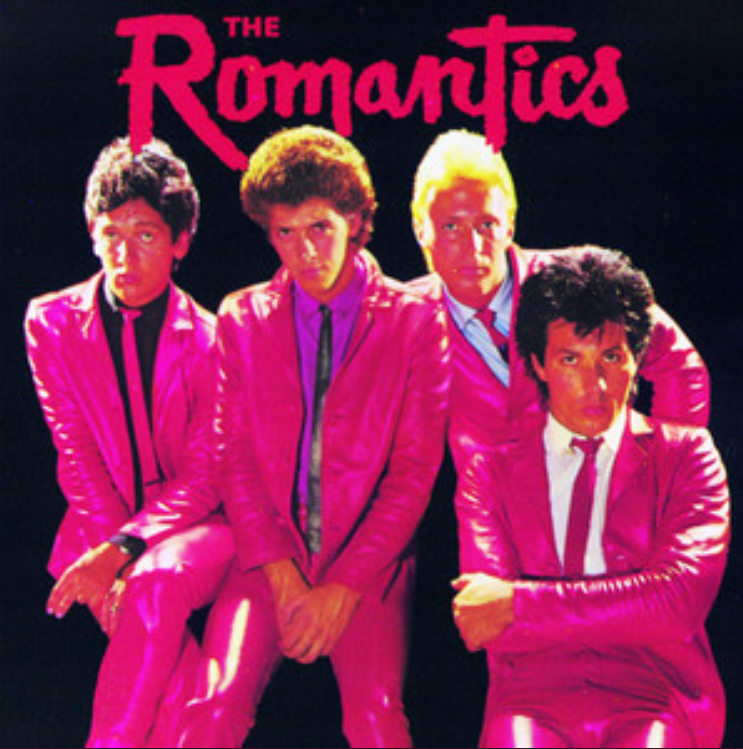
When I learned it was by The Romantics, I had a bit of cognitive dissonance trying to match this song that I loved with the guys in this video. Not that I didn’t like “Talking in Your Sleep”, which was a Canadian . But the video is just, umm, weird: the first appearance of the band, floating up into the viewfinder like glossy big-haired aliens, is chuckle worthy. And while you can hear the similarities in the two songs once you know it’s the same band, I don’t think you would make that connection unguided. I certainly didn’t.

I don’t think my failure to appreciate that this was a 1979 release is all that odd since the song sounds like something out of the 1960s. The Wikipedia page for the tune lists such influences as The Yardbirds, Chuck Berry and Neil Diamond (!) – you know, acts from the ‘60s. Bob Seger’s 1969 “Ramblin’ Gamblin’ Man” could be this song’s hungover uncle. There is a certain timelessness to the tune, with jangly garage band guitars, hand claps, “Hey!”s and “Uh-huh-huh”s and “Ahhhhhh”s. Pounding but unobtrusive drums provide a steady backbeat, and while there is a guitar solo, it is then immediately upstaged by a harmonica solo, which is so incredibly rock and roll. At one point, it seems to be heading into the fade out, before revving up again, then suddenly ending on one last “Hey!” The song jumps in, does its job, then slips back out in a nifty 2:54.

AllMusic has this great feature that links a record to thematically similar works. The album this tune came from is categorised under Guys Night Out, Late Night and Hanging Out, all of which feel pretty appropriate. Guys Night Out is by far the best match, with tunes that include Thin Lizzy’s “The Boys Are Back in Town”, Joe Walsh’s “All Night Long”, Kiss’ “Rock and Roll All Nite”, The Rolling Stones’ “Honky Tonk Woman”, “I Wanna Be Sedated” from The Ramones, and “Louie Louie” by The Kingsmen. “What I Like About You” fits quite nicely, albeit with a slightly more bubblegum finish. AllMusic missed out though by not having Community Hall Wedding Reception as a theme. What else would be on there? “Don’t Stop Believin’”? “Livin’ on a Prayer”? “Shout” (Isley Brothers, not Tears for Fears)?

There is something about “What I Like About You” that has kept it in the airwaves for over 40 years. It’s the kind of tune that a kid in his bedroom hears and thinks, “I could play that”, and that kid isn’t wrong. I have danced to this song with male and female friends, with a girl I was (secretly) in love with, even with my mother at my stepbrother’s wedding reception. I have soberly danced in my kitchen to this tune, and tapped my toes while sitting on my couch drinking coffee, but it works best when you’re just a little drunk, in a room where there are a few too many people, so that everyone is a bit too warm and starting to run out of steam. It’s at that moment that those opening bars kick in, and everyone feels energised again, ready to take on the night. That might be the key to its longevity: hearing it just makes you, well, happy. And what’s not to like about that?