Classic Songs of My Youth Revisited #35

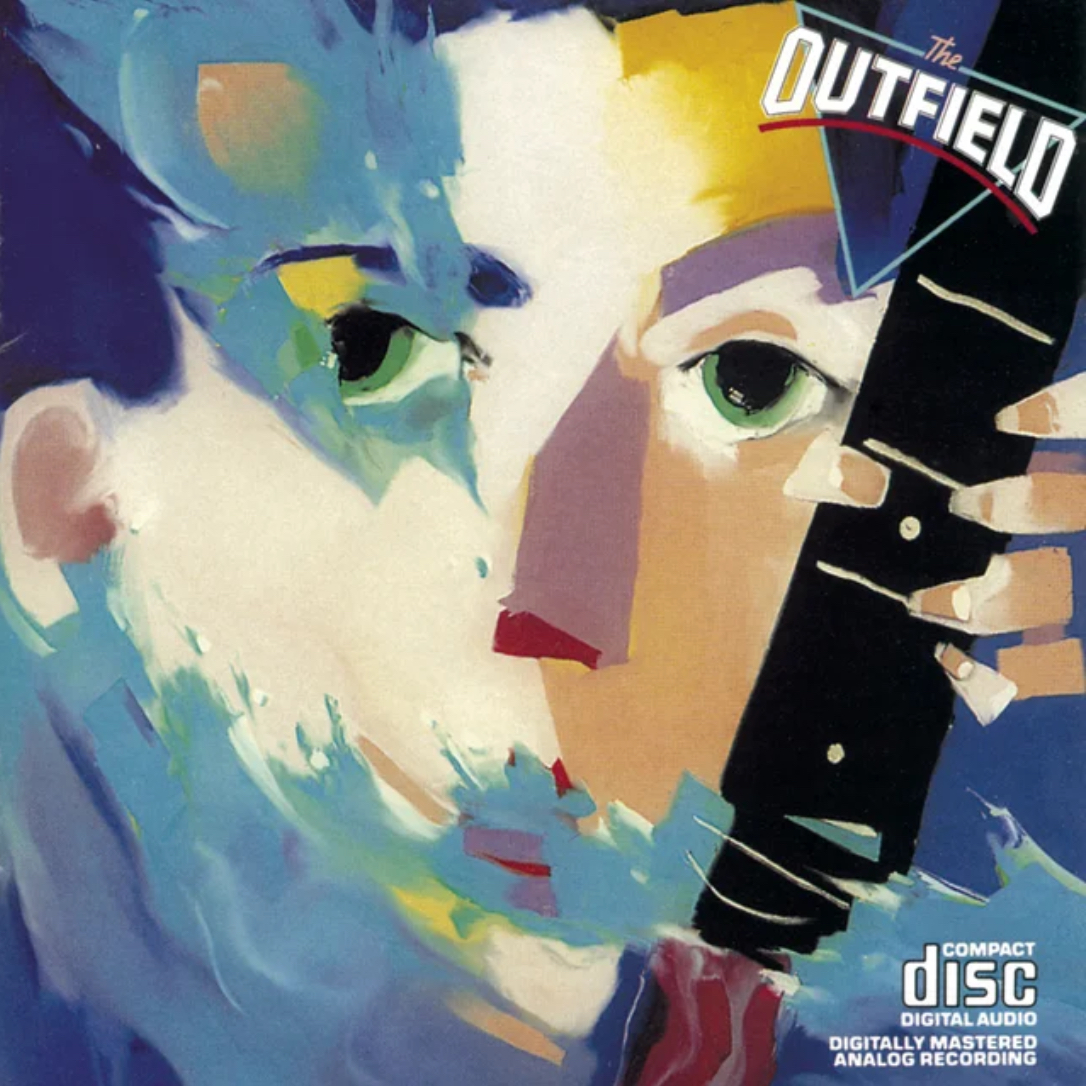
The Outfield – Your Love

From September 1984 to the spring of 1986, my main source of new music – and primary viewing pleasure – was MuchMusic, Canada’s only 24-hour music video channel. That was sort of a lie – they initially had eight hours of programming that was then repeated twice – but in that lie was also the knowledge that if they played, say, “Like A Virgin” at 1:38 p.m., you could safely tune in at 9:38 that night and 5:38 the next morning for another Madonna fix.

That all came to an end in the spring of 1986 when I began renting a room in the home of a lovely lady in her 90s who was known to all in her circle (regardless of actual blood affiliation) as Granny. Granny controlled the television with occasional jokey (though I never tested this) threats of lethal force, as I had enough problems right then without adding “fistfight with a near-centenarian” to the list. Granny had her shows (I wish I could say for certain that “Murder, She Wrote” was one of them, but let’s just agree that it was) and I could either watch with her or do something else. The one concession was that I convinced her to check out “ALF” when it debuted in September 1986, and it soon became our weekly ritual to watch together, even past the point when I had tired of the show, because it seemed to make Granny happy to do this one small thing together.

Because I no longer had a television or reasonable access to someone else’s, I rarely saw music videos between May 1986 and spring 1990, when I moved in with my then-girlfriend and her Panasonic. As a result, I had no awareness of the video representations of most of my favourite songs of that era (and still don’t, really) unless they became ubiquitous in the culture, like Peter Gabriel’s “Sledgehammer”. Which meant that when I finally watched the video for The Outfield’s “Your Love”, more than 37 years after its release, I was, umm, a little confused.

I have been hooked on “Your Love” since I first heard it in early 1986, so I don’t know why I missed the video initially. I bought the album on cassette and regularly listened to the entire thing – it’s just one pop gem after another. The lyrics to “Your Love” always seemed pretty straightforward to me: the narrator’s girlfriend Josie is out of town and he’s hooking up with his slightly older and very secret side piece who he’s more attached to than he’s prepared to admit. But there are other theories. That Josie is the older girl, and he’s hooking up with someone too young for him. (Creepy.) That Josie is a man and he’s sneaking around with his friend’s gal. (Plausible – though there aren’t a lot of male Josies.) Who expected such worlds of possibility in a humble pop song?

But that video? There is some conceptual weirdness going on here. Why is the woman painting the album cover during the video shoot? Is she supposed to be drawing inspiration from being with the band? There is a sort of flirtation with chipmunk-cheeked frontman Tony Lewis and then that out of left field check in from guitarist John Spinks (R.I.P. to both men), but it’s also clear she isn’t even looking in their direction while they perform, despite some shots through the glass she is painting on that suggest otherwise. And do Spinks and his fellow guitar player think they’re in a different band? A power stance? This isn’t metal, fellows: it barely qualifies as rock. And just a style question: is there a rule somewhere that blind keyboard players have to wear shades? (See Milsap, Ronnie, and Charles, Ray, and Wonder, Stevie, and – oh, you get the point.) Then there is the paint dripping down the screen, suggesting a connection between the song and the painting that doesn’t really exist. And, finally, she just ups and starts to leave halfway through the song. Sorry, boys – at least you’re going to get a pretty cool album cover out of it.

“Your Love” isn’t exactly unique: the strain to connect the visuals to the song was a constant in that era, though considering that this song actually tells a story, the effort really should’ve been saved for some other tune. And let’s face it: some bands are just meant to be heard and not seen, and the era when videos were the key promotional device threw that reality out of whack. I’m not saying The Outfield were such a band, but not everyone could fit as smoothly into that box as, say, Huey Lewis & the News, with their strong-jawed but obviously goofy frontman and his super cool and very game band mates.

In the end, though, it’s the song that perseveres. It’s a fantastic power pop record, a little more new wave influenced perhaps than others of that ilk, and with a great opening guitar hook that draws you in (and different hooks later that keep you listening – the guitar has three different motifs by my count, which come and go throughout). There’s an echoey effect to the whole song, and I’ve always loved the drums, which have a subtle boom that serves as a nice counterpoint to the texture of Lewis’ voice (which I like best when he goes low about a third of the way through) and the shift to more tinny guitar in parts (and the song doesn’t really kick into gear until drummer Alan Jackman shows up 29 seconds in). It’s a song that doesn’t overstay its welcome, a mere 3:36 of boy meets girl/boy cheats on girl with another girl or on his best friend with girl/boy feels deep regret and shame but knows he’s going to do the whole thing all over again the first chance he gets. You know: a pop song.
Classic Songs of My Youth Revisited #34

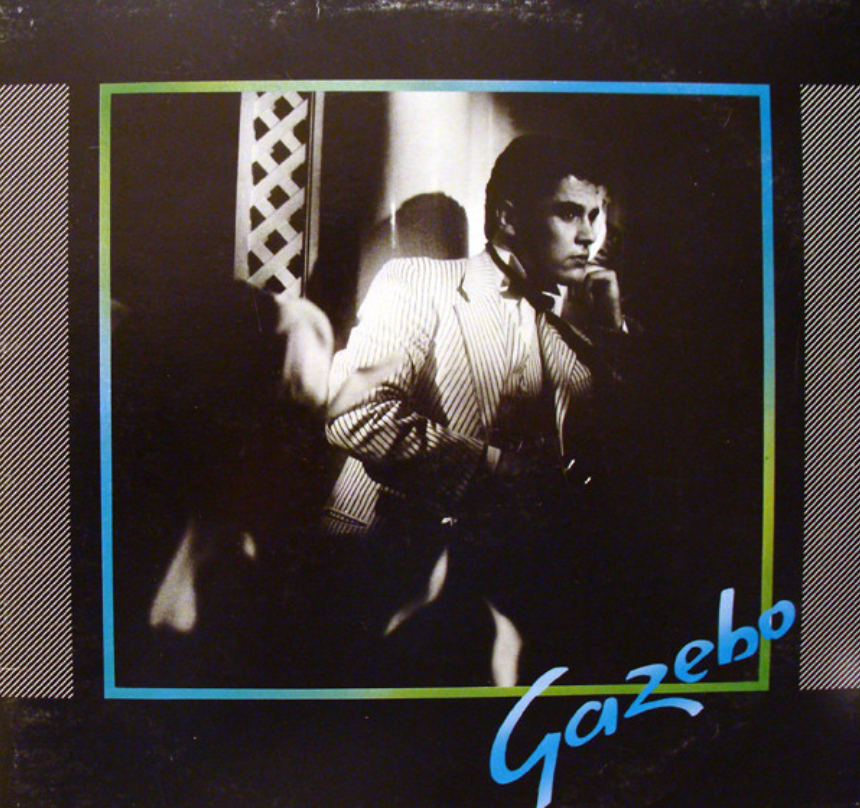
Gazebo – I Like Chopin

I don’t think I’ve ever given up on a friend (even when I probably should have), but I know for certain that at least three friends gave up on me. Two of them had good reasons: Chris got tired of me cancelling plans with her after I got a new girlfriend, and Shelley got tired of waiting for me to figure out whether I wanted to be a Jehovah’s Witness or not (I did not). The third friend was Serge, and he gave up on me because of Shelley, and that was just wrong, though I completely understand now where he was coming from.

I met Serge in September 1982 when I started university, and he was sort of a larger than life figure. He was a week late to school that year, and I heard stories about him (mostly from one source) throughout frosh week, finally meeting him when we both drunkenly staggered into the same corridor of our residence while looking for something to eat. We quickly became friends, and he was yet another in my rapidly growing collection of slightly older comrades who had a driver’s licence (which I avoided getting until I was 43) and a car (ditto). By the summer of 1984, he had graduated and I had dropped out, and we were housemates and coworkers in the university’s cafeteria.

Serge and I fell out when he and Shelley broke up and I completely misunderstood the bro code that demanded that she now be persona non grata or else I was betraying our friendship. Weirdly, our other friends also behaved as I did, but I was the only one deemed to have betrayed him. People with broken hearts are not logical.

In any event, at some point during our friendship, which ended on a crisp Saturday night in the fall of 1984 at the main bus stop on the Brock University campus, Serge bought Gazebo’s self-titled album on vinyl. He bought it for just the one song (the whole album is pretty good, though), and he was eager to play it for his friends. The first time I heard “I Like Chopin”, I fell in love. But after the falling out, I knew that if I wanted to listen to it again, I needed to find my own copy.

If you’ve never heard this song before, you are not alone: it was never close to being a hit in Canada or the United States (though it went to all over Europe). The odds of me finding the album without serious effort were low. And yet, I did exactly that: I walked into a chain record store, went to “G” in the cassette section, and there it was. I didn’t even have to travel to Toronto: it was right there in St. Catharines, a city hardly at the forefront of contemporary ItaloDisco sounds. At the checkout, the clerk approved of my selection. I felt like Gazebo fandom was some sort of secret club that I had unexpectedly stumbled into, blinking in wonder. What I later learned – and I don’t know if this is actually true – is that demand for “I Like Chopin” was linked to its periodic plays on CFNY (a.k.a. “The Spirit of Radio” for all the Rush fans). Whenever the station aired it, even years later, there would be calls asking what that song was. 

What it was, and is, is a synth pop wonder, and I always pick the extended 7-minutes plus version for the full effect. It may not be for everyone, but I’m yet to meet anyone who knows the song and doesn’t love it. (Okay, there’s just one other person, but, as you’ll see, that’s a pretty critical vote.) It’s about love and longing, a melancholy song of rainy days and a lot of other cheesy abstractions that are sort of beside the point when you’re in love. The piano (an original melody, not lifted from Chopin) is the centrepiece, a delicate backdrop between rounds of glittery synth and snare-shot drum machine. It has a mysterious feel in parts, like the score to a chase scene from an espionage B movie set in some pre-Gorbachev Eastern Bloc country. It feels sad and cheerful all at once, and there is a hypnotic energy that draws you in. I sometimes play it back-to-back-to-back, 23 minutes plus on repeat, and it never fails to please me, even almost 40 years later.

Serge and I never really made up, though his anger subsided enough that we could at least exchange a few non-hostile words from time to time before we moved to new homes in May 1985. My Gazebo cassette was played less often as time passed, and eventually it was gone from my collection and never replaced. I don’t remember when I found out that my wife loved “I Like Chopin”, but if we weren’t married yet, I should have proposed on the spot. It’s the only ItaloDisco record I’ve ever owned, and there is no way that my soulmate also loving the song could be a coincidence. I often feel something akin to fate about how we came to be together, and it makes sense that “I Like Chopin”, and the odd twists of my love for it, would find its small place in that story.

Classic Songs of My Youth Revisited #33

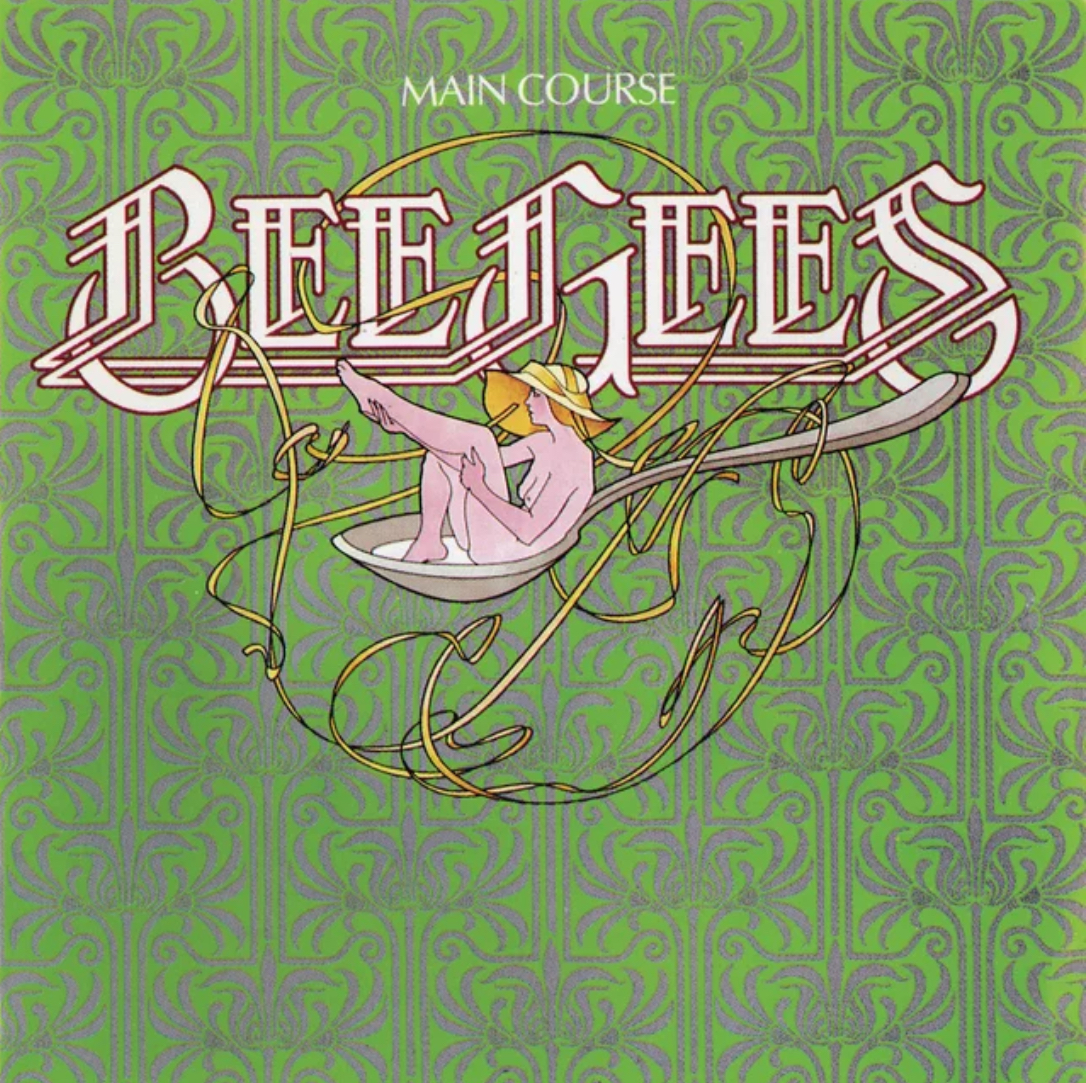
Bee Gees – Fanny (Be Tender with My Love)

On the landing page for this site is a photo of three all-time favourites – Prince, Elvis Costello and Billy Joel – but it could just as easily have been a photo of the three brothers Gibb. For while those artists have fallen in and out of favour – Prince released some barely listenable records, Costello’s “North” will have you looking for synonyms for “dull”, and Joel could deliver a dozen songs like “Scenes from an Italian Restaurant” and still not clear the unforgivable stench of “We Didn’t Start the Fire” – I have never not loved the Bee Gees, or at least the version that I grew up to. Even when much of the world abandoned them in the alleged disco backlash of 1979, I kept playing all my “Saturday Night Fever” 45s, and even the less pleasing tracks on “Spirits Having Flown” went unskipped.

Picking a favourite Bee Gees song was a no-brainer, which is sort of amazing since I could probably start singing without any hesitation about two dozen of them, and that’s without including Bee Gees-adjacent tunes from little brother Andy and folks like Samantha Sang and Frankie Valli. Bob Stanley raved about their songwriting chops in his magnificent book “Yeah! Yeah! Yeah! The Story of Pop Music from Bill Haley to Beyoncé”, and their insane versatility in that area is what made them stars again after every dip in their fortunes as a band. Add the unmistakable harmonies, and you have something undeniable.

Now, my wife may disagree with this choice. For all our years together, she’s been entertained by my response to “Nights on Broadway” whenever it pops up in a playlist. I have an almost physical reaction: my cares lighten, a smile etches itself onto my heart, my vocal cords soften, and then I am howling away like the poppiest pop diva. It is by far my favourite of their songs to sing along to. 

And yet, it is “Fanny” that moves me most, in part because it is probably the ballsiest song they ever recorded. I am a sucker for big epic statements in music, for rock songs that are operatic in scope and in the emotions they convey. For songs that start out gentle and build to an insane intensity that almost makes your heart explode out of your chest. For songs that are so complex in their structure that to perform them as recorded is nearly impossible in a live setting. Ladies and gentlemen, I give you “Fanny (Be Tender with My Love)”, which meets all of these criteria yet is somehow even more than that.

“Fanny” is a song about love, but, as the title makes clear, there’s a lot of trepidation on the narrator’s part about what this love might do to him. It opens with a relaxed tempo, with tinkling keyboards, slightly throbbing guitar and delicate piano bar drums. The intensity rises with the layered voices of the first chorus, then again with the roar of frustration in the second verse of “Do you think I’m gonna stand here / All night in the rain?” It’s a nice song, but it’s from 1:55 to 2:15, in the section ending “You made a promise / You’ll always love me forever”, that you first sense (1) how truly fucked this guy is and (2) you might just be listening to something great.

After another chorus, more intense than the last, voices overlapping in a barely controlled cacophony, the song reaches at 2:55 what could be its natural endpoint. There’s nothing more to say about Fanny, and you could fade out with a few more lines of the chorus and be proud of the work you put in. But there’s more than a minute left, and what a minute it is. From 2:55 to 3:10, the drums pick up and the brothers “ooh” and “aah” and almost howl before Barry comes out for one more chorus on absolute fire, displaying all the vulnerability and terror that lies at the heart of giving yourself to another person so completely, the existential “oh, fuck, what have I gotten myself into?” that every last one of us, if we’ve been lucky, has experienced at least once. Having released that pain, his energy finally depleted, the song fades out, into history.

So, maybe too much weight for a pop song? Hell, no. Music at its best triggers an emotional response, and I can listen to “Fanny” again and again and never not feel that same thrill over the last minute or so. It’s a work of studio wizardry – the brothers never played it live because it was impossible to recreate what they had done – but it isn’t clinical like so much manufactured music because the technology is warm, not cold: the genius isn’t the manipulation of a Pro Tools-wielding producer demigod, but of professional musicians committed to making something timeless and using the tech to enhance their talent, not as a substitute for it. It’s another song that I want played at my funeral (that’s going to be a kickass playlist – too bad I’ll have to miss it), and I hope people start singing along. It’s sort of impossible to resist.

Classic Songs of My Youth Revisited #32

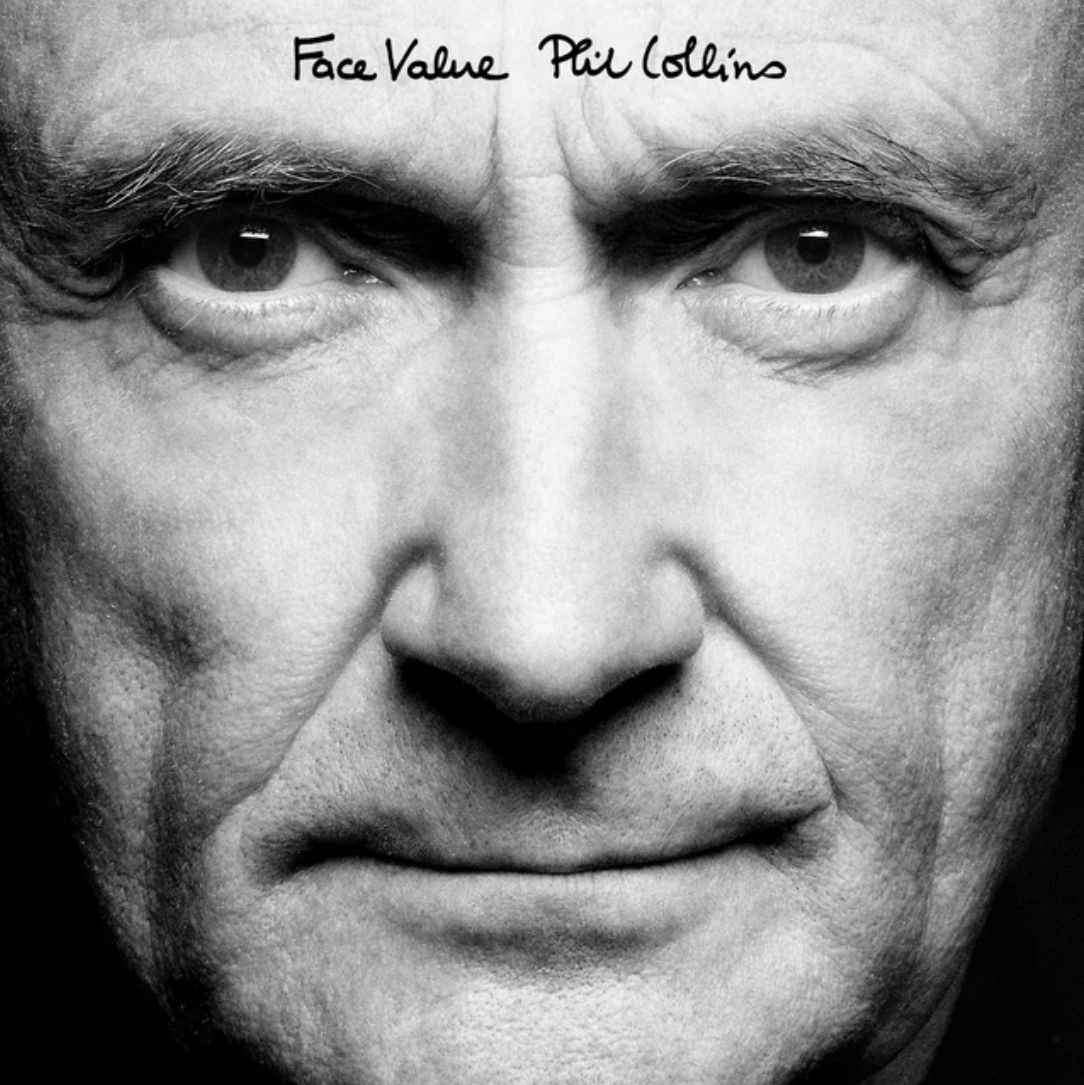
Phil Collins – In the Air Tonight

If you set yourself the task of revisiting your past, musical or otherwise, you are soon going to find yourself writing about a lot of dead people. I don’t think that’s an inherently sad enterprise, as much as I still find myself surprised by all those who are gone who once shone brightly in my days.

It was Doug Maxwell who first played “In the Air Tonight” for me, and he did it in the worst way possible. Before the needle dropped, he told me I was going to be blown away. Never do that to someone. First, it’s a song – keep expectations realistic. It’s also a lot of pressure. What if I’m not blown away? Am I somehow lacking as a result?

I had really crappy music players when I was a kid. First, there was a record player with a tiny speaker in the front, then a proper stereo with detached speakers that was still about 95% cheap plastic. I don’t recall our home ever having an 8-track system, and our cassette player was also low tech. My high school graduation present from my parents was a higher end boombox-type cassette player/radio that gave me my first glimpse of personal hi-fidelity. Up until then, sound quality was something experienced only at friends’ homes.

Doug had a great system. I could not begin to tell you a single thing about it because I just wasn’t paying attention. For all my love of music, sound quality has never been a big priority for me, which might explain my love for jangly guitar rock, the low-effort instinct of punk, and bedroom pop: a great hook is a great hook and a clever lyric still resonates no matter how cruddy it sounds. It could be that because I fell in love with music in a cruddy sonic environment, I developed an ear for hearing what really mattered in a record, since that’s all I could get from it. Music is completely democratic: you just need will, creativity and something to make a sound with. You don’t even need money: your voice is enough of an instrument, and you can set a beat by tapping on, well, anything. What happens after that is mostly out of your control, but you’re still making music, and that DIY aesthetic has long found a home in my ears.

Thankfully, I was blown away by “In the Air Tonight”, though it was never a tune that made it into heavy rotation for me, likely because it really is one of those songs that benefits immensely from being played on a great sound system. It’s all gloomy atmospherics, and sounds like it’s being sung underwater, or at least in an empty swimming pool. No wonder the “Miami Vice” producers were attracted to it: it’s pure feeling distilled into sound (it was from Phil’s divorce album, after all, and divorce is very much about feeling powerless and incapable of expressing how you feel without devolving into histrionics). It’s an incredibly bitter song – “Well, if you told me you were drowning / I would not lend a hand” is an all-time Top 10 “fuck you” – and there is a tension, an edginess, that never relents.

But what makes this song legendary is the drum solo, and everything that comes after that. If you watch the official music video (Speaking of democratic, remember when pop stars could look like the guy who fixes your broken household items?), you can tell the director had no idea what a weapon he had at his disposal in that oh-so-brief drum solo. The song changes after Phil lets rip at 3:41 for a mere three seconds of “holy fuck, what was that?” bloodletting as all his anxiety and fear and anger are taken out on his kit. And though the tempo doesn’t really change, it somehow feels more urgent, with the drum a constant throbbing presence until the end. And that end takes forever to come: it has the longest fade-out in my experience, with a noticeable volume change 52 seconds before the song ends. And Phil is at full howl for all of it, a Janovian rant against the wilds.

Doug passed away less than a year ago, far too fucking early as usual. He had a big personality in a small form, and was one of many music-loving friends that I, coincidentally, surrounded myself with during those years of growth. He was also one of too many friends who I mostly lost touch with over the years. It happens: life’s journey is, hopefully, a long and varied one, and it’s foolish to think that the people who mattered most to you at 17 will still be on the ride with you when it comes to a stop. And yet, once again, I feel sad about it. It might be that drifting apart is the best way for a friendship to end: the happy memories aren’t tinged by the less happy stuff that came after. With Doug, I have a lot of musical memories: “Elvira”, “Jumping Jack Flash” and the still-to-be-told “Can’t You See” prom night tale. It’s nice that they aren’t befouled by an argument over something like Limp Bizkit’s “Nookie”. Wouldn’t that be awful?

Classic Songs of My Youth Revisited #31

Michael Johnson – Bluer Than Blue

One of my closest friends growing up was Kirk Boutilier. We were distant cousins on my mother’s side, but never knew that until we were adults and the day of my first marriage put Kirk in a room with my grandmother, who connected the dots between his arm of the clan and mine. Kirk could always make me laugh, and he had (at least in my eyes) a sort of effortless-appearing cool. Kirk could get me to do things I wouldn’t otherwise have done just by suggesting them, like trick-or-treating in drag when we were 15. I expect he never did anything like that again (I can’t make the same claim): a dress and wig made him into his mother’s doppelgänger, which was commented on at pretty much every door we knocked on.

Robert Barrie was my main music-loving friend, and still is to this day, but Kirk lived just up the road from my house while Robert was a car ride away. So it was with Kirk that I would sometimes play my records, although neither of our dads was particularly fun to be around so it didn’t happen a lot. We would bounce around to The Cars’ “Just What I Needed”, make up silly alternate lyrics to songs like Barry Manilow’s “Copacabana (At the Copa)”, practise our falsettos to Andy Gibb’s “Shadow Dancing” and our air sax to Gerry Rafferty’s “Baker Street”, and channel our inner musical theatre nerds to “Grease”.

I owned all those records on 45, and tons more. I always played the “B” sides, and found some great tunes that way. But I never read the songwriting credits on either side of the record with any sense of purpose, so I missed out on the fact that, in 1978, I owned three discs where the “A” side was written by the same guy. Randy Goodrum was the pop genius who composed Anne Murray’s “You Needed Me” (likely bought by my mother then merged into my collection), Gene Cotton’s Top 20 “Before My Heart Finds Out” and, my personal favourite, Michael Johnson’s Canadian Top 10 “Bluer Than Blue”. 

Kirk called “Bluer Than Blue” the most romantic song of all time. He was being sarcastic, but I wonder now if he wasn’t accidentally right. Having been through a few painful breakups, I have a new perspective on this song. The verses are full of positivity, as the narrator talks about all the things he’ll be able to get done once this woman is out of his life. He can watch his favourite TV shows, get more sleep, have all-night parties (not sure how those last two are supposed to work together), read more. Things are looking good. But the truth comes out in the chorus: he’s actually devastated by the end of the relationship, and life without her is going to be, yes, bluer than blue.

It opens with a melancholy piano, followed by rising strings, and that’s pretty much the song, with some low-key guitar, a gentle but steady backbeat on the chorus and an occasional mild drum flourish. Johnson begins with a matter-of-fact recitation of his future single life, but his voice starts to change halfway through the verse, and the sadness comes through in the chorus. He regains control for the next verse, but there’s a bit of a quiver, and then we’re back to his misery in the chorus. It’s an uncomplicated vocal for an uncomplicated pop song, but it’s amazingly affecting, and I get chills in places. Just a lovely way to spend 2:59.

Goodrum had broken through as a songwriter in 1977 with England Dan & John Ford Coley’s “It’s Sad to Belong” (yep, I owned that one, too), and he’s still at it, though 1978 was probably his commercial peak. Of his future compositions, I remember DeBarge’s sweetly sad “Who’s Holding Donna Now”, and have mad love for the cheesefest that is Steve Perry’s “Oh Sherrie”. Johnson, who passed away in 2017, had another minor pop hit in 1979 before moving on to a run of country hits in the late 1980s, and was releasing new music up to 2012.

My friendship with Kirk abated some as we charted different courses on reaching high school, reconnecting when we worked together for a summer at 19, then again at our 10-year high school reunion at 28. That one lasted a few years until the inevitable drift apart brought about by (1) distance and (2) us being men. Contact had been infrequent over the years when I learned of his terminal illness, and then, before we could reconnect once more, he was gone, only 52. I don’t look on this as a missed opportunity: our friendship was firmly in both our rear view mirrors, and he had people he loved and who loved him in the now that needed his focus, not some ghost from his past. But I miss him, of course, in a way I couldn’t when he was still alive and there was a chance that we would have one more run as close friends. He’s another of those people and moments who become alive to me again through music. To paraphrase Rick Blaine, we’ll always have “Bluer Than Blue”. I think Kirk would smile at that. I certainly do.

Classic Songs of My Youth Revisited #30

Donna Summer – Dim All the Lights

I will never not be annoyed by people who make mistakes when writing about Disco Demolition Night. It happened again recently in a most unexpected place: an article about 1970s hockey superstar Guy Lafleur (who, I shit you not, put out a disco record in 1979).

To recap: in 1979, either Steve Dahl, a dumbass disc jockey from Chicago, or his handlers convinced Chicago White Sox owner Bill Veeck, who never missed out on a chance at pulling off an oddball promotional stunt (see Gaedel, Eddie if you doubt me), to let him blow up a bunch of disco records between games of a baseball double header at Comiskey Park on July 12. The results were predictable to anyone with the first clue about explosions and human behaviour: the field was left a mess and the fans ran wild, leading to the second game being cancelled and Veeck’s White Sox having to forfeit.

What always annoys me is the idea that this event arose out of some sort of populist revolt against disco for taking over our radio airwaves. There is no doubt disco was running out of steam, as all massively popular cultural movements inevitably do, usually from a mix of consumer fatigue and the appeal of the new. But it was still immensely popular in 1979. Other than two ballads and the soft rock of the Doobie Brothers’ “What A Fool Believes”, every Billboard number one song so far that year had been a disco or disco-adjacent tune. At the very moment fans were streaming into Comiskey, Anita Ward’s “Ring My Bell” was atop the charts. It would be followed by a five-week run from Donna Summer’s “Bad Girls” before The Knack took control of the charts, and soon faced their own backlash. Clearly, disco wasn’t the problem – idiots were.

And those idiots? A lot of racists, most likely. Fans showed up at the game with records by such artists as Stevie Wonder, Marvin Gaye and Smokey Robinson. Definitely not disco. But Black, which a lot of White folks either seemed to think made them disco, or they just didn’t care about the reason for the protest, just its target. (Homophobia likely played a part as well.)

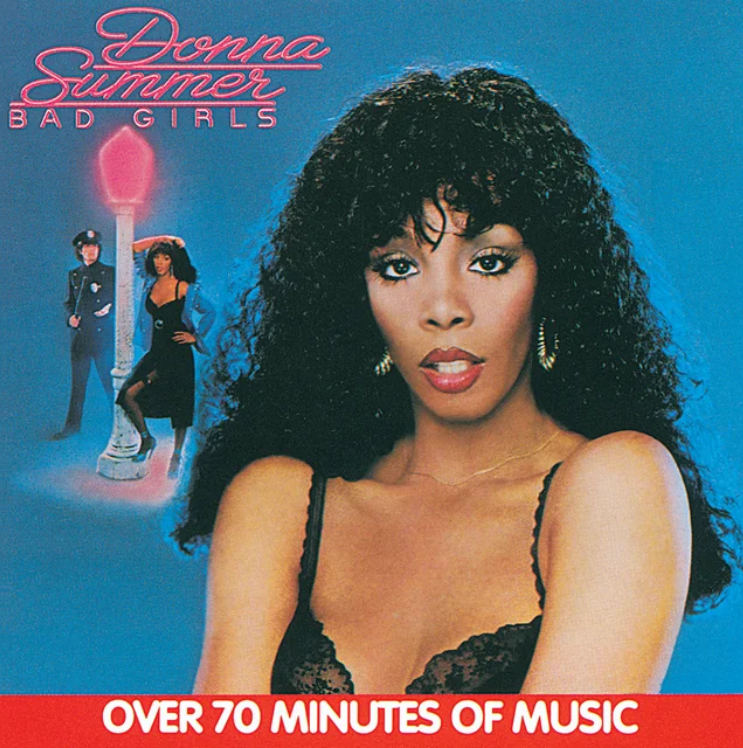
But let’s talk about Donna Summer. I owned a few disco albums (and a lot of singles), but Summer’s “Bad Girls” is the only album that I played repeatedly when it came out and still enjoy listening to today. It’s unfair to call a lot of this disco: there’s soul and pop and rock and something called hi-NRG and a bunch of other stuff, and all of it is lethal. I particularly love the banner along the bottom of the front jacket cover: “Over 70 minutes of music”. The volume isn’t that big of a deal in the oversized streaming age: it’s that every one of those 71 (to be exact) minutes earns its place, unlike the often unlistenable bloat of something like Drake’s “Certified Lover Boy”.

Though not the biggest hit, “Dim All the Lights” was, even then, my favourite of the album’s singles. It doesn’t turn up much on playlists, which is too bad, because it is still great. It’s a song about sex, of course (“You can use me all up / Take me bottom to top” and “Turn my brown body white” – how did that line get onto 1979 radio?), but there are also old-fashioned notions of love and commitment, with the reference to a Victrola a lovely signalling device. It starts out sultry and languid, a slow jam before such things had a name, but with a buzzing energy underneath and a vocal from Donna that lets you know this won’t be a ballad. She draws you in, then, as the disco beat kicks up, holds a note for an impossibly long time. After that, it’s just breathless, the beat never letting up, with even the changes hanging onto the thumping backdrop. It’s a song built for extended forays to the dance floor, and there has got to be a great 12-minute remix out there somewhere. (There is an official seven-minute version that, unfortunately, doesn’t seem to understand what makes the song great.) I particularly love the little bits that sound like a worn-out steel drum during the instrumental break from 2:49 to 3:21. And after the processed vocals that follow that break, it’s chilling when Donna’s pure voice kicks in again at 3:54, and takes you home (blending into “Journey to the Centre of Your Heart” on the album).

So, yes, I love this song, and the whole album. It was Summer’s peak, commercially and artistically, and although she didn’t have a pop hit after 1989, she continued to top the dance charts regularly almost up to her passing in 2012. Even now, this music seems fresh and timeless, and I am happy to get into the trenches with anyone dumb enough to try and argue that all disco was intended to be disposable. Although it was much maligned in its time, there were genuine artists working in the genre, with all-time great albums from the likes of Chic, and even better singles, like Sylvester’s “You Make Me Feel (Mighty Real)”. Of course, there were hacks just churning out records to fit demand, but every genre has its version of Stock, Aitken & Waterman. I was too young to participate in the disco era, but I’m pretty sure I can conjure what it must have felt like to be a young urban adult in 1977 by cranking up “I Feel Love” and letting the beat take over. That’s art, my friends.

Classic Songs of My Youth Revisited #29

New Order – “True Faith”

In the mid 1980s, the place to be on a Friday or Saturday night in St. Catharines, Ontario (should fate have marooned you there) was Club Henley. It was a dark cavernous space completely without any artistically meritorious design elements, but it was easily accessible, could hold a lot of people, and never, to my knowledge, turned anyone away at the door for lack of space.

It was also where I found myself in March 1985 at the end of a labour dispute that had stopped beer distribution in Ontario. Club Henley’s owners had crossed the U.S.-Canada border and stocked up on Genesee, which was pretty awful but (marginally) better than nothing at all. Late in the evening, word came that the strike was at an end, and good ol’ Canadian beer would be flowing again in a few days. Knowing they would never be able to sell the Genesee once a better option was available, the bar announced at around 11:00 p.m. that it was now going for half price, and then, at last call at 12:45 a.m., took the bold step of violating a few laws by telling us that “no one goes home until the Genny is gone!” The roar of approval was overstated, since it only took another hour to finish off what was left, but it was still a pretty awesome night.

Club Henley had a large dance floor, which was its biggest selling point for me and my friends, and they played a pretty decent mix of indie and alternative music that was mostly familiar from CFNY in Toronto, with bands like The Cure, Depeche Mode and Pet Shop Boys, plus pop hits like Dead or Alive’s “You Spin Me Round (Like A Record)”. I remember in particular Melle Mel’s “White Lines (Don’t Don’t Do It)” and Ministry’s “(Every Day Is) Halloween” getting lots of play, and the bar was still popular when Paul Lekakis’ “Boom Boom (Let’s Go Back to My Room)” (what was with all the brackets?) got to number 4 in Canada in June 1987. And, of course, they played a lot of New Order.

Most people weren’t taking New Order too seriously at that time: a guitar rock-loving friend renamed their 1987 double album “Substance” (which I owned on vinyl) by sticking “Lack of” at the beginning. They were a dance band, and generally seen as the lame descendant of the great Joy Division. It wasn’t the fault of New Order’s founding members that Ian Curtis had killed himself, and you certainly couldn’t blame them for pursuing a far less gloomy sound that would distinguish their new band from their old one. But dance music has always been treated as a lesser art by “serious” musicians, which is idiotic, because pretty much everyone loves to dance and helping people do that – while perhaps not as difficult to achieve as moving them to tears – is damned important, and brings a lot of joy into the world. And New Order were masters of that art.

Club Henley, over the 1984 to 1987 period when I was going there, had many New Order songs on its playlist: “Everything’s Gone Green”, “Temptation”, “Blue Monday” (easily the most acclaimed of their tunes), “ The Perfect Kiss”, “Shellshock”, “Bizarre Love Triangle”. I could be wrong about a few of these, but if Club Henley wasn’t playing them, they were definitely turning up at other bars I frequented in my early 20s. The band was at the top of a particular style of music aimed at a particular demographic at a particular moment in history, which I think is pretty impressive.

But none of those songs were my favourite. My top pick was “True Faith”, and it’s this New Order tune that is on my favourite songs of all-time playlist. Why is that? Well, it makes me want to dance, but then so do the other songs listed above. But, unlike those other songs, the lyrics grabbed hold of me and expressed something I was struggling to make sense of in my own life. I was trying to live in two worlds at the time. On one side were my friends and the life we had, going to bars and generally being fun-seeking young adults. On the other was a spiritual need that was being satisfied in a rather extreme way and in which I was beginning to question the choices I had made that got me there. The title alone made me feel subversive when I played it, given my tenuous footing in a religion that liked to believe it alone possessed the Truth about God and all things faith-related. There’s a pull between a sort of despair in the verses (“Now I fear you’ve left me standing / In a world that’s so demanding”) and a slightly hopeful turn in the chorus (“My morning sun is the drug that brings me near / To the childhood I lost, replaced by fear”). I think the title settles the argument: the narrator is choosing to believe, choosing a hopeful path. I was less confident about my path, and by the time I walked away from the religion, most of my Club Henley era friends had already moved on, tired of waiting for me to decide who I was. I didn’t blame them: I was self aware enough to know I was not always an easy person to be around back then.

So the song is both a declaration of my liberation from (self-imposed) religious tyranny, but also a reminder of what I lost. That I almost always forget the sad part and just start bouncing around is a measure of its power. All music can take us back through time, and as I write this, the sad part is what I’m feeling, but I’m remembering the happy part, too, the part where I’m sweaty and singing along at the top of my lungs and carrying way too much alcohol in my veins and just being 21 or 22 and feeling like the night is never going to end and that the friends who I love (and, of course, never said that to) are the best friends anyone could ever have. And I was right. And so were you at your own Club Henley dancing to your own version of “True Faith”. I hope you managed it better than I did.

Classic Songs of My Youth Revisited #28

John Lennon – “(Just Like) Starting Over”

From December 5 to 7, 1980, I had what was to that point probably the best weekend of my young life. The following day, December 8, John Lennon was murdered. The two events, of course, had nothing to do with each other (as far as I know, anyway), but their temporal relationship has always meant that I don’t think of one without the other.

Let’s start with Lennon. The Beatles were my first band, so I naturally loved John. But he was barely on my listening radar in the late 1970s while Paul McCartney still churned out hit after hit, so I by default fell on the Paul side of that particular dispute. John hadn’t had a hit single in over half a decade when “(Just Like) Starting Over” was released in late October 1980, and while it was doing well in the United States, it seemed like his recent fallow stretch was going to continue north of the 49th parallel: the song wasn’t even on RPM’s national chart when it came out on December 6. That quickly changed: it debuted at number 28 a week later, then hit number 1 on December 20. That momentum continued into the new year, and it ended up as the biggest song in Canada for 1981.

So, what was I up to that was so great that first weekend of December?

A regular part of my childhood Saturday evenings was watching “Reach for the Top”, a national quiz show that matched teams of four high schoolers in a battle to prove who knew the most stuff. I had always loved trivia – I was an incessant dabbler in “The World Almanac” with its lists of highest mountains and Olympic gold medalists, and by 1980 owned the first two editions of both “The Book of Lists” and the endlessly fascinating “The People’s Almanac” (which I still have, their condition evidence of heavy use) – so getting onto my high school’s “Reach” team was a life goal. Schools in Nova Scotia only competed every second year, so my Grade 11 year of 1980-81 was my one shot, and I made it. We had a magnificent and balanced team, with Sandy Nicholson, Nelson Rice and Doug Campbell joining me, and it could be intimidating to be around such smart people. I was beginning to understand that maybe this was my tribe.

The fun started on the night of December 5 when, after getting set up in our hotel following a long drive to Halifax, my uncle picked me up and brought me back to his apartment, where I ate pizza, played with his infant daughter, watched American sitcoms on channels I didn’t have access to at home and, yeah, after his wife arrived and said child was put to bed, smoked black hash out of a bong he made using a toilet paper core and some tinfoil. Good times.

Anyway, even with my less than stellar contribution, on December 6 we won our first two games (including a particularly satisfying defeat of a private school in their matching outfits whose number included a boy who less than two years later was in a New Jersey jail for his role in the murder of a classmate’s parents), and our teacher chaperones, two lovely women named Pat, got permission from our principal to take us out for a fancy celebratory dinner at a Mexican restaurant called Zapata’s. I doubt said permission included alcohol, but a pitcher of sangria was ordered, and, in a misjudgment that could have had disastrous consequences with a less law-abiding group of boys, we cajoled them into ordering a second. Left to our own devices the rest of the evening, we retired to the poolroom, where we would alternate between heating up in the sauna then racing to dive into the pool before our body temperatures dropped. Another school who had lost earlier that day were in the same hotel, and we hung out with them a bit, failing to make any headway with two pretty girls that were in their number. After the pool closed, we watched “Monty Python and the Holy Grail” in one of our rooms, then crashed, getting up the next morning to take care of business and earn our spot in the final round. Somewhere along the way, I bought Kurt Vonnegut’s “Player Piano”. A magnificent weekend.

Two days later, I was among the tens of millions watching tribute after tribute to Lennon on television, where it seemed to own every channel the night of December 9. And “(Just Like) Starting Over”, a song that I already liked but hadn’t given a heck of a lot of thought to, was soon everywhere, the tragedy a grimly ironic thumb in the eye to Lennon’s positivity about new beginnings.

It is a song out of time, more at home in the 1950s than 1980, which may explain the rather muted response initially: post-punk and post-disco, music was trying to look ahead to the next big thing, and not to a relic from the 1960s drawing inspiration from a decade before that. Light taps on a triangle, gently strummed guitar, then a heavenly chorus of “ooooo” and “aaaah”, followed by a vocal that I’ve always thought of as John’s attempt to resurrect Elvis Presley, as, again, a 1950s piano bangs away while a stubbornly subtle bass line rolls along underneath, with drums that sound at times like handclaps. The lyrics are a mature declaration of love to a partner who has been with him through much, and the hope of more to come. It’s far more honest and romantic than the more traditional dreck of “Woman” that followed later on the same album, and whatever you think of Yoko Ono (as time passes, I am more and more impressed by her), you can’t deny John’s love for her. The song is blissfully sunny without being Pollyannaish, and not many of those can get you on the dance floor, too. Pretty damned impressive.

Our return trip to Halifax for the final round a few months later was far less fun – the Pats had learned better. And, as it turned out, having four really smart guys was not enough against the buzzsaw that was Hans Budgey, who ran the table in the rapid-fire last two minutes of the title game to turn a close match into a blowout. Hans and company went on to win the national championship, and no one will ever convince me (and I defy them to try) that we weren’t the true national runners up. I still love trivia (yes, I did try to get on “Jeopardy”, which is a good way to learn that maybe you don’t know nearly as much as you think you do), and, over the last year or so, I’ve listened to a lot more of John Lennon’s music. Two days ago, I heard “(Just Like) Starting Over” in a grocery store, and for all the nostalgia in its sound, it remains a fresh and invigorating piece of pop music. I still think Paul won the 1970s, but John was definitely gearing up to take a run at him in the 1980s, which leaves us with one of the great “what if”s of pop music.

Classic Songs of My Youth Revisited #27

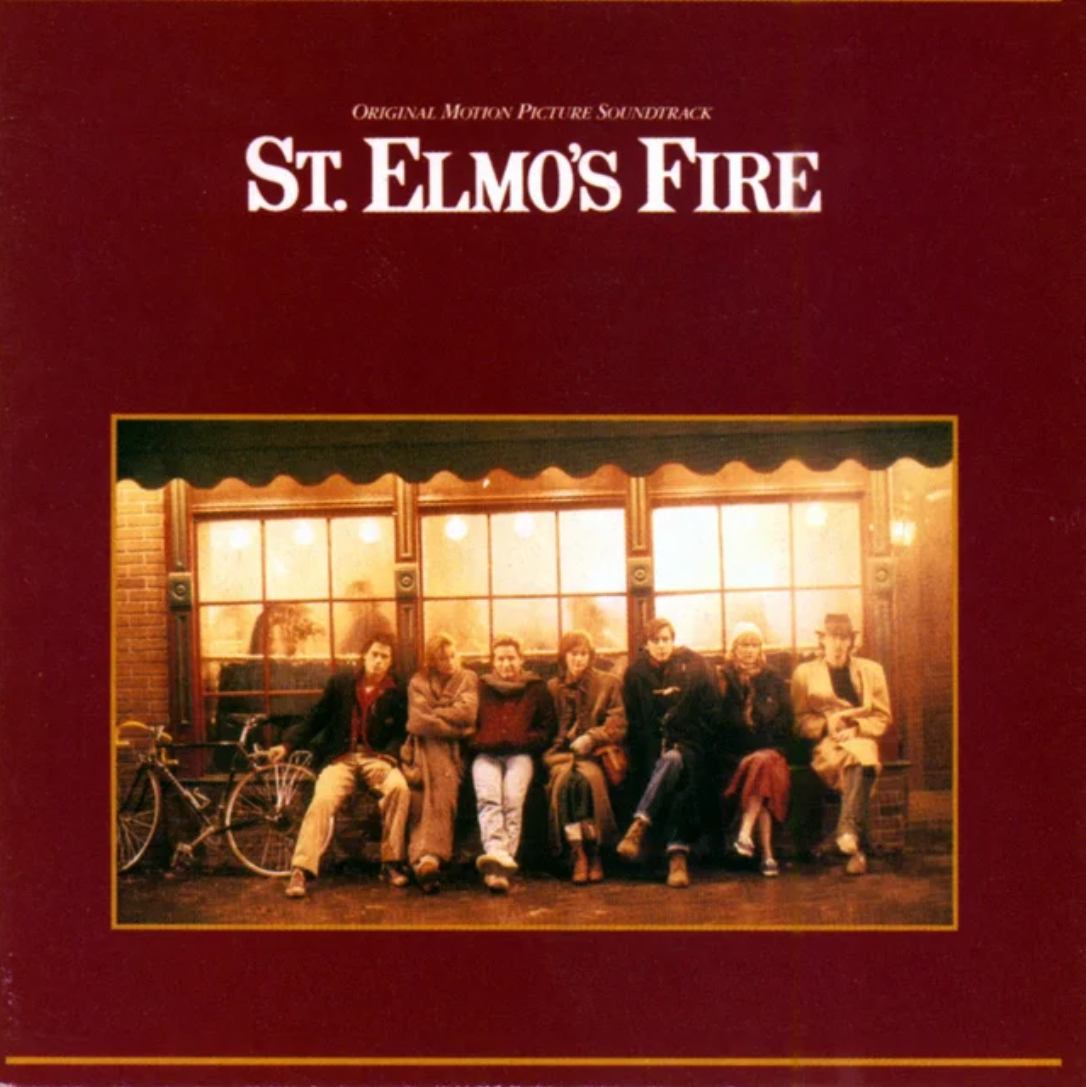
John Parr – St. Elmo’s Fire (Man in Motion)

I think that the artists and entertainers that we form an attachment to at a critical stage in our lives never stop being important to us. That has to be the case, because it’s the only way I can find to explain my lifelong interest in the career of Andrew McCarthy.

In the 1980s, I saw, relative to the total count of movies I attended and the small tally of those he appeared in, a disproportionate number of films starring McCarthy. “Class”, “Heaven Help Us”, “St. Elmo’s Fire”, “Pretty in Pink”, “Mannequin”, “Weekend at Bernie’s”: for all but the first of these, I laid down a part of my limited cash in exchange for the privilege of watching McCarthy act – sometimes poorly (sorry, Andrew!) – in some often fairly awful but always entertaining films. Why? Because something about McCarthy – or at least the characters he played – appealed to me. He seemed like an outsider to the Brat Pack (confirmed in his recent memoir about that era), and therefore more relatable. Who else was a young wanna be novelist going to identify with but the fairly normal looking actor playing a young wanna be novelist saying overwrought things about art and life in a film about trying to get your shit together after university? The rest of the male “St. Elmo’s Fire” cast couldn’t fit that part: Emilio Estevez was too much a try-hard, Judd Nelson was either intimidating (“The Breakfast Club”) or a dick (“St. Elmo’s Fire”), and Rob Lowe was (is!) too painfully beautiful for mere mortals such as I to look to as a model for living. Which left McCarthy.

If you’ve forgotten the film, then you are blessed. My friends and I made fun of it even when we were watching it pretty much every week on First Choice. Since it isn’t on any of the 38 streaming services that I pay for and I didn’t feel like laying out another $4.99 to torture myself, I checked out some of the available clips on YouTube, and it was every bit the overwritten and overacted horror show that I remembered. It’s like Strindberg or Ibsen as interpreted by 12-year-olds, all drama without depth of feeling. There is casual racism (the single minority character of note is a stereotyped Black streetwalker) and a disdainful mockery of outsiders. Maybe accurate for the world of baby yuppies that it purports to show, but hardly a fun day at the movies.

And yet, at 21, I loved it even while knowing what bullshit it was. McCarthy’s Kevin was who I wanted to be. I wanted to be that clever, that attractive (a reachable goal, I thought, before “Pretty in Pink” turned him, ever so briefly, into a heartthrob), and, as he is by the end of the film, a published writer. Plus, I would get to sleep with Ally Sheedy in her super-cute phase. Not a shabby life, really.

I don’t recall where in the film the song shows up, but its synthy pop-rock sound and extremely generic lyrical content don’t match the movie’s vibe at all. That isn’t John Parr’s fault: he hadn’t seen the movie, so co-writer David Foster showed him some video of CanCon superstar Rick Hansen’s world tour via wheelchair for inspiration. The ridiculous music video showing Parr interacting with the actors in character at the burned-out bar that serves as their hangout in the film (their decision to stop going there at the movie’s end is supposed to signal to the viewer that they are now adults) has nothing to do with the film’s narrative. It sounds like a bunch of other songs that were popular in the first half of the 1980s, and somehow – likely thanks to the boost from the movie – jumped past those songs to reach . I owned the 45 and played it frequently, finding the overall positivity of the song to be aspirational and inspirational. But before now, I can’t remember the last time I played it with intent. After a few plays, each of which left me with that old pumped-up feeling, I still can’t see it breaking into my nostalgia rotation.

Anyway, despite wanting to model myself on McCarthy’s character, that wasn’t who I was, and Kevin’s future wasn’t my future, or McCarthy’s. And as I have travelled through life, I have periodically checked in to see what McCarthy was up to. His acting career seemed like a wasteland for a long time, but I knew he ended up as a successful television director. His memoir filled in the gaps, including overcoming alcohol addiction and building a second career as a travel writer. He sounds fulfilled, and as surprised as anyone might be about where he ended up. I get that. I learned long ago that writing The Great Canadian Novel was beyond me, but I know, too, that I wouldn’t want that at the price of what I have. You may not get the life you want, but, if you’re lucky, you get the life you need.

Classic Songs of My Youth Revisited #26

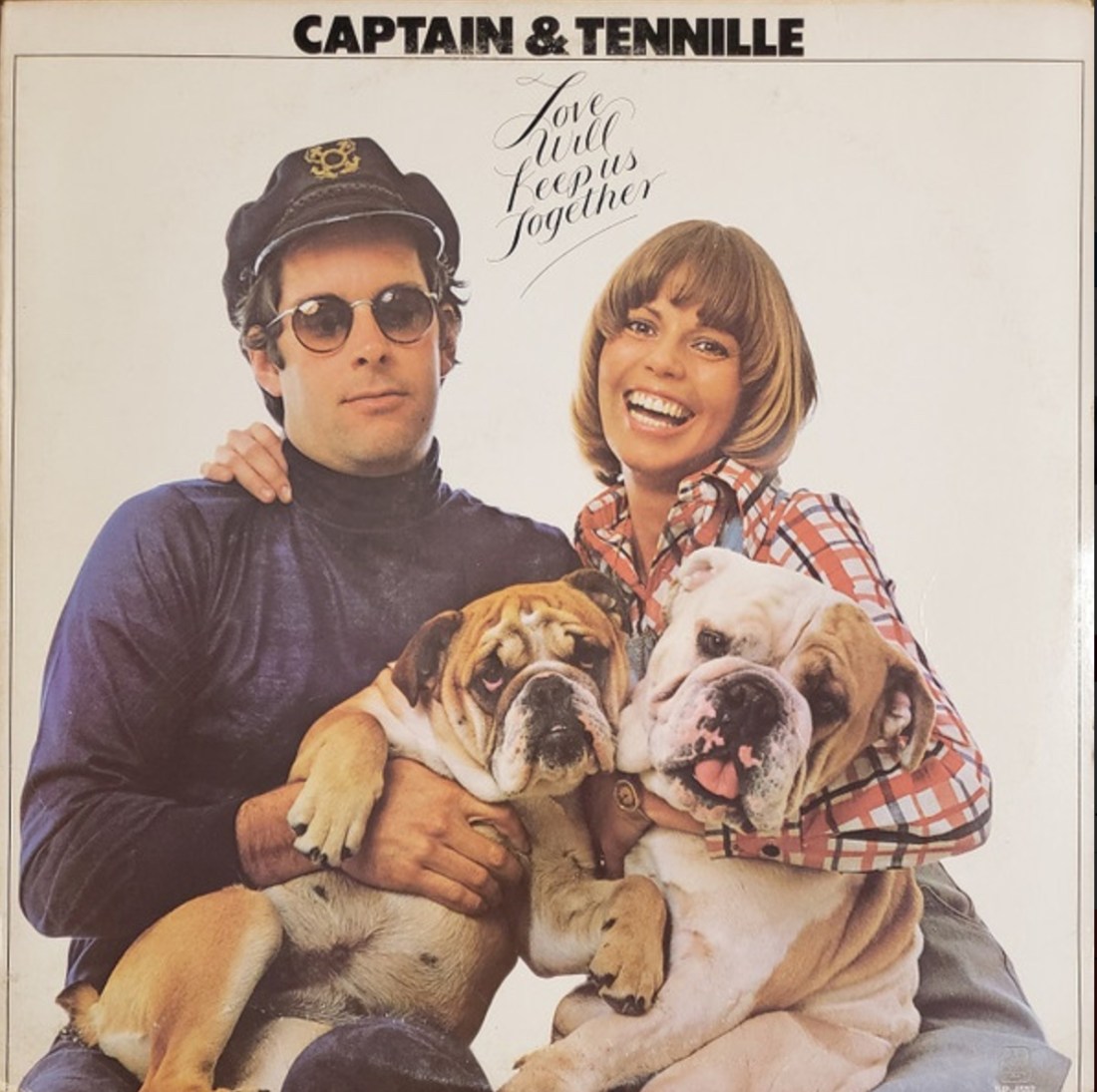
Captain & Tennille – Love Will Keep Us Together

From the mid-1970s into the early 1980s, New Year’s Day would always find me doing the same thing. Around noon, I would set myself down next to a radio and spend the remaining half of the day listening as CJCB counted down the top 100 songs of the year just ended. I think they picked it up from a station in Toronto, but it wasn’t CHUM-FM, and whoever was compiling it wasn’t following the RPM chart. It was a critical part of my musical life, a clearing of the deck before the exciting new sounds to come.

The songs were mixed in with little anecdotes and sometimes interview snippets. I learned – and have never forgotten – the story behind “I Don’t Like Mondays”. The announcer told me in 1978 that The Rolling Stones were the greatest rock ‘n’ roll band in the world. (I had thought it was Kiss.) I also heard – though I’ve never been able to verify that this actually happened – that Al Stewart claimed to make dance music for people with two left feet. My brain is littered with trivia from those long ago January 1s.

The countdown also meant learning that some of the songs I loved best weren’t as widely adored by others, or others that I hated were in fact monster hits. I really disliked Kim Carnes’ “Bette Davis Eyes”, so its place at the top of 1981’s chart befuddled me. (I am so not the same listener I was in my youth – “Bette Davis Eyes” rocks!) There would be a delicious tension as the top 10 were counted down and one mega hit after another fell short of the top spot. I was devastated when the 1976 countdown found my beloved Bay City Rollers and “Saturday Night” falling to Wings’ unquestionably drecky “Silly Love Songs”. The 1977 countdown was the oddest, when a song I’d pretty much already forgotten – Leo Sayer’s “When I Need You” – came out of nowhere to take the top spot.

But in 1975, everything went as the music gods intended. The top song of the year was “Love Will Keep Us Together” by Captain & Tennille. And I was very okay with that.

1975 seems like a pretty decent year for pop music. There were a lot of songs that hold up well today: “Jive Talkin'” by the Bee Gees. Neil Sedaka (with a helping hand from Elton John) and “Bad Blood”. “Ballroom Blitz”, “Someone Saved My Life Tonight”, “Nights on Broadway”, “Fame”, “Only Women Bleed”. Not a bad start. But look a little deeper into the top 100 and things get sketchy. There are hits from The Carpenters, Barry Manilow, Paul Anka, Olivia Newton-John, Frankie Valli. There were a lot of lame tracks in heavy rotation that year. And I liked a lot of them.

The lamest of the lame – and therefore champion of that most lame of musical years – was the married team of Captain & Tennille and “Love Will Keep Us Together”. And I loved that song. I don’t think it was my favourite of the year – “Magic” by Pilot had a serious hold on me – but it was up there. Listening to it now, I can’t really make sense of it. The best explanation is that I was probably a pretty lame 11-year-old. I’ll defer further comment to those who remember me from then.

Yet, as I listen to it now, the song starts to get under my skin again, and it really is something of a masterful pop confection. There’s a simple piano hook and weird little fuzzy synth notes that catch your attention, anchored by Toni Tennille’s sweet but potent voice. Neil Sedaka wrote the song, but his version is sluggish and more discrete, missing the energy that Toni brings. It also lacks the Brill Building feel of Neil’s roots, but Captain & Tennille capture that air a bit with their girl-group background singers. The production from Captain Daryl Dragon is smart, putting the vocal front and centre and most instruments lower in the mix, emphasizing the cheery positivity of the song. The tempo change with jangly piano – again, very subtle, a little trick in the back of your brain – when she sings “young and beautiful” picks up the energy just when it starts to become too familiar, and if you don’t get chills every time Toni hits a run of “I will”s, especially the last one, then you just aren’t listening closely enough.

This was Captain & Tennille’s first song to get wide release, and they never flew so high again – who could? – but they remained reliable hit makers for several years, including giving us the delightfully bizarre soft core “Muskrat Love”. Their marriage was long-lasting but not a happy one, yet they remained on friendly terms afterwards, and Toni was at his bedside when Daryl passed in 2019. You can put your own spin on the title of their biggest hit for a line to end this piece.