Classic Songs of My Youth Revisited #15

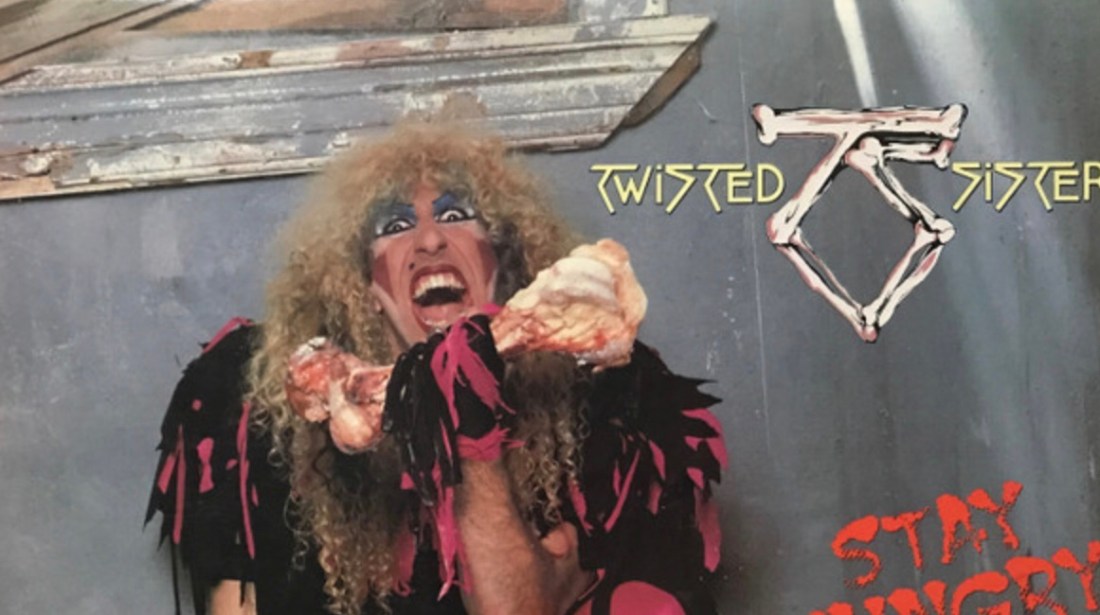
Twisted Sister – We’re Not Gonna Take It

I don’t listen to heavy metal very often, and those times that I do leave me confused about the genre. Classic so-called metal bands like Led Zeppelin seem more like blues rock to me, yet there they are, slotted in next to acts like Motorhead – which more match my expectations for the genre – and hair metal posers like Ratt. The stuff I think of as metal – with words like “speed”, “thrash” and “death” preceding it – has no real appeal to me as a listener.

And yet, my God, I get that appeal. While writing the above paragraph, I had my phone open to Wikipedia to look up subgenres and artists, which I then punched into Spotify for a listen. At this very second, “Prepare for Attack” by Havok is playing, and my heart is racing. I want to run out into the street and punch something, or at least just run and run and run until I fall down exhausted. Now Havok’s “Point of No Return” is on, and I feel slightly different, but still brimming with energy. Crazy evidence of how music can affect us – even music that we don’t much like.

The heavier stuff that I have liked over my listening lifetime falls more on the hard rock side than metal. Bands like Def Leppard (those guys were great – very melodic tunes that still kicked ass) and Guns N’ Roses, or alt metal bands like Faith No More (“Epic”), Korn (“Falling Away from Me”) and Linkin Park (“In the End”) were what I’d play when I wanted some­thing loud. These days, it will be the Sex Pistols first, then Nirvana.

Glam metal bands were always a joke to me, with their fake tough guy act (five minutes of watching Sebastian Stan play Tommy Lee will convince you of how much of a comic set piece Lee was, though it is possible he was at least in on the joke). So, why was Twisted Sister different? They definitely looked ridiculous. And they emerged into the wider public’s aware­ness just a few months after a more conventional-looking set of rockers, Quiet Riot, had hit the Top Ten with “Cum on Feel the Noize”. Why did I like Twisted Sister?

I think it’s because the band knew the whole thing was ridiculous and, rather than pretend otherwise, they steered into the skid. They wore outlandish costumes and cartoonish makeup, and made violently comic videos starring actor Mark Metcalf, whose prior claim to fame was as the villainous ROTC jagoff Douglas Neidermayer (who later met his demise in Vietnam at the hands of his own troops) in “National Lampoon’s Animal House”. They were a band that was obviously having fun, and fun is infectious.

Also, 1984 was a delightfully weird year in popular music, fueled at least in part by the explosion of music videos. Cyndi Lauper and her wrestling-related antics, Steve Perry’s cheeseball “Oh, Sherrie”, the over-the-top head-bobbing glory of Corey Hart’s “Sunglasses at Night”, Tracey Ullman with her secret sweetheart Sir Paul McCartney in “They Don’t Know”, the celebrity cameos in “Ghostbusters” because Ray Parker Jr. wouldn’t say the word (a guilty conscience, perhaps?), this nutbar appearance by Matthew Wilder on “Solid Gold”, Rockwell, The Romantics, Nena, and a duet from Willie Nelson and Julia Iglesias.  Prog rock gods Yes had a number one hit. I’m pretty sure that I had “We’re Not Gonna Take It” on a K-tel compilation that also included soap star Jack Wagner’s “All I Need”. WTF was in our water that year?

And what about the song itself? It starts with a straightforward drum intro, then frontman Dee Snider jumps in at the eight-second mark with the title. The song is a howl against the Reagan-era establishment, against other people – mainly older people, like parents and teachers – telling you how to live your life. It isn’t poetry or philosophy, and it is far from profound. It’s just rock ‘n’ roll, and that’s more than enough. 

One of the weird twists of modern life is that Trump-loving right wingers have somehow adopted this song as their anthem, which completely misses the point. When rich white guys think they’re the ones being oppressed, we’ve defi­nitely entered cuckooville. Snider is so not having this bullshit. It’s not about picking a political side: in the 1980s, he went toe-to-toe with Tipper Gore and the PMRC over censorship. Today, he gently takes down dim conservatives on Twitter, where he is a constant source of delight and one of my favourite music industry tweeters (along with Peter Frampton and Richard Marx). He continues to have a great sense of humour about his career.

Twisted Sister had one other lesser hit, then faded out of the limelight without ever really going away. Young people don’t seem to watch videos like we did in the ‘80s, so a band like this might not get the same chance to happen today, although maybe they’d just do the same thing but with Tiktok and a lot fewer shots of C-list actors getting thrown through windows. I’m sure Dee would find a way to make it work.
Classic Songs of My Youth Revisited #14

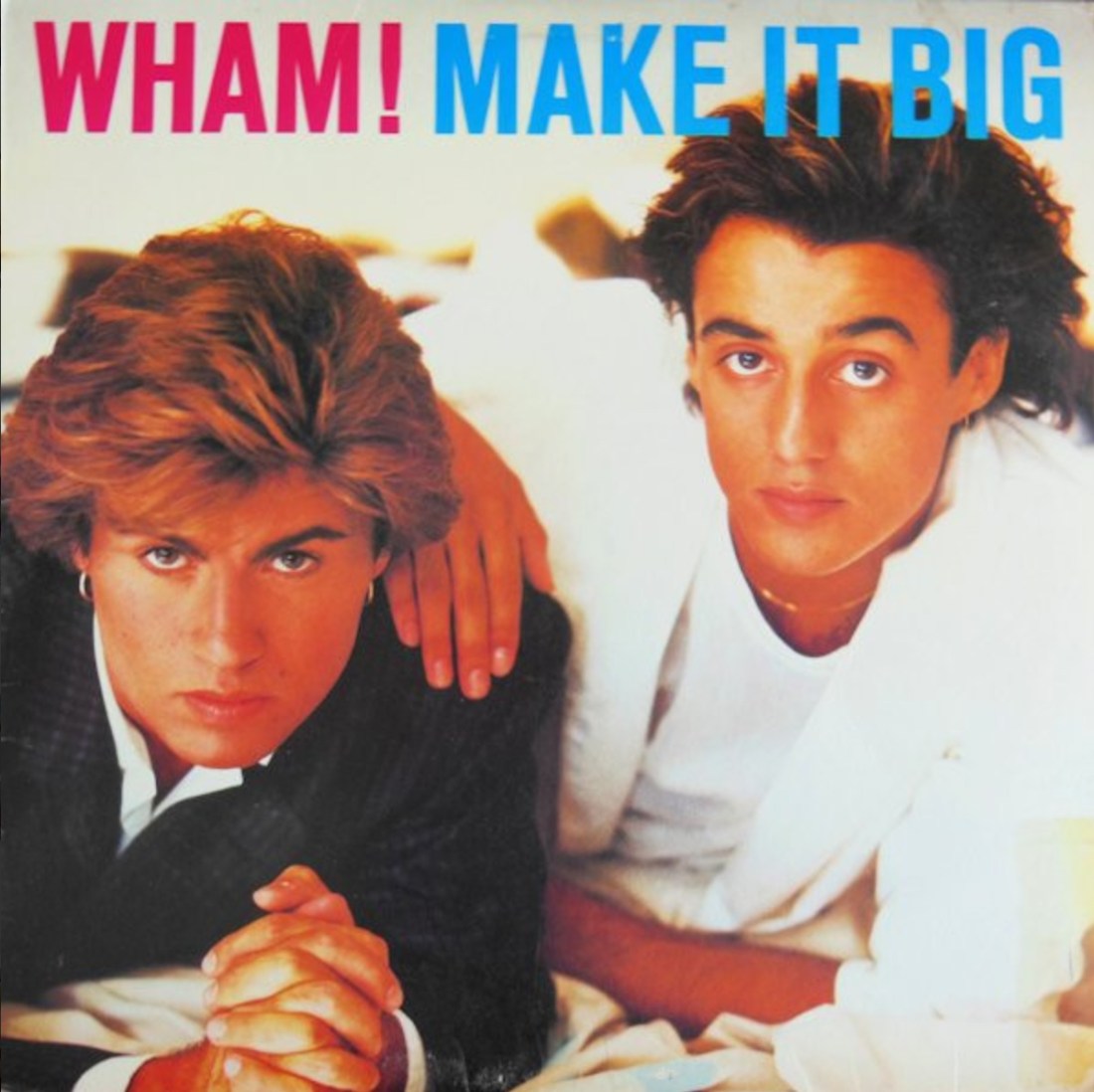
Wham! – Wake Me Up Before You Go-Go

When the first frames of the video for “Wake Me Up Before You Go-Go” flashed across the screen, my initial thought, I kid you not, was that Ted McGinlay had started a band. Now, this was ridiculous for two reasons. First, I had recently seen the (and I write this unironically for all the elitists out there) masterpiece “Revenge of the Nerds“, so I should have had a clearer idea about Ted’s looks. Second, other than a similar bouncy hairstyle, Ted and Wham! frontman Yog Panas really didn’t look all that much alike (though I can still see a resemblance in some shots – and I wasn’t the only one to see it.)

If you watched that video without any awareness of the band, you would have likely concluded it was a foursome, with Panas a.k.a. George Michael and long-time pal Andrew Ridgeley joined by the female duo of Pepsi and Shirlie (plus two other women who get a lot of screen time for people whose names I can’t even find on the internet). But the women were never more than hired help, and George had long before this moment passed Andrew as the creative force driving the bus that was Wham!. Andrew, who had once had to push George into music, was a smart lad who knew when he was in the presence of genius. He was just happy to be making music with his best friend.

I loved Wham! from the first listen, and, as a heterosexual 20-year-old male, was rather embar­assed by this initially. When I bought “Make It Big”, the album led off by “Wake Me Up”, I made sure to pair it with Van Halen’s “1984” so the cashier at Records on Wheels or wherever it was would know I wasn’t a wuss. My cassette of “1984″ was played all the way through once – maybe. “Make It Big” remained in regular rotation for several years, the cassette end­lessly flipped back over from B to A for one more listen to “Wake Me Up” (and often the next song, ”Everything She Wants”).

The song is a joyous pop confection that sounded like nothing else on the radio at the time. It has the feel of ’60s girl group hits, with finger snaps,  hand claps, ooo ooos and yeah yeahs, but sped up and with synths, and missing those booming drums and Phil Spectoresque pretensions. The use of the goofy “jitterbug” refrain calls back to swing dancing and early rock ‘n’ roll, and instantly pulls you into the song with a “WTF is that?”. I don’t know if any song feels happier, and it always puts me in a good mood.

George Michael went on to greater acclaim and bigger hits but no other song quite captures his mastery of the pop idiom. My wife and I don’t have much in common musically, but the Venn diagram of our tastes has George Michael smack dab in the middle of where the circles overlap. That his pop sensibility can align two such people – she’s never once listened to “Never Mind the Bollocks ” (which I played right after Wham! this morning, spazzing all over my kitchen), and I often greet her choices with a giant shrug – speaks to his genius.

As great as the song is, it really works better with the video. It’s so goofy, especially after they discard the all-white Choose Life get-ups they start out in for pastel beachwear. George has a sexy come-on at one point that even he seems to know is ridiculous. Andrew carries a guitar around and appears to be playing in a song that has little in the way of recognizable guitar parts other than Deon Estus’ bass, and they both pretend to play horns. Mistakes during filming are weaved in, and there is an energy that’s inescapable.

At the heart, though, is the love between George and Andrew. Ridgeley was a bit of a punchline, the much-less-talented hard-partying friend who George carried until he outgrew him. That Andrew then struggled post-breakup to figure out what came next (with a failed album (so obscure it isn’t even on Spotify) and even more disastrous car racing efforts) added to this. But the truth was, all Andrew had wanted to do for a long time was be in a band with George, and when you achieve all you want in life before age 25, it can take some time to come up with a Plan B. Like most of us, he eventually found another path.

You can see the bond in the video. My favourite moment is at 3:13. Michael makes a mistake, coming out of a twirl and landing in front of Ridgeley, who howls and puts a hand on his friend’s back. It’s such a sweet moment that the director included it twice. Then, at the end, George is alone at centre stage, looking confused, needing his support system. I always loved that they remained friends until Michael’s far too early death. And though their reign was short, the pairing left us with a lot of great songs – if you’ve forgotten that, just wait until next Christmas. It’ll come back to you.

Classic Songs of My Youth Revisited #13

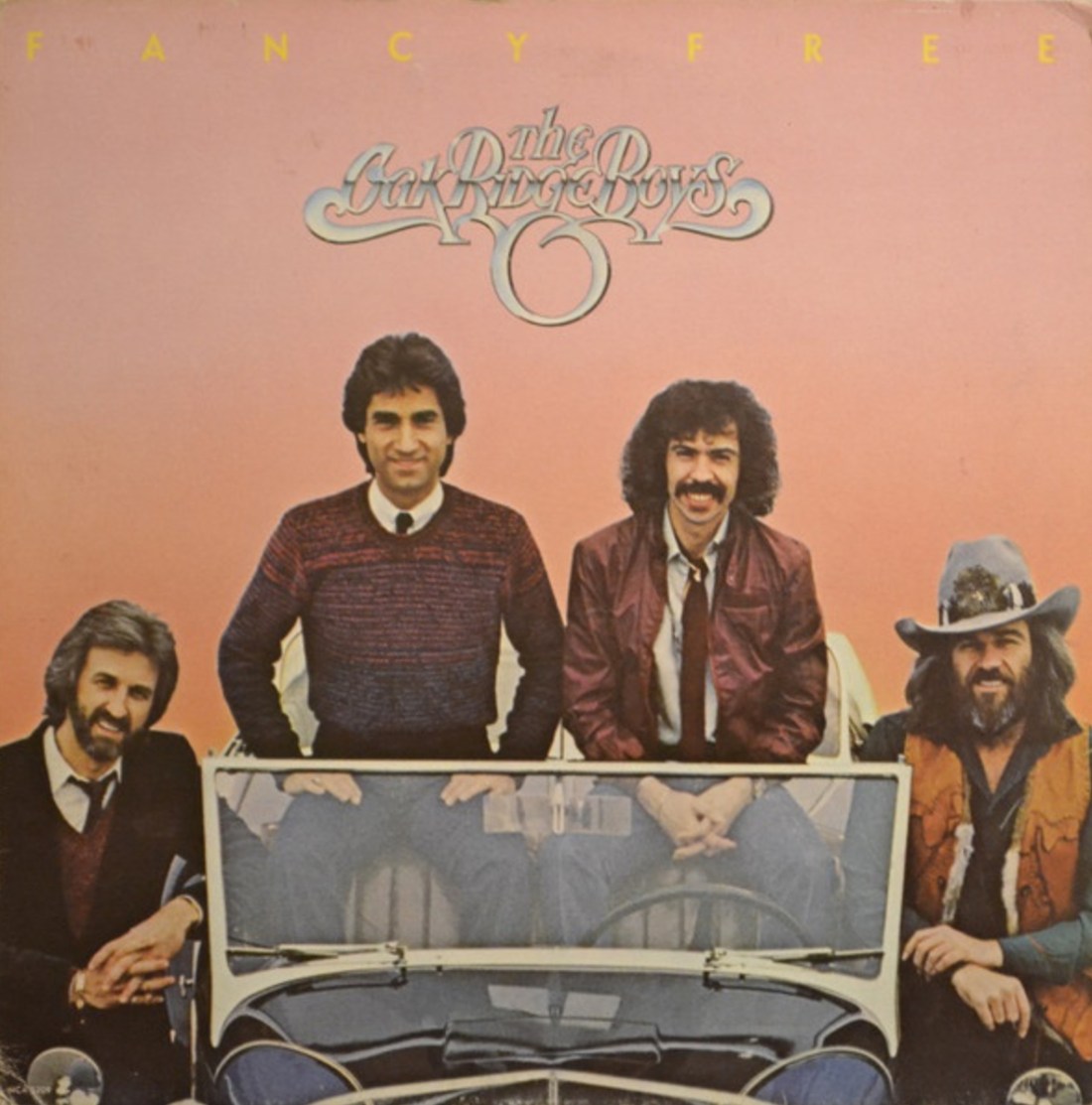
The Oak Ridge Boys – Elvira

Nostalgia can be very dangerous. It can easily lead you down a path where you greatly overstate the awesomeness of some past thing. But I don’t think it’s nostalgia when I say that I had more fun in the summer of 1981 than any other.

The linchpin of this was one Calvin Hood, who decided in the fall of 1980 that I was his friend, so I (after some brief hesitation) gladly jumped on for the ride. He was several years older, back in high school on a part-time basis to finish an aborted diploma now that he had figured out his path in life. Calvin might have been the most essentially decent person I ever met – and one of my aunts is a nun. He made decisions for his own life based in part on how they might impact YOUR immortal soul. He was unabashedly Christian, but never preachy or pushy – he just lived his life in a way that you couldn’t help but admire.

The highlight of that summer would come on Sunday nights. An ever-changing group of four to six of us would go to the drive-in for the midnight double feature, a carful of rowdy late teens and young adults who were usually too busy trying to crack each other up or visiting friends in other vehicles to pay much attention to the movie (mostly cheesy action or detective flix and soft core erotica (I think Calvin took a pass on those nights) from the 1960s and early 1970s – I (sort of) saw “Vixen!” and “Supervixens” in one night). After­wards, we would drive into the nearby city, play “spy” on the dark empty streets (basically, chasing each other around) or have Chinese fire drills, then head to Tim Hortons, where we would consume most of a large portion of Timbits before heading out to play tennis badly as the sun was coming up. We did this for several weeks, then Calvin left town for a new job and Doug Maxwell – the only decent tennis player among us (and I better not hear from anyone else who was there trying to defend their tennis game) – left to join the military, and the rest of us drifted off to other activities. As stupid as it all sounds now, it was a blast, and that was really more about who I was with than what we did. To paraphrase the narrator at the end of “Stand by Me“, I never had any friends later on like the ones I had when I was 16.

On CJCB radio, lords of the soundtrack to our summer, the biggest song – or at least the one that seemed to always be playing that year – was “Elvira” by The Oak Ridge Boys. Sometimes, we would request it, timing our call so that it came on the air while we were at the coffee shop. But it was better if it played when you weren’t expecting it. You would be rolling along, laughing about something stupid or ragging one of the other guys (or being ragged on), and then you’d hear that intro and – boom! – a car full of idiots were singing along in full voice.

It’s such a fun song to sing along with. Maybe it’s a karaoke standard by now but I expect it’s better to have the Boys as your backing track. Those giddy ups and oom poppas are delightful – I defy you to sing along and not feel happy. It’s almost entirely corn, like good bourbon mash, and that’s also part of the fun. A lot of the best country music doesn’t take itself too seriously – think of people like Brad Paisley or Toby Keith, or consider a song like “I’m Gonna Hire a Wino to Decorate our Home” or “You’re the Reason our Kids Are Ugly” or “It’s Hard to Be Humble”. This makes them a buttload of fun to sing along with, to give in to the ridiculousness of the thing, and let loose and just have fun with it. “Elvira” tapped into that, and for a group of rock-loving boys – I was at a party on prom night that June where we kept playing the same Minglewood Band album over and over and over until we were too drunk to care anymore – The Oak Ridge Boys owned an awful lot of our aural real estate for that brief window in time. I’ll never be able to separate that song from the love I felt – never expressed, of course, because I was a male teenager of a certain generation – for the friends I sang along with. I’ve had a lot of great summers since, with a lot of great songs, but I don’t think any of them can compete with 1981 and “Elvira”.

Classic Songs of My Youth Revisited #12

The Knack – My Sharona

If you turned on your radio for even an hour in the summer and fall of 1979, you could not avoid hearing “My Sharona” by The Knack at least once. It was the biggest song of the year, and I don’t remember anything else being particularly close in the way it took over our airwaves.

That kind of dominance almostly certainly means that we’re going to get sick of the thing we once loved, and this was no exception. The backlash against The Knack, when it came, was particularly vicious. Some of this, I think now, was due to category confusion. The Knack were marketed as a new wave band, and this probably contributed strongly to general denigration of the band. New wave, to my mind at least, meant more melodic and smarter punks, like Elvis Costello, Joe Jackson, Blondie, The Police. Stacking The Knack up against those bands made them seem like lightweights.

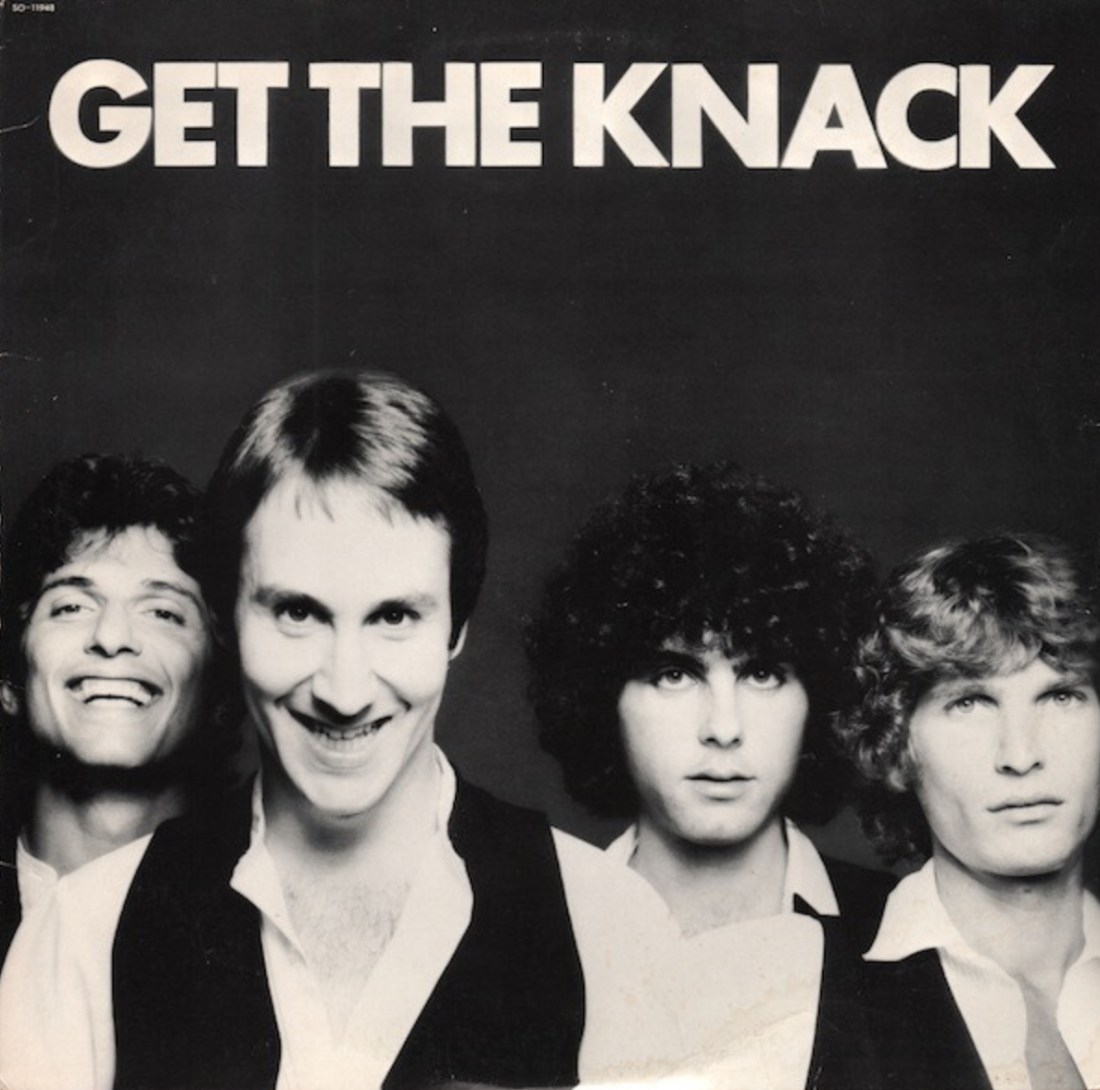
Replaying their first album, “Get the Knack!”, I saw how faulty this label was. No, The Knack were not a weakass new wave band: they were a holy-shit-this-is-fucking-awesome power pop band. Their antecedents weren’t the punks that evolved into new wave – they were Todd Rundgren, and Big Star, and (fuck you, Eric Carmen and the Trump-loving train you rode in on) Raspberries. They made big, melodic, energetic blasts of joy that had you – well, me – jumping around your bedroom like the demented hormone monster that you really were.

So, let’s get this out of the way off the top – this is an incredibly pervy song. This is obvious even if you didn’t know that there actually was a Sharona, who was 17 years old, while frontman Doug Fieger was, umm, not. I probably at 15 wouldn’t have gotten the point had I even been paying close attention to a line like “I always get it up for the touch of the younger kind”. So let’s just set aside for a moment this ode to ephebophilia (don’t worry – Sharona seems to have turned out fine), and focus on the song itself.

Actually, one other thing needs to be mentioned: The Knack were NOT a one-hit wonder. “Good Girls Don’t” also did well, and even hit in some markets.

It opens with pounding drums, then a throbbing bass joins in to lay the foundation. And this just keeps repeating, with guitar flourishes added, and occasionally a sped-up tempo. It’s an insistent, pulsating beat, and the song feels much shorter than its 4:55 length (the single release was about half a minute less). There isn’t a lot of variety – they aren’t trying to impress you with their songwriting virtuosity, they just want to rock. The guitar solo is serviceable, but nothing that wasn’t being matched by reams of bedroom rockstar teenagers – more noise than finesse. But that’s what makes it so great – you might’ve wanted to be Keith Richards, but you couldn’t see it happening. But The Knack? They seemed so normal, and that was some­thing you could be. Well, maybe not entirely normal: Fieger looks like a creepy uncle in the jacket photo, and the faces he makes in this video do not lower the cringe factor. Drummer Bruce Gary had model-quality cheekbones – I could see him flashing Magnum, or at least Blue Steel – but the others are just normal-looking guys.

After their second album tanked (don’t blame me – I owned a copy), I never gave much thought to The Knack. About a decade later, in the thrall of Was (Not Was)’s “What Up Dog?”, I plucked their 1983 album “Born to Laugh at Tornadoes” from a vinyl discount bin and found Fieger singing on a few tracks. The Knack ultimately released six albums, trying over and over to recapture glory, without success. Cancer took Gary in 2006, and then Fieger in 2010. 

I don’t think this song has ever really stopped being played, and it had a bit of a bump from “Reality Bites” in 1999. (The world can probably be divided into Ethan Hawke, and everyone else.) It’s still a great song, and a great album, too. Rediscovering The Knack has been one of the true joys of writing this series.

Classic Songs of My Youth Revisited #11

Elvis Presley – Don’t Be Cruel

Anyone who knows when I was born and is capable of inter­preting a calendar will right about now be calling ballshit on my framing of “Don’t Be Cruel” as a classic song of my youth. To that, I have three comments (well, four):

  • The first time I became aware of Elvis was during my youth. (This creates a lot of leeway: I’m coming for you, “Rock Around the Clock” by Bill Haley and the Comets. Hell, even Mozart (a.k.a. the first pop star) isn’t safe.)
  • Elvis has never stopped being popular, and thus his songs are classics of everyone’s ­youth.
  • Women are born with all the eggs they will have in their lifetimes (well, maybe), so when this song was released in 1956 a significant chunk of my DNA was just hanging around waiting to become me. Science!
  • Finally, this is my blog. The only rules are my own.

Now, to our story.

Possibly the first album I claimed ownership over (but didn’t actually own) was a 1973 compila­tion called “Elvis”. It had a blue cover with yellow lettering, and until writing this, I had long believed it was a K-Tel compilation. It was packed with 20 of his biggest hits, and I think I loved every one of them. But the song I loved best was the first track on the A side of disc two: “Don’t Be Cruel”.

By the end of the 1970s, I had stopped listening to Presley, having moved on to that other Elvis who claimed to be King. That’s never really changed even to this day. But I still remember those songs well, and get a small spark of joy when I hear one without warning.

When my father passed away in 2007, he didn’t leave much in the way of a material legacy for his four offspring. As it was, I only wanted one thing: his Fender guitar. It wasn’t worth anything (his was a mass market axe), and I couldn’t play. But a love of music was one of the few things we had in common, and I guess that was a factor. 

Flash forward to Christmas 2009, and my future wife bought me guitar lessons as a present. I attended for several months, then started law school and had little time for much else over the next few years. My guitar has sat in its case, neglected, pretty much ever since. But the one song I had started learning to play was an Elvis tune. Taken off an album called “Elvis ‘56”, I had never heard “Too Much”  before, even though it had been a hit. It’s a good song for a beginner – straightforward strumming of some basic chords without much in the way of changes. I wasn’t a bad student, even with my aging digits and sluggish reflexes, thanks to having a pretty good ear, and I was actually getting the hang of playing it before I packed my guitar away. And that “Elvis ‘56” album is pretty great.

But it still can’t top “Don’t Be Cruel”. It opens with Bill Black’s thumping double bass, and if you don’t immediately recognize it, that can only be because you haven’t listened to pop radio at any point in the last 65 years. The backup singers create atmosphere with their bop-bops and aah’s, and that deep bass never lets up, paired with a simple drum beat, driving through as Elvis presses on to the end, seeking his girl’s undying love. 

It isn’t his greatest vocal, and he is downright minimalist when it comes to clear articulation (now that I’ve read the lyric sheet, I know how many of these I misheard). He fully commits to the song, with a hint of pathos to his hopeful romanticism. He starts out saucy, despite the pleading in the words – even when Elvis is begging a girl, he never stops being cool. He then does what every cool guy does when a girl is blowing him off: he ups the ante, with Mr. Confident thinking the solution to his problem is to get her to marry him. This is a false hope, and there is a slight hitch in his voice towards the end, as he realises “maybe this isn’t going to work out”, with the now clear and earnest delivery from Elvis and doo-doo’s of the last chorus sending a chill along your spine (or neck into the upper shoulders in my case).

It’s a classic for good reasons, and the uncomplicated production allows the musicianship to shine through. Great music doesn’t need to be fussy. It just needs to grab and hold your attention, and there were few equal to Elvis in doing just that.

Classic Songs of My Youth Revisited #10

Shaun Cassidy – That’s Rock ‘N’ Roll

The school year of 1976-77 was a difficult one in our family, and for me personally. An uncle died at a horrifically young age. My parents’ marriage was imploding, resulting in a separation that was soon followed by an even more unfortunate reconciliation as they clearly were not done punishing each other for the mistake of having once been madly in love.  And I endured for a time what we would today likely call bullying but back then (had I told anyone) would have been characterised as just boys being boys.

As has been true for much of my life, a major place for me to escape to during difficult times was into books. (Also hockey – I will never be able to overstate how important the success of the 1970s Montreal Canadiens was to my self-image and overall mental health.) A critical part of this were the not-very-mysterious Hardy Boys mysteries. Frank and Joe were nothing special as detectives: typically they were (1) lucky or (2) bailed out by dad Fenton. But as exemplars of late-teen cool, at least from the perspective of someone much younger, they could not be matched.

My attachment was such that during that winter of 1976-77, I went so far as to read the autobiography of Leslie McFarlane, the Canadian ghost writer of many Hardy Boys titles. A few years before, I had done a book report on “What Happened at Midnight!” (scored as a five-star book on my Goodreads). Also during that 1976-77 season, my mother took me along on a visit to a friend one day. On doing my usual (a habit that continues to this day) scan of his bookshelves, I found a Hardy Boys title and was fine for the next few hours, caring not what the adults were up to.

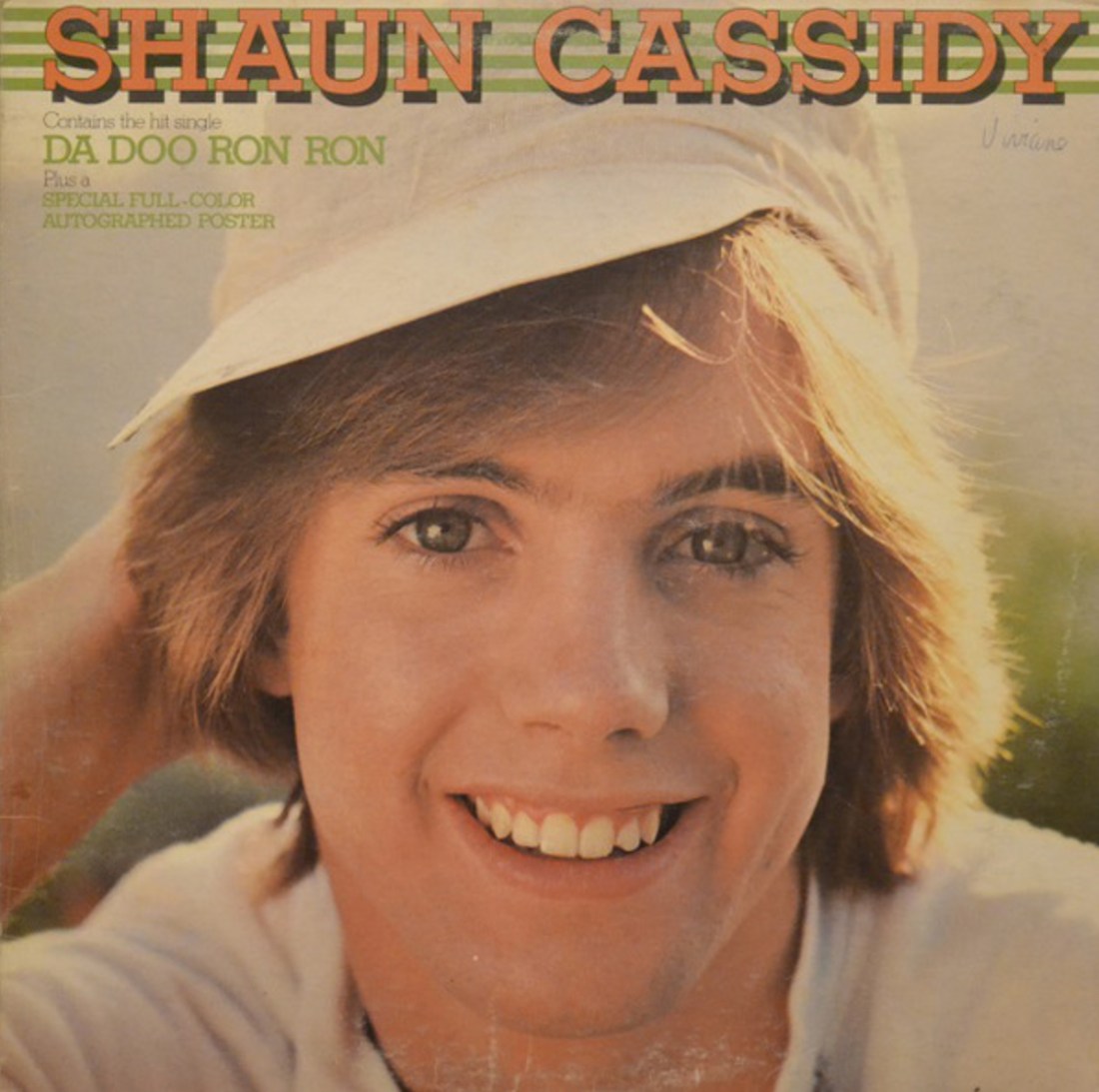
On January 30, 1977, my fandom went to the next level, with the debut of “The Hardy Boys/Nancy Drew Mysteries”. The Nancy part was fine (I had read a few of the books, and Pamela Sue Martin was adorable), but the real draw was the cool guys on the male half, with Parker Stevenson as Frank and Shaun Cassidy as Joe. Cassidy was the younger brother of a past teen heartthrob and had some musical skill of his own, so it was inevitable that it would become part of the show, despite the books’ utter lack of commentary on Joe’s musical talents.

Written by the odious Trump-loving Eric Carmen, “That’s Rock ‘N’ Roll” is a joyous piece of bubblegum. (The song’s excellence justifies the pennies due Carmen from Spotify for my repeated listens in writing this.) It feels like an update of a hit from an earlier age, as Carmen – savant that he was – seemed able to tap into the entire history of popular music in concocting his powerpop delicacies. It’s about teen malaise and insecurity, and the release that comes from discovering that music can be the path out of the woods: you need only to give in to the music and embrace the freedom, with no consideration of consequences. It celebrates that feeling of youthful invincibility, something they never seem to be in short supply of. It is unpretentious, while at the same time being incredibly pretentious about the power of pop music. So, of course, I’m a sucker for what it has to offer.

Cassidy’s voice is fine though not exactly tested here, and he was, of course, a first rank cutie. The song opens with a solid drumbeat. Pseudo chugging guitars follow, then horns, joined by piano on the chorus. And that’s it. Nothing fancy, just a heap of joyful noise packed tight with every pop music cliche you can imagine in under three glorious minutes.

It’s been a long time since I’ve read a Hardy Boys book, though I still own a large collection in the blue covers that will be familiar to anyone of my generation. Sometimes, I think I might like to crack one open, but I know it will never happen, at least not in my present state of sentience. There is no need to sully my memory of them as literary masterpieces.

Classic Songs of My Youth Revisited #9

Boston – More Than A Feeling

I loved Boston during their late 1970s heyday, but always sort of understood that there wasn’t anything particularly special about the band. I was no musical purist – in addition to my deep and unquestioned love for the Bay City Rollers, I owned three Shaun Cassidy 45s and one by Leif Garrett (no disrespect intended to either gentleman – those were great pop singles), to say nothing of Joe Dolce’s culturally questionable (and really quite awful) “Shaddap You Face”. But, track by track, there was very little that stood out in Boston’s catalogue. I was likely influenced in this direction by my all-time favourite rock critic dis; the literary genius in question queried why, in writing about “Don’t Look Back”, it took two years to re-record their first album and sleeve it in a rejected ELO jacket. Priceless.

Some bands were built to be one-hit wonders. They have one outstanding musical idea, and it explodes across the culture, takes its place among the greats, and the band itself disappears. Oh, they might still be out there, plugging away, but the collective culture no longer cares. We’ve moved on.

But what happens when a band doesn’t go away, but still has nothing more to say. Well, as one example, you get Boston.

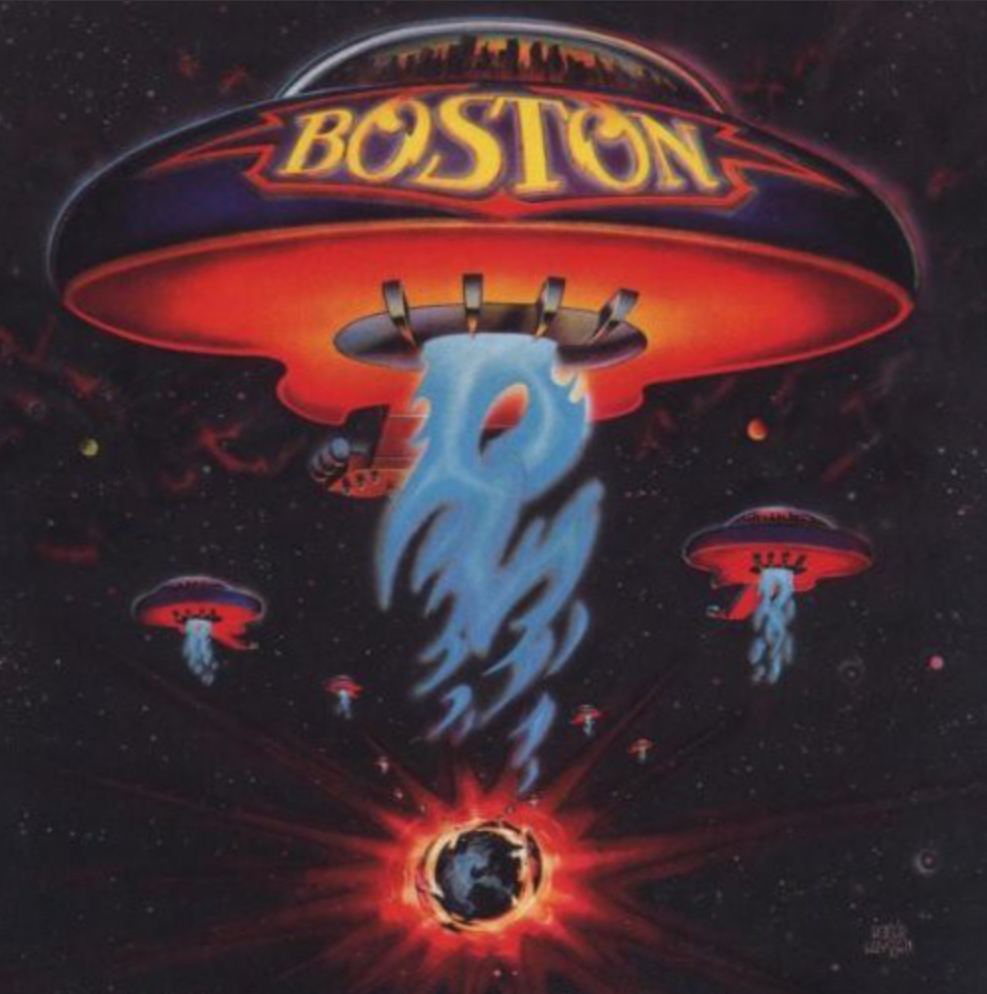
“More Than A Feeling” is an all-time classic, an uncontested great. Now, name Boston’s second best song. There’ll be “Amanda” devotees, probably a fair number of whom lost their virginity while it played over a car stereo or a boombox in a darkened basement. There will be “Long Time” stans who’ll insist it’s as good as “More Than A Feeling” – they’re wrong – or “Don’t look Back” freaks. You might favour a deeper cut – my favourite track when I was young was “Feelin’ Satisfied” (no idea what I was thinking) and “A Man I’ll Never Be” is a solid and quite moving rock ballad that runs out of ideas three minutes in then inexplicably runs for 6:35. But the gap between “More Than A Feeling” and any of those is incon­testable.

I used to think this was a great-but-not-good song. By that I mean a song that somehow overcomes a lot that is wrong to collectively be right. I was the one who was wrong – it’s just a great song. But I wasn’t listening to it right. Context is so important for music. Some bands are meant to be played in the car, some are for when you’re out in nature, others are for when you’re a little too drunk and have gotten to discussing the meaning of life with your cat. (I recommend Big Star, Mahavishnu Orchestra and Pink Floyd, respectively.) I’m no Adele fan, but I know if she gets me at the right place and time, I will turn into a puddle, such is her demonic power. (“Over You” by Daughtry was my anthem as my first marriage started circling the drain, and until writing this, I felt no need to revisit it in the many years since.) For “More Than A Feeling”, it took the trailer for “Inside Out”. I’d heard the song hundreds of times, but matched with those Pixar visuals, I finally appreciated it, and it’s grown for me in the years since. I have a visceral reaction to the song, a physical sensation that still surprises me.

The song’s construction by mad scientist Tom Scholz is masterful. A slow build – gentle guitars and quiet vocals – explode about 35 seconds in and never let up. Brad Delp is in full roar, and Sib Hashian slides in with perfect support in his unobtrusive drumming. The peak comes around the 2:30 mark as Delp’s howl blends into an air-guitar classic solo from Scholz – 20 seconds of playing that is instantly familiar to anyone who’s ever heard it on repeat.

Then the needle moves along to “Peace of Mind” when what you really want to do is go back to the beginning. How many copies were worn out this way in 1976/1977? Boston had a good run – spread out though it was – but nothing ever came close to the very first song most of us heard from them, whether as the lead single or the opening track of the album. There is no shame in that – we should all strive for a “More Than A Feeling” moment in our lives.

Classic Songs of My Youth Revisited #8

Ace Frehley – New York Groove

Unlike a lot of hormonal boys in the 1970s, I was not the biggest Kiss fan. The makeup and overall schtick was undeniably cool, and I loved the movie “Kiss Meets the Phantom of the Park” (though I remember nothing about it other than some of the band members’ character names). But I was far less enthused by their music. I had their 1979 disco-tinged atrocity “Dynasty”, but it mercifully was soon scratched, and its arresting of my musical development brought to an end. Much better was 1978’s Christmas present from my parents “Double Platinum”, but even this collection of “hits” (only “Beth”, a real outlier for the band, had reached the Top 10) had an awful lot of drudgy filler. The record also irritated me because, for reasons that are unknown and could never make sense anyway, two of their more popular tunes, “Shout It Out Loud” and “Christine Sixteen”, weren’t even included.

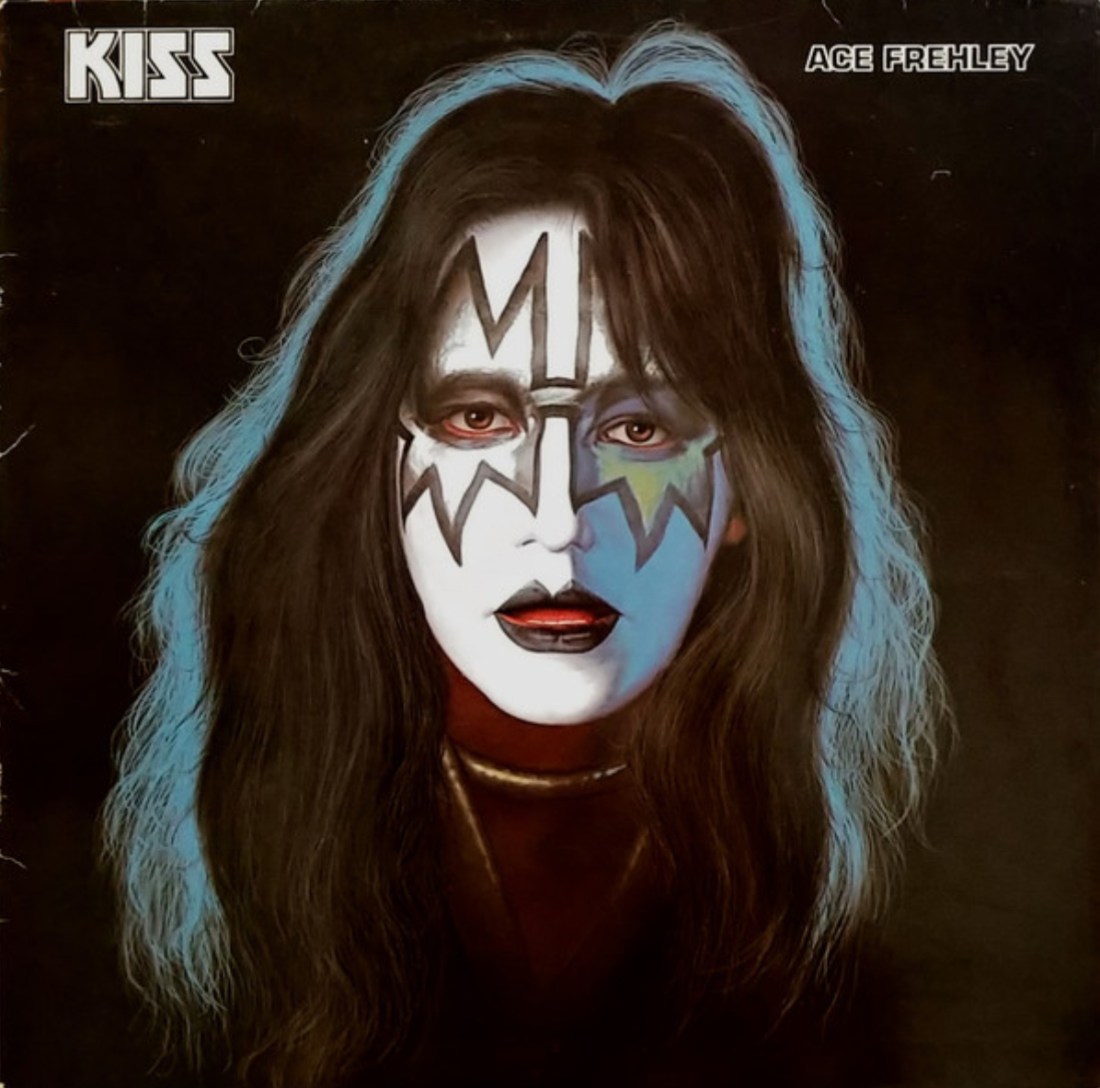
So when the band members, either through misplaced confidence in their individual abilities or corporate greed, released solo albums on the same day in late 1978, I mostly shrugged. That they were almost universally dismissed by critics, and performed way below commercial expectations, gave me no reason to reconsider my position. The one exception was the effort from Ace Frehley. It received by far the best reviews – I still remember (meaning I didn’t have to look it up!) a critic saying he was like a .350 hitter on a last-place team who should go play somewhere else. It also sold the most copies. And, for today’s purposes, produced the only hit single.

I don’t know if I loved “New York Groove” from the first listen, but it sure feels like it from the vantage point of 43 years now of playing it. I have never owned a physical copy, but as I moved between delivery models, I usually found a version – a radio-recorded play (cut off slightly at each end to remove the disc jockey’s contribution) on cassette in the ’70s until it become unplayable, a Napster download in the ‘90s, Spotify now – to include on my playlists. It owns a permanent spot on my all-time 100 favourite songs.

I finally used this exercise as a reason to listen to the album, and it is bloody good. More power pop than rock for the most part and not like most of the Kiss that I remember (I think I need to revisit “Double Platinum”, but Spotify is of no help with this). Space Ace did not disappoint.

But the standout remains “New York Groove” – even in a sea of pretty decent tracks, it is the earworm port in the storm. Starting with stomps and handclaps that dare you to not join in, then paired with a guitar that chugs along with a subtle, slowed-down disco churn, it builds to a perfect balance between the vocal and backing track. The ooooooo’s leading into the chorus encourage you to sing along. Against the main guitar line, Ace interjects simple-sounding rock-star flourishes that are in harmony with the rest of the song. His singing conveys the wonder of a traveller getting his legs under him on his return to the site of his greatest triumphs. There is a sense of not believing his good fortune in having a “wicked lady” by his side in HIS Cadillac as he heads into the enticing night. The song never fails to make me want to bounce around and sing along (even after playing it about a dozen times while writing this). It’s 3:03 of pop perfection, ending right before it overstays its welcome.

As an object lesson in how the artist can make the song, check out the original version by Hello. It’s still a pretty good tune, but Ace’s cover – with his more impassioned vocal and slightly-altered grittier lyrics – is the one that has endured. It’s a cleaner and poppier production, and a more fully realized work. Plus, it’s the one, for most listeners, that benefits from the tinge of nostalgia that improves almost everything it touches.

The promise of this record was never fulfilled, and the rest of his tenure with Kiss was filled with drama. He’s still going, 70 now but always rocking, with his last album out in 2020. Not a true one-hit wonder, more a star who exploded with one moment bigger than anything else he could have imagined. If there’s a party in my honour after I’m gone, this absolutely better be played, or I will haunt everyone present until their own final day. Heed these words!

Classic Songs of My Youth Revisited #7

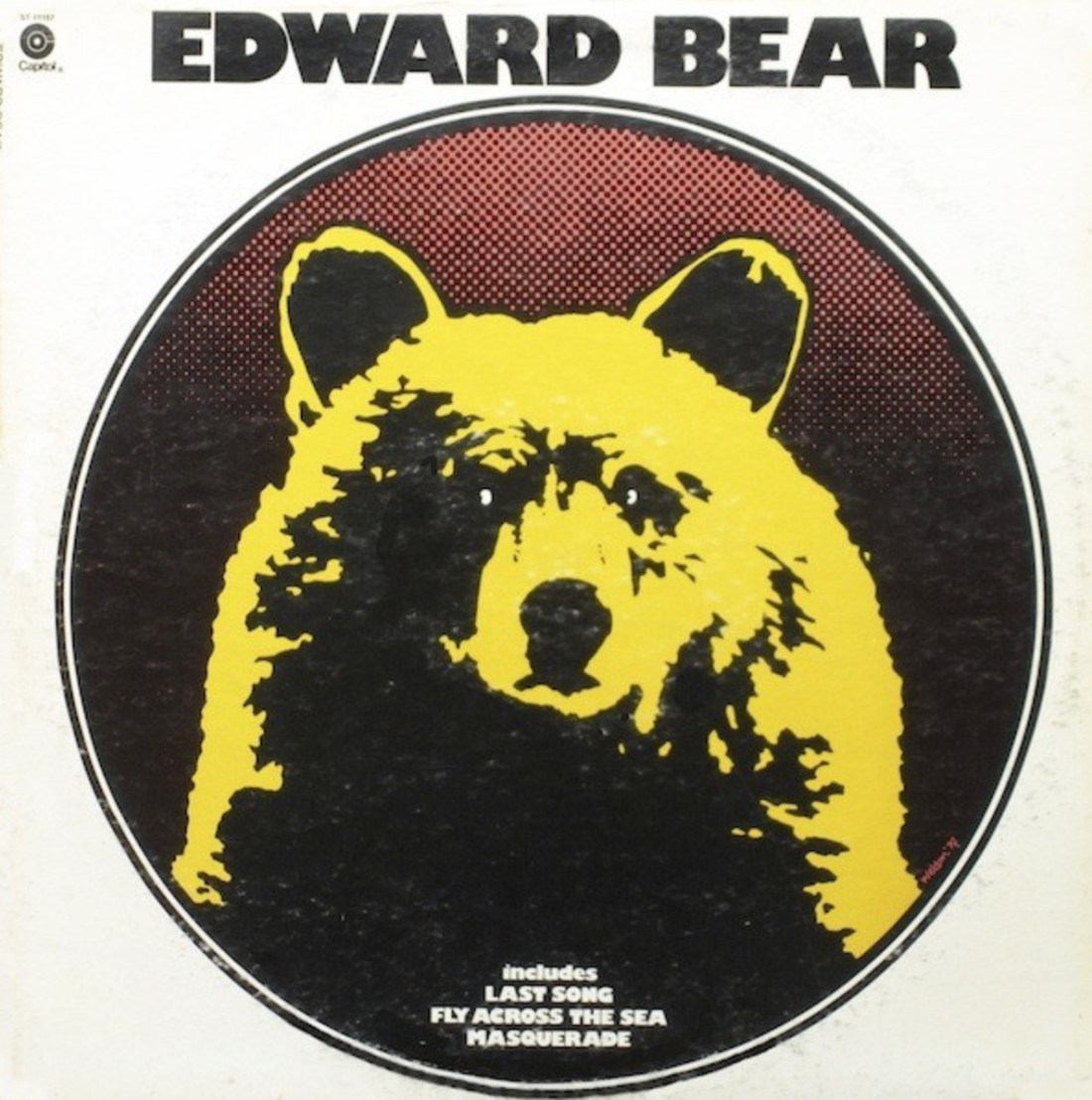
Edward Bear – Last Song

I don’t remember how old I was when I first attended a dance, but it was definitely well before my 12th birthday, because I was still 11 when I experienced my first heartbreak at one of those dances. But before Patsy Jessome tore my heart apart – yes, I went there – on an earlier Friday (probably the one exactly seven days earlier, given the trajectory of our “relationship”), she and I had certainly danced to “Last Song” by Edward Bear. I know that because every dance I went to at that point in my life ended with Larry Evoy singing us into the night. Well, evening – they always ended at 8:00 pm. (Shoutout to the friends who had my back that night when I cried like a kitten at an empty food dish – you know who you are (or maybe you don’t – it naturally was a bigger deal to me).)

My first dances were the Friday sock hops at the church hall in Florence, the village closest to mine where I attended elementary school. This was the Catholic hall and I was Catholic, but that was just incidental – I often went to the Saturday evening Protestant church hall events, and would have gladly spent time with Rosicrucians or Santerians for the chance to spring awkward boners in the close proximity of a pretty classmate.

I know the classic end-of-dance tune is “Stairway to Heaven” – the Barenaked Ladies didn’t sing about Edward Bear in “Grade 9” – but that wasn’t how our disc jockey rolled in 1975-76 Florence. Maybe he thought we were idiots – even the dimmest altar boy couldn’t miss the message – or maybe he needed the reminder himself or maybe it was a CanCon thing. Maybe he just loved the song.

In any event, this was our song. Was it any good? Eh, not really – it’s a slow poppy tune that’s perfect for the side-to-side shuffle we called a waltz, but the lyrics are nothing special and the music diabetes-inducing sweet. But at 7:55 pm on a Friday with the girl you’re in love with that week in your arms (well, your hands on her waist and hers on your shoulders), it was the greatest fucking song ever. So, yes, it wasn’t good – it was, for that brief moment in time, the greatest fucking song ever. And that’s all that matters.

Classic Songs of My Youth Revisited #6

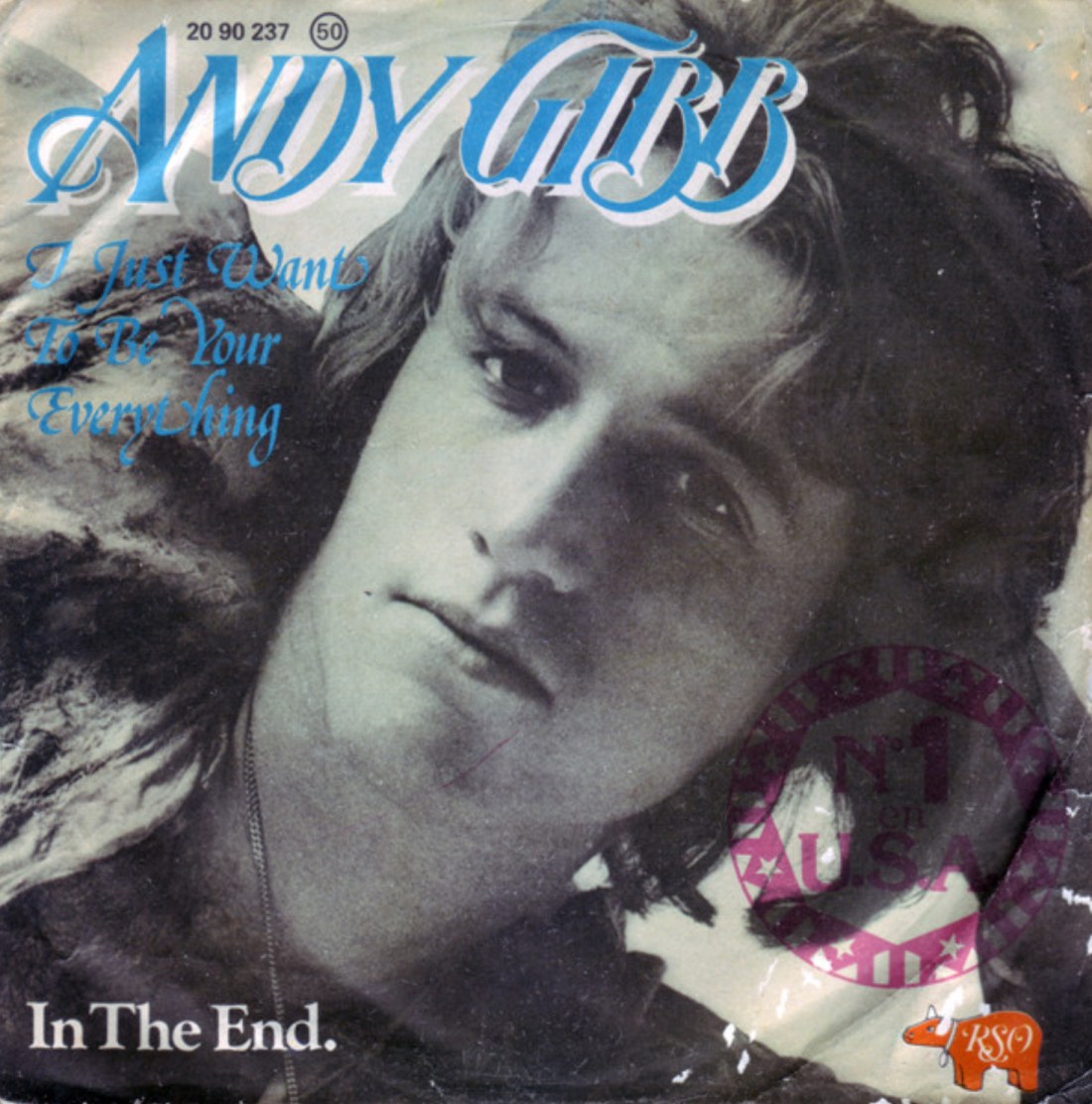
Andy Gibb – I Just Want to Be Your Everything

Probably no musical collective has dominated a year’s airwaves like the Gibb brothers did in 1978. The only competition is The Beatles in 1964, when they landed 5 of the top 16 songs, including the top 2, on Billboard’s year-end charts. The Gibbs managed to top that by farming out some of the work. The core trio, known to the world of course as the Bee Gees, had three of the top six songs in 1978, and, in various combinations, they wrote three more of the year’s top 19: “Grease” by Frankie Valli, “Emotion” by Samantha Sang (I am yet to be fully convinced this wasn’t just a clean-shaven Barry Gibb in drag) and “If I Can’t Have You” by Yvonne Elliman. Finally, they turned to little brother Andy to put them over the top, and he came through with two big hits of his own, including the year’s top song in “Shadow Dancing”.

Of course, when Andy first came on the scene in 1977, we had no idea that such a juggernaut lay in our futures, nor that it would end so soon. The Bee Gees’ hits dried up in mid-1979, and Andy’s the following year. He made a series of bad life decisions, then cleaned up and started trying to get his career back on track, but the damage was done, and he was gone less than a week after turning 30.

I wonder if people have forgotten how great this song is. I never hear it on the radio when my wife plays an oldies program, Acclaimed Music ranks it as only the 128th best song of 1977, and on Spotify it has a relatively paltry 36 million plays, of which I have contributed a healthy proportion. The first time I heard this was in my parents’ car on a bright day in the late spring, coming out of what I’m sure was another miserable Cape Breton winter, and I remember that feeling of just instantly loving a song so much that I wanted to live inside it for a while.

It has a sort of slow-roll disco beat, with just enough rhythm to make it danceable. Synths and faux strings gently glide along, the percussion is subtle, and the effect is sunny despite lyrics that are a cry of love to someone who may not feel the same, and the desperate fear of loss that presents (“If I stay here without you, darling, I will die”). The vocal shows that passion, with the trademark Gibb brothers falsetto that makes so many songs sound like they are life and death (check “Fanny (Be Tender with My Love)” for what I think is the best example of this). I think it also makes a very simple but true statement about how love should work: “If you give a little more than you’re asking for, your love will turn the key”.

What really makes this – and all of the Gibbs’ songs – so great is that they are just the most fun to sing along to. I could write 20 of these about those songs (and “Tragedy” is definitely going to happen). I think it’s the falsetto. Even the most voice-challenged listener can muster one up, and it – though you’ll have to check with my poor wife to confirm this – helps hide the weaknesses of the singer’s delivery. Plus, it’s really fun to play the castrato and just howl. There’s a lot of music that I used to love that I no longer have time for, but there will always be a place in my life for the Bee Gees and their tragic junior partner.