SoundTracking #4

”And the Oscar goes to . . .”

Rob Lowe is a very good looking man who is aging so gracefully that you can’t even dislike him for it. He’s also an excellent comic actor who for some reason keeps appearing in dramas. What he is not is a singer or dancer. Yet, in a decision that can never be truly understood, he was called upon to do both as the blind date of Snow White in the opening number at the Academy Awards on March 29, 1989. The results were glorious.

I am a regular Oscar ceremony watcher (though these days I rarely make it to the end unless I’m invested in a particular film’s prospects, like last year), but I missed the 1989 show, so I had not watched this video until just this week. I certainly knew the legend of the botched opening. But I assumed that Disney, who were so upset by the unapproved use of their intellectual property that they (1) sued the Academy and (2) had Snow White portrayer Eileen Bowman agree not to speak about the show for 13 years, made sure that this clip was buried. I wouldn’t be surprised to see it taken down at some point, so, please, take the 11 minutes right now and watch the video. It is so undeniably awful that you can’t help but feel embarrassed for (almost) everyone involved, yet you are also compelled to keep watching, to see what fresh horror is coming up. It’s supposed to be a tribute to old Hollywood, and I guess the amount and variety of cheese on display is consistent with that. But what is the cheesiest part? The dancing stars? The dancing tables? Snow White’s voice? The rewritten lyrics to familiar songs? Rob Lowe shimmying? The gigantic hat – I guess it’s a hat – that Snow wears towards the end? The mere presence of Merv Griffin? The only one for my money who comes out of this a winner is Cyd Charisse: just past her 67th birthday and more than 20 years since her last major film role, she turns up at 3:37 and shows that she still has moves, and looked awfully good in the process.

Now, it’s Oscar time again, and it is certain that nothing so gloriously camp will turn up in tonight’s ceremony. Unless, of course, it’s on purpose. Which brings us to “I’m Just Ken”.

There are five tunes up for best original song this year, but three of those have no chance of winning, despite contributing honourably to a strong nominee slate. “It Never Went Away” (from “American Symphony”) has beautiful piano, and is a lovely and moving elegy to enduring love. “The Fire Inside” (from “Flamin’ Hot”) is yet another Diane Warren anthem, but with a faux Latin beat, and I can’t deny that it had me moving my head and shoulders along with the music in a way that my wife would instantly recognize and, hopefully, be embarrassed by. And, last but not least of the also-rans, we come to “Wahzhazhe (A Song for My People)” (from “Killers of the Flower Moon”), which I can’t even begin to pretend to understand but which also dug under my skin and made my heart race.

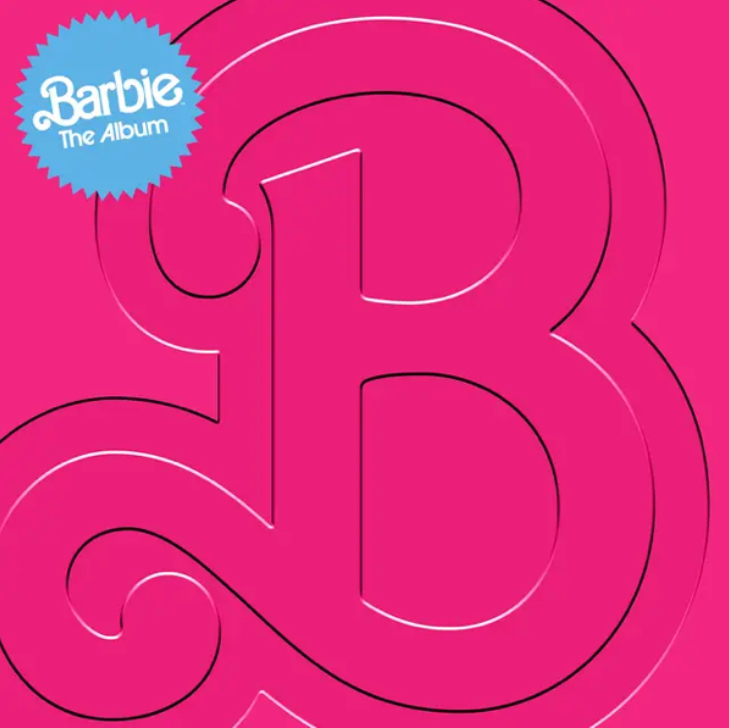
But this is “Barbie”’s year, and it is probably 99% certain that Billie Eilish and her brother will be walking off the stage tonight with their second little gold man. And it’s hard to deny that it would be a deserving victor. “What Was I Made For?” is a delicate lament, light and airy sounding but with lyrics that display an existential questioning of purpose that is also grounded in the film’s through line. An Oscar winning song should ideally be connected to the movie itself, and not just a pretty trifle played over the closing credits. Eilish’s song touches on the emotional centre of the film, and of Barbie’s journey.

And yet, nothing is certain until someone says “And the Oscar goes to”, and in that tiny 1% of space that remains, I will be rooting for Mark Ronson and Andrew Wyatt – two of the folks behind “Shallow” – to win their second Oscars with “I’m Just Ken”.

My love for this song is a little irrational, but I’m okay with that. It, too, is connected to the story, as Ken grapples with his insecurities and confusion over why Barbie doesn’t appreciate his awesomeness. That it is accompanied by a massive production number, in which dozens and dozens of Kens (but no Allans) battle each other with beach toys and, I don’t know, charisma, I guess, organically ties in to the problems with the patriarchy and toxic masculinity that the film addresses. I prefer to watch the movie clip so I can appreciate its full glory, with Ryan Gosling in beach god mode and fellow Canuck Simu Liu as his preening nemesis, but the song on its own is great, switching from power ballad to ‘80s dance track to grungy techno then back to power ballad. And the lyrics: “a life of blonde fragility”, “the man behind the tan”, “Am I not hot when I’m in my feelings?” and, my personal favourite, “I’m great at doing stuff”. Plus, this song gave the world Kenergy. Give these geniuses another Oscar, damn it!

Okay, that’s absolutely not going to happen. For one thing, Hollywood, despite being a place that has churned out great comedic entertainments for over a century, has never had a sense of humour about itself, and rarely has awarded those comedies its highest honour. So the emotional turmoil of “What Was I Made For?” is more on brand for the Oscars than the absurdist humour of “I’m Just Ken”. Also, everything Eilish touches turns to award-season gold – she has already won the Grammy for Song of the Year for her track, an award for which “I’m Just Ken” was egregiously not even nominated. But what would it say about Hollywood if Barbie’s moment of triumph was stolen away by Ken? It would fuel thinkpieces for days on every feminist (and anti-feminist) Substack, every website and magazine, every culturally oriented TikTok, Instagram, Reddit, X, blog, vlog and whatever the heck else is out there. If nothing else, it would take our minds off Trump and the American apocalypse in the making for just a few more days.

Do it, Academy. We demand that you step up in this moment of need. Give “I’m Just Ken” the Oscar. The world is counting on you.
SoundTracking #3

Career Planning

Growing up, there were two jobs that I set my sights on attaining once I entered the workforce. First and foremost, I wanted to be a professional hockey goalie. If that didn’t work out, my backup plan was to be a statistician. I really had no idea what the latter position entailed, but I liked math, and my imagining of it was that I’d be the guy who tracks all the assists and penalty minutes and figures out what someone’s goals against average was. Now that I have some idea of what a statistician actually does, it’s clear my conception was really more of a scorekeeper role, and not the analytics-type worker that professional sports teams hire in droves these days. (Career tip for anyone still figuring things out: statisticians are in high demand right now and will remain so for the foreseeable future.)

Eventually, I did a lot of jobs that had nothing to do with hockey or numbers before settling in the legal field and ultimately becoming a lawyer. And while I (usually) like what I do, it isn’t a calling: I’m a lawyer because they let me into law school. (Crazy bastards.) If they hadn’t, I’d have tried something else.

It’s too late to head down this path now, but ever since I learned that such a gig existed (yes, it was after law school), my dream job has been to be a music supervisor for film and television. These are the folks who, working with other members of the creative team, help to come up with the songs that you hear in a movie or show, including such simple things as a background tune in a diner, or the critical mood-setter underlying a scene.

I think this job would’ve been a great fit because I’ve always had a filmmaker’s sensibility without any actual cinematic eye. Music almost always sparks a visual connection for me. A good reminder of this came one recent day in my car with a Spotify playlist on when the Swedish behemoth served up “You Should Be Dancing” from the Bee Gees. What my brain pulled up was not a picture of the Gibb brothers in their satiny disco era glory. No, what I saw was Gru, the supervillain turned father-of-the-year from “Despicable Me” (and four sequels/spin-offs). There are a lot of other songs that my mind spontaneously connects with cinematic visuals. I can’t hear any version of “I’m A Believer” without seeing the celebration of Shrek and Fiona’s nuptials in “Shrek”. Queen’s “Bohemian Rhapsody” means I’ll soon imagine the head shaking and hair flying everywhere of “Wayne’s World”. And there are a half-dozen songs – including ELO’s “Mr. Blue Sky” and David Bowie’s “Moonage Daydream” – that bring back scenes from the first two “Guardians of the Galaxy” films. Even a noteworthy cover version can have this effect: what fan of The Police and “48 Hrs.” does not see – and, more importantly, hear – Eddie Murphy’s falsetto when “Roxanne” comes on?

What I am talking about are songs we already love that the movies have hijacked. There are, of course, songs we love that were created for the movies, like “Don’t You (Forget About Me)” or “Streets of Philadelphia” or “Lose Yourself”. Or a song like Yello’s “Oh Yeah”, which was not widely known before it became associated with a movie. And then there are smaller bits of songs that show up in movies, sometimes without us even realising that they have a pre-history outside of the film. I love the movie “Moneyball” (the book is awfully good, too), and there is a mournful bit of music that I always thought was composed for the film but turns out to be a piece called “The Mighty Rio Grande” from a band named This Will Destroy You. 

We’ve all seen different movies, so your list will differ from mine. But below (SPOILER ALERT!!!) are five more songs that my brain can no longer separate from the movies in which they later appeared.

The Rolling Stones, “You Can’t Always Get What You Want” (The Big Chill)

Truly one of the great song scores, this track sets the tone for the almost-midlife reckoning to come.

The Beatles, “Twist and Shout” (Ferris Bueller’s Day Off)

We should all be honest and admit that super cool Ferris Bueller is something of a selfish dick. But when he climbs up on a parade float and lip syncs to this classic (and Wayne Newton’s “Danke Schoen”), who wouldn’t want to be in his orbit?

Derek and the Dominos, “Layla” (Good Fellas)

As betrayal follows betrayal and the bodies pile up, the haunting piano and wailing guitar lead into one of the most unexpected deaths in the history of cinema.

Stealers Wheel, “Stuck in the Middle with You” (Reservoir Dogs)

Once you’ve heard a song played while a lunatic dances around, cuts off a man’s ear, then covers that man in gasoline, you can never go back.

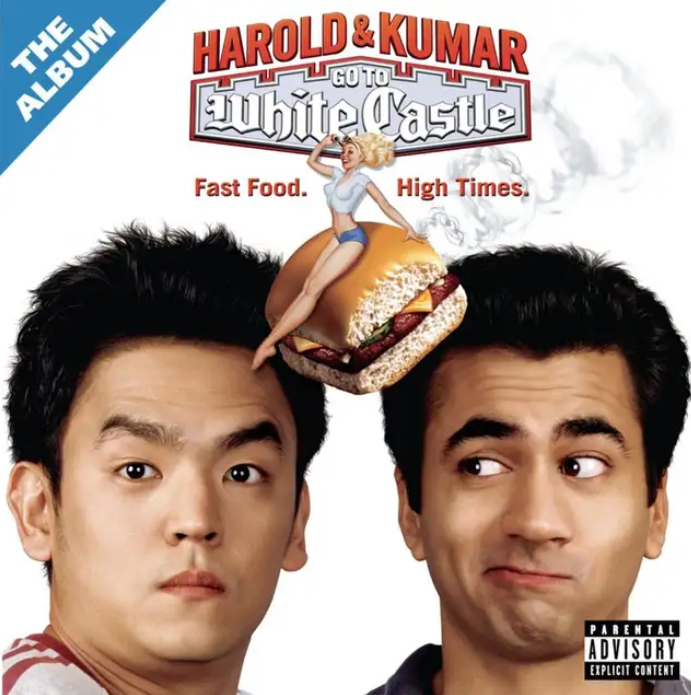
Wilson Phillips, “Hold On” (Harold and Kumar Go to White Castle)

I won’t try to convince you that this is one of the great comedies of the last 20 years: either you are on board, or you aren’t. But in this scene, near the end of a night that tested their friendship, the titular heroes somewhat reluctantly bond over a pop classic.

SoundTracking #2

”We always got the diner.”

Now that we live in a world where, for the right price, you can watch pretty much every movie ever made on your telephone with no more effort than a few thumps of your thumb, it can be jarring to think back to when you had no control, when you watched what the television programmers chose to show you and were damned happy about it. Which is why the video cassette recorder was such a godsend.

We never owned a VCR while I still lived under my parents’ roof, and for good reason: almost no one did. The average price of a VCR was $647.44 Canadian as of July 1, 1983, or $1,752.74 today. It was a luxury item, and me and most of my friends were part of multi-kid families with parents who had seasonal employment. There were a lot of better places to put money like that.

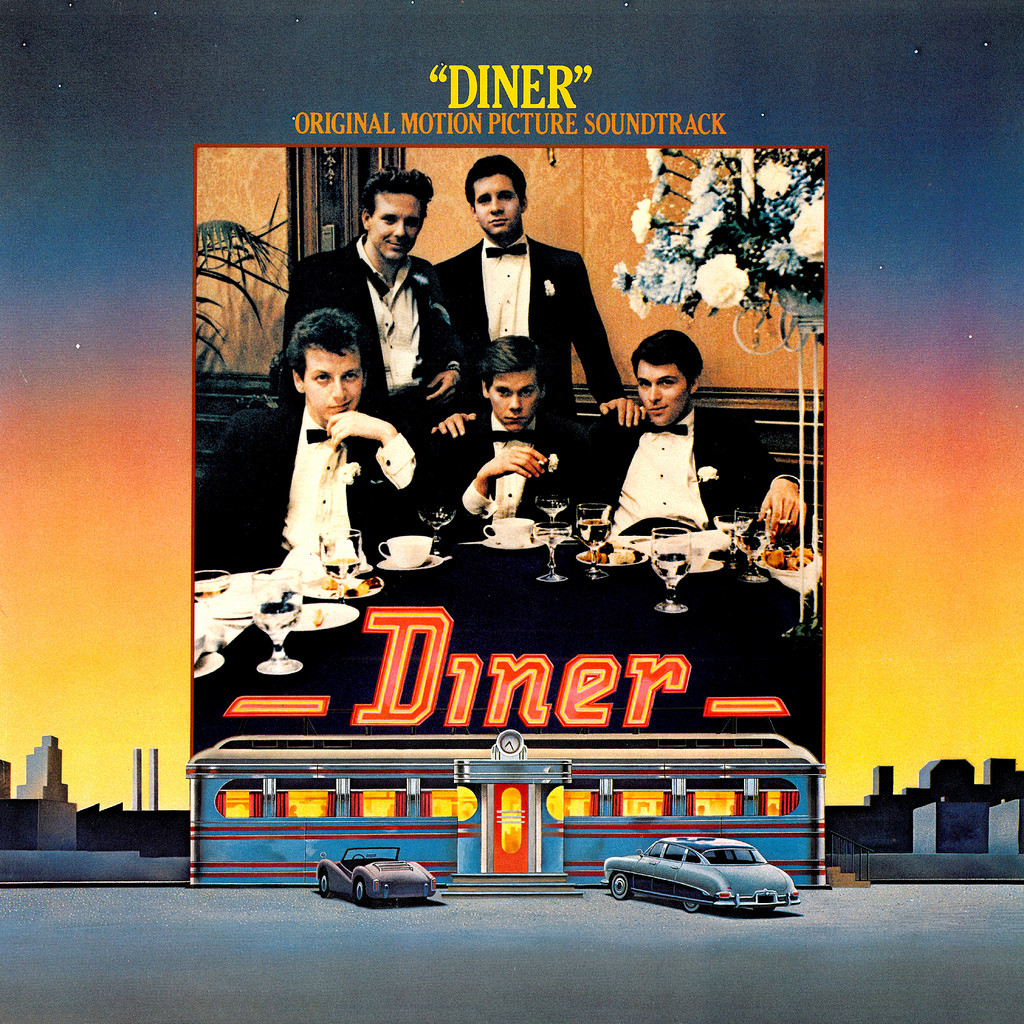
But you could rent one for a more reasonable expenditure, and on the Canada Day weekend of July 1 to 3, 1983, my father did exactly that. With the glorious machine, he also brought home six movies. “Blade Runner” was one of them, along with “An Officer and a Gentleman” and maybe “On Golden Pond”. As good as those were – yes, even “On Golden Pond” – the one I liked best, and have watched the most times since that lost weekend, was “Diner”.

None of them were stars then, but pretty much everyone in the young cast went on to have a solid career. Mickey Rourke, Kevin Bacon, Ellen Barkin: you could’ve made a decent ‘90s thriller with those leads. Steve Guttenberg and Daniel Stern had major parts in some very successful comedies, and Timothy Daly, Paul Reiser and even the slightly-older Michael Tucker have all had great runs on television.

Taking place over the last few days of 1959, music plays an important part in the film. It opens at a dance and ends at a wedding reception. In one scene, several characters discuss whether Johnny Mathis’ or Frank Sinatra’s music is better for making out. Shrevie (played by Stern) is obsessed with his record collection, leading to tension with his wife (Barkin), who doesn’t understand this. The soundtrack of ‘50s classics never falters: Jerry Lee Lewis, Dion and the Belmonts, Eddie Cochran, Bobby Darin, Fats Domino and, of course, Elvis Presley.

I haven’t seen it in years, but it’s the kind of movie that, were I to stumble across it while channel surfing, would absolutely end with me watching the whole thing. (It’s a programming failure that this has never happened to me.) There are so many great scenes (the football test given to a bride-to-be, a character’s unfortunate encounter with a box of popcorn) and sharp lines (“I’ll hit you so hard, I’ll kill your whole family.” “We all know most marriages depend on a firm grasp of football trivia.”), but one has always stood out for me. Eddie (Guttenberg) is so afraid of settling down that he cancels his wedding over the results of said football test. Billy (Daly) has the opposite concern: he wants to settle down with reluctant Barbara, who is pregnant with his child. They take their woes to where men have gone since time immemorial to contemplate life’s challenges: to a strip club, where the entertainment is uninspiring. And then this happens:

I’ve watched this clip over a dozen times in recent months, and it never ceases to please me. Does it move the plot forward? Not really, though it does lead to an eye opening discussion with the stripper (Billy: “Just in love.” Stripper: “Does the girl know?” Billy: “Yeah, I told her about it.” Stripper: “Told her? Didn’t you show her?”) and to Eddie deciding to get married after all. In a movie like “Diner”, the plot is besides the point: it’s all about getting to know the characters, and the scene tells us things we didn’t know about Billy (he’s really good on the piano) and Eddie (he’s, umm, a great dancer?). And then there’s a New Years Eve wedding and the bride’s bouquet lands on the table in front of the young leads. It’s an invitation to embrace uncertainty, with a new decade hours away. And, whatever may come, as Eddie and Shrevie observe, they’ve “always got the diner”, where there’ll be decent food (just ask Earl), good conversation and, of course, great music.

SoundTracking #1

“Bond . . . James Bond”

I love James Bond movies, and there is nothing quite like a classic Bond theme song. The best of them tie the familiar John Berry motifs from the score to a pop sensibility that sounds fresh while holding lingering echoes of another era. They feel both of the ‘60s when Bond first stepped onto our screens, but also very much of the moment when a given film was released. 

There really isn’t any sort of consensus about the “best” Bond song, though there are certain tunes that are consistently high on individual lists. This is my personal top 5 – and, no, it does not include Adele.

No. 5 – Carly Simon, “The Spy Who Loved Me

The first Bond song that I knew of in real time, I finally saw the movie about a year ago and was floored by what an epic cheese fest it is. The song matches it, step by step, Gruyère by Parmesan. From swelling strings, heavily-banged-on piano keys and that guitar sound that was endemic to ‘70s AOR tracks, you could easily dismiss this as pop pap. Yet, what saves it, what elevates it to art, is Carly’s measured vocal, the straightforwardness of her declaration about the man the singer loves but really doesn’t trust (he is not just a spy after all, but THE spy). The song as written isn’t worthy of her, but she redeems it anyway.

No. 4 – Duran Duran, “A View to a Kill

The Roger Moore Bond flicks were often barely watchable within a year or two after their release (see above re “The Spy Who Loved Me”), and this was easily the worst of the lot. Other than Grace Jones being in it and this song, I remember zilch about “A View to a Kill”, the motion picture. And when it came out in 1985, I was to that point generally unimpressed with Duran Duran’s contributions to the music world. (That’s evolved over time – “All She Wants Is” is an all-time favourite tune, and those old singles always give me a jolt of nostalgic pleasure.) But this song grabbed me right away – I bought the 45 – with its mix of second British Invasion new wave pop and retrograde funk. The lyrics are completely nonsensical, which adds to the fun.

No. 3 – Sam Smith, “Writing’s on the Wall” (from “Spectre”)

Have you ever hated a song at first, then slowly grown to love it, and maybe love it more for the journey? That’s this song. And the journey is even more noteworthy for the song having been chosen over a hauntingly beautiful and sort of terrifying Radiohead tune. Somehow, this song sums up everything a Bond ballad should be – sensual, epic, vivid and, yes, a bit over-the-top. If you don’t get chills when this plays, you need to see a neurologist, because something in your nervous system isn’t working properly.

No. 2 – Paul McCartney, “Live and Let Die

So, here we are: the alpha and omega of Bond theme songs, it falls to no. 2 only for the more contemporaneous nature of my experience with the song listed below. Obviously, McCartney knows how to write a great pop song, and this doesn’t let you down. (I was going to make a rude comment about it losing the Oscar in 1973, but having just listened to “The Way We Were” for the first time in about 500 years, I have to admit it’s a pretty potent record, even though the only part of it worth saving for posterity is Barbra’s vocal – the rest gives 1970s cheese a bad name. Hmm, I guess I have made a rude comment.) He changes tempo about 86 times, and, like a great Bond movie, it’s a thrill just to try and keep up. Killer Guns N’ Roses cover, too.

No. 1 – Chris Cornell, “You Know My Name” (from “Casino Royale”)

It’s hard to top McCartney, but Cornell does it for me. Daniel Craig is my utopian ideal of what Bond should be – pity the poor bastard who is going to replace him sometime soon – and I have loved the movies (yes, even “Quantum of Solace”). After a cold open that establishes how Bond earned his 00 status, we are thrown into the title sequence. Cornell truly had one of modern rock’s great voices, and him showing up here tells the viewer, if the black-and-white opening didn’t make that clear, that this is not your dad or older brother’s Bond. It’s gritty, and loud, but that voice, that magnificent howl, reveals the grace and poetry that will also follow. The lyrics, too, are ruthless, a window into the soul of a (possibly) irredeemable killer. Now, after five films, with Bond having (spoiler alert) made the ultimate sacrifice, the song feels even more potent for showing the “blunt instrument” (Judi Dench rules) who grew into the man who saved the world and, finally, himself.