Not the Pazz and Jop 1972 – #4

Yes – Close to the Edge

I loved this album on the first listen, which was unexpected since more progressive rock after the displeasing Jethro Tull experience was not my idea of a good time. I loved it less on listens 2 and 3, but was still happy with it overall. Plus, it lead me to some nostalgia listens of Jon Anderson’s team-up with Vangelis on “Friends of Mr. Cairo”, leading into Vangelis’ “Chariots of Fire” theme, an all-time Top 2 inspirational sports movie theme (along with “Gonna Fly Now” from “Rocky”, of course).

You can’t really talk about songs – these are true epics – but of moments and movements within tracks. Anderson says the album was inspired by “Siddhartha”, which I read in high school and only vaguely remember. I kept hearing the Beach Boys in some of the vocals, especially in “Close to the Edge” and “Siberian Khatru”. The beginning isn’t promising – nature sounds are the hallmark of a pretentious band, as are four-part songs that take up an entire side of vinyl. The opening few minutes is discordant, like the musicians haven’t agreed yet on what they’re going to play. I love the chorus in parts 1 and 2 (and 4) of “Close to the Edge”, but part 3, “I Get Up, I Get Down”, is one of my two favourite things here. There is a crazy tonal shift from what surrounds it – haunting keyboards, gently beautiful harmonies on the chorus and overlapping during the verses, rising to the sounds of a church organ encircling the last unmussed run-through of the chorus. My other favourite is the jazz fusion-funk (yes, you can dance to Yes) of “Siberian Khatru”, which is just a really fun way to end a fairly serious record. If it makes you think of Red Hot Chili Peppers, that isn’t an accident.

The sound is so rich, so immersive, at times it can feel like you are at a live show for one listener – this record was made to be played with headphones on, your head thrown back as the sound washes over you, especially the “Eclipse” portion of “And You and I” and the lead in to “Apocalypse”. There’s a strange unity, with the songs echoing each other in tiny snippets of instrumentation or vocal tics.

You know, I take it back – I do still love this record. It just took writing this (and my 4th listen) to make me realize it. Music is funny that way.

(Originally posted on Facebook, May 30, 2021)
Not the Pazz and Jop 1972 – #3

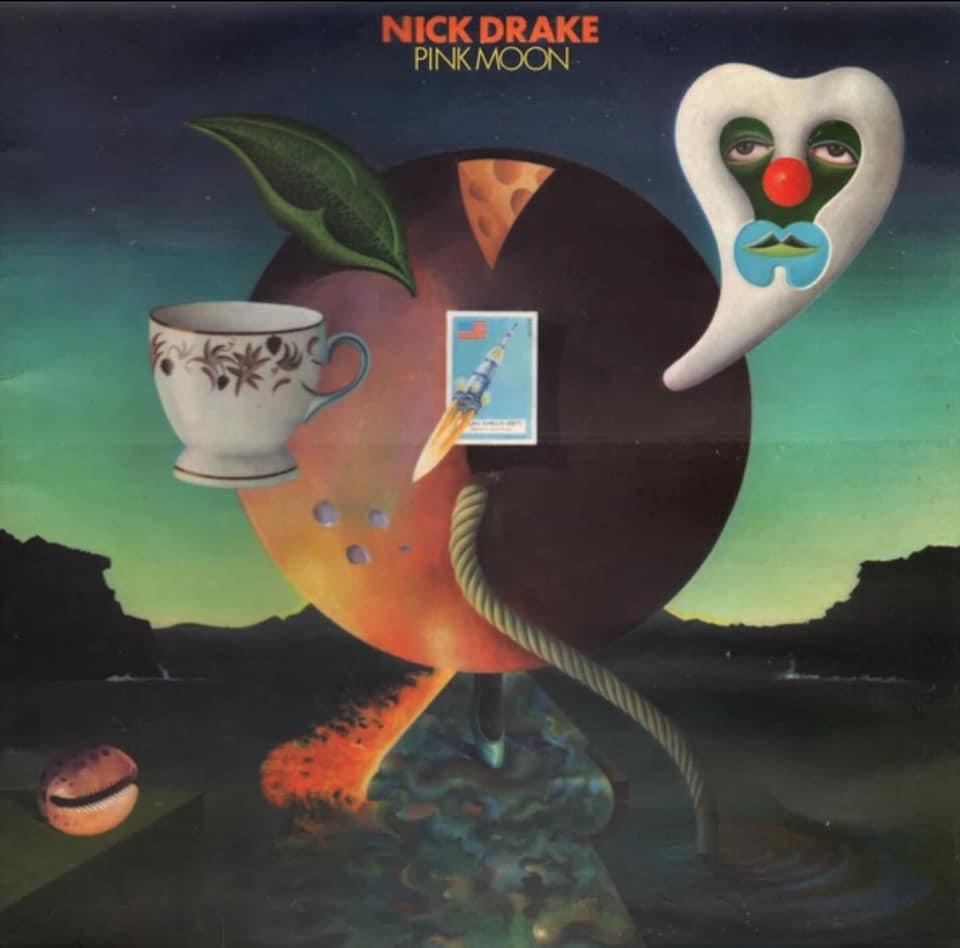
Nick Drake – Pink Moon

I first encountered Nick Drake in the early 2000s when my new computer included Musicmatch, which allowed you to pick an artist you liked and the service would stream songs in a similar vein. Basically, the forerunner of any artist radio channel on Spotify today. I don’t remember who the match was. Probably Elliott Smith. His spare acoustic guitar, (usually) unmessy production and straightforward vocals caught my ear, and I’ve been a fan ever since, so I was very pleased to see this album coming up.

Except, as it turns out, I wasn’t a fan of this particular record. One of the effects of the streaming culture is that you forget where songs, taken out of their original context, first appeared. And most of what I’ve been listening to over the years is from his other two albums. It makes sense, as they are more playlist friendly, with sunnier production and a little less gloomy lyrically. (Reading a Drake lyric sheet is not as a general rule going to brighten your day.) This album is Drake’s voice and acoustic guitar and almost nothing else. After being caught off guard by so much unfamiliarity on the first listen, I dug in and now love it as much as “Five Leaves Left” and “Bryter Layter”. The longing in “Place to Be” hits hard, and “Which Will” and “Things Behind the Sun” are among the more welcoming tracks here. The final track, “From the Morning”, is almost bouncy, and quite hopeful. In the end, it’s a simple record from an incredibly complicated human, and worthy of our attention.

As a side note, Drake’s mom, Molly, was also a singer and songwriter, though none of her work was released during her lifetime. A few years back, an album of home recordings from the 1950s was released. It’s a bit of a slog at times – accompanied only by piano, her voice is limited and untrained, and the lo-fi production wears over the course of 26 songs. But there is one genuine masterpiece, “I Remember”, a bittersweet reminiscence that reminds us that a shared experience isn’t a shared response to that experience. (Also, the guy in this song seems like a total dick. Molly, I hope it isn’t about the guy you married.)


(Originally posted on Facebook, May 22, 2021)

Not the Pazz and Jop 1972 – #2

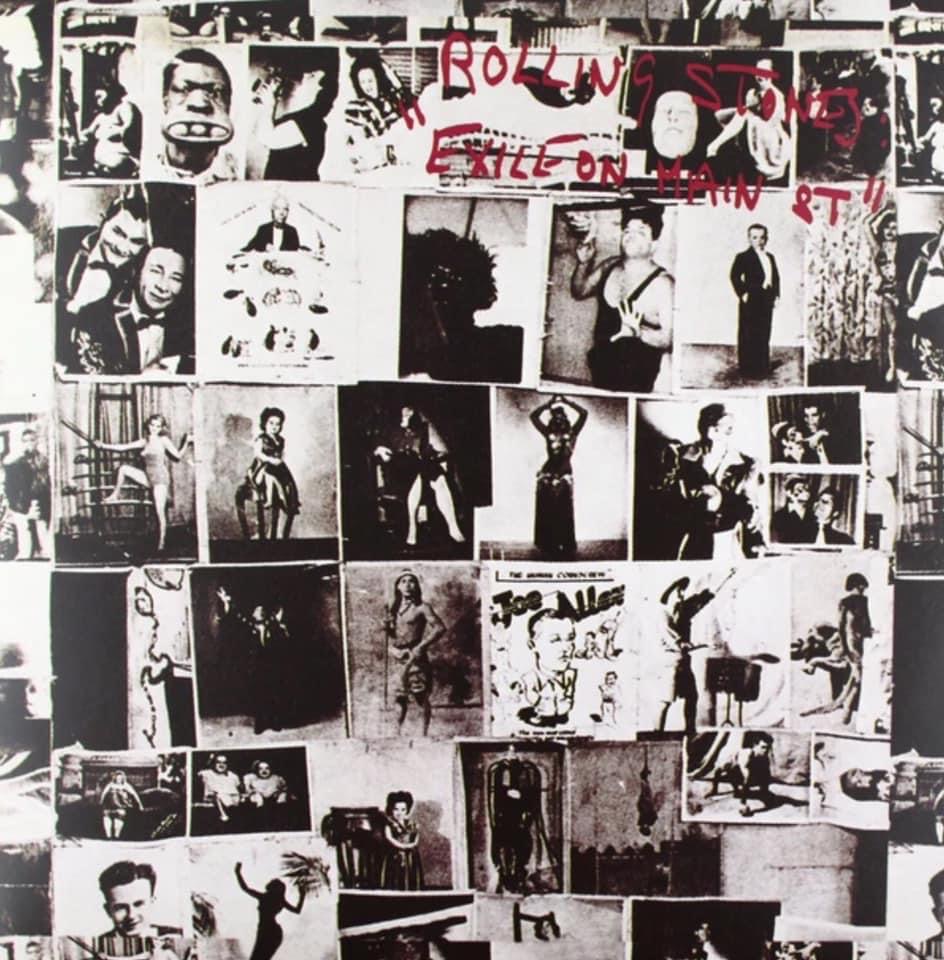
The Rolling Stones – Exile on Main Street

I would never call myself a Stones fan: I think fandom requires a bit more than just liking anything you hear on the radio or a Spotify playlist. Having heard so much of the band over the years, I had a pretty good idea what a Stones record would sound like before listening to it. It would reliably be in the blues-rock vein, but with lots of honky tonk-style piano, maybe some country, soul or gospel elements. They own that lane – everyone else should be smart enough to stay out of their way – but it’s still a fairly recognizable path. The songs I really love by them – the ones that I want to crank up – are those that don’t sound like they came from exactly the same band, like “Ruby Tuesday”, “Sympathy for the Devil” or “Gimme Shelter”.

The thing is, I was wrong, and it took the third listen for me to realize it. There are nuances that only become clear in repeated plays. This song is like a church spiritual (“Torn and Frayed”), that song is like a swing classic updated to late 50s rockabilly (“Rip this Joint”), another is a country-blues shuffle (“Sweet Virginia”), and this other song sounds like it was mixed by a drunk in a gas station bathroom (“Rocks Off”). There was, unexpectedly, another near-brush with solo public dancing during “Loving Cup”.

Part of the problem with double albums is listener fatigue. You start record two full of gusto, but after an hour of the same band, side four is usually the least-listened to of the set. I never felt that way here – much of what I like best on this record is on disc two: the gospel-tinged jam of “I Just Want to See His Face”, the spine-tingling ballad “Let it Loose” (my favourite new-to-me song on the record, and as lovely as anything I’ve ever heard from them), the dance-rocker “All Down the Line”, the balls out Robert Johnson cover “Stop Breaking Down”. The pinnacle comes with “Shine A Light”, the penultimate track, which steers into the gospel elements played with earlier in the record and is haunting in places, followed by “Soul Survivor”, a true show stopper to end the record. It’s a good feeling to be wrong about something this great.

(Originally posted on Facebook, May 16, 2021)

Not the Pazz and Jop 1972 – #1

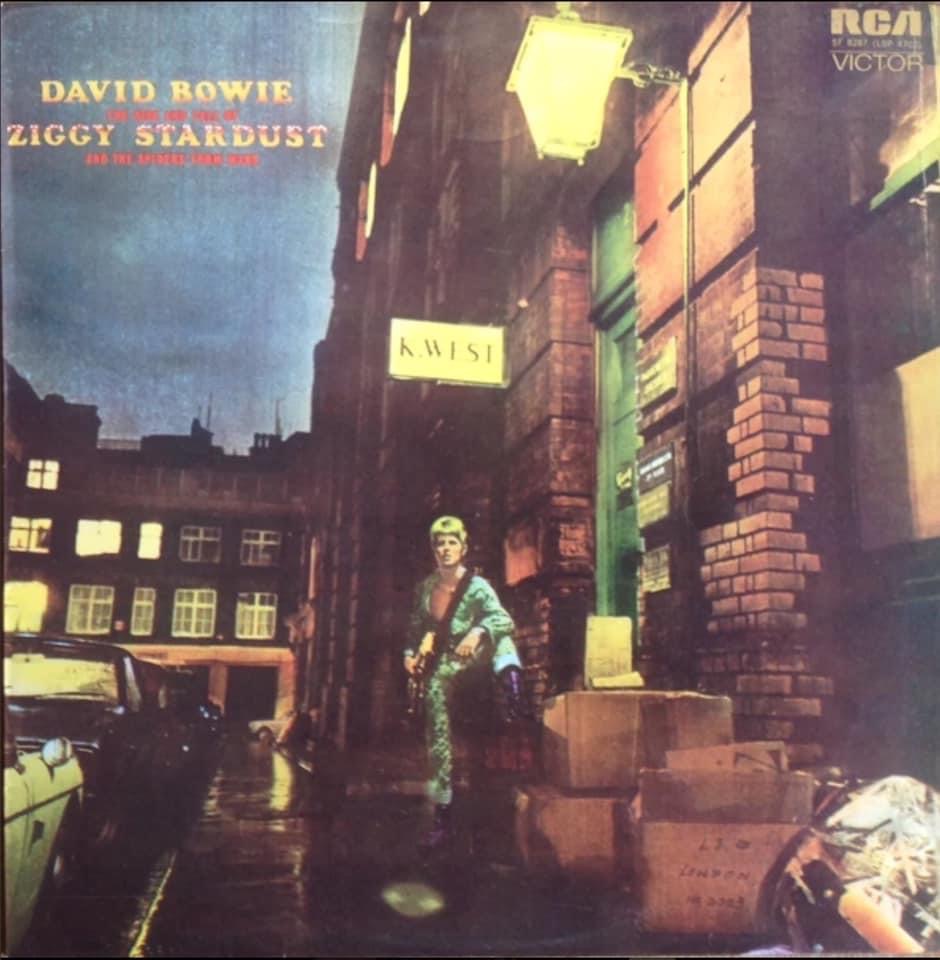
David Bowie – The Rise and Fall of Ziggy Stardust and the Spiders from Mars

For reasons unknown (to me – Robert Christgau certainly knows), there was no Pazz & Jop poll in 1972 or 1973. I was going to skip these years, but instead hunted down an alternate source – Best Ever Albums. It isn’t ideal, since it doesn’t match the zeitgeist feel of Pazz and Jop and has a heavy non-critic component, but we work with what we have. For comparison’s sake, had I used this source for 1971, I would have been spared Jeff Beck and Mahavishnu Orchestra (but not, sadly, Jethro Tull), but would have missed out on Joy of Cooking, Janis Joplin and, most tragically, the Kinks. I think I came out way ahead (even with having to listen to Jethro Tull – I can’t slam these guys enough).

So we begin with Bowie, whose 1971 offering didn’t overwhelm me. Consider me now overwhelmed. You know that feeling when you finally do something you’ve been putting off and it turns out great and now you’re full of regret that you didn’t do it sooner? That’s how I feel about this record. Like, WTF was I thinking by never even once giving this a spin over the last 40+ years? I am now on my fourth listen of this record and it won’t be my last. All is forgiven – even Little Drummer Boy. (Well, maybe not that.)

This is a sort-of concept album – Earth has five years left and Ziggy is coming to save us – but that’s really just a pretty wrapping for individually great songs. Piano is still prominent, with some serious rock guitar familiar to anyone who knows the “hits” (because there weren’t any at the time of release) like “Suffragette City”, “Moonage Daydream” (forever linked in my mind to “Guardians of the Galaxy”) or “Ziggy Stardust”. Starting with a simple drum like a heartbeat, the anthemic “Five Years” sets the tone – this is not your older brother’s Bowie, assuming your older brother was cool enough to notice an artist who’d had limited commercial success to this point. I love the line “All I have is my love of love” from the deceptively sad “Soul Love”. I have a new appreciation of “Starman”, which is a great listen with the car windows down on one of the first warm days of the season. “Star” is mostly a romp, but it has nothing on the next track. “Hang on to Yourself” is a blast, a cleaned-up precursor of what the Sex Pistols and other punks would get up to 5 years later. I nearly broke out dancing on the boardwalk during my morning walk, which would have been awkward AF without someone else in my company. If I hear nothing else I like on this journey (spoiler alert: that ain’t happening), it would be worth it for having finally “discovered” this jewel. And now I’m excited to hear more Bowie.

(Originally posted on Facebook, May 15, 2021)