Classic Songs of My Youth Revisited #49

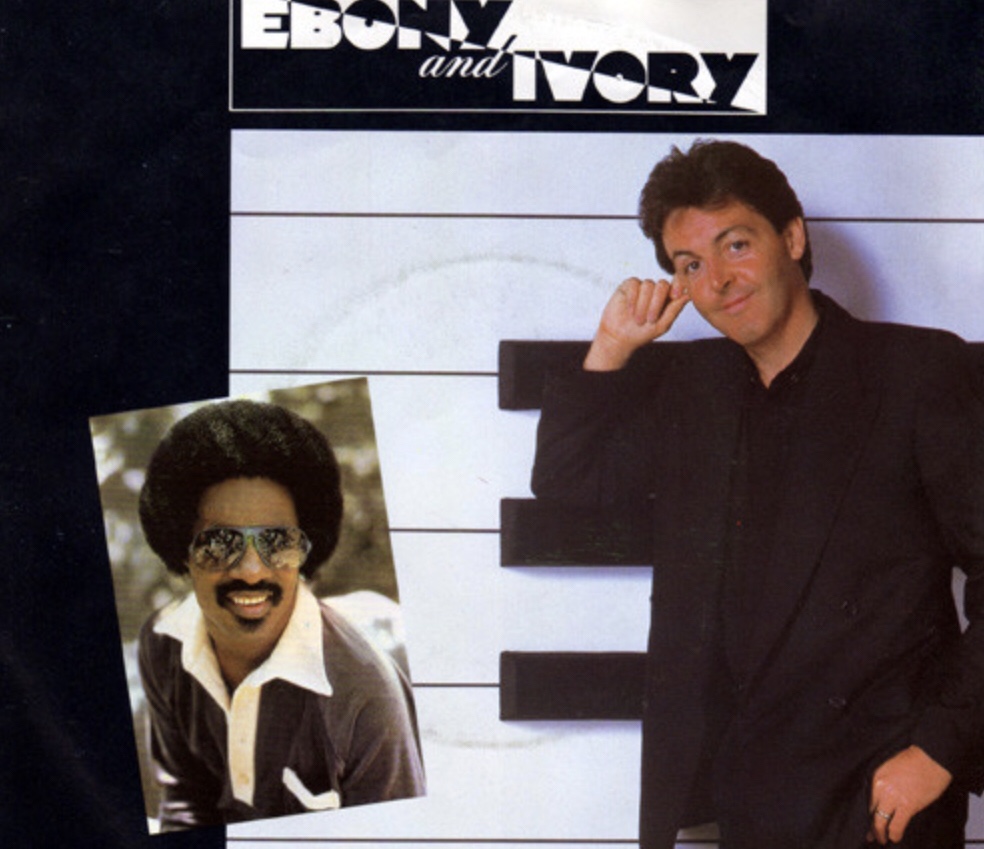
Paul McCartney featuring Stevie Wonder – Ebony and Ivory

It’s not surprising that our tastes change over time. When I was a teenager, I loved the novels of Irving Wallace. They were big books full of facts about fascinating topics: the Bible, the Nobel Prizes, American politics. Wallace was a capable but not particularly dynamic writer, and eventually I moved on to more challenging reads.

Those earlier loves can be enduring for nostalgic reasons even if our aesthetic sensibility no longer finds them pleasing as art. I recently listened to an album from The Ravyns, an early ‘80s band that had a minor hit called “Raised on the Radio” off the “Fast Times at Ridgemont High” soundtrack. The entire time it was playing, I just kept thinking that it was a perfect example of the overproduced faux rock of that era. I was trying to figure out what artist their sound most reminded me of, and then it hit me: Rick Springfield. Who I owned five albums by and listened to regularly into the early ‘90s without even once thinking that it might be shite. Who I still sort of love, but am now a little anxious about listening to very closely given my realization that his music may be sort of garbage and I think I’d rather not confirm that. Awareness can be a burden.

I mention all this because I am grappling with a question: why did 17-year-old me love “Ebony and Ivory”? Because 59-year-old me, and most intervening versions, wants all physical and digital traces of this song to be locked in a vault, dropped into Marianas Trench, have an anvil land on it Wile E. Coyote style and then blow the whole thing up for good measure. I don’t understand why we didn’t think it was awful at the time. I remember having a conversation about the song with my friend Alan Sutherland, who took his music very seriously, and he neither mocked it nor mocked me for liking it (and Al was always up for a good mock when circumstances called for it).

I had not really paid attention to it in years, and then suddenly there it was, in my poor ears, as the third track on a Paul McCartney compilation called “All the Best”. No, not even close to one of his best (though when “Silly Love Songs” also makes the cut, you know the bar is limbo champion low). Not when that record did not include “Helen Wheels”, “Maybe I’m Amazed” or “Mull of Kintyre”. Not when it could have been replaced by pretty much any omitted track from “Band on the Run”. No way.

So, why do I – the “there is no bad music” guy – think this song is so awful? First, is there a more treacly song out there? Yes, of course – the musical excrement that is “Butterfly Kisses” immediately comes to mind, and the name Bobby Goldsboro can give me hives. (I won’t link to them – if masochism is your game, you can easily find them yourself.) Neither of them, however, topped Messrs. McCartney and Wonder on Blender’s list of the 50 worst songs ever, where “E & I” ranked 10th. (“We Built This City” topped (bottomed?) the list, and I think everyone can agree – even, as it turns out, the woman who sang it – that it truly blows. (Aside: I just learned this was co-written by Bernie Taupin. How is such a thing even possible?))

Not a moment in the song isn’t sparkly clean, honed to a version of perfection that overlooks the part where a song should maybe be a bit dangerous to be actually fun. It’s all so artificial, a synth heavy soundscape that feels very lush, like lying in an aural down bed. There really isn’t much happening here: the only musically interesting bits are coming from Paul’s bass. It’s music for washing the dishes, not listening to, and thus is more akin to what is happening now than to an era where you still had to pay attention to the music coming over the air lest you miss something great and never have a chance to hear it again. “E & I” is musical wallpaper, and, like all wallpaper, if you look too closely you’ll notice the torn edges, the parts that don’t line up quite right and the soul crushing blandness of the thing. That’s this song in a nutshell.

I don’t doubt that Paul and Stevie believed in their message, limited as it may be to the confines of a chorus and a single repeated verse. The song’s notions about racial harmony were belittled on release as simplistic, and it’s not like another 40+ years of people trying to destroy each other on the basis of ethnic differences has redeemed their poptimism. But that never really concerned me: I knew exactly two Black people, and while race may have been something the two of them were highly conscious of, I wore blackface in our high school musical “Finian’s Rainbow” and never gave it a moment’s consideration. (I was 17 and living in a less enlightened time and place – the adults in the room maybe should’ve thought a little more carefully about the show they selected that year for a bunch of white kids to perform. Those photos could damage my political career!)

McCartney and Wonder made tons of music that I love, but very little of it came after this team-up: Stevie’s last widely acclaimed album was 1980’s “Hotter Than July”, and some feel this song marked the point where Paul began to lose credibility as an artist. You have to give them credit for one thing: it takes a lot of confidence to make a record this earnest, although no one ever went entirely wrong recycling lame messages about humanity’s inherent goodness. The lyrics were made for a United Nations banner, not the top of the charts, yet somehow that’s where they ended up. I guess we were just really boring in 1982.
Classic Songs of My Youth Revisited #44

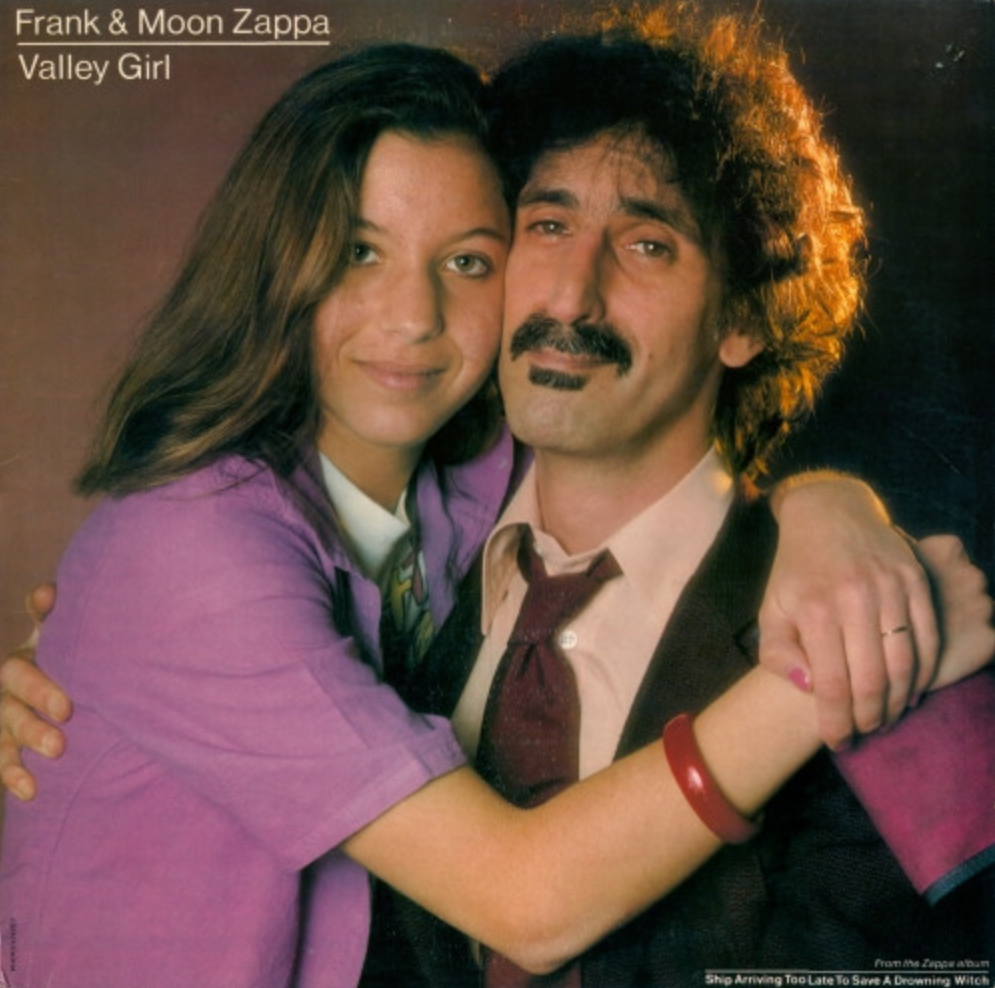
Frank & Moon Zappa – Valley Girl

I recently wrote about a novelty song, and that of course lead to thinking about other songs of this type. There’s a natural goofiness to such tunes, but it doesn’t mean that the artists writing and performing them aren’t deadly serious about what they’re doing, or applying all of their talents to make them, well, not great, because let’s not overstate this, but good, maybe. Frank Sinatra did one (“Mama Will Bark”, quickly defeating my above “good” position – WTF was Frank on when he agreed to this monstrosity?), as did The Coasters (“Yakety Yak”), Roger Miller (“You Can’t Roller Skate in a Buffalo Herd”), Chuck Berry (“My Ding-a-Ling”, which turns out to be about exactly what giggling 12-year-old me thought it was) and probable future Rock and Roll Hall of Famer Warren Zevon (“Werewolves of London”).

I don’t know when I last heard “Valley Girl” in nature, but 1982 is definitely a possibility. And I know I still had positive memories of its silliness. So, when Spotify served it up one recent Sunday afternoon as part of my personal “Discover Weekly” playlist, I was struck with an odd joy on hearing the opening notes.

It didn’t last.

Frank Zappa apologised to his fans for this song – he promised never to accidentally write a hit again (giving a very elastic definition to “hit”), and he was good to his word. But I don’t think he had creator’s remorse about it. Elvis Costello once talked about hoping he never had a hit with a crappy song that he would then be forced to sing over and over again despite hating it. (For my money, he accomplished this unfortunate end with “Veronica”.) Zappa never seems to have expressed regret about the fact of “Valley Girl” existing (though this Letterman clip comes close), but only that it was successful. Alas, he was bothered by the wrong thing.

It sort of is a great song, if not a good one, and, yes, something can be the former without being the latter. Zappa hated the San Fernando Valley and the people who lived there, and turned his daughter Moon Unit’s gift for mimicking them into a satirical masterpiece that shows how ridiculous they are. (And, yes, that is her given name.) But that’s one of the problems with satire – it needs an audience that understands what is being satirised. In this case, the Valley aesthetic was largely unknown to the outside world, and the song helped popularise it for a brief time, which couldn’t have pleased Zappa very much.

Also, satire isn’t really designed to stand up to repeated scrutiny: there’s only so many times you can hear the same joke before you want to punch the person telling it to you. “Valley Girl” is almost five excruciating minutes long, and if the aim is to make you feel annoyed, it only half succeeds: I actually feel sort of sympathetic towards the girl that Moon is channelling, while dad Frank’s bits are just abrasive. Again, the latter at least seems to be intentional, but it doesn’t make it any more satisfying as a listen.

In the end, I’m glad I stumbled across this again. I was rooting for this song to be a hit in 1982 – it got to #18 in Canada – and just because 2023 me finds it annoying doesn’t devalue 1982 me’s love of it. And while I also enjoyed Buckner & Garcia’s “Pac-Man Fever” – which is exactly as awful as you would expect – that year, I was also listening to albums from The Human League, Go-Go’s, Rush, Elvis Costello and ABC, so I wasn’t a complete idiot. I just had moments of idiocy, and we’ve all been there. Even Frank Sinatra.

SoundTracking #2

”We always got the diner.”

Now that we live in a world where, for the right price, you can watch pretty much every movie ever made on your telephone with no more effort than a few thumps of your thumb, it can be jarring to think back to when you had no control, when you watched what the television programmers chose to show you and were damned happy about it. Which is why the video cassette recorder was such a godsend.

We never owned a VCR while I still lived under my parents’ roof, and for good reason: almost no one did. The average price of a VCR was $647.44 Canadian as of July 1, 1983, or $1,752.74 today. It was a luxury item, and me and most of my friends were part of multi-kid families with parents who had seasonal employment. There were a lot of better places to put money like that.

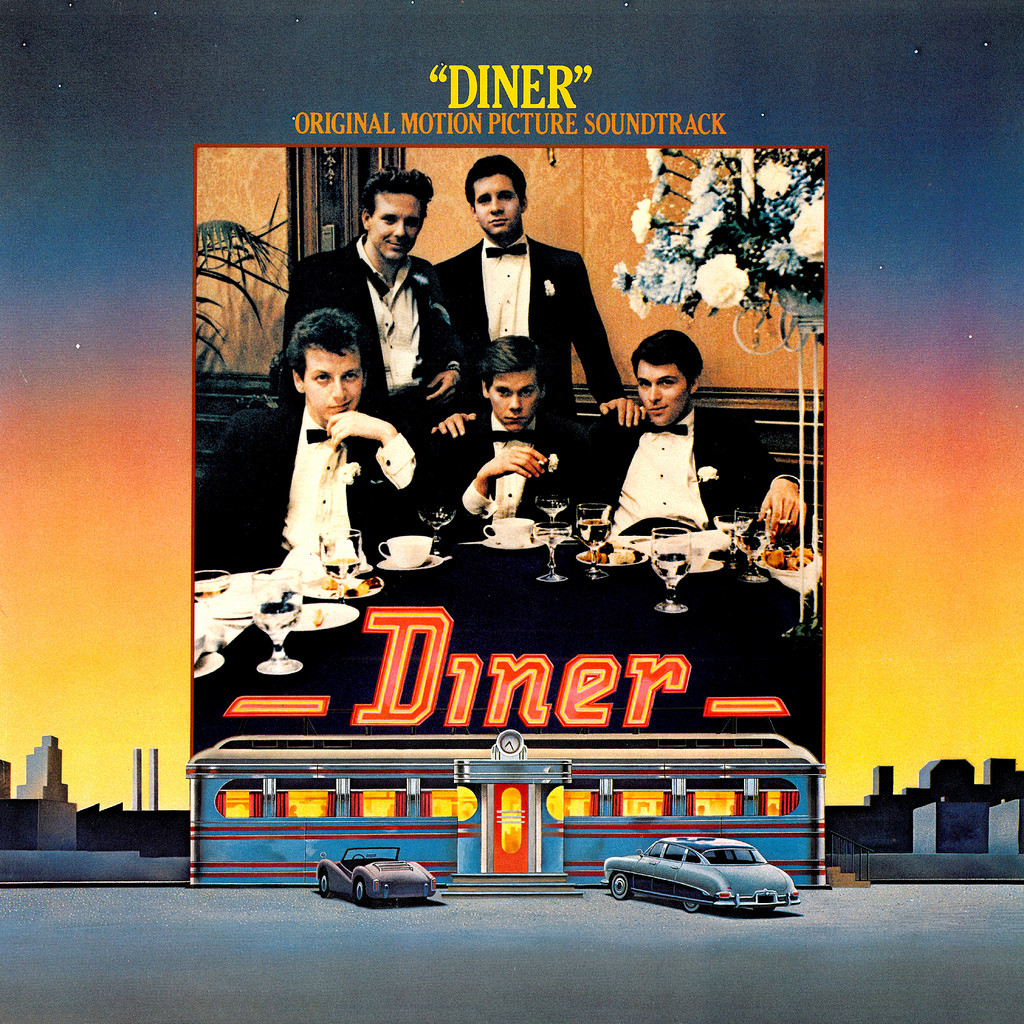
But you could rent one for a more reasonable expenditure, and on the Canada Day weekend of July 1 to 3, 1983, my father did exactly that. With the glorious machine, he also brought home six movies. “Blade Runner” was one of them, along with “An Officer and a Gentleman” and maybe “On Golden Pond”. As good as those were – yes, even “On Golden Pond” – the one I liked best, and have watched the most times since that lost weekend, was “Diner”.

None of them were stars then, but pretty much everyone in the young cast went on to have a solid career. Mickey Rourke, Kevin Bacon, Ellen Barkin: you could’ve made a decent ‘90s thriller with those leads. Steve Guttenberg and Daniel Stern had major parts in some very successful comedies, and Timothy Daly, Paul Reiser and even the slightly-older Michael Tucker have all had great runs on television.

Taking place over the last few days of 1959, music plays an important part in the film. It opens at a dance and ends at a wedding reception. In one scene, several characters discuss whether Johnny Mathis’ or Frank Sinatra’s music is better for making out. Shrevie (played by Stern) is obsessed with his record collection, leading to tension with his wife (Barkin), who doesn’t understand this. The soundtrack of ‘50s classics never falters: Jerry Lee Lewis, Dion and the Belmonts, Eddie Cochran, Bobby Darin, Fats Domino and, of course, Elvis Presley.

I haven’t seen it in years, but it’s the kind of movie that, were I to stumble across it while channel surfing, would absolutely end with me watching the whole thing. (It’s a programming failure that this has never happened to me.) There are so many great scenes (the football test given to a bride-to-be, a character’s unfortunate encounter with a box of popcorn) and sharp lines (“I’ll hit you so hard, I’ll kill your whole family.” “We all know most marriages depend on a firm grasp of football trivia.”), but one has always stood out for me. Eddie (Guttenberg) is so afraid of settling down that he cancels his wedding over the results of said football test. Billy (Daly) has the opposite concern: he wants to settle down with reluctant Barbara, who is pregnant with his child. They take their woes to where men have gone since time immemorial to contemplate life’s challenges: to a strip club, where the entertainment is uninspiring. And then this happens:

I’ve watched this clip over a dozen times in recent months, and it never ceases to please me. Does it move the plot forward? Not really, though it does lead to an eye opening discussion with the stripper (Billy: “Just in love.” Stripper: “Does the girl know?” Billy: “Yeah, I told her about it.” Stripper: “Told her? Didn’t you show her?”) and to Eddie deciding to get married after all. In a movie like “Diner”, the plot is besides the point: it’s all about getting to know the characters, and the scene tells us things we didn’t know about Billy (he’s really good on the piano) and Eddie (he’s, umm, a great dancer?). And then there’s a New Years Eve wedding and the bride’s bouquet lands on the table in front of the young leads. It’s an invitation to embrace uncertainty, with a new decade hours away. And, whatever may come, as Eddie and Shrevie observe, they’ve “always got the diner”, where there’ll be decent food (just ask Earl), good conversation and, of course, great music.