Classic Songs of My Youth Revisited #54

Steve Perry – Oh Sherrie

Starting in June 1979, when the ridiculously titled “Lovin’, Touchin’, Squeezin’” (a perfect stripper song musically, though lyrically problematic if a patron tried to test that invitation) began its climb up the charts, to the late spring/early summer  of 1987, when “Why Can’t This Night Go On Forever” sputtered to its peak at #60, there were few voices that we heard coming out of our radios more often than that of Journey frontman Steve Perry. 

Despite owning two of their albums thanks to Columbia House, I was never much of a Journey fan. They certainly sounded pleasant enough, a sort of mushy guitar-forward AOR. They were making power ballads before those were really a thing: I slow danced with a succession of failed hoped-for romantic partners to hits like “Open Arms” (a childhood friend told me she lost her virginity to this song, so at least it worked out for someone) and “Faithfully” (which, listening to it now for the first time in years, is quite a lovely tune – it gave me chills). And their rockers, like “Any Way You Want It” and “Don’t Stop Believin’” (which remains a damned good song despite becoming a pop culture cliche), were made for being blasted from a car stereo by restless teens on the make on a warm summer night.

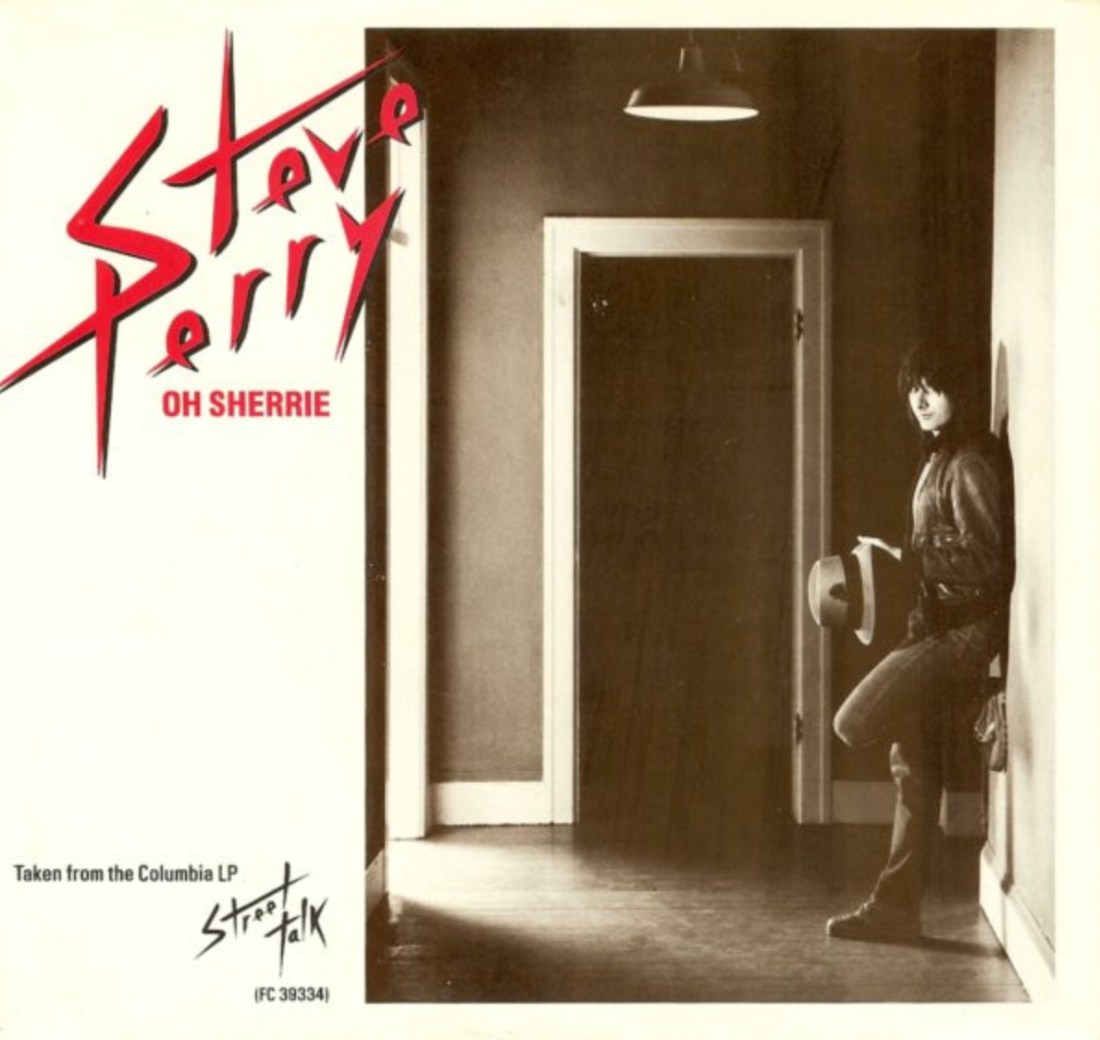
I had stopped paying attention to the band before its run came to an end, so while I have a hazy familiarity with their 1986 hit “Be Good to Yourself”, the last of their singles that I clearly remember hearing in real time is late 1983’s “Send Her My Love”. It was at that point that Perry decided he needed to spread his wings and make a solo record. Working primarily with songwriter Randy Goodrum, in April 1984 he released “Street Talk”, which showed enough new tricks that you can get why Perry wanted to play in a different sandbox for a bit. But it was preceded a month earlier by the lead single “Oh Sherrie”, and that had to have caused some doubt: why go solo if you’re just going to make a record that sounds like the band you’re already in?

I have a fixation with what I like to call “good bad songs”. That is, songs that are, well, not bad, because I don’t really believe there is such a thing, but not good, in the sense that if you looked at them on sheet music, you would shrug or worse. “Oh Sherrie” is such a song. There isn’t a single quote-worthy lyric, and that it sounds so much like a Journey record shows that no boundaries were being broken with the music either. Yet, I loved this song from the first time I heard it, and still do almost 40 years later. What’s up with that?

The song opens (and eventually closes) with a synthetic baroque vibe, leading into Perry singing the first few lines a capella. It’s basically about a couple who keep hurting each other, but they have a love that always comes back stronger after those wounds heal. It’s a nice sentiment, the idea that bad times can preserve a love rather than destroy it. But I have listened to this song over and over and over while writing this, and I still really have no clear idea why I love it so. It has a nice backbeat that gets my foot tapping, but nothing else really stands out, and the guitar bits are nothing that anyone (other than Perry in the video) even once considered air guitar worthy. The thing I keep coming back to is the chorus: every time my interest starts to lag, the chorus kicks in, and, almost against my will, I find myself singing along – “Oh Sherrie, our love / holds on, holds on” – making rockstar faces (you know the ones) at this affirmation of commitment. I’ve always been a cheap romantic, and music that pushes those buttons will usually have its way with me. (I just did a test on this point, and, yes, “My Heart Will Go On” still guts me.)

It’s hard to separate the song from its ridiculous music video. The ridiculousness is initially intentional, with the opening two minutes a prick to the bubble of the video excesses of the era, with hip British directors, often from the world of commercials – John Self, the loathsome hedonist at the centre of Martin Amis’ 1984 novel “Money”, is maybe the worst case scenario of the brand – turning simple pop songs into treatises on contemporary society and culture. Perry wanders off to get his bearings amidst the set’s turmoil, and then we get other bits of ridiculousness – air guitar with a broom, an awkward walk down some stairs – mixed with neat bits like the shot of a young actress in Elizabethan garb puffing away on a cigarette. The stuff with Sherrie (a real person who plays herself in the video) is confusing: she’s initially happy to see him, then seems sheepish, then laughing, then sheepish again. (Hmm, maybe she’s the problem in this relationship – give poor Steve some clearer signals, lady.) In the end, the couple united, Perry blows off the video shoot, leading to off-camera recriminations and possibly litigation, while the director goes on to become an even bigger dick who makes every set a horror show until he finally returns to England and takes his rightful place in the House of Lords.

In a way, songs like “Oh Sherrie” are the most fun, because they don’t need context to be appreciated. I can’t remember the last time I encountered it in the wild, but if I heard it in a retail setting or a bar or even from a car driving by, I would be happier for the encounter, and would absolutely sing along for a moment before moving on to the next thing. Just a little blast of endorphins to give you a lift as you go about your day, like all the best pop music does. The “why” is never less important than in such moments.
Classic Songs of My Youth Revisited #52

Platinum Blonde – Crying Over You

As I was growing up in the 1970s and early 1980s, internationally successful Canadian pop and rock acts were rare. Artists like Neil Young and Joni Mitchell were superstars but their album-oriented music didn’t get a ton of play on our local radio station, and others like Anne Murray and Gordon Lightfoot had lots of hits but were, well, lame. The Guess Who was long gone, and Bachman-Turner Overdrive peaked before I paid them much attention. There were outlier tunes like Nike Gilder’s “Hot Child in the City” and Dan Hill’s “Sometimes When We Touch”, and soon Bryan Adams would come along to spend the better part of two decades interchangeably yelling or growling at us.

But we had lots of bands with hit after hit within our borders. Because of government licensing requirements, Canadian radio stations had to play 30% domestic recordings, under a formula that eventually reached its nadir when it decided Adams – or at least his music – wasn’t Canuck enough to fit into that 30%. For better and often worse, these rules gave a lot of homegrown acts an opportunity, and that radio play helped them develop a following. This was joined in 1984 by the MuchMusic video channel, giving us a look to go with the sound. And possibly no domestic band took better advantage of the power that video had to offer than Platinum Blonde.

As the band name would suggest, yes, they were sort of ridiculous, and I also owned their first three albums, played them a lot, and make no apologies for that. Their biggest hit by a fair margin was “Crying Over You.”, and the video is a glorious mess of big (probably dyed?) hair and slick New Romantic styling, all glossy surfaces and flashy colours. (I wonder, too, if they ran out of money during the shoot: an awful lot of shots seem recycled. Lead singer Mark Holmes would later say that drug use played a part in the band’s demise. Just sayin’.) The four band members are styled so similarly and the video shot so allusively that it took my second reviewing before I remembered – I had to have known this in 1984/85, right? – that the point of the video is that the female subject is dating ALL of them at once, and only her inscrutable manservant is wise to her shenanigans. The premise seems to be a dudes only powwow where they share how they each were betrayed – and, umm, how they betrayed each other – ending with begrudging acceptance that they are done with her, though her wink just before the closing shot suggests that this game is far from over.

But this was of course a song before it was a video, and it happens to be my favourite of their tunes. Their early sound was post-new wave nu glam, and when I was introduced to The Cure a few years later, I recognized echoes of Platinum Blonde, so I was thrilled to hear Cure leader Robert Smith cover the band’s “Not in Love” with Crystal Castles. (Images in Vogue is another great Canadian band that fits with that group, and their “Call it Love” is overdue for the Smith treatment.) As they evolved, the guitars became more forward, and they also started pulling in shades of funk, which they would dive into headfirst on their next album and its eponymous lead single “Contact” (the other leading contender for my fave PB track). “Crying Over You” sort of catches them in the middle of that evolution: there’s a solid bass line from Kenny MacLean on the chorus (based on how into it he seems in the video, MacLean really liked this song) and nice shredding on the guitar solo (from guest player Alex Lifeson of Rush), but the main sound is a sort of jittery funk-lite groove meets pout rock on the verses. Together, they make not what I would call a dance tune, but definitely something with a hip swinging vibe (and not the borderline sashay seen in the reverse shot of Holmes that flashes across the screen at the 20-second mark of the video – I can’t be the only one who thought of Pete Burns of Dead or Alive). I don’t remember it getting club play back then, but it would have been a solid early evening entry to get the crowd warmed up.

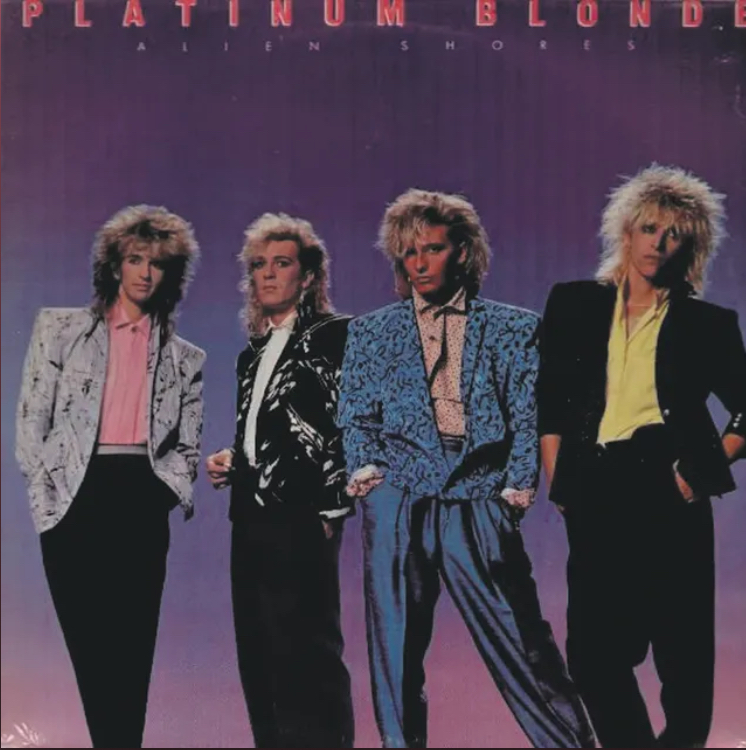
“Crying Over You” hit in Canada and the album it came from, “Alien Shores”, got to #3, both marking the band’s commercial peak. They broke up a few years later but remained pals, with the original threesome of Holmes, guitarist Sergio Galli and drummer Chris Steffler reuniting to honour MacLean’s wish after his ridiculously early death. They haven’t released a record in over a decade but are still around (and newly inducted into Canada’s Walk of Fame), minus Steffler, who had to retire for the very rockstar reason of having developed tinnitus. Their music, which was very much in the style of the moment, holds up better than I expected, just like some of the other bands of that era, like Duran Duran (to which they were often compared), that were dismissed by many as bubblegum but were in reality masterful sugar confections. More bonbons than bubblegum, let’s say. But there’s nothing wrong with bubblegum either.

Classic Songs of My Youth Revisited #51

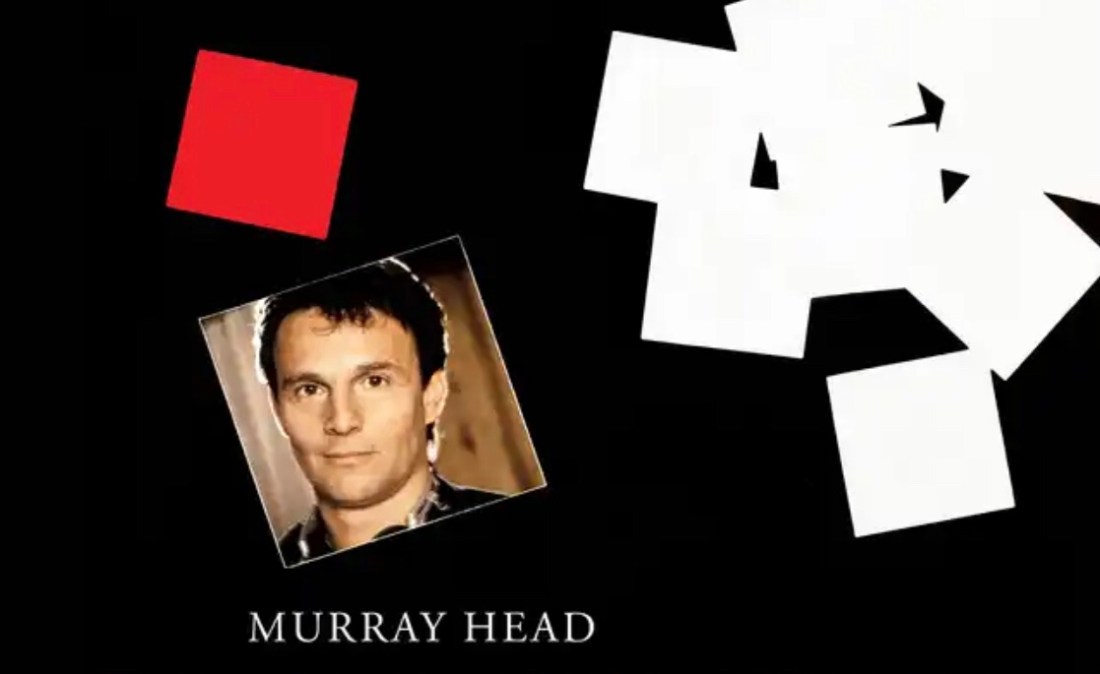
Murray Head – One Night in Bangkok

What do you do after selling a few hundred million records? Well, if you’re the guys in ABBA, you write a musical about chess. (Sure you do.) Actually, they did.

So, a confession here: I have never liked ABBA. By that I mean that I don’t think I had ever, with intention, played one of their songs. I would let them play on when they came on the radio, or as part of a compilation, or on a playlist. I have probably even spontaneously sung along, and I’m certain I danced to some of them. But I had never once said to myself, or to anyone else, “You know what would sound great right now? How about a little ‘Knowing Me, Knowing You’?” They never created music that appealed to me. It’s okay: they did just fine without my support.

After the band split up in 1982, the two female members, Agnatha Fältskog and Anni-Frid Synni Lyngstad (under the name Frida), had minor pop hits – “Can’t Shake Loose” and “I Know There’s Something Going On”, respectively – that I sort of liked, or at least wasn’t super irritated by, possibly because they didn’t really sound like ABBA. Meanwhile, the male band members, Benny Andersson and Björn Ulvaeus, moved on to, among other things, “Chess”, on which they teamed up with Tim Rice, who’d made his name with Andrew Lloyd Webber on such musicals as “Jesus Christ Superstar”, “Evita” and, my favourite from the duo (thanks to my amazing junior high school music teacher, Miss Beaupre), “Joseph and the Amazing Technicolor Dreamcoat”. Before mounting an expensive stage production, as both a fundraising device and sort of proof of concept, the decision was made to release an album of the songs that would likely be in the show. And to sing one of the lead roles, the call went out to Murray Head.

This was not new to Head: he’d been part of a similar approach with “Jesus Christ Superstar”, on which he sang the part of Judas Iscariot. For “Chess”, he was cast as the Bobby Fischer-esque American grandmaster. Early in the second act, the former champion, who lost his world title in act one, takes in the nightlife of the next host city as a journalist. And he celebrates this in “One Night in Bangkok”.

I can’t really say Head sings “One Night in Bangkok”, nor do I want to equate it with talk singing, because what he is doing here is really talking musically. (Wikipedia calls it a rap, and whoever wrote that should have their editing privileges revoked.) It isn’t because Head couldn’t sing: just check out “Superstar” for solid evidence to the contrary. So this was an artistic choice, and it absolutely works, giving a sardonic creepiness to the performance. Rice delivers some great lines – I would give even money that I could sing the whole thing from start to finish, and that’s because zingers like “the queens we use would not excite you” are lodged in my brain. It’s a Thai pop culture journey, with nods to “The King and I”, Buddhism, martial arts and ladyboys. Over it all stands Head, commenting on the corrupt and disreputable setting for “the ultimate test of cerebral fitness”. All of this is to an upbeat tempo – this was a top ten dance hit – that has the synth sheen that was found on 95% (my non-authoritative and unverified guess) of the pop music released in that era. And the video is pretty slick, too: Head has the kind of cool that doesn’t look ridiculous in a white suit.

So, yes, I still love this song, and can’t see that changing anytime soon. But this brings me back to its co-writers and ABBA: why didn’t I care for them? Outside of the music, I was definitely irritated by the suggestion that they were even more successful commercially than my beloved Beatles. But I also never gave them a serious listen either.

So I checked out one of their albums, 1976’s “Arrival”, which is the only one in Acclaimed Music’s top 3000, at #852 (though four singles off the album are also ranked in the top 10,000 songs). A few of the unfamiliar tunes were slick and didn’t really distinguish themselves in any way. But there was much to like here. I caught myself bumping my hip to “Dancing Queen”, some sort of muscle memory from my barely pubescent earlier self let loose on a sweaty junior high school gym turned Friday night dance floor. And now that I’ve really listened to it, “Knowing Me, Knowing You” is pretty cutthroat when it comes to what happens at the end of a relationship, and damned heartbreaking. “Dum Dum Diddle” is silly fun, and “Money Money Money” shows that Andersson and Ulvaeus were writing stage-worthy songs long before “Chess”. The title track is an instrumental save for some aggressive humming, and it had me imagining a “Braveheart”-esque race across an open field to battle. And “Happy Hawaii” ends the record with a fun tune that wouldn’t have been completely out of place on a pre-“Pet Sounds” Beach Boys record (and also feels like a bit of counterpoint to First Class’ 1974 hit “Beach Baby”).

So, my final conclusion is that I should maybe listen to more ABBA. And maybe more Murray Head, too. (“Superstar” is pretty awesome.) The lesson I take away from this is that I need to keep an open mind. Now, if you’ll please excuse me, I think I need to go listen to “Knowing Me, Knowing You”.

Classic Songs of My Youth Revisited #40

Ultravox – Dancing with Tears in My Eyes

Living during the Cold War, you could never entirely shake yourself free of the concern that your life might end in a nuclear war. I haven’t thought of this in years, but this was something I was genuinely worried about in real time, to the point of adding scary dreams about this potential war to my other major sleep time worry: my mother driving our car over the cliff and into the water at the end of the road that we took to get from Little Pond to Alder Point. Part of that was the unavoidable reality of our geography: the missiles fired by the United States and Soviet Union stood a good chance of flying over our Canadian heads. Whether through a misfire, an intentional shot at America’s most faithful ally or just the subsequent fallout, Canada was as likely as anywhere to be a hellscape after the bombs stopped falling.

This seemed to become more prominent in pop culture after the near-disaster at Three Mile Island in March 1979. Over the next decade, major films with a nuclear war/reactor element included “The China Syndrome”, “The Day After”, “The Dead Zone” (Martin Sheen has never been more chilling – he makes Christopher Walken’s future-seer seem rational), “Terminator”, and, the champion of all such films, 1983’s “WarGames”, which gave me a long-lasting crush on Ally Sheedy and a deep mistrust of video games. In literature, heavyweights like Martin Amis and Bernard Malamud weighed in on the subject. And in music we had such songs as Nena’s “99 Luftballons”, “Def Con One” by Pop Will Eat Itself (I had forgotten this fantastic song, with samples that include a chilling use of Lipps Inc.’s “Funkytown”), “Walk the Dinosaur” from Was (Not Was), Frankie Goes to Hollywood’s “Two Tribes”, and “I Melt With You” by Modern English. I did not realise until seeing them on a comprehensive Wikipedia list (and I don’t entirely trust the inclusion of all entries) that some of these were even about nuclear concerns. The subtlety of great pop music continues.

For me, though, the most compelling – and therefore terrifying – of these came from Ultravox. The band has released 11 albums, and I am pretty certain that “Dancing With Tears in My Eyes” is the only one of their songs that I know. (Frontman Midge Ure’s Canadian #12 “If I Was” from 1985 doesn’t count, nor does his writing and production work on “Do They Know It’s Christmas?” (Sidebar: Why doesn’t Ure’s role in this charitable work that is also a great song – as opposed to, say, the self-important dreck that is “We Are the World” – get the same attention as Bob Geldof’s? Feel free to discuss among yourselves.)) I only ever bought one of their records, the 1984 album “Lament”, and that was just so I could get this song, which I’m pretty confident is the only track I ever played. Sorry, guys.

As I have mentioned previously, I watched a lot of music videos in the first half of the 1980s, and I am quite certain this is how I was introduced to “Dancing With Tears In My Eyes”. The images from the video have always shaped my perception of the song, even though I hadn’t seen it in at least a decade and probably a lot further back than that. On the cusp of a nuclear reactor failure, a man rushes to get back to his wife and child. Everything is either dark or washed out, bereft of colour, as they drink their last drink together, dance their last dance, and, presumably, make love for the final time. Then, as they lay together, a window blows out, light floods the room, and it’s over. We see their home, emptied of life, before ending with an extended selection of brightly coloured and lively home movies of happier days, before the film melts in the apocalypse.

That’s the video, of course, but the song is awfully potent without it. Against a synth-and-drum-machine-heavy new wave beat, Ure’s vocal is taut, pained, desperate. Opening with a thumping like a sped up heartbeat, then a quick drumbeat and power stance guitar strokes, Ure explodes without any preamble into the chorus and the title line, with spine tingling keyboard in the background, just outside of your direct notice. The tempo never really changes, but the verses feel less rushed than the chorus. The lyrics speak of things already lost – a life gone by, a love that has died – but we aren’t there yet. Through each verse, the final moment looms, and there is soon a resigned and even grateful acceptance of the unavoidable. And then, with the word “time” repeating like a warning cry, there is no more. Guitar rises, and we get one more run of the chorus before the song draws to an end, fading at first, then simply over.

I know that sounds like I’m putting an awful lot of weight on a pop song. But there’s a reason why this still hits me hard after 39 years.

I thought this was a hit in Canada, but it only peaked at #52 on RPM’s weekly chart. I guess my perception was skewed by seeing it three times a day on MuchMusic and regular plays on southern Ontario’s leading (only?) alternative radio station. It did better in Europe, and is the band’s second biggest song after “Vienna” (which did not chart in Canada or the U.S. and rang no bells when I listened to it). They played it at Live Aid in 1985 – I think I had the same shirt (or at least a lower-priced knockoff) that Ure is wearing – but there was no bump in popularity on this side of the pond.

With Putin-related terrors a constant in our lives, I’ve been expecting a revival of 1980s nuclear angst music, but so far that does not seem to have happened. If you read the YouTube comments under the video (try to ignore the political stuff), you will see a lot of people who feel as I do about the song and video, including its relevance to today’s world. At the same time, the film “Oppenheimer”, and its account of how this awful story began, is almost upon us. Time passes, and we make the same mistakes, and live with the same horrors. Music, at least, can be a tiny respite from that, even when the song scares the crap out of you. And if you need a happy ending, there’s always “WarGames”.

Classic Songs of My Youth Revisited #34

Gazebo – I Like Chopin

I don’t think I’ve ever given up on a friend (even when I probably should have), but I know for certain that at least three friends gave up on me. Two of them had good reasons: Chris got tired of me cancelling plans with her after I got a new girlfriend, and Shelley got tired of waiting for me to figure out whether I wanted to be a Jehovah’s Witness or not (I did not). The third friend was Serge, and he gave up on me because of Shelley, and that was just wrong, though I completely understand now where he was coming from.

I met Serge in September 1982 when I started university, and he was sort of a larger than life figure. He was a week late to school that year, and I heard stories about him (mostly from one source) throughout frosh week, finally meeting him when we both drunkenly staggered into the same corridor of our residence while looking for something to eat. We quickly became friends, and he was yet another in my rapidly growing collection of slightly older comrades who had a driver’s licence (which I avoided getting until I was 43) and a car (ditto). By the summer of 1984, he had graduated and I had dropped out, and we were housemates and coworkers in the university’s cafeteria.

Serge and I fell out when he and Shelley broke up and I completely misunderstood the bro code that demanded that she now be persona non grata or else I was betraying our friendship. Weirdly, our other friends also behaved as I did, but I was the only one deemed to have betrayed him. People with broken hearts are not logical.

In any event, at some point during our friendship, which ended on a crisp Saturday night in the fall of 1984 at the main bus stop on the Brock University campus, Serge bought Gazebo’s self-titled album on vinyl. He bought it for just the one song (the whole album is pretty good, though), and he was eager to play it for his friends. The first time I heard “I Like Chopin”, I fell in love. But after the falling out, I knew that if I wanted to listen to it again, I needed to find my own copy.

If you’ve never heard this song before, you are not alone: it was never close to being a hit in Canada or the United States (though it went to all over Europe). The odds of me finding the album without serious effort were low. And yet, I did exactly that: I walked into a chain record store, went to “G” in the cassette section, and there it was. I didn’t even have to travel to Toronto: it was right there in St. Catharines, a city hardly at the forefront of contemporary ItaloDisco sounds. At the checkout, the clerk approved of my selection. I felt like Gazebo fandom was some sort of secret club that I had unexpectedly stumbled into, blinking in wonder. What I later learned – and I don’t know if this is actually true – is that demand for “I Like Chopin” was linked to its periodic plays on CFNY (a.k.a. “The Spirit of Radio” for all the Rush fans). Whenever the station aired it, even years later, there would be calls asking what that song was. 

What it was, and is, is a synth pop wonder, and I always pick the extended 7-minutes plus version for the full effect. It may not be for everyone, but I’m yet to meet anyone who knows the song and doesn’t love it. (Okay, there’s just one other person, but, as you’ll see, that’s a pretty critical vote.) It’s about love and longing, a melancholy song of rainy days and a lot of other cheesy abstractions that are sort of beside the point when you’re in love. The piano (an original melody, not lifted from Chopin) is the centrepiece, a delicate backdrop between rounds of glittery synth and snare-shot drum machine. It has a mysterious feel in parts, like the score to a chase scene from an espionage B movie set in some pre-Gorbachev Eastern Bloc country. It feels sad and cheerful all at once, and there is a hypnotic energy that draws you in. I sometimes play it back-to-back-to-back, 23 minutes plus on repeat, and it never fails to please me, even almost 40 years later.

Serge and I never really made up, though his anger subsided enough that we could at least exchange a few non-hostile words from time to time before we moved to new homes in May 1985. My Gazebo cassette was played less often as time passed, and eventually it was gone from my collection and never replaced. I don’t remember when I found out that my wife loved “I Like Chopin”, but if we weren’t married yet, I should have proposed on the spot. It’s the only ItaloDisco record I’ve ever owned, and there is no way that my soulmate also loving the song could be a coincidence. I often feel something akin to fate about how we came to be together, and it makes sense that “I Like Chopin”, and the odd twists of my love for it, would find its small place in that story.

Classic Songs of My Youth Revisited #24

Thompson Twins – If You Were Here

I could write a dozen of these about songs from John Hughes’ movies, and I just might by the time I hang up my, uh, . . . keyboard? Or digital pen? Fingers? Anyway, let’s start with this one, the first song – and film – that made me realize that Hughes was a genius at integrating pop music and teen comedy.

This wasn’t a hit, and it wasn’t even released as a single, which is a bit of a surprise, since the non-Twins hit number 3 the same month the film was released with “Hold Me Now” (worthy of its own write up, for sure). It could be record label shenanigans – it was a track from two albums ago, and maybe they didn’t want any focus taken off the current release. Or maybe they thought it wasn’t a worthy single, which is (1) completely stupid and (2) irrelevant. The streaming era has its flaws, but one good thing is that record labels – and artists for that matter – have little say about what becomes a hit. The listener decides which tracks to stream and which to skip, and the charts reflect that. And “If You Were Here” found its audience – it’s one of the band’s most popular tracks on Spotify.

So, no single, so you only heard this song if you were already a fan of the band or saw the movie or bought the soundtrack, which you likely would only have done if you, you know, saw the movie. I don’t remember why I went to see this, but I was already a massive Hughes fan thanks to some of his truly demented writings in National Lampoon during the 1970s. It was summer 1984, and after crashing out of university in spectacular fashion (I think I changed majors four times in five months then just stopped attending classes entirely – yeah, direction I did not have), then wallowing in my failure in Cape Breton for three months (including a horrendous fishing trip on my father’s boat), I returned to St. Catharines – the scene of my academic washout – and secured a job with the catering company at the university, where I had previously worked part-time. And, most importantly, rented a room in the house where my friend Serge was living.

My friendship with Serge ended in spectacular fashion, but before it all went south, that summer might just have been the best of my life. On one of those nights, with nothing better to do, Serge and I jumped in his car with a case of beer and went to the drive-in to see “Sixteen Candles” and some other film whose identity has been lost to time.

I wish I could say I was really focused on the film, but when two or more young men get together and alcohol is involved, there’s usually as much screwing around as paying attention to any nominal focal point like a movie or whatever bullshit your girlfriend is complaining about. So it wasn’t until 6 or 9 months later when it showed up on The Movie Network that I appreciated what a great – albeit juvenile, sexually inappropriate and racially insensitive – film it was. But the music? Yeah, that caught me right away.

There are a ton of great songs in this film, and just seeing the titles takes me in my mind to the accompanying scene. It of course helps that I’ve probably watched it all the way through a dozen times, and can’t help but watch for 10 or 15 minutes if I come across it while channel surfing. It’s my favourite Hughes film – for all it’s inappropriateness, there is also a strange innocence to the film, and, yes, I am of the school that Farmer Ted is a complete gentleman who doesn’t take advantage of Caroline, and so that kiss is romantic, not creepy. The teens are not Ferris Bueller cool, they have issues: Ted hides his insecurity with bravado, Jake feels unappreciated, Sam’s whole family forgets her 16th birthday. Real teen trauma. Yeah, I know that’s a bit thick – it’s a movie. But I really love it.

And a big reason why it’s stuck with me is this song. After an entire film of misfortune – including having her story stolen out from under her by Anthony Michael Hall as Ted – Molly Ringwald’s Sam, emerging from the church after her sister’s wedding, watches the crowd disperse only to see dreamboat Michael Schoeffling’s Jake waiting for her. As the song’s opening plays under the scene, Sam and Jake navigate some miscommunication to come to the realization that both want the same thing: to be together. (I’m not crying, you’re crying.) (Also, pair this with “Breaking Away” for a double feature of Paul Dooley playing great dads.) And the film ends with their first kiss over her birthday cake, the end of an unexpectedly perfect day – just a day later than Sam had been hoping for, but far better than she ever imagined it could be.

It sounds like I love the song because of the movie but it goes both ways – the song helps me love the movie, too. It’s a perfect early ‘80s pop confection, all atmospheric synth and Tom Bailey’s whispery vocal and perfectly placed percussion from Joe Leeway. Despite the romantic context in the film, it’s about a dying love, not a blossoming one – the word “deceive” is not sung by accident. But the vibe of the song is completely New Romantic, and it sweeps you up.

Leeway left the band in 1986, and while it’s probably coincidental (no disrespect intended), they never had another major hit. But they left behind some great pop tunes – “King for a Day” is another personal favourite – and a couple of classic albums that probably don’t get played enough these days. The music of the early ‘80s was fun, and there isn’t nearly enough of that in the world today, or in music for that matter. It’s well worth spending some time with those records.

Classic Songs of My Youth Revisited #22

Dan Hartman – I Can Dream About You

There are a LOT of jobs in the music business. The glamour spots, of course, involve being a successful solo performer or front person in a band. But every song ever recorded didn’t get that way without the involvement of writers, other musicians and singers, engineers, producers and/or a host of other players who don’t make the liner notes other than as special thank you’s to the artist’s significant other, massage therapist, dealer or life coach. Which means that a lot of people who are famous for a few minutes then seem to disappear are probably still very much involved in making music: they just aren’t famous for it anymore. Which brings us to Dan Hartman.

I have loved “I Can Dream About You” since I first heard it in 1984 in connection with the film “Streets of Fire”. I was not alone: it became a Top 10 hit, and has over 58 million steams – presumably mostly from nostalgic boomers like myself – on Spotify. But there are some odd background notes about this song. For years I thought Hartman was Black, which he absolutely was not. I guess I never saw the video when the song was a hit, so when the movie showed up on television around a year later (shoutout to a young Willem Defoe as the villain, but I don’t remember much else about the film but this song and Diane Lane looking like, well, Diane Lane, and that was enough), what I saw was four Black guys performing it. Even that was a bit of a trick: the actor playing the lead singer was lip syncing to a recording by another guy who was not Dan Hartman. Ah, movie magic.

Despite loving the song, and being a total music trivia nerd, I never looked into Hartman to see what became of him post-fame. This morning, Spotify suggested I listen to The Edgar Winter Group’s 1973 album “They Only Come Out at Night”, which turned out to be a brilliant recommendation. I’m reading about who worked on the album, and there I see Dan Hartman’s name. As it turned out, he had a pretty impressive career as a performer, writer, engineer and producer. He wrote and sang “Free Ride” for the Winter band, and co-wrote (with the awesomely-named Charlie Midnight) James Brown’s “Living in America”. As an artist, he sandwiched the disco hit “Instant Replay” between his rock work with Winter and the synth soul of “I Can Dream About You”. He worked with a ton of notable artists (including Tina Turner, Steve Winwood and Joe Cocker) and died way, way too fucking young from AIDS in 1994.

It sets the beat off the top, with a funk-lite edge and some thumping drums, followed by a sort-of scuzzy synth bass and faux piano, then Hartman starts singing, sounding like he was dropped onto the stage in front of a mic, as surprised as the audience is to see him there, and just decided to go for it. In a flash, we’re into the chorus, with smooth soul backing vocals acting as a layered echo to Hartman’s lead, and then it just sort of repeats the same motifs for the next round, before the tone alters slightly through said backup singers at just under the two-minute mark. Then we’re back to the initial setup, before the obligatory guitar solo as Hartman keeps on dreaming over and over and over until it fades out.

I can’t really rationalize my love for this song. The lyrics are meh, and the music is pretty much unvaried from beginning to end. But something about it picks me up and makes me want to strut. If I could dance, I could totally see myself swirling around a club floor, the star of my own “Saturday Night Fever” knockoff. (Check out the movie for what I see in my head. The outfits are pretty terrific, too.) That’s the ineffable magic of great pop music. It doesn’t comply with a logical analysis – it’s all about how it makes you feel. “I Can Dream About You” makes me happy, and it’s been doing so for 38 years and counting. Nothing else really matters, right?

Classic Songs of My Youth Revisited #14

Wham! – Wake Me Up Before You Go-Go

When the first frames of the video for “Wake Me Up Before You Go-Go” flashed across the screen, my initial thought, I kid you not, was that Ted McGinlay had started a band. Now, this was ridiculous for two reasons. First, I had recently seen the (and I write this unironically for all the elitists out there) masterpiece “Revenge of the Nerds“, so I should have had a clearer idea about Ted’s looks. Second, other than a similar bouncy hairstyle, Ted and Wham! frontman Yog Panas really didn’t look all that much alike (though I can still see a resemblance in some shots – and I wasn’t the only one to see it.)

If you watched that video without any awareness of the band, you would have likely concluded it was a foursome, with Panas a.k.a. George Michael and long-time pal Andrew Ridgeley joined by the female duo of Pepsi and Shirlie (plus two other women who get a lot of screen time for people whose names I can’t even find on the internet). But the women were never more than hired help, and George had long before this moment passed Andrew as the creative force driving the bus that was Wham!. Andrew, who had once had to push George into music, was a smart lad who knew when he was in the presence of genius. He was just happy to be making music with his best friend.

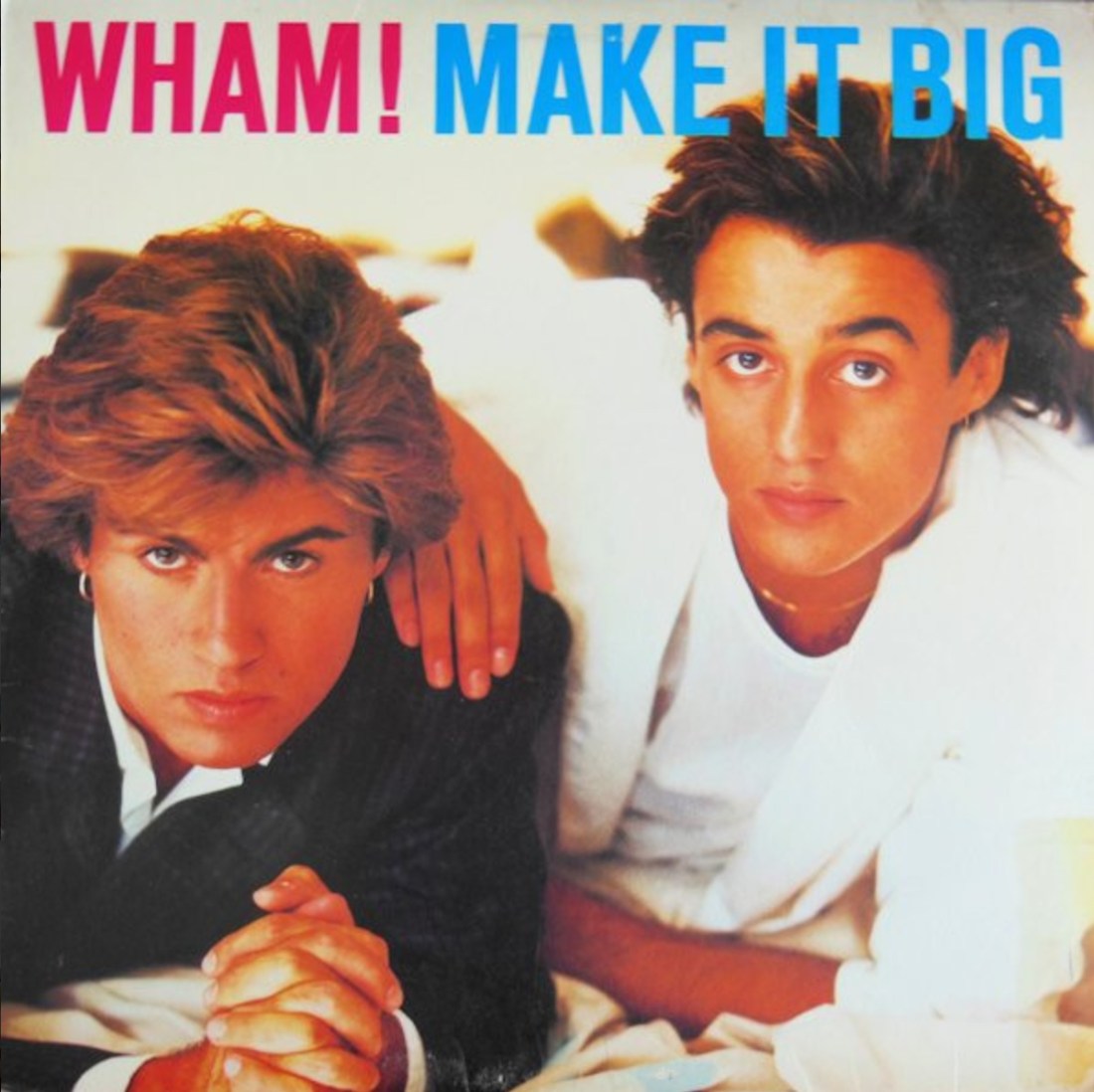
I loved Wham! from the first listen, and, as a heterosexual 20-year-old male, was rather embar­assed by this initially. When I bought “Make It Big”, the album led off by “Wake Me Up”, I made sure to pair it with Van Halen’s “1984” so the cashier at Records on Wheels or wherever it was would know I wasn’t a wuss. My cassette of “1984″ was played all the way through once – maybe. “Make It Big” remained in regular rotation for several years, the cassette end­lessly flipped back over from B to A for one more listen to “Wake Me Up” (and often the next song, ”Everything She Wants”).

The song is a joyous pop confection that sounded like nothing else on the radio at the time. It has the feel of ’60s girl group hits, with finger snaps,  hand claps, ooo ooos and yeah yeahs, but sped up and with synths, and missing those booming drums and Phil Spectoresque pretensions. The use of the goofy “jitterbug” refrain calls back to swing dancing and early rock ‘n’ roll, and instantly pulls you into the song with a “WTF is that?”. I don’t know if any song feels happier, and it always puts me in a good mood.

George Michael went on to greater acclaim and bigger hits but no other song quite captures his mastery of the pop idiom. My wife and I don’t have much in common musically, but the Venn diagram of our tastes has George Michael smack dab in the middle of where the circles overlap. That his pop sensibility can align two such people – she’s never once listened to “Never Mind the Bollocks ” (which I played right after Wham! this morning, spazzing all over my kitchen), and I often greet her choices with a giant shrug – speaks to his genius.

As great as the song is, it really works better with the video. It’s so goofy, especially after they discard the all-white Choose Life get-ups they start out in for pastel beachwear. George has a sexy come-on at one point that even he seems to know is ridiculous. Andrew carries a guitar around and appears to be playing in a song that has little in the way of recognizable guitar parts other than Deon Estus’ bass, and they both pretend to play horns. Mistakes during filming are weaved in, and there is an energy that’s inescapable.

At the heart, though, is the love between George and Andrew. Ridgeley was a bit of a punchline, the much-less-talented hard-partying friend who George carried until he outgrew him. That Andrew then struggled post-breakup to figure out what came next (with a failed album (so obscure it isn’t even on Spotify) and even more disastrous car racing efforts) added to this. But the truth was, all Andrew had wanted to do for a long time was be in a band with George, and when you achieve all you want in life before age 25, it can take some time to come up with a Plan B. Like most of us, he eventually found another path.

You can see the bond in the video. My favourite moment is at 3:13. Michael makes a mistake, coming out of a twirl and landing in front of Ridgeley, who howls and puts a hand on his friend’s back. It’s such a sweet moment that the director included it twice. Then, at the end, George is alone at centre stage, looking confused, needing his support system. I always loved that they remained friends until Michael’s far too early death. And though their reign was short, the pairing left us with a lot of great songs – if you’ve forgotten that, just wait until next Christmas. It’ll come back to you.

Cover Version Showdown #1

Prince, ”Darling Nikki” – Foo Fighters vs Rebecca Romjin Stamos

Prince is on the front page of this site, but I haven’t written about him yet. His debut album was released in 1978 and he first received Pazz and Jop notice in 1980, after which he was a regular for much of the following decade. So, when I decided to start this series, I went looking for a Prince song. And, in “Darling Nikki“, I found, like a gift from the gods, Rebecca Romjin (formerly Rebecca Romjin Stamos – does it bother Jerry O’Connell that she didn’t change her name for him, too?). You know, model Rebecca Romjin. Actress Rebecca Romjin. But a singer? She has exactly one song on Spotify – this one. Her music career is so obscure that it doesn’t even warrant a mention on her Wikipedia page. Yes, please, I’ll have that one, thank you.

As for our other contender, the Foo Fighters are a band I am certainly familiar with, and have occasionally enjoyed, without actually paying even the tiniest bit of attention to. Dave Grohl is one of the coolest guys around (and I love Nirvana), but I have never once consciously played one of their songs. Seriously – not a single time. I have to strain my mind to remember any titles (I’m not going to check this – they have one called “Learning to Fly”, right?), and I don’t think I’ve ever heard anyone in my circle say they can’t wait for the next Foo Fighters record.

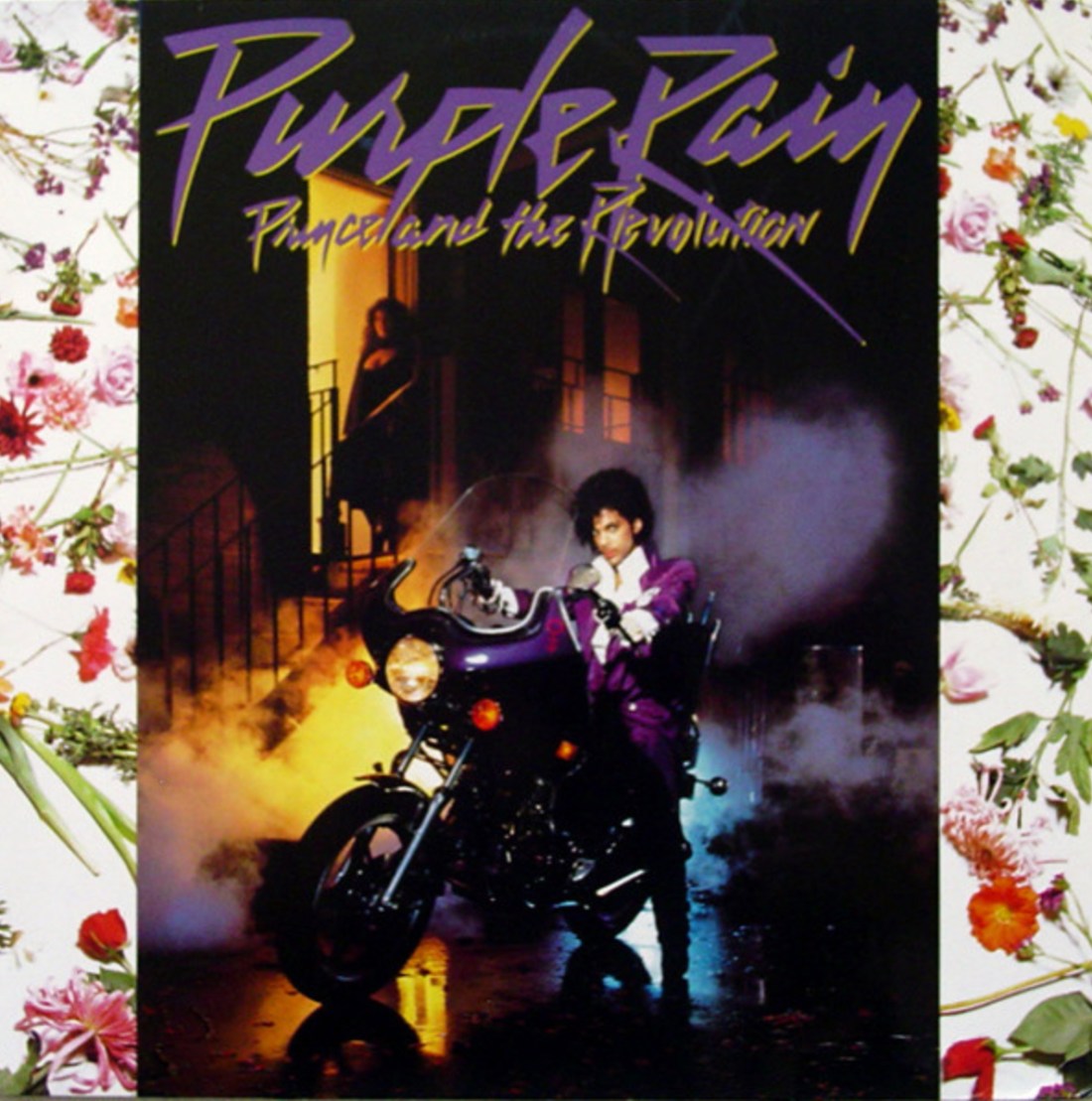
But first, let’s check in with the champion. In 1984, Prince was at the height of his powers, with “Purple Rain”, the Oscar-winning film and Grammy- winning album. There are so many great options coming out of that album. Lydia Loveless does a killer version of “I Would Die 4 U”. “Purple Rain” filtered through Dwight Yoakam will make you forget it didn’t start out as a country song. And Susanna Hoffs does a lovely “Take Me with U” that I think I like more than the original.

But “Darling Nikki” was contro­versial. Tipper Gore completely lost her shit when she heard what her 11-year-old daughter was listening to. (It doesn’t seem to have harmed her too much.) Back when we were still buying CDs, those “Parental Advisory” stickers could be traced back to that moment when Tipper met Prince. Thanks in part to this song, Luther Campbell was arrested in June 1990. A butterfly flaps its wings.

Anyway, the song itself kicks ass, like pretty much everything good on that album. (I love Prince but all songs are not created equal.) “Let’s Go Crazy” rocks harder, but “Nikki” has Prince’s most impassioned vocal outside of the title track. 40 seconds in, almost every straight man listening wishes he could meet a girl like Nikki, and is terrified of what might become of him if he did. Prince has no such concerns – he jumps right in. In the movie, it’s a revenge song when his lover abandons him for a rival impresario (Morris Day just does not get talked up enough). Nikki uses the narrator, and moves on, leaving him a changed man.

And what of Ms. Romjin? How the hell did this become the one song she seems to have ever recorded? It comes from an album so obscure that it also is absent from Wikipedia: “Party o’ the Times: A Tribute to Prince“. The artists involved who I’ve heard of were way past their best before dates when this came out in 1999: Heaven 17, Missing Persons, Gary Numan, Information Society. Ice T is the closest thing to someone with a functioning music career, and he hadn’t made a great record since 1991’s “O. G. Original Gangster” (which I owned on cassette and played, and played, and played some more). Yet, for all the strangeness of this project, the presence of Rebecca takes first place.

So, how did she do? Pretty great, actually. It’s less raunchy musically, and her vocal is cool, sultry, casual, with that girl-on-girl air that makes it more risque – this was 1999 after all. It’s sexy AF without even trying all that hard, and I really wish she had sang more. Maybe the Romjinaissance that’s coming with her extended foray into the “Star Trek” universe will make this happen.

The Foo Fighters version is more faithful to the original, but it is unmistakably their song. It rocks harder than Prince did, and while Grohl roars like His Purpleness, it isn’t sexy, it’s pained. Prince came away from the encounter a new man – Grohl sounds like she left him a mere husk of what he was.

The Winner: Rebecca Romjin

No one outdoes Prince, except maybe Sinead O’Connor or The Bangles – and it’s telling that he gave those songs to others rather than release them himself. “Darling Nikki” is no exception. And the Foo Fighters do a respectable job in making it their own, but the bar is high when a band is already so accomplished. I put on Romjin’s version expecting a travesty, and was instead delighted. It’s faithful, yet also personal – my definition of a perfect cover version. That the source is so unexpected only adds to the delight.