Classic Songs of My Youth Revisited #52

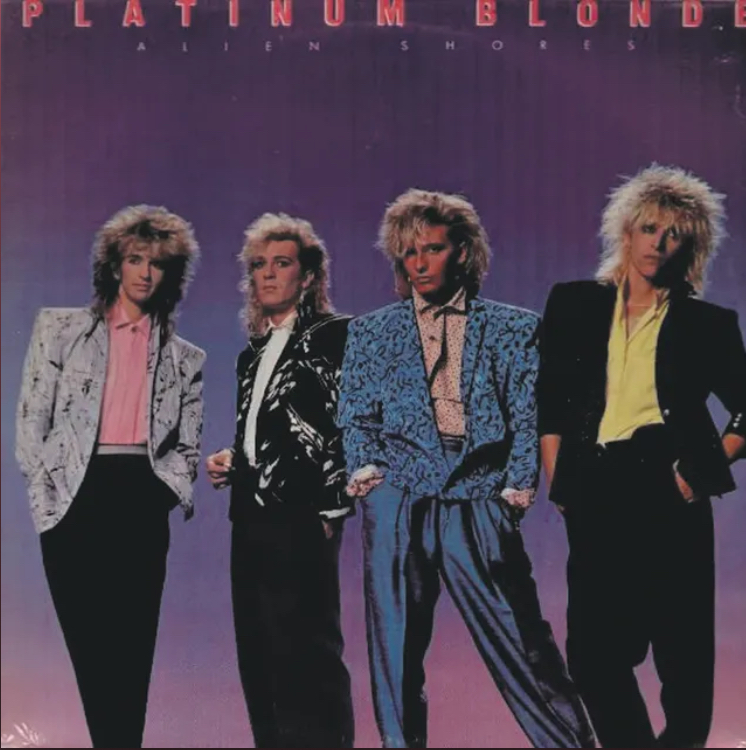
Platinum Blonde – Crying Over You

As I was growing up in the 1970s and early 1980s, internationally successful Canadian pop and rock acts were rare. Artists like Neil Young and Joni Mitchell were superstars but their album-oriented music didn’t get a ton of play on our local radio station, and others like Anne Murray and Gordon Lightfoot had lots of hits but were, well, lame. The Guess Who was long gone, and Bachman-Turner Overdrive peaked before I paid them much attention. There were outlier tunes like Nike Gilder’s “Hot Child in the City” and Dan Hill’s “Sometimes When We Touch”, and soon Bryan Adams would come along to spend the better part of two decades interchangeably yelling or growling at us.

But we had lots of bands with hit after hit within our borders. Because of government licensing requirements, Canadian radio stations had to play 30% domestic recordings, under a formula that eventually reached its nadir when it decided Adams – or at least his music – wasn’t Canuck enough to fit into that 30%. For better and often worse, these rules gave a lot of homegrown acts an opportunity, and that radio play helped them develop a following. This was joined in 1984 by the MuchMusic video channel, giving us a look to go with the sound. And possibly no domestic band took better advantage of the power that video had to offer than Platinum Blonde.

As the band name would suggest, yes, they were sort of ridiculous, and I also owned their first three albums, played them a lot, and make no apologies for that. Their biggest hit by a fair margin was “Crying Over You.”, and the video is a glorious mess of big (probably dyed?) hair and slick New Romantic styling, all glossy surfaces and flashy colours. (I wonder, too, if they ran out of money during the shoot: an awful lot of shots seem recycled. Lead singer Mark Holmes would later say that drug use played a part in the band’s demise. Just sayin’.) The four band members are styled so similarly and the video shot so allusively that it took my second reviewing before I remembered – I had to have known this in 1984/85, right? – that the point of the video is that the female subject is dating ALL of them at once, and only her inscrutable manservant is wise to her shenanigans. The premise seems to be a dudes only powwow where they share how they each were betrayed – and, umm, how they betrayed each other – ending with begrudging acceptance that they are done with her, though her wink just before the closing shot suggests that this game is far from over.

But this was of course a song before it was a video, and it happens to be my favourite of their tunes. Their early sound was post-new wave nu glam, and when I was introduced to The Cure a few years later, I recognized echoes of Platinum Blonde, so I was thrilled to hear Cure leader Robert Smith cover the band’s “Not in Love” with Crystal Castles. (Images in Vogue is another great Canadian band that fits with that group, and their “Call it Love” is overdue for the Smith treatment.) As they evolved, the guitars became more forward, and they also started pulling in shades of funk, which they would dive into headfirst on their next album and its eponymous lead single “Contact” (the other leading contender for my fave PB track). “Crying Over You” sort of catches them in the middle of that evolution: there’s a solid bass line from Kenny MacLean on the chorus (based on how into it he seems in the video, MacLean really liked this song) and nice shredding on the guitar solo (from guest player Alex Lifeson of Rush), but the main sound is a sort of jittery funk-lite groove meets pout rock on the verses. Together, they make not what I would call a dance tune, but definitely something with a hip swinging vibe (and not the borderline sashay seen in the reverse shot of Holmes that flashes across the screen at the 20-second mark of the video – I can’t be the only one who thought of Pete Burns of Dead or Alive). I don’t remember it getting club play back then, but it would have been a solid early evening entry to get the crowd warmed up.

“Crying Over You” hit in Canada and the album it came from, “Alien Shores”, got to #3, both marking the band’s commercial peak. They broke up a few years later but remained pals, with the original threesome of Holmes, guitarist Sergio Galli and drummer Chris Steffler reuniting to honour MacLean’s wish after his ridiculously early death. They haven’t released a record in over a decade but are still around (and newly inducted into Canada’s Walk of Fame), minus Steffler, who had to retire for the very rockstar reason of having developed tinnitus. Their music, which was very much in the style of the moment, holds up better than I expected, just like some of the other bands of that era, like Duran Duran (to which they were often compared), that were dismissed by many as bubblegum but were in reality masterful sugar confections. More bonbons than bubblegum, let’s say. But there’s nothing wrong with bubblegum either.
Cover Version Showdown #5

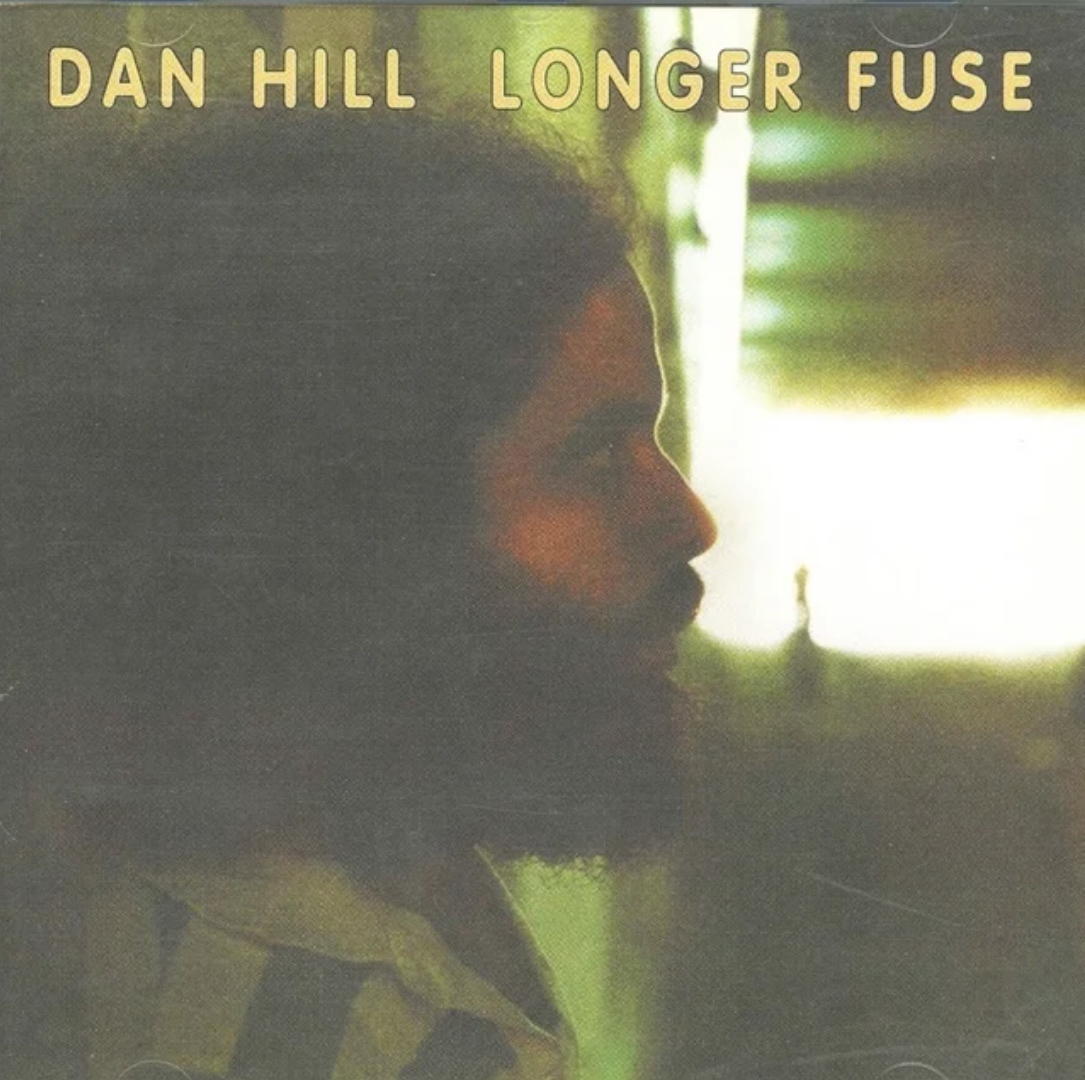
Dan Hill, “Sometimes When We Touch” – Tina Turner v Diesel

It’s probably due to growing up in the cultural shadow of the United States, but I will never not cheer the success of Canadian creatives. It doesn’t matter whether I personally think what they are doing is good – it only matters that other people do (though Bieber pushes the envelope on this support). So, critics can take all the shots they want at Nickelback, and I might even agree with some of them (though, honestly, this is so worn out): the band has sold over 50 million records, “How You Remind Me” remains a fantastic power ballad, and don’t get me started on my love for “Hero”, frontman Chad Kroeger’s duet with Josey Scott. Nickelback are Canadian and loved by millions, and the haters are just jealous knobs.

So, yeah, when Dan Hill was kicking major chart ass in 1978 with “Sometimes When We Touch”, I was very happy about that. Likewise, I was pleased when he did it again in 1987 with “Can’t We Try”. He’s Canadian and was briefly loved by millions, and . . . well, that’s all I need.

I think I owned the 45, but I wouldn’t have needed it because my mom had the album it came from. Her record collection was a mix of country and soft pop, and by the time Hill was getting attention for the song in late 1977 and the first half of 1978, I was already into my Gibb brothers-centric listening phase that would dominate the next year and a half.

Something about this song attracts bizarre cover versions. The most painful listen was from some guy named Vernon, who has over 4,000 monthly listeners on Spotify, and I would love to speak to just one of those people to ask, “Why?” (But do make sure to check out his version of “Every Breath You Take”, though it might be better if you don’t – let’s not encourage him.) Or musical genius Oscar Peterson, whose piano bar version is quite lovely but would have been better served by pretty much any singer besides himself (well, anyone besides himself and, of course, Vernon). Finally, we have former world boxing champion turned politician Manny Pacquiao, whose thin monotonous voice is overshadowed on the chorus by Hill, who, based on the video, can still somehow get worked up to sing this tune that has been part of his artistic life for a very long time.

But they aren’t all duds. There are lots of competently sung country versions, including one from icon Marty Robbins, who leaves out the histrionics and ends up with a recording that is very compelling for its subtlety. It clearly was noticed in Asia, with three female singers – Tracy Huang, Olivia Ong and Susan Wong – delivering lovely if uninspired takes (I like Ong’s voice best). Cleo Laine’s might actually be the cover that I found the most fun, but in the “Well, that was a wacky thing that I’m glad I tried” way, not in a “Let’s do that again” way. And reggae singer Eddie Lovette really takes ownership of the song, though it is in no way a reggae version.

(By the way, lest you, dear reader, ever question my commitment to this little musical and literary project of mine, know that I listened to every version of the song referenced herein, and a bunch more. Never doubt that I take my mission very, very seriously.)

But for a battle like this, you need heavyweights who can do justice to Hill’s original, and you’d be hard pressed to find two more potent voices than Tina Turner and Bonnie Tyler. Both were in rather fallow periods when they covered the song. After her 1978 hit “It’s A Heartache”, which had risen up the charts as Hill was headed down, Tyler’s next two albums were barely noticed, and she wouldn’t have another hit until 1983’s monster “Total Eclipse of the Heart”. Turner was newly divorced and finding her way as a solo performer, with her breakout coming the year after Tyler’s.

And yet, Tyler just doesn’t make the cut, because I don’t get any sense that she actually believes in the song that she’s performing. Say what you like about the high cheese content of Hill’s original, but you can’t tell me he doesn’t mean with all his person every word he’s singing. It wasn’t a hit by accident: from the gentle underlying piano to the tour de force of the final minute, with pounding drums, clashing cymbals and swelling strings, this was manufactured to take people from the dance floor to somewhere more private, and it’s Hill’s lost soul vocal that closes the deal. Bonnie sounds like it’s just another day at the office: it would take the operatic stylings of Jim Steinman to unlock her passion.

Tina, on the other hand, could make singing an instruction manual for your new toaster oven sound sensual. As a singer, she has one mode: give everything you have on every song. Where Hill is mushy and sentimental, Tina is weary and maybe a bit angry: when she sings “I’m only just beginning to see the real you”, it’s an accusation, and not Hill’s sense of wonderment at his lover’s depths. She howls and growls her way to an epiphany, and goes into full on “Proud Mary” mode by the end, triumphant over the confusing emotions that she’s feeling, which makes me wonder to what extent this may have been a declaration of her escape from the villainous Ike Turner. It just gets more interesting with each listen.

So who is this artist who beat out Bonnie Tyler to go up against Tina? Mark Lizotte, who was going by the name Diesel when he covered the song in 2001, has had a pretty decent career in Australia while making zero impact on the North American charts: but for searching out covers of “Sometimes When We Touch”, I likely would have never heard of him. And what a loss that would have been: his take on the song is revelatory. It’s a bluesy rock version, and unlike Hill’s desire for rapprochement with his faithless lover, Lizotte turns the entire song into an assault. Like all great blues songs, the artist is as disappointed in himself as he is in the evil woman who done him wrong, and he wants to punish her by punishing himself, by not walking away. It’s kind of twisted, actually, and twisted relationships are, again, a staple of the blues.

(Sidebar: searching for Diesel on Spotify led me to the Dutch band of that name and their 1980 hit “Sausolito Summernight”, which was fun to revisit.)

The Winner: Tina Turner

Was there ever any doubt with Tina Turner in the race? That voice is truly one of the great instruments of our times. Yet, Diesel made this a real fight. If you heard his version without any context, there’s a good chance you wouldn’t be able to place it, and that’s about as good a way as there is to make someone else’s song your own. He has a deep catalogue that I’m looking forward to exploring, starting with “Americana”, with covers of greats like Springsteen, Cash and Dylan. I never think of Australia as foreign in the way I think of countries that don’t share a connection with a common Crown, but there is, of course, an entire world of artists who are barely known outside their borders, just as we have in Canada with, for example, Blue Rodeo. (But not, I was surprised to learn, Billy Talent, who are massive stars in Austria, Germany and Switzerland.) Discovering these “foreign” artists is one of life’s little joys.