Classic Songs of My Youth Revisited #66

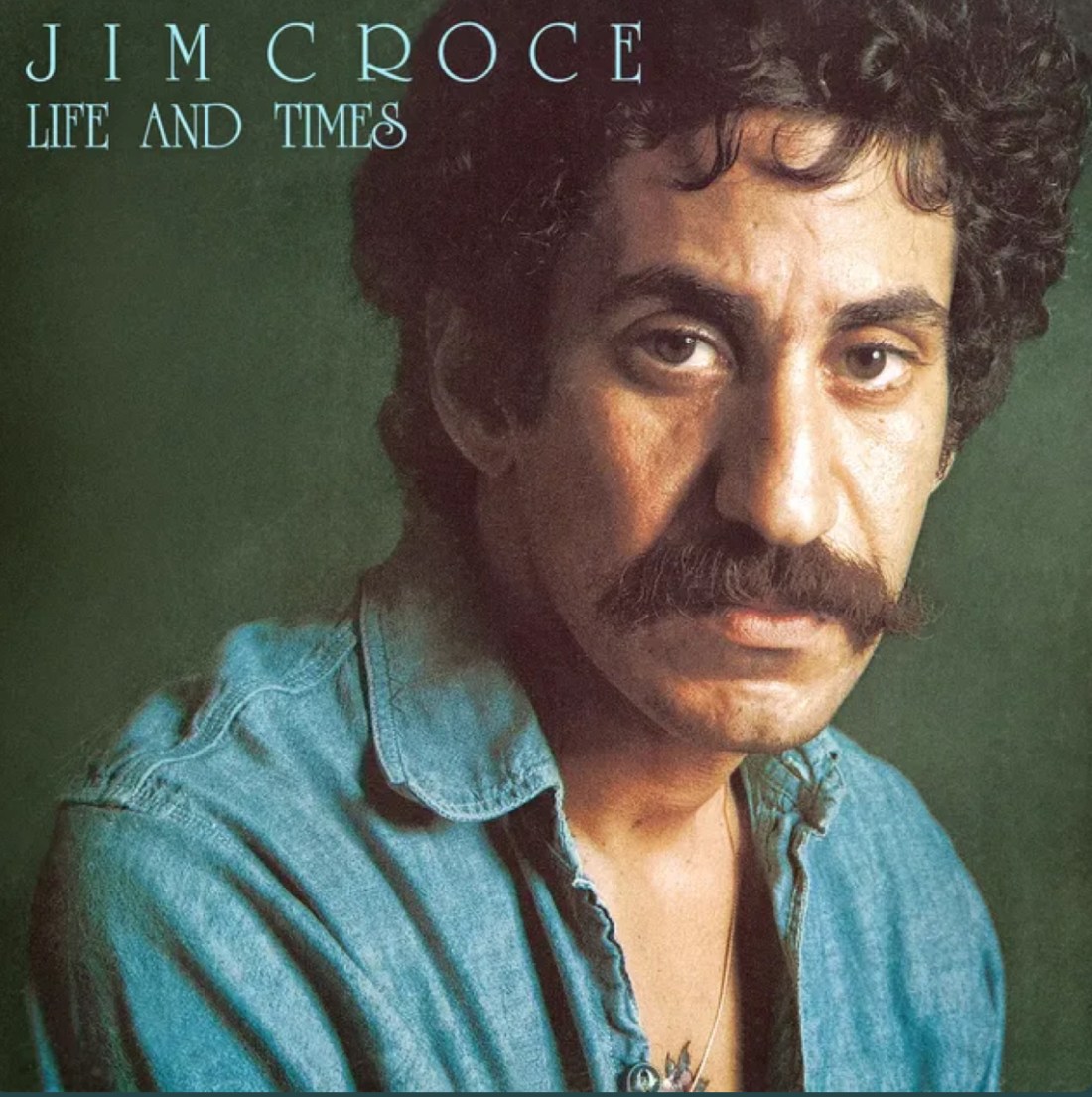
Jim Croce – Bad, Bad Leroy Brown

As much as I love listening to music, as well as talking and writing about it, I am bereft when it comes to creating it. Junior high school music classes included playing the ukelele and recorder, I once owned a keyboard (officially purchased for my children, but, sure, I had notions, too), and I have made several attempts to learn the guitar, but always lacked the staying power to see it through. It may be that my destiny was to end up exactly where I am.

My first glimpse of how I might not be up to swimming in the musical deep end came in the spring of 1976, when I was 11 years old. I had made some early attempts at songwriting by then, if you can call it that, since it consisted of lyrics with a melody, but not even rudimentary chords. I was not shy about promoting my efforts, so on a school trip to Ottawa I broke out some of my songs and sang them for classmates. I remember only positive responses, because of course I do, and I at a minimum felt bolstered in my delusions by that positivity.

Also on that trip was Robert Barrie, who was one of my closest friends. I expect I had heard him sing before that point, but have no firm memory of it. But on the train back to Nova Scotia, he sang for our group, and I remember that as clear as day. It was a lightning bolt through the heart, with their enthusiastic response letting me know just how far I had to go if I was serious about making a life in music. I had dreams, but Robert had actual talent, and all else being equal, you’re far better having the latter. Luckily for me, as the years since have proven, I wasn’t serious about making music; rather, it was one of many dreams (professional hockey player being one, film director another – aim high, right?) that I was trying on over the journey to whatever the heck you want to call what I’ve done with my working life. Robert, on the other hand, was serious, and he has continued to play music in one capacity or another to this day.

That trip came back to me a few weeks ago on a visit to Cape Breton to celebrate the lives of my recently passed mother and stepfather. Robert and I are still close, and when we learned he’d be playing a few solo shows during our visit, my wife and I made up our minds to see him. It turned out to be a fortuitous evening: he was playing at the very place (rebuilt after a fire) where my mother and stepfather first met over 40 years ago, and the evening included a surreptitious request by our future son-in-law for permission to ask our daughter to be his bride. (So old fashioned!) And one of the songs he played during a fantastic show was Jim Croce’s “Bad, Bad Leroy Brown”: the very song that he sang on the train that had left me breathless with jealousy over his colossal talent. To add to the fortuity of it all, he had only recently added it to his set list.

Of course, you know the song: it was a number 1 hit in 1973, and will remain a staple of oldies radio stations as long as such things exist. Croce, tragically, never got to see this afterlife for his song, passing away just two months later and joining the far too long list of musical greats who died in an aviation-related incident. (There’s a Wikipedia entry for this, for God’s sake.)

It starts with a rollicking honky tonk piano, which is either inspired by or stolen from (depending on how generous you feel) the opening to Bobby Darin’s “Queen of the Hop”, and there’s a big “Woo!” before the opening verse kicks in. It isn’t a complicated song: the pace never really changes, and other than a bit of noodling on the guitar and piano starting with the second verse, nothing much happens in the background of the tune. As for the lyrics, Croce never says that Leroy is Black, but he certainly sounds like a character out of a blaxploitation flick: fancy clothes, big flashy cars, a penchant for criminal activities, certain linguistic clues. Leroy is not only the bad guy in the story: he loses the climactic battle. So, it’s basically the tale of an asshole who gets his comeuppance. Of such ingredients are chart topping hits cooked up.

When my father passed away in February 2007, I knew I wasn’t going to be getting any part of an estate, but there was something I wanted. After the funeral, I was trying to figure out how to ask my stepmother for his old Fender guitar, but she offered it to me unprompted. It followed me to a new home a year later when my first marriage broke up, staying in its case until my future wife bought me lessons as a Christmas present. I was working out how to play “Too Much” from the fantastic Elvis Presley compilation “Elvis 56” when I was accepted into law school, and back into the case it went. 15 years later, it’s still there.

In 2024, during one of my many visits that year to see my dying mother, my Uncle Jimmy, who was present when I was gifted that guitar, asked if I ever played it. I confessed that I did not. This was one of two times that year that I believe I disappointed him. I corrected one of those on this last trip, when I finally visited my father’s gravesite for the first time. I think it might be time to crack open the guitar case and get to work on the other. It’ll just be for me and my dad – and Jimmy, if he’s okay with me not sounding as good as Robert, or my father, for that matter. We can’t all have talent, but that’s no reason not to do the things we love.
Favourite “New” Music – August 2022

Yep, still here. I just paid for another year of this domain name, so I’m not going away just yet. Like all hobbies, writing a blog sometimes has to take a back seat to other things in life that need to be prioritised, or just going through periods where you need to step away to refresh. My paying gig is 90% reading and writing or talking about the things I’ve read/written or will read/write, and there are many days when writing for another hour – even something I enjoy as much as doing this blog – is the last thing I want to do. But I am back to pontificate some more.

I’ve been listening to a lot of 1950s rock lately, thanks to a playlist (prepared by someone with Job-level commitment) compiling the almost 150 hours of music referred to in Bob Stanley’s fantastic book “Yeah! Yeah! Yeah! The Story of Pop Music from Bill Haley to Beyoncé”, so naturally there was a good chunk dedicated to the works of Elvis Presley. It didn’t just stick to the 1950s, so the journey passed through the godawful low of “Yoga is as Yoga Does”. Elvis’ career in the 1960s was a series of bad movies with soundtracks that would have been even worse but for The King’s splendid instrument. “Yoga is as Yoga Does” fits the mould, coming from a 1967 film called “Easy Come, Easy Go”. Bonus points if you know it: the song is so obscure that the biggest Elvis fan I know had never heard of it. That obscurity is well-deserved.

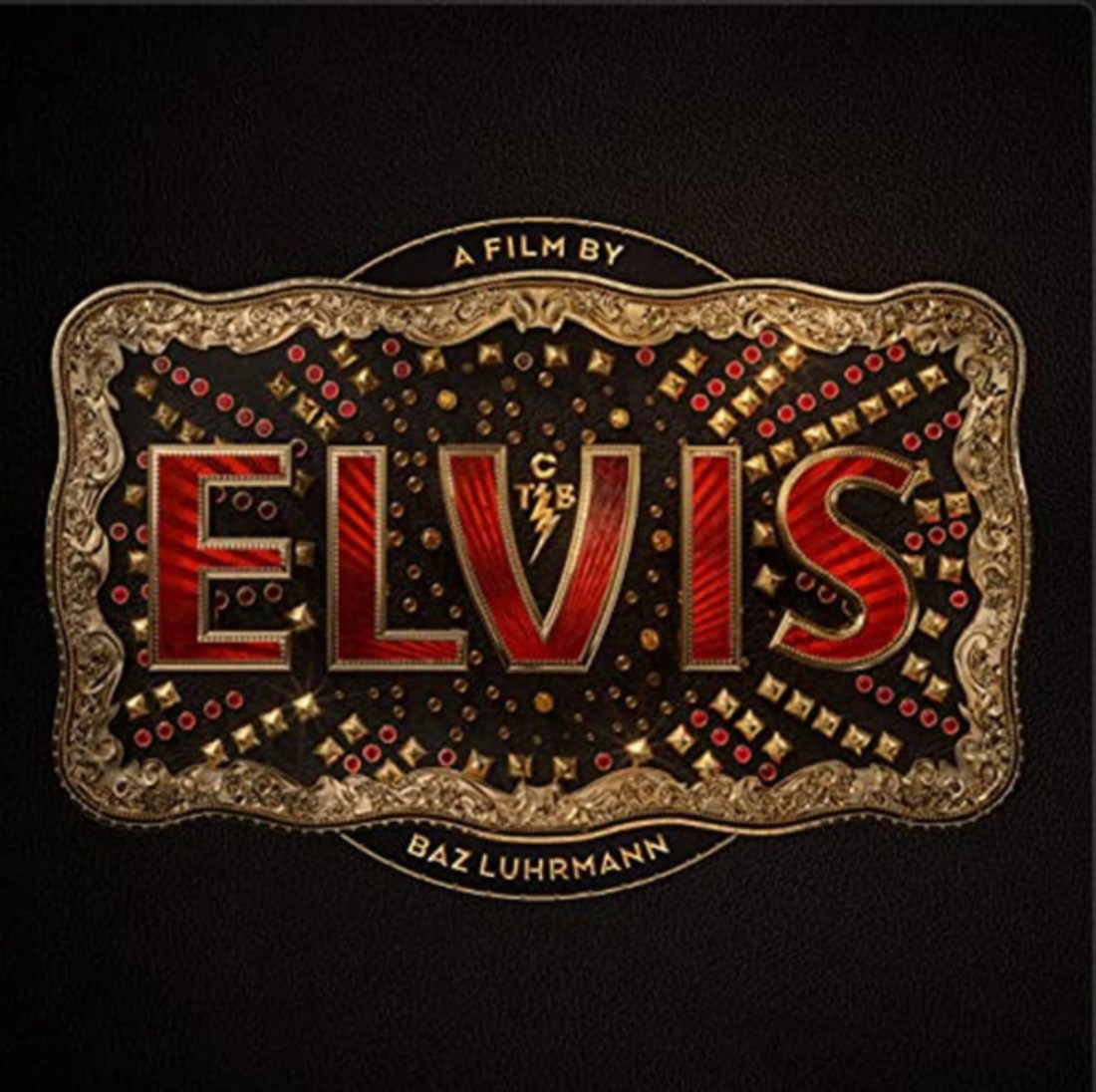
The movies don’t get a lot of attention in Baz Luhrmann’s film “Elvis”, which strikes me as a better creative choice than Presley made in appearing in them. The film is both an indelible portrait of what made Elvis great, and a reminder of how often he failed to honour his prodigious talents. It does a great job of showing the force of nature that Elvis was at his peak. Those powers never went away, even when Elvis misused or abused them, and his fans somehow kept that idealised image in their heads, so that when he lifted himself out of the muck and gave the world art again in something like the 1968 television special, there was always a parched desert of believers eagerly waiting to drink. His career was an endless series of failures to be great, yet the highs are so powerful and the hits so unforgettable that he remained great in spite of making bad choice after worse choice.

That the film works is thanks to star Austin Butler, a Disney/Nickelodeon kid now grown up and kicking ass. (Next up: picking up (not literally, I hope) Sting’s codpiece for “Dune”.) Playing such an icon is a tall order, but if you don’t buy Butler as Presley, you didn’t see the same movie I saw. The film is cheesy and campy – it is a Baz Luhrmann film, after all – and a lot of fun until it isn’t. Tom Hanks is sort of over the top as Colonel Tom Parker, and other than the young fellow playing Little Richard and the Butler lookalike playing the juvenile Elvis, I barely remember the rest of the cast. But Butler makes it worth your time.

• • •

And now, to my favourite listens of August 2022.

  • The Ronettes – Presenting the Fabulous Ronettes featuring Veronica (1964)
  • Fred Neil – Fred Neil (1966)
  • Muddy Waters – Electric Mud (1968) (Blues purists hate this album. It’s that lack of purity that I love.)
  • Fleetwood Mac – Mystery to Me (1973) (I was never much of a Mac fan, and definitely didn’t pay attention to the pre Nicks/Buckingham incarnations. This album comes from when Bob Welch was the dominant creative force, and the poppy brilliance that later gave the world “Ebony Eyes” and “Sentimental Lady” is on display, along with Christine McVie’s prodigious talents. So good, I played most of it back-to-back.)
  • AC/DC – Back in Black (1980)
  • The dB’s – Like This (1984)
  • Guns N’ Roses – Appetite for Destruction (1987) (These guys really were (are?) a significant cut above other hard rock bands of their time, weren’t they? (Of course, I had this same thought an hour later about “Back in Black” era AC/DC, so either (1) I’m an unaware hard rock fan or (2) I need to listen to more hard rock so I can actually develop a coherent opinion about this stuff before I make more such comments.))
  • Del the Funky Homosapien – I Wish My Brother George Was Here (1991) (Spotify claimed that my friends were listening to this. I must meet these “friends”.)
  • Kathy McCarty – Dead Dog’s Eyeball (1994)
  • The Jayhawks – Tomorrow the Green Grass (1995)
  • STRFKR – Vault Vol. 1 (2017)
  • Austin Jenckes – If You Grew Up Like I Did (2019)
  • Jeremy Ivey – Invisible Pictures (2022)
  • Flo Milli – You Still Here, Ho? (2022)
  • Maggie Rogers – Surrender (2022)
  • Megan Thee Stallion – Traumazine (2022)
  • Fireboy DML – Playboy (2022)
  • Horace Andy – Midnight Rocker (2022) (The search for reggae that I enjoy finds a place to land.)
  • Sun’s Signature – Sun’s Signature (2022) (If you’ve been missing Cocteau Twins, and assuming you’re a little less depressed now than you were from 1982 to 1996, this could be your new favourite band.)
  • Jeshi – Universal Credit (2022)

Classic Songs of My Youth Revisited #11

Elvis Presley – Don’t Be Cruel

Anyone who knows when I was born and is capable of inter­preting a calendar will right about now be calling ballshit on my framing of “Don’t Be Cruel” as a classic song of my youth. To that, I have three comments (well, four):

  • The first time I became aware of Elvis was during my youth. (This creates a lot of leeway: I’m coming for you, “Rock Around the Clock” by Bill Haley and the Comets. Hell, even Mozart (a.k.a. the first pop star) isn’t safe.)
  • Elvis has never stopped being popular, and thus his songs are classics of everyone’s ­youth.
  • Women are born with all the eggs they will have in their lifetimes (well, maybe), so when this song was released in 1956 a significant chunk of my DNA was just hanging around waiting to become me. Science!
  • Finally, this is my blog. The only rules are my own.

Now, to our story.

Possibly the first album I claimed ownership over (but didn’t actually own) was a 1973 compila­tion called “Elvis”. It had a blue cover with yellow lettering, and until writing this, I had long believed it was a K-Tel compilation. It was packed with 20 of his biggest hits, and I think I loved every one of them. But the song I loved best was the first track on the A side of disc two: “Don’t Be Cruel”.

By the end of the 1970s, I had stopped listening to Presley, having moved on to that other Elvis who claimed to be King. That’s never really changed even to this day. But I still remember those songs well, and get a small spark of joy when I hear one without warning.

When my father passed away in 2007, he didn’t leave much in the way of a material legacy for his four offspring. As it was, I only wanted one thing: his Fender guitar. It wasn’t worth anything (his was a mass market axe), and I couldn’t play. But a love of music was one of the few things we had in common, and I guess that was a factor. 

Flash forward to Christmas 2009, and my future wife bought me guitar lessons as a present. I attended for several months, then started law school and had little time for much else over the next few years. My guitar has sat in its case, neglected, pretty much ever since. But the one song I had started learning to play was an Elvis tune. Taken off an album called “Elvis ‘56”, I had never heard “Too Much”  before, even though it had been a hit. It’s a good song for a beginner – straightforward strumming of some basic chords without much in the way of changes. I wasn’t a bad student, even with my aging digits and sluggish reflexes, thanks to having a pretty good ear, and I was actually getting the hang of playing it before I packed my guitar away. And that “Elvis ‘56” album is pretty great.

But it still can’t top “Don’t Be Cruel”. It opens with Bill Black’s thumping double bass, and if you don’t immediately recognize it, that can only be because you haven’t listened to pop radio at any point in the last 65 years. The backup singers create atmosphere with their bop-bops and aah’s, and that deep bass never lets up, paired with a simple drum beat, driving through as Elvis presses on to the end, seeking his girl’s undying love. 

It isn’t his greatest vocal, and he is downright minimalist when it comes to clear articulation (now that I’ve read the lyric sheet, I know how many of these I misheard). He fully commits to the song, with a hint of pathos to his hopeful romanticism. He starts out saucy, despite the pleading in the words – even when Elvis is begging a girl, he never stops being cool. He then does what every cool guy does when a girl is blowing him off: he ups the ante, with Mr. Confident thinking the solution to his problem is to get her to marry him. This is a false hope, and there is a slight hitch in his voice towards the end, as he realises “maybe this isn’t going to work out”, with the now clear and earnest delivery from Elvis and doo-doo’s of the last chorus sending a chill along your spine (or neck into the upper shoulders in my case).

It’s a classic for good reasons, and the uncomplicated production allows the musicianship to shine through. Great music doesn’t need to be fussy. It just needs to grab and hold your attention, and there were few equal to Elvis in doing just that.