
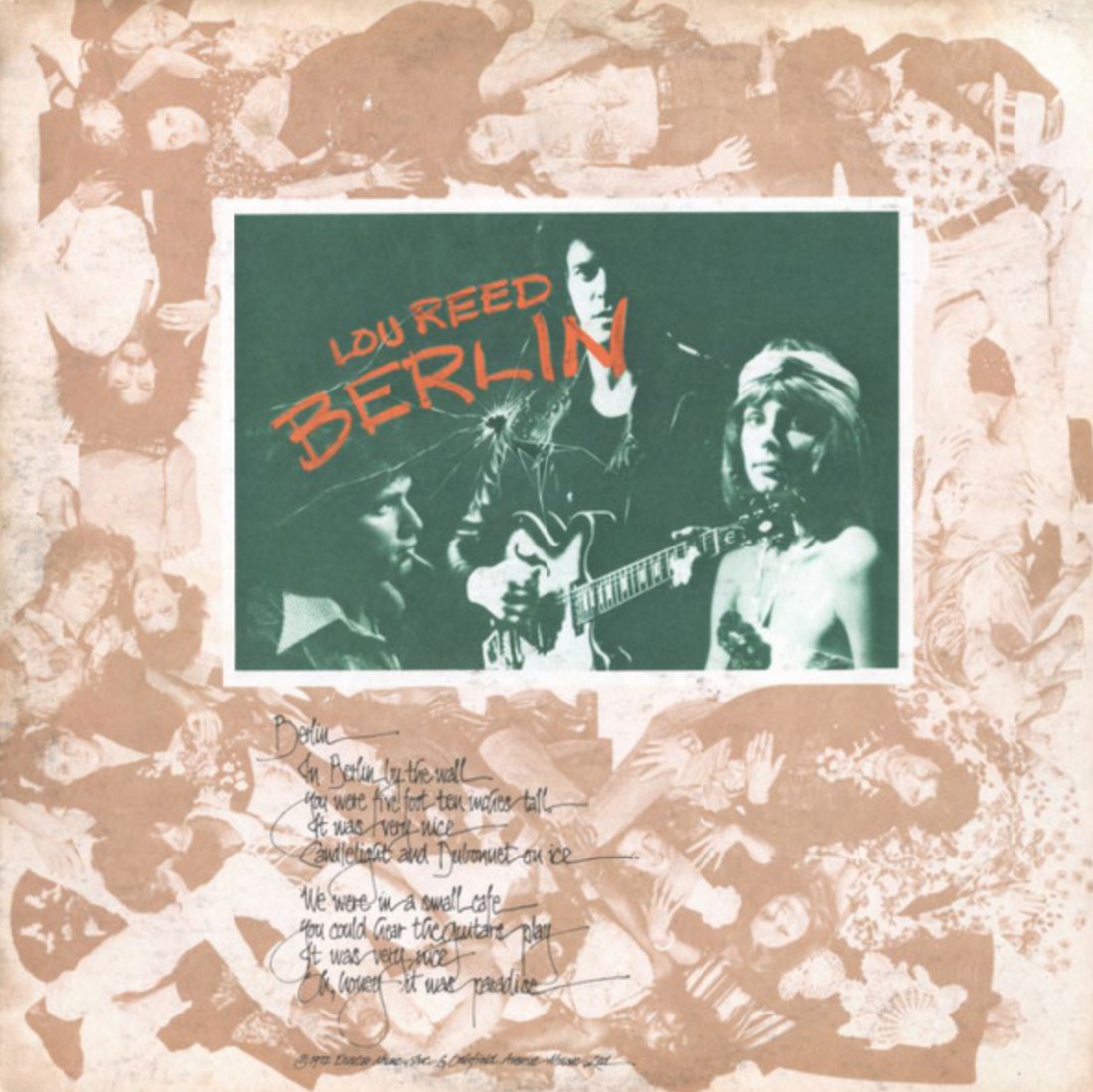
Lou Reed – Berlin
Figuring out the essence of Lou Reed as a creative figure can be challenging. As a rock star, he is iconic – an active cool, dark and aloof – and it almost feels as if the role needed to be invented just to contain him. Yet he’s really more of a gloomy troubadour, with a vagabondish feel to his music – he would’ve thrived as a wandering minstrel in the Middle Ages, not that he didn’t do just fine in our era. But where he really would have been at home is musical theatre, in storytelling songs with dramatic flourishes and stylistic switches, the kind of tunes that are showcases for the performer.
Of course, one problem with musical theatre is that it is full of big and messy emotions, and that is not who Lou Reed was as an artist. He leaned towards a deadpan vocal style, drained of passion, always chill. But because he so rarely shows emotion, it’s a really big deal when he does. Some singers are forever on the knife’s edge – whether faking it for effect (most of them) or genuinely losing it (basically, Adele) – but that quickly becomes exhausting. Lou usually stays above it all, so when he slips, when the whole human mess of it all gets through to Lou-fucking-Reed, then you notice, and you lean in, and listen harder to take in what this wizard of cool is losing his shit over.
“Berlin” is a love story, but it’s not a happy one, and when the relationship at the heart of the album reaches its conclusion over the brutal sock in the teeth that is the three-song stretch that ends the record, Lou has clearly had enough of Jim and Caroline. You can see it coming, though: the delicate nostalgia of the title song becomes the flirtatious put downs (“she wants a man, not just a boy”) of “Caroline Says I” becomes the abusive toxicity (“You can hit me all you want to but I don’t love you anymore”) of “Caroline Says II”.
He’s in the middle of the mess now on “The Kids”, and he sings with less distance, a hint of emotion seeping into his voice, as the gentle music contrasts with the devastated mother of the tale. This turns into the delicate guitar picking of “The Bed”, an almost whispered inventory of grief so matter-of-fact that there really is no grieving being done (“I’m not at all sad that it stopped this way”), the “oh-oh”s rising to his voice slightly breaking on “what a feeling”. It then ends with “Sad Song”, a lightly hopeful and nostalgic epic that seems to be saying that maybe it’s best that the bitch is gone (“Somebody else would have broken both of her arms”).
There’s lots more to love here, especially the circus-like feel of “Lady Day” and the album’s one true rocker, “How Do You Think It Feels”. It’s an album that lives inside you with repeat listens, as you internalise its rhythms. Although a Lou Reed production would’ve made for a gloomy evening out – more “Sweeney Todd” than “My Fair Lady” – it is not an experience you would have easily forgotten. I’ll definitely be buying a ticket if anyone ever decides to give it a try.
 PopNotes