
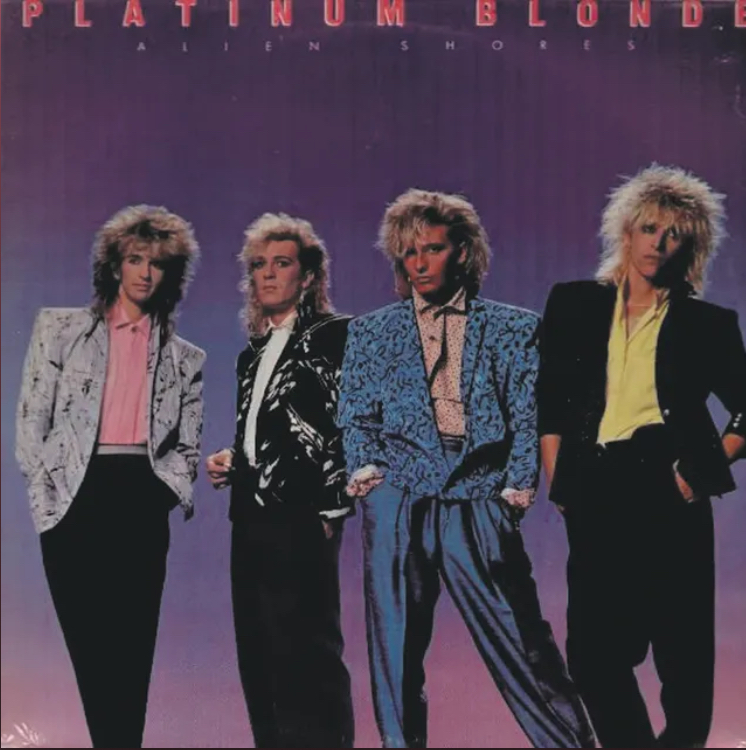
Platinum Blonde – Crying Over You
As I was growing up in the 1970s and early 1980s, internationally successful Canadian pop and rock acts were rare. Artists like Neil Young and Joni Mitchell were superstars but their album-oriented music didn’t get a ton of play on our local radio station, and others like Anne Murray and Gordon Lightfoot had lots of hits but were, well, lame. The Guess Who was long gone, and Bachman-Turner Overdrive peaked before I paid them much attention. There were outlier tunes like Nike Gilder’s “Hot Child in the City” and Dan Hill’s “Sometimes When We Touch”, and soon Bryan Adams would come along to spend the better part of two decades interchangeably yelling or growling at us.
But we had lots of bands with hit after hit within our borders. Because of government licensing requirements, Canadian radio stations had to play 30% domestic recordings, under a formula that eventually reached its nadir when it decided Adams – or at least his music – wasn’t Canuck enough to fit into that 30%. For better and often worse, these rules gave a lot of homegrown acts an opportunity, and that radio play helped them develop a following. This was joined in 1984 by the MuchMusic video channel, giving us a look to go with the sound. And possibly no domestic band took better advantage of the power that video had to offer than Platinum Blonde.
As the band name would suggest, yes, they were sort of ridiculous, and I also owned their first three albums, played them a lot, and make no apologies for that. Their biggest hit by a fair margin was “Crying Over You.”, and the video is a glorious mess of big (probably dyed?) hair and slick New Romantic styling, all glossy surfaces and flashy colours. (I wonder, too, if they ran out of money during the shoot: an awful lot of shots seem recycled. Lead singer Mark Holmes would later say that drug use played a part in the band’s demise. Just sayin’.) The four band members are styled so similarly and the video shot so allusively that it took my second reviewing before I remembered – I had to have known this in 1984/85, right? – that the point of the video is that the female subject is dating ALL of them at once, and only her inscrutable manservant is wise to her shenanigans. The premise seems to be a dudes only powwow where they share how they each were betrayed – and, umm, how they betrayed each other – ending with begrudging acceptance that they are done with her, though her wink just before the closing shot suggests that this game is far from over.
But this was of course a song before it was a video, and it happens to be my favourite of their tunes. Their early sound was post-new wave nu glam, and when I was introduced to The Cure a few years later, I recognized echoes of Platinum Blonde, so I was thrilled to hear Cure leader Robert Smith cover the band’s “Not in Love” with Crystal Castles. (Images in Vogue is another great Canadian band that fits with that group, and their “Call it Love” is overdue for the Smith treatment.) As they evolved, the guitars became more forward, and they also started pulling in shades of funk, which they would dive into headfirst on their next album and its eponymous lead single “Contact” (the other leading contender for my fave PB track). “Crying Over You” sort of catches them in the middle of that evolution: there’s a solid bass line from Kenny MacLean on the chorus (based on how into it he seems in the video, MacLean really liked this song) and nice shredding on the guitar solo (from guest player Alex Lifeson of Rush), but the main sound is a sort of jittery funk-lite groove meets pout rock on the verses. Together, they make not what I would call a dance tune, but definitely something with a hip swinging vibe (and not the borderline sashay seen in the reverse shot of Holmes that flashes across the screen at the 20-second mark of the video – I can’t be the only one who thought of Pete Burns of Dead or Alive). I don’t remember it getting club play back then, but it would have been a solid early evening entry to get the crowd warmed up.
“Crying Over You” hit #1 in Canada and the album it came from, “Alien Shores”, got to #3, both marking the band’s commercial peak. They broke up a few years later but remained pals, with the original threesome of Holmes, guitarist Sergio Galli and drummer Chris Steffler reuniting to honour MacLean’s wish after his ridiculously early death. They haven’t released a record in over a decade but are still around (and newly inducted into Canada’s Walk of Fame), minus Steffler, who had to retire for the very rockstar reason of having developed tinnitus. Their music, which was very much in the style of the moment, holds up better than I expected, just like some of the other bands of that era, like Duran Duran (to which they were often compared), that were dismissed by many as bubblegum but were in reality masterful sugar confections. More bonbons than bubblegum, let’s say. But there’s nothing wrong with bubblegum either.
 PopNotes