Classic Songs of My Youth Revisited #49

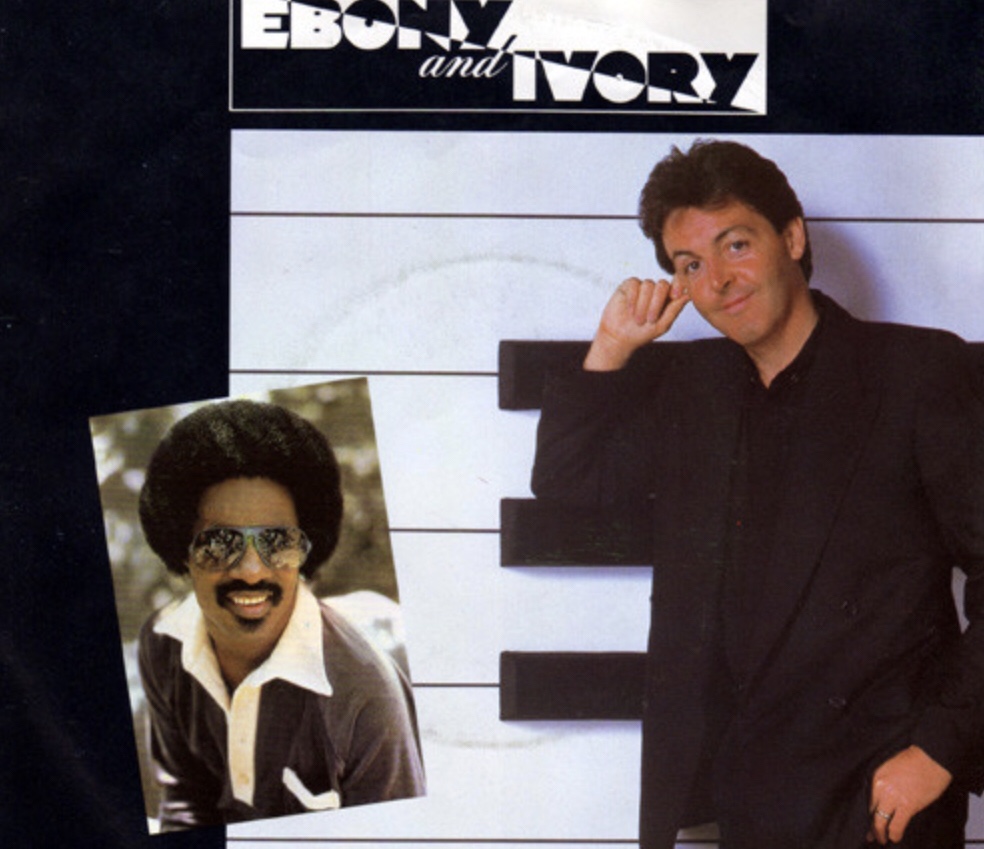
Paul McCartney featuring Stevie Wonder – Ebony and Ivory

It’s not surprising that our tastes change over time. When I was a teenager, I loved the novels of Irving Wallace. They were big books full of facts about fascinating topics: the Bible, the Nobel Prizes, American politics. Wallace was a capable but not particularly dynamic writer, and eventually I moved on to more challenging reads.

Those earlier loves can be enduring for nostalgic reasons even if our aesthetic sensibility no longer finds them pleasing as art. I recently listened to an album from The Ravyns, an early ‘80s band that had a minor hit called “Raised on the Radio” off the “Fast Times at Ridgemont High” soundtrack. The entire time it was playing, I just kept thinking that it was a perfect example of the overproduced faux rock of that era. I was trying to figure out what artist their sound most reminded me of, and then it hit me: Rick Springfield. Who I owned five albums by and listened to regularly into the early ‘90s without even once thinking that it might be shite. Who I still sort of love, but am now a little anxious about listening to very closely given my realization that his music may be sort of garbage and I think I’d rather not confirm that. Awareness can be a burden.

I mention all this because I am grappling with a question: why did 17-year-old me love “Ebony and Ivory”? Because 59-year-old me, and most intervening versions, wants all physical and digital traces of this song to be locked in a vault, dropped into Marianas Trench, have an anvil land on it Wile E. Coyote style and then blow the whole thing up for good measure. I don’t understand why we didn’t think it was awful at the time. I remember having a conversation about the song with my friend Alan Sutherland, who took his music very seriously, and he neither mocked it nor mocked me for liking it (and Al was always up for a good mock when circumstances called for it).

I had not really paid attention to it in years, and then suddenly there it was, in my poor ears, as the third track on a Paul McCartney compilation called “All the Best”. No, not even close to one of his best (though when “Silly Love Songs” also makes the cut, you know the bar is limbo champion low). Not when that record did not include “Helen Wheels”, “Maybe I’m Amazed” or “Mull of Kintyre”. Not when it could have been replaced by pretty much any omitted track from “Band on the Run”. No way.

So, why do I – the “there is no bad music” guy – think this song is so awful? First, is there a more treacly song out there? Yes, of course – the musical excrement that is “Butterfly Kisses” immediately comes to mind, and the name Bobby Goldsboro can give me hives. (I won’t link to them – if masochism is your game, you can easily find them yourself.) Neither of them, however, topped Messrs. McCartney and Wonder on Blender’s list of the 50 worst songs ever, where “E & I” ranked 10th. (“We Built This City” topped (bottomed?) the list, and I think everyone can agree – even, as it turns out, the woman who sang it – that it truly blows. (Aside: I just learned this was co-written by Bernie Taupin. How is such a thing even possible?))

Not a moment in the song isn’t sparkly clean, honed to a version of perfection that overlooks the part where a song should maybe be a bit dangerous to be actually fun. It’s all so artificial, a synth heavy soundscape that feels very lush, like lying in an aural down bed. There really isn’t much happening here: the only musically interesting bits are coming from Paul’s bass. It’s music for washing the dishes, not listening to, and thus is more akin to what is happening now than to an era where you still had to pay attention to the music coming over the air lest you miss something great and never have a chance to hear it again. “E & I” is musical wallpaper, and, like all wallpaper, if you look too closely you’ll notice the torn edges, the parts that don’t line up quite right and the soul crushing blandness of the thing. That’s this song in a nutshell.

I don’t doubt that Paul and Stevie believed in their message, limited as it may be to the confines of a chorus and a single repeated verse. The song’s notions about racial harmony were belittled on release as simplistic, and it’s not like another 40+ years of people trying to destroy each other on the basis of ethnic differences has redeemed their poptimism. But that never really concerned me: I knew exactly two Black people, and while race may have been something the two of them were highly conscious of, I wore blackface in our high school musical “Finian’s Rainbow” and never gave it a moment’s consideration. (I was 17 and living in a less enlightened time and place – the adults in the room maybe should’ve thought a little more carefully about the show they selected that year for a bunch of white kids to perform. Those photos could damage my political career!)

McCartney and Wonder made tons of music that I love, but very little of it came after this team-up: Stevie’s last widely acclaimed album was 1980’s “Hotter Than July”, and some feel this song marked the point where Paul began to lose credibility as an artist. You have to give them credit for one thing: it takes a lot of confidence to make a record this earnest, although no one ever went entirely wrong recycling lame messages about humanity’s inherent goodness. The lyrics were made for a United Nations banner, not the top of the charts, yet somehow that’s where they ended up. I guess we were just really boring in 1982.
Pazz and Jop 1974 #4

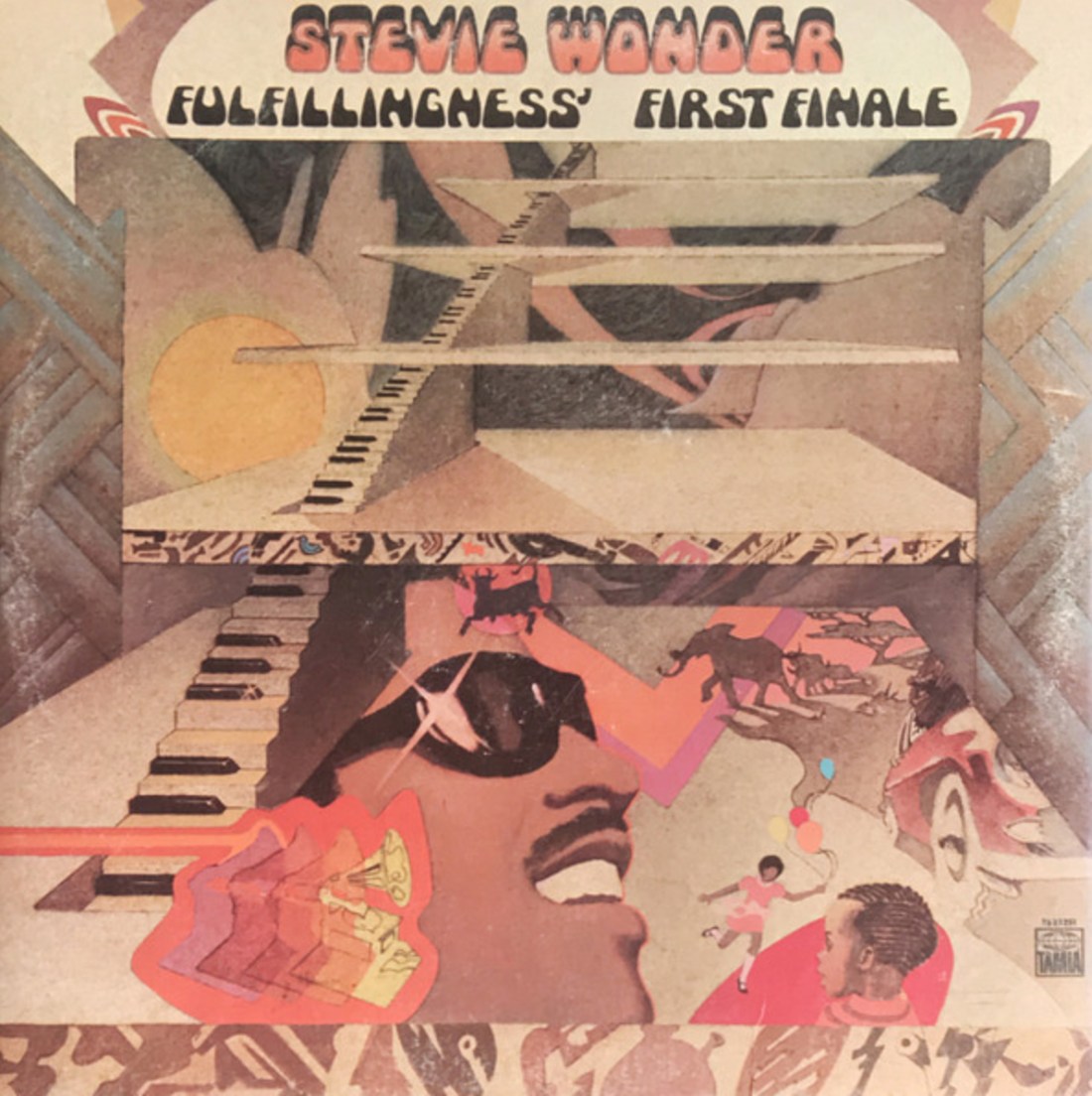
Stevie Wonder – Fulfillingness’ First Finale

The more I play an artist’s music, the closer I get to understanding them, or at least understanding what they are willing to let us see. In the early 1970s, Stevie Wonder, was a very spiritual and socially conscious man, and a true believer in romantic love. And, perhaps most importantly, he knew that sometimes you needed to put aside the seriousness and get down.

I always favour the upbeat Stevie, so the electro funk of “Boogie On Reggae Woman” and “You Haven’t Done Nothin’” rank highest from this album. The latter has fuzzy chords and slurred lyrics, paralleling the sexual despair of the narrator, but the pairing with tinkling piano, harmonica (has anyone ever loved a good harmonica solo like Stevie?) and an on-fire tempo make it a feel-good track. The former has a more sluggish beat, fitting for a peppy but far from light tune. Absent of funk but still upbeat is the toe-tapping “Smile Please”, which is very much of its era, conjuring up visions of men in brightly-coloured suits and big hair with wide collars and wider ties spinning women in flowing print dresses cut at mid calf across a lounge room dance floor.

As for romantic and spiritual Stevie, his ballads are too often sunny border­ing on sappy, with an undercurrent of obsession – especially “Creepin’” – and deep insecurity about the love in question. “Too Shy to Say” does a good job of balancing this with the piano in a lower register than Wonder’s voice. The deep vein of spirituality seen on his last few albums is tempered here somewhat, but still significant: “Heaven is 10 Zillion Light Years Away” feels like a gospel song, and the repeated line – “feel it, feel His spirit” – leaves no room for doubt. The dirge-like piano opening of “They Won’t Go When I Go” soon turns into a hymn of sorts. It’s a beautiful song, but it unfortunately compels some great artists – Kanye and, more sadly because he seems like an awesome guy (and damned funny – check out his SNL bits as a basketball reporter on a new assignment), Chance the Rapper – to think they are singers. (They are not.)

The only real downside to Wonder’s records is that some of the songs begin to have the repetitive sameness of a wallpapered room. Some of this is at least partly a product of his early dabbling with synthesized sounds: on many tracks, the notes seem to blur together, flowing, indistinct. And he has an all-star team of past, present and future hitmakers on backing vocals – Paul Anka, The Jackson 5, Minnie Riperton, Deniece Williams – but none of them really stand out: it’s Stevie’s show, no matter who (including bass legend James Jamerson) comes along for the ride.

There are few matches in pop music history for the acclaim that Wonder received for his five-album run from 1972 to 1976. Retrospective consideration of those records has defined a clear top 3 – “Songs in the Key of Life” (coming to this blog, at the current rate, sometime in late 2023) with “Innervisions” close behind, then “Talking Book” a distant third – followed, way back, by “Fulfillingness’ First Finale”. I don’t really understand the gap, because this is a damned good album, and well worth a listen or five.

Not the Pazz and Jop 1973 – #2

Stevie Wonder – Innervisions

If you had “socially conscious Stevie Wonder” on your pop music bingo card in 1973, you could have completed the line that included “Dolly Parton sweet talks a ho”, “Marvin Gaye brings even more sexy” and “some new guy named Bruce” for a bingo with the free space in the middle.

There are songs about drug abuse, reincarnation, meditation, urban decay and crime, (allegedly) Richard Nixon, and, because it’s Stevie, love, though maybe that’s really what all of these songs are about. Even in a powerhouse like “Living for the City”, with its tale of the struggle to survive, it starts with a foundation of familial love. 

Conventional romantic love isn’t forgotten. The uptempo piano ballad “Golden Lady” has a pseudo Latin feel, and it glides along, melodic and soothing, as the underlying music becomes more complex. “All in Love is Fair” is impassioned and intense, full of regret that emerges towards the end with the vocals becoming strained as the piano keys hit harder, and could serve as the closing theme over the credits of a tragic romance movie. 

More aggressively Latin is the super fun “Don’t You Worry ‘Bout A Thing” (probably my favourite track), which finds the cocky narrator trying to impress his girl, but the chorus shows his limitations. He tells her “I’ll be standing on the side when you check it out”, and while he thinks she’s overreaching and should be content, in fact she’s trying new things while he is afraid to put himself out there.

But it’s the three more spiritual tracks that make the greatest impression. There is a sense of disenchantment in the fantasy soundscape of “Visions”, of seeing wonderful things that really aren’t. It becomes somewhat neurotic in the latter stages, before ending on a hopeful note. The funky dance vibe of “Higher Ground” lauds reincarnation and the process of growth, but the verses show that everyone keeps repeating the same old patterns. Finally, the mellow “Jesus Children of America” questions how to find peace and the price paid to achieve it.

Just a great record from start to end. Break out your dabbers (or daubers – this is apparently a matter of some controversy in the bingo community) – Marvin will be along soon.

Not the Pazz and Jop 1972 – Extra Credit

Even with listening to most of these records a few times before doing a post, that still leaves a lot of time – mostly on walks, but also while doing yard work – to listen to other music. This includes records from 1972 that didn’t make it into the top 20, and not just the already-commented-on Black Sabbath’s “Vol. 4”. How Jethro Tull made it ahead of any of these records is mystifying to me, and some of your favourites are likely here, too. I can’t recommend everything from 1972, but the albums listed below gave me a lot of pleasure.

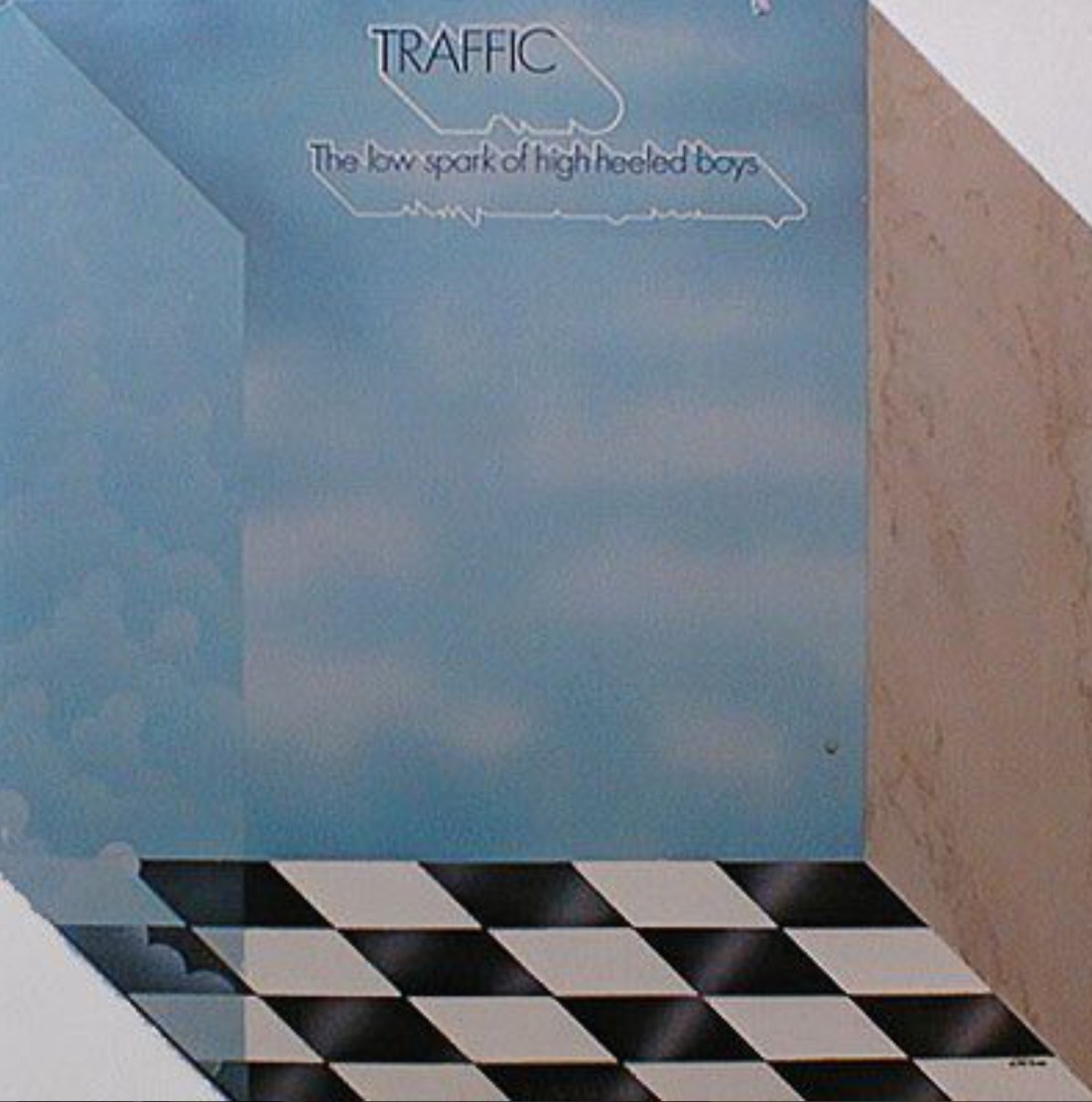
  • Traffic – The Low Spark of High Heeled Boys (especially the epic title track, an immediate addition to my Spotify playlist “Long Songs that Never Get Boring”)
  • Stevie Wonder – Music of My Mind (what a year he had)
  • The O’Jays – Back Stabbers
  • Todd Rundgren –  Something/Anything?
  • Randy Newman – Sail Away
  • Al Green – I’m Still in Love with You; Let’s Stay Together (also a pretty good year)
  • T. Rex – The Slider
  • Mott the Hoople – All the Young Dudes (produced by David Bowie – its a crime these guys aren’t appreciated more)
  • Miles Davis – On the Corner
  • Elton John – Honky Chateau
  • Alice Cooper – School’s Out (possibly 1972’s biggest surprise outside of Black Sabbath – I think there’s a musical theatre nerd in Vince that managed to sneak out for part of this record)
  • Captain Beefheart and the Magic Band – Clear Spot
  • Eagles – Eagles (it pains me to include this – Don Henley seems like an enormous tool (just ask Frank Ocean), and Glenn Frey may have been one – but there is no denying these guys made some decent records)

Not the Pazz and Jop 1972 – #16

Stevie Wonder – Talking Book

I’m beginning to think Stevie Wonder may be a forgotten master. He’s never stopped being popular – “Superstition” has over half a billion streams on Spotify – but, unlike Steely Dan for example, it seems that popularity is being driven entirely by oldsters rather than finding a new audience. This occurred to me when my massage therapist, who is roughly a decade younger, told me about a friend getting her to listen to some of his albums, which were new to her. His run in the ‘60s and ‘70s has few equals. But after 1980, there isn’t much worth listening to. If you came to his music after that, your main avenues of exposure would have probably been “Ebony and Ivory” and “I Just Called to Say I Love You”, two of the most execrable pieces of garbage ever put to tape by a major artist. And if that is how you first heard of him, then it is more than reasonable if you decided that your ears had suffered enough offence for one lifetime. Which is too bad, because, man, when he was on, it was fire.

This is one of those “on fire” records. 

I have probably heard “You Are the Sunshine of My Life” hundreds of times over the years, and it always seemed like a sappy song of no great significance. But when the needle dropped and the familiar sounds washed over me, I felt so happy. It was a beautiful sunny day, I was strolling on my beloved boardwalk, and the world just felt like a really good place for a change. That was Wonder’s power – he brought joy with his music.

His other ballads are great – especially “You and I”, which I first heard in 1976/77 as the “B” side to either “I Wish” or “Sir Duke” (I had both on 45). It leads with piano, but it’s the synthesizer underlying it that gives the song an air of needed sadness, since it is as much about the fear of losing a great love as the joy of being in the middle of it. But it’s the funkier songs that I like best. “Maybe Your Baby”, with Ray freaking Parker Jr. on guitar, is a classic strut song, the kind where you feel more confident just hearing it, like mainlining cool (though it goes on for about two minutes longer than needed). His voice is so dexterous – it might have been my fourth listen when I finally realized it’s Wonder singing the chorus. Or “Superstition”, which I was surprised to discover had a heavy contribution from Jeff Beck (whose version from the Beck, Bogert, Appice album is a much rockier approach to the song).

There is a richness to the record, and as sweet and gentle as it can sound at times, it’s never cloying, because he leans on synths, and their technical chill, rather than strings for those backing elements. There’s some great soulful pop, too, like “Tuesday Heartbreak”, with sax and wah-wah disco sounds, “You’ve Got It Bad Girl” and “I Believe (When I Fall in Love it Will Be Forever)”. There isn’t a weak track, though “Big Brother” is a tad heavy-handed lyrically.

There’s going to be a lot of Stevie in my future – he released three more all-time great albums between 1973 and 1976 – and I can’t wait. Until now, I really didn’t appreciate his mastery. There was too much “Ebony and Ivory” clogging my ears.

(Originally posted on Facebook, August 14, 2021)