SoundTracking #3

Career Planning

Growing up, there were two jobs that I set my sights on attaining once I entered the workforce. First and foremost, I wanted to be a professional hockey goalie. If that didn’t work out, my backup plan was to be a statistician. I really had no idea what the latter position entailed, but I liked math, and my imagining of it was that I’d be the guy who tracks all the assists and penalty minutes and figures out what someone’s goals against average was. Now that I have some idea of what a statistician actually does, it’s clear my conception was really more of a scorekeeper role, and not the analytics-type worker that professional sports teams hire in droves these days. (Career tip for anyone still figuring things out: statisticians are in high demand right now and will remain so for the foreseeable future.)

Eventually, I did a lot of jobs that had nothing to do with hockey or numbers before settling in the legal field and ultimately becoming a lawyer. And while I (usually) like what I do, it isn’t a calling: I’m a lawyer because they let me into law school. (Crazy bastards.) If they hadn’t, I’d have tried something else.

It’s too late to head down this path now, but ever since I learned that such a gig existed (yes, it was after law school), my dream job has been to be a music supervisor for film and television. These are the folks who, working with other members of the creative team, help to come up with the songs that you hear in a movie or show, including such simple things as a background tune in a diner, or the critical mood-setter underlying a scene.

I think this job would’ve been a great fit because I’ve always had a filmmaker’s sensibility without any actual cinematic eye. Music almost always sparks a visual connection for me. A good reminder of this came one recent day in my car with a Spotify playlist on when the Swedish behemoth served up “You Should Be Dancing” from the Bee Gees. What my brain pulled up was not a picture of the Gibb brothers in their satiny disco era glory. No, what I saw was Gru, the supervillain turned father-of-the-year from “Despicable Me” (and four sequels/spin-offs). There are a lot of other songs that my mind spontaneously connects with cinematic visuals. I can’t hear any version of “I’m A Believer” without seeing the celebration of Shrek and Fiona’s nuptials in “Shrek”. Queen’s “Bohemian Rhapsody” means I’ll soon imagine the head shaking and hair flying everywhere of “Wayne’s World”. And there are a half-dozen songs – including ELO’s “Mr. Blue Sky” and David Bowie’s “Moonage Daydream” – that bring back scenes from the first two “Guardians of the Galaxy” films. Even a noteworthy cover version can have this effect: what fan of The Police and “48 Hrs.” does not see – and, more importantly, hear – Eddie Murphy’s falsetto when “Roxanne” comes on?

What I am talking about are songs we already love that the movies have hijacked. There are, of course, songs we love that were created for the movies, like “Don’t You (Forget About Me)” or “Streets of Philadelphia” or “Lose Yourself”. Or a song like Yello’s “Oh Yeah”, which was not widely known before it became associated with a movie. And then there are smaller bits of songs that show up in movies, sometimes without us even realising that they have a pre-history outside of the film. I love the movie “Moneyball” (the book is awfully good, too), and there is a mournful bit of music that I always thought was composed for the film but turns out to be a piece called “The Mighty Rio Grande” from a band named This Will Destroy You. 

We’ve all seen different movies, so your list will differ from mine. But below (SPOILER ALERT!!!) are five more songs that my brain can no longer separate from the movies in which they later appeared.

The Rolling Stones, “You Can’t Always Get What You Want” (The Big Chill)

Truly one of the great song scores, this track sets the tone for the almost-midlife reckoning to come.

The Beatles, “Twist and Shout” (Ferris Bueller’s Day Off)

We should all be honest and admit that super cool Ferris Bueller is something of a selfish dick. But when he climbs up on a parade float and lip syncs to this classic (and Wayne Newton’s “Danke Schoen”), who wouldn’t want to be in his orbit?

Derek and the Dominos, “Layla” (Good Fellas)

As betrayal follows betrayal and the bodies pile up, the haunting piano and wailing guitar lead into one of the most unexpected deaths in the history of cinema.

Stealers Wheel, “Stuck in the Middle with You” (Reservoir Dogs)

Once you’ve heard a song played while a lunatic dances around, cuts off a man’s ear, then covers that man in gasoline, you can never go back.

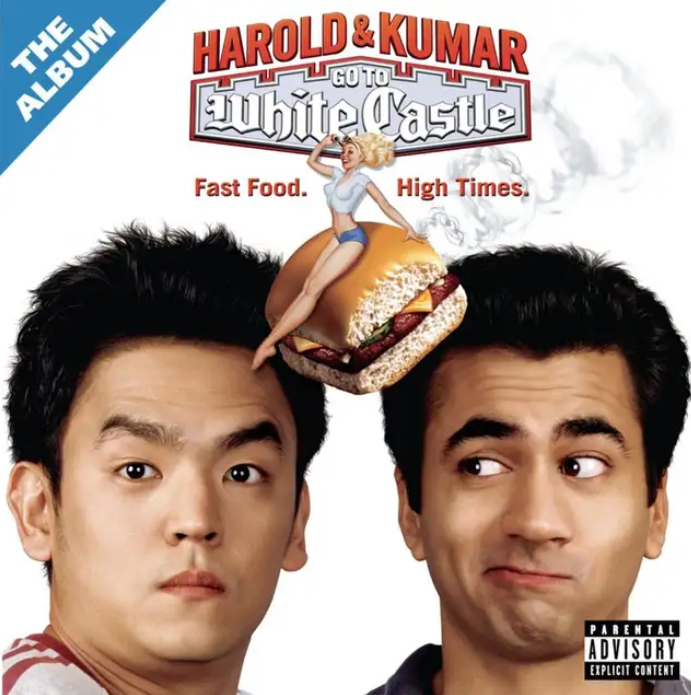
Wilson Phillips, “Hold On” (Harold and Kumar Go to White Castle)

I won’t try to convince you that this is one of the great comedies of the last 20 years: either you are on board, or you aren’t. But in this scene, near the end of a night that tested their friendship, the titular heroes somewhat reluctantly bond over a pop classic.
One-Hit Wonderment #1

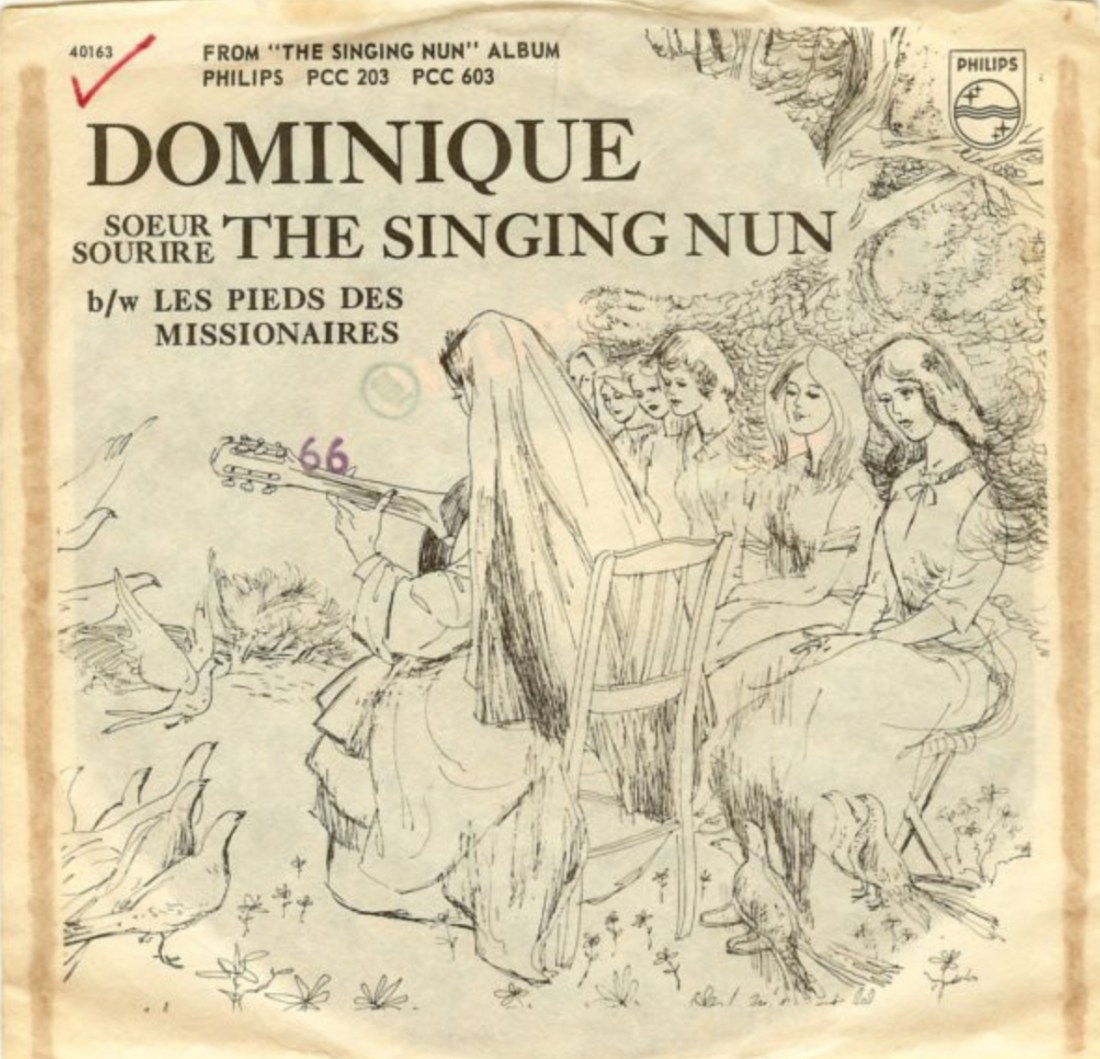
The Singing Nun – Dominique

What makes a hit song? There are people who are paid a lot of money to figure this out and they are as clueless as the rest of us. For proof, I offer two (well, three) examples. 

In 1983, Sheriff hit #61 on Billboard with “When I’m With You”. A most modest success, it was soon relegated to the last spot on stripper set lists. Five years later, it was resurrected by a Las Vegas disc jockey (one wonders where he was spending his off hours), rereleased as a single and went to . Or take Billy Vera & the Beaters, whose “At This Moment” stalled at #79 in 1981. Ignored even by strippers after that, it also became a hit five years later when it was featured prominently on an episode of “Family Ties”. The point? Timing has a lot to do with whether or not a song “pops”. (A pop culture tie-in helps: see also Bush, Kate).

Second (or third) example. History records “Passionfruit” as the second single from Drake’s 2017 mixtape “More Life”. But what I remember in real time is that his label was pushing another song but fans weren’t having it so they had to pivot to support the listeners’ choice. The point? You can’t make people like stuff.

I mention this because it leads into one of my favourite things in music: the one-hit wonder. These are the most unpredictable of musical treats, since no one has the goal of having but one popular song. The artist captures the cultural moment – or at least part of it – with a song that can’t be denied, then is returned to where they were, maybe a little richer, maybe heartbroken by the failure to stay on top, maybe just thrilled to have had that moment. The songs that got them there might be all-time classics (The Penguins’ “Earth Angel”), craven attempts to capitalize on a trend (Buckner & Garcia’s “Pac-Man Fever”), novelties (“They’re Coming to Take Me Away, Ha-Haaa!” by Napoleon XIV), viral sensations (Tay Zonday’s “Chocolate Rain”, which actually never charted, because Billboard had no idea what to do with YouTube streams in 2007), or earnest efforts that end up being just weird enough to stand out (“Dominique” by The Singing Nun). Or they might just be good songs.

The definition of what makes an act a one-hit wonder is so subjective that it can defy reason and even simple math. Case in point: Simple Minds. In early 1985, after several acclaimed albums but no hit singles in North America, they reached with “(Don’t You) Forget About Me”. For a lot of people, it seems their career ended there, which ignores that their very next single, “Alive & Kicking”, reached #3 less than a year later. Somehow, because people are too dim to continue listening to the latter song, which is damned good if not the former’s equal, the band has this label. WTF?

In my eyes, to be a one-hit wonder you must (1) have a song make the Billboard top 40 and (2) never have another song get even a whiff of the top 100. That leaves out a band like A-Ha, who followed up their “Take On Me” with another top 20 single just five months later (plus had a long and successful career outside North America). Nor should it include actors who briefly steer into music, like Anna Kendrick (#6 with “Cups” in 2013), or side projects from established stars/band member stars turned solo stars (both too many to mention), or artists with great careers that were not built on having pop hits (Bobby McFerrin already had five Grammys before any of us had ever heard “Don’t Worry, Be Happy”). So, yes, my standard is subjective as well, but it sure as hell would never include an artist with two top 3 hits in one 12-month period. That’s just stupid.

In the end, one-hit wonders are just fun to listen to (usually) and read and write about, and there are hundreds (I’ve been making a list) of them to remember, and celebrate. I mean, what’s not to love about a singing nun. She’s a nun! Who sings! Count me in.

So, about that. Not only was Jeannine Deckers an actual nun, but her song is about a saint, which has to make it one of the most Catholic songs to ever chart (and thus kind of appealing to a reformed Catholic like myself). Her story is sad in so many ways: she was screwed out of most of the profits from her surprise hit (a pretty common occurrence), was forced out of her beloved Dominican order followed by the Church interfering at times as she tried to establish a singing career, was possibly a closeted lesbian, and, ultimately, ended her own life (as did her purported life partner) at a far too young age. A pretty glum back story to a very cheery tune.

It’s a rather simple song – unless my ears are missing something, guitar is the only instrument – with a straightforward verse/chorus/repeat until nauseated format. Deckers is joined by what my mind imagines to be a small chorus of other nuns, in austere black behind her glowing white habit, palms pressed together as they look heavenward and Jeannine strums away. It’s also far from original: this Spike Jones mashup with “When the Saints Go Marching In” shows that in pretty awesome fashion.

Most importantly, it’s another one of those songs that makes me wonder WT actual F was in people’s minds when masses of them said “I want to own that record” in late 1963. Enough of them said it that it spent all of December at , which boggles the mind. The more you listen to it, you can almost talk yourself into seeing why people loved it so (unless they were pioneering hate buys, like the later Sanjaya voters or many viewers of “Emily in Paris”): it has a bouncy energy that gives the endorphins a boost. Or maybe it was just the times, since 1963 was a year when none of the following classics topped the charts: “Be My Baby”, “Louie Louie”, “Blowin’ in the Wind”, “Ring of Fire”, “Surfin’ U.S.A.”. Instead, a lot of weeks they had the likes of Bobby Vinton, Steve Lawrence and “Deep Purple” to choose from. “Dominique” may have been an unexpected joy in musically dark times. That’s how I like to see it.

Luckily, The Beatles were coming to change that.