Not the Pazz and Jop 1973 – #3

Iggy & the Stooges – Raw Power

For a guy who hasn’t had much commercial success, Iggy Pop has an outsized pop culture presence. A treacherously skinny standup comic I saw live in the early 1990s said he was doing the “Iggy Pop workout tape”, and we all got the reference. (For younger readers, workout tapes were things we could buy in order to help us exercise in front of our televisions in our underwear or pyjamas, before regular people started going to gyms and it became acceptable to wear such items in public.) I’ve always been a little scared of him. He looks like a fit version of the addict he once was, all sinew and raw energy. He’s the guy who, meeting him on a street late at night, you either, depending on how you’re wired, cross the street to avoid or follow to see where he ends up, because you know that’s where the party is. It will shock no one who knows me to hear I am the “cross the street” type.

Though I’ve liked the songs from Iggy that made it into the broader culture, I knew instinctively that this wasn’t something I’d be playing on any kind of regular basis. With only a  few exceptions, I’ve never listened to much hard or punk rock, and Iggy was definitely the former and possibly the original of the latter. The only one of his records I ever bought was the 45 of “Real Wild Child (Wild One)”, which I believe I first heard in the trailer for “Adventures in Babysitting”, which was not a very good movie, though rewatching the trailer reminds me why I went to see it in the first place.

It’s a fired up collection, and if nothing here gets your heart racing, you are either a world class athlete or you really, really need to see a doctor. However you want to describe this – garage or proto-punk – there is something primal about this music. The vocals are often screams, and though prominent in the mix (along with lead guitar, to the virtual negation of the rhythm section at times), he really doesn’t seem to care if you understand what he’s singing. The force of their sound is relentless, the pace rarely lets up, the tenor often menacing. It’s a messy record, distorted and disjointed, but never confused about what it wants to be. The standout songs for me are the more bluesy “I Need Somebody”, along with “Gimme Danger”, a very insistent tune that crawls into your head and won’t leave. 

Despite being a good listen overall, I’m fairly certain I will never play this album again. I don’t know why I don’t love this – maybe I only have room for one purely punk record in my life, and that slot is forever owned by the Sex Pistols. Or maybe that’s just how taste works. If you love everything, then you don’t really love anything. 
Classic Songs of My Youth Revisited #3

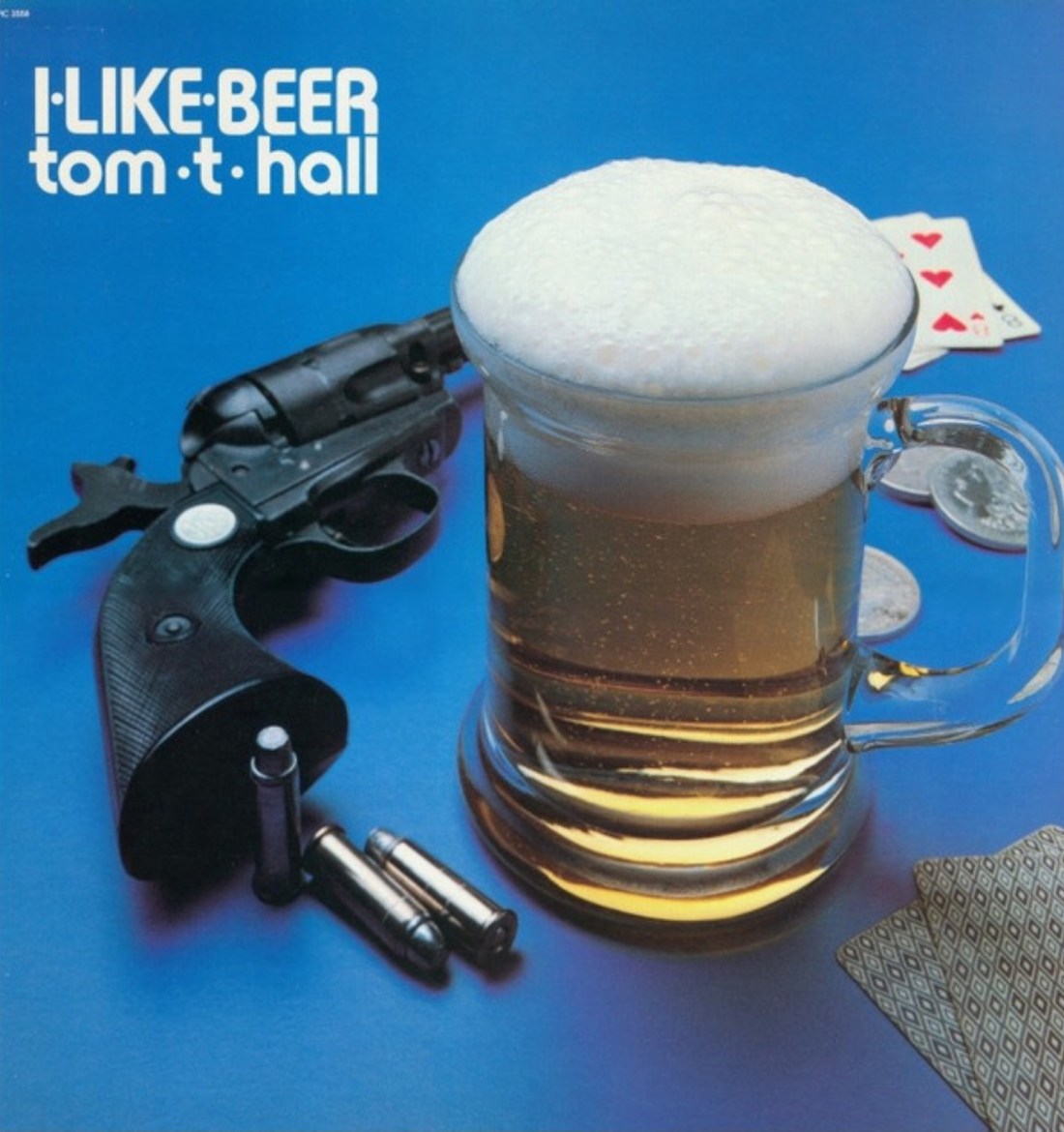
Tom T. Hall – I Like Beer

Country music was a big part of my early listening. Children don’t have a lot of control over, well, pretty much anything in their lives, and music is no exception. My parents listened to country music, so that’s what I listened to. It wasn’t all I heard – my younger uncles played Beatles records when we saw them, and there was other music on the radio and television – but I mostly remember my parents’ records.

There was Merle Haggard, and Charley Pride, and the Statler Brothers, and Conway Twitty, and George Jones, and there must have been some women, too, but for the life of me I can’t remember who. Pride was my favourite (especially “Crystal Chandelier” and “The Snakes Crawl at Night” – also, fuck COVID), but I loved the gentle humour of the Statlers, and Jones’ “The Race is On” is an all-time favourite. And then there was Tom T. Hall.

I can’t say for certain that my parents had one of his records, but that’s my recollection. And if they did, it probably wasn’t 1975’s “I Wrote A Song About It”, which this song first appeared on. But when Hall died last month, there was one song and one song only that immediately came to mind. I pulled it up on Spotify and, a bit to my surprise since I probably hadn’t heard it in over 40 years, I dragged the chorus from the deepest recesses of memory and began singing along:

I like beer, it makes me a jolly good fellow

I like beer, it helps me unwind and sometimes it makes me feel mellow

Whiskey’s too rough, champagne costs too much, vodka puts my mouth in gear

This little refrain should help me explain as a matter of fact I like beer

If that isn’t four perfect lines, I don’t know what is.

It’s the second-most streamed Hall song on Spotify (we’re coming for you, “That’s How I Got to Memphis”!), but his biggest hit was one he wrote but didn’t sing, “Harper Valley P.T.A.”. That song earned him a Grammy nomination for best song in a field that included “Hey Jude” and “Mrs. Robinson”, all of them somehow losing to this. Yes, the Grammys have always sucked.

Anyway, Hall was a master. He could nail a song like “I Love”, with its simple statement of life’s little joys, building to the powerful declaration in the chorus. But give me the jaunty pleasures of “I Like Beer” every time.

Not the Pazz and Jop 1973 – #2

Stevie Wonder – Innervisions

If you had “socially conscious Stevie Wonder” on your pop music bingo card in 1973, you could have completed the line that included “Dolly Parton sweet talks a ho”, “Marvin Gaye brings even more sexy” and “some new guy named Bruce” for a bingo with the free space in the middle.

There are songs about drug abuse, reincarnation, meditation, urban decay and crime, (allegedly) Richard Nixon, and, because it’s Stevie, love, though maybe that’s really what all of these songs are about. Even in a powerhouse like “Living for the City”, with its tale of the struggle to survive, it starts with a foundation of familial love. 

Conventional romantic love isn’t forgotten. The uptempo piano ballad “Golden Lady” has a pseudo Latin feel, and it glides along, melodic and soothing, as the underlying music becomes more complex. “All in Love is Fair” is impassioned and intense, full of regret that emerges towards the end with the vocals becoming strained as the piano keys hit harder, and could serve as the closing theme over the credits of a tragic romance movie. 

More aggressively Latin is the super fun “Don’t You Worry ‘Bout A Thing” (probably my favourite track), which finds the cocky narrator trying to impress his girl, but the chorus shows his limitations. He tells her “I’ll be standing on the side when you check it out”, and while he thinks she’s overreaching and should be content, in fact she’s trying new things while he is afraid to put himself out there.

But it’s the three more spiritual tracks that make the greatest impression. There is a sense of disenchantment in the fantasy soundscape of “Visions”, of seeing wonderful things that really aren’t. It becomes somewhat neurotic in the latter stages, before ending on a hopeful note. The funky dance vibe of “Higher Ground” lauds reincarnation and the process of growth, but the verses show that everyone keeps repeating the same old patterns. Finally, the mellow “Jesus Children of America” questions how to find peace and the price paid to achieve it.

Just a great record from start to end. Break out your dabbers (or daubers – this is apparently a matter of some controversy in the bingo community) – Marvin will be along soon.

Classic Songs of my Youth Revisited #2

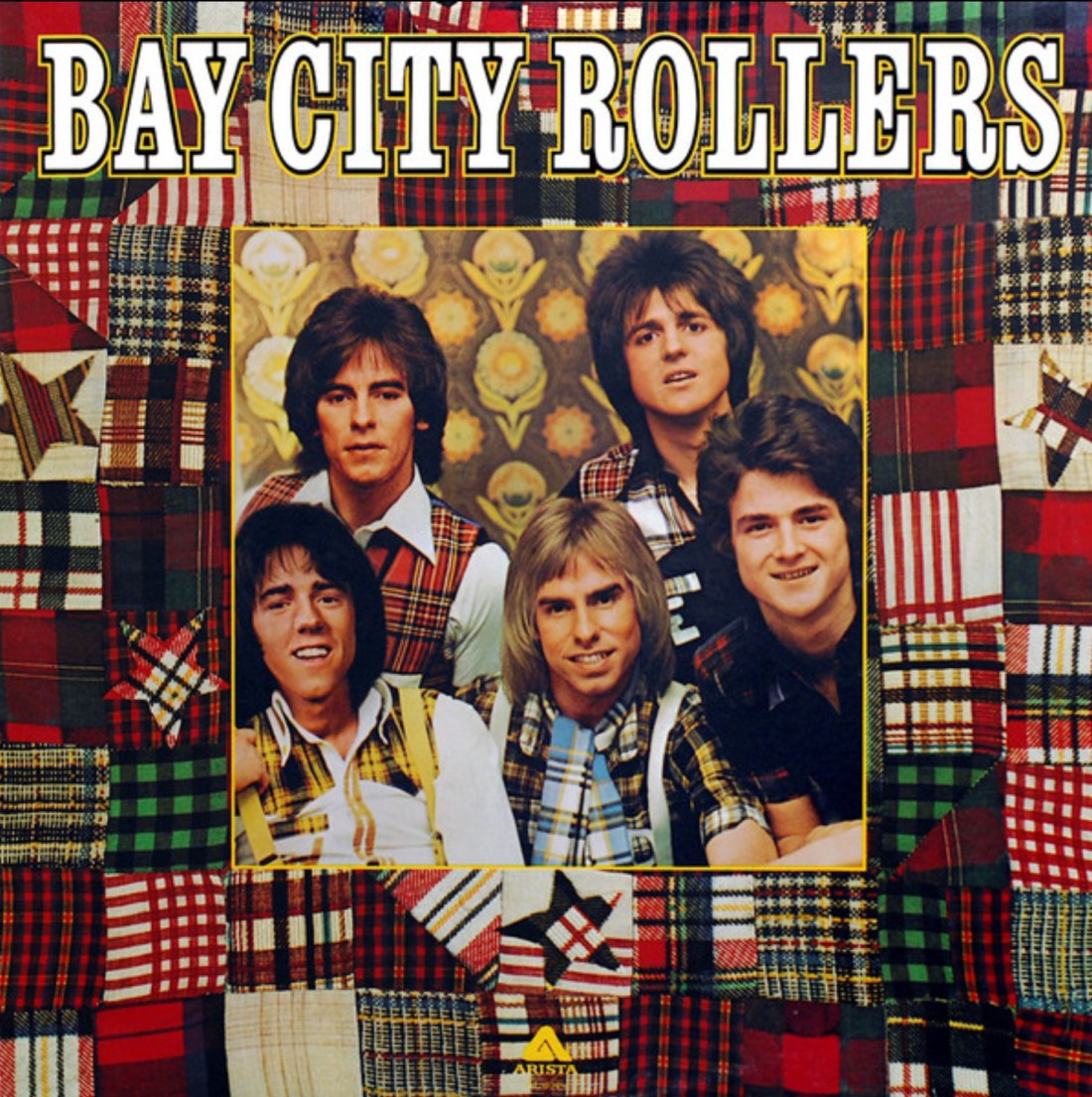
Bay City Rollers – Saturday Night

I was always more than a little bit embarrassed by my love of the Bay City Rollers. Their outfits were ridiculous: not the respectable jeans and t-shirt of a real band. Much, much worse was the idea that there was something not very masculine about liking what was essentially a boy band, whose marketing, in Tiger Beat (which I read religiously) and elsewhere, was aimed at girls. I didn’t want to be the Rollers – again, those stupid tartans – and I sure didn’t want to sleep with them (I don’t recall wanting to sleep with anyone at that age – though Ian Mitchell was confusingly pretty in the first photo the magazine printed of him after he joined the band). I just loved their music.

In April 2021, after the death of the band’s lead singer Les McKeown, John Darnielle of the Mountain Goats wrote a lovely Twitter appreciation of the Rollers that hit home. I assume it was different for girls, but being a boy in a small community I don’t remember having anyone to share my love of the band with. John, it seems, had better luck.

“Saturday Night” was the way they first came to my/our attention, and I am happy to say it is still a perfectly-constructed pop song. The spelled-out chant at the top draws you in, followed by drums and fuzzy guitar, then Les’ gentle voice, with that accent that offers up the mystery of the foreign. The chant keeps coming back, firing you up, the “S-S-S-Saturday” of the chorus so fun to sing along with. Then, right before the end, the chant gets more intense, the S-S-Ss carry you out, and you’re calling the local radio station to ask them to play it again, or moving the needle back to the beginning.

It’s pure bubblegum: a boy has a big date and can’t wait to have fun with his girl and tell her how he feels about her. It’s mostly innocent (though I wonder now about those “little things I’m gonna do” in the second verse), and completely relatable to a pre-teen or early teen, thinking of sock-hops (Friday night at the local church hall for me) and first loves. Listening to it takes me back to a time that wasn’t even a little bit innocent – I’m saving those stories for my inevitable therapist (should probably get on with that) – but was maybe a lot more fun.

As Darnielle also pointed out, the story of how the Rollers were screwed over by their manager (read here for a pretty good accounting of his malfeasance in business and otherwise) is sad, but not atypical of business in general and the music industry specifically. Les was the third member from the glory years to pass on, but the band still seems to exist in some fashion. I still don’t much care for tartan – though, yes, I do own some plaid shirts (I contain multitudes within my contradictions) – and I still think the Rollers are pretty awesome. It’s nice to not have to feel awkward about that.

Girls Aloud – Tangled Up

I follow a fair number of Twitter accounts based in England, so things that trend in that country tend to be highlighted for me. Two weekends ago, Sarah Harding was trending, and since I had never heard of her, I clicked to see why. Sadly, she passed away from cancer at the horribly young age of 39. Learning why her death got so much attention sent me down a bit of a Wikipedia rabbit hole.

For non-Brits, the name Girls Aloud means, probably, nothing. In their native land, however, this five-member girl group, including Sarah Harding, were massive in the 2000s, with a run of uninterrupted top 10 hits from 2002 to 2009. They never charted on this side of the Atlantic, which, coming not long after the Spice Girls ruled the world, surprised me a bit. Since two of my sweet spots are “band I’ve never heard of” and “female-centred pop”, yeah, I was absolutely going to give this a listen. Their best-reviewed record was “Tangled Up”, so why waste time on the chaff when someone had already directed me to the spot at the table where the bread is waiting. 

Maybe they just came along a bit too late for North America, but they were so, so much better than the Spice Girls, and deserved as much success, at least based on this record. The first listen through only a few tracks stood out, but when I gave it a spin while doing some cardio on my stationary bike, without any distractions beyond my legs swearing at me, I was able to get past the glossy production and sameness of the voices to hear a fantastic record. A lot of this has a sped-up ‘60s feel, as if Phil Spector found another gear in all the craziness that eventually took over his life, especially in the propulsive beat of “Black Jacks” and the breezily sexy “Can’t Speak French”. Other tunes that stand out are the electro ska of “Control of the Knife” and faux rocker distortion of “Fling”. “Call the Shots” is a techno dance track, and the record ends with the bouncily hypnotic “Crocodile Tears”. There is really no filler on this album – every track has something to offer.

I’ve listened to this a half dozen times over the past two weeks – it’s great in the car – and the record always leaves me feeling happy. Of course, Spotify is now trying to feed me, so I’ve heard a few of their other songs, with standouts being “Love Machine” and “The Promise”, which won a Brit Award the year it came out over such amateurs as Coldplay and Adele. “Girls Aloud World” doesn’t roll off the tongue like ”Spice World” did, but it’s a much better place to have working hearing.

Not the Pazz and Jop 1973 – #1

Pink Floyd – The Dark Side of the Moon

There was no Pazz and Jop in 1973 – it would return in 1974 and continue for more than 40 uninterrupted years – so for this year I’m going with Acclaimed Music, which seems more critic and artist focussed than my 1972 source. For , at least, the two lists are in full agreement.

There are records that have such a large cultural imprint that it is virtually impossible to have an original thought about them, even if you’ve never played them before. This might be the record of that type, which has left me feeling slightly intimidated when it comes to writing about it. That it is considered progressive rock in many circles (I disagree, respectfully) did not help my frame of mind coming in. Curiously, I don’t think it would have ranked this high if there was a Pazz and Jop in 1973 – Robert Christgau only gives it a “B” in his guide, and the early polls were a very inclusive club of his music writer pals. This seems to be a record whose import has grown with time.

The burden of such an outsized profile is that it can make a record seem underwhelming on first listen, because the listener (okay, me) has such high expectations. This is the “Office Space” effect. For years, I heard about what a great movie this was, so when I finally watched it, I wanted too much to love it, and ended up disappointed. Thankfully, because I’m a stubborn cuss, I gave it another try, now with more measured expectations, and did love it. More than a few people have been forced to listen to me deliver this exchange.

That was my experience with “The Dark Side of the Moon”. It was good, for sure. But what made it great? I wasn’t hearing it the first few times through. Records, though, are easy to keep playing. They can accompany us in the car, when doing dishes or laundry, when feeding our cats. Slowly, one play at a time, this album has gotten under my skin. I have no idea if it’s the second best album of all time, as Acclaimed Music has concluded, but, god, it’s good.

The more experimental stuff – heartbeats, conversational snippets, the legendary clocks of “Time” and cash register of “Money” – is fine, but I’m a song guy, and those are impressive even without the little avant garde flourishes. The gentle “Breathe (In the Air)” sets the tone, with the mournful guitar sounds washing over you. The guitar in “Time” is propulsive and howling, and sounds like loss feels, with a callback to “Breathe” in the final stanza. Plus, it has my favourite line on the album: “Hanging on in quiet desperation is the English way.” “The Great Gig in the Sky” has some beautiful piano – I love the change at 0:35 – and is the most stirring tune here, with the possible exception of the spirituality and grandeur of “Us and Them”, with melancholic saxophone turning desperate towards the end.

The second half of the record, which includes “Us and Them”, starts with the money-is-bad-but-don’t-touch-mine cynical vibe of “Money”, with the saxophone adding a jauntiness that turns into a strut. The sadness over a lost comrade – “or maybe I’m crazy, too?” – of “Brain Damage” is followed by the “nothing matters” fatalism of “Eclipse”. The album is in no way a trip to a happy place, focussing on conflict, madness, fears and the like, but it is also a call to understand and empathize with what the people around us are going through, and that is a message that never gets stale. Especially today, when the world can seem like Jamie Tartt waiting for a hug from Roy Kent.

The lesson for me is to not give up on something too quickly. (Except Jethro Tull – I am very comfortable that I am right about those guys and don’t need another listen.) If I wasn’t writing these little commentaries, this would probably have gotten one play and then been consigned to the bin of “yeah, that just wasn’t for me” records. It can be good to find out you were wrong about something.

Classic Songs of My Youth Revisited – #1

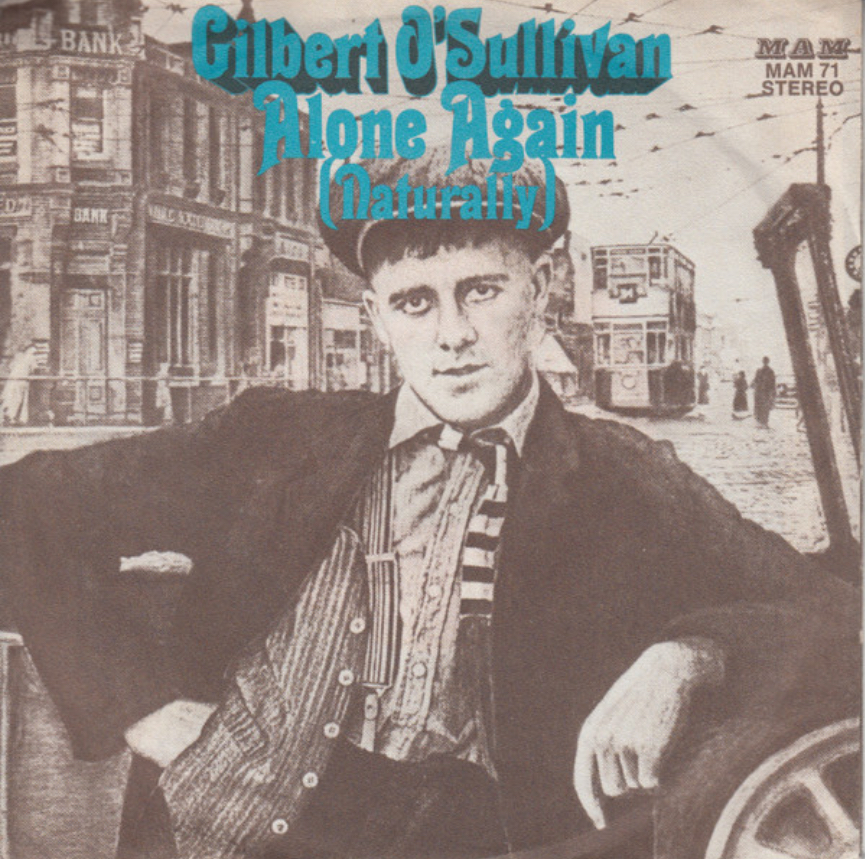
Gilbert O’Sullivan – Alone Again (Naturally)

Before we leave 1972 (for now – I’m certain we’ll be coming back this way), it seems like a pretty good year to start a new series, with a song that I expect everyone knows, and should come to know if they don’t. (I’ll have to check if the Twinsthenewtrend guys have given it a spin – and you should look these guys up (start with the “In the Air Tonight” episode) if none of what you just read makes any sense.)

As I dig through the music of the past, I am also rewriting my own history somewhat to be more in accord with what actually happened, and not my age-addled version of events. This song is Exhibit “A”. I have long believed that the first time I heard it was on “The Sonny & Cher Comedy Hour”. I remembered the set perfectly, remembered the staging, but somehow forgot the bloody song, which turned out to be his other big hit, “Clair”. Now I don’t know how I first came across it, so it most likely was on CJCB, the radio station that dominated my early listening once I had some choice in the matter.

It’s a fairly melodramatic song – feeling suicidal at being left at the altar, mourning the death of a parent – but I oddly always found it pretty hopeful. For though the narrator is, indeed, alone at the end of the song, he’s still standing, and sometimes that’s accomplishment enough. I love the simple sounding piano, the guitar picking, and even the strings aren’t overwrought, which is really saying something in a song about, you know, contemplating throwing yourself off a tower. A near-perfect pop song, and it never fails to get to me, despite having heard it time and time again over some 50 years.

I always thought of O’Sullivan as something of a one-hit wonder, despite knowing he actually had two hits in North America. (Don’t ask me to explain why I thought of him this way – I know it isn’t rational.) As it turns out, he actually had a third hit here called “Get Down”, which I had never heard before this week. It’s peppier than the other hits and a little creepy – he’s compares a woman’s behaviour to a dog’s – which shouldn’t be surprising coming from the man behind “Clair”, which is a super sweet song directed at a young girl who the narrator befriends, but your skin might crawl just a tiny bit if you don’t appreciate that fast enough.

O’Sullivan is still out there, releasing a new album every few years, most recently in 2018. Maybe he’s going to get another moment: that last album hit the British top 20, his first record of original material to chart since 1991, and his highest charting original since the tail end of his heyday in 1974. It is recognizably him, and I especially liked “Love How You Leave Me”, “What Is It About My Girl” and “No Head for Figures but Yours”. Pretty much every track would fit in just fine on any easy listening playlist.

He is active on Twitter, engages with fans and posts photos with his family. He looks happy, and that makes me happy, too.

Not the Pazz and Jop 1972 – Extra Credit

Even with listening to most of these records a few times before doing a post, that still leaves a lot of time – mostly on walks, but also while doing yard work – to listen to other music. This includes records from 1972 that didn’t make it into the top 20, and not just the already-commented-on Black Sabbath’s “Vol. 4”. How Jethro Tull made it ahead of any of these records is mystifying to me, and some of your favourites are likely here, too. I can’t recommend everything from 1972, but the albums listed below gave me a lot of pleasure.

  • Traffic – The Low Spark of High Heeled Boys (especially the epic title track, an immediate addition to my Spotify playlist “Long Songs that Never Get Boring”)
  • Stevie Wonder – Music of My Mind (what a year he had)
  • The O’Jays – Back Stabbers
  • Todd Rundgren –  Something/Anything?
  • Randy Newman – Sail Away
  • Al Green – I’m Still in Love with You; Let’s Stay Together (also a pretty good year)
  • T. Rex – The Slider
  • Mott the Hoople – All the Young Dudes (produced by David Bowie – its a crime these guys aren’t appreciated more)
  • Miles Davis – On the Corner
  • Elton John – Honky Chateau
  • Alice Cooper – School’s Out (possibly 1972’s biggest surprise outside of Black Sabbath – I think there’s a musical theatre nerd in Vince that managed to sneak out for part of this record)
  • Captain Beefheart and the Magic Band – Clear Spot
  • Eagles – Eagles (it pains me to include this – Don Henley seems like an enormous tool (just ask Frank Ocean), and Glenn Frey may have been one – but there is no denying these guys made some decent records)

Welcome to PopNotes!

First up, thanks for stopping by. If you read the mission statement on the main page, you know this project started on Facebook. A special thanks to any and all who were reading along there and decided to check out what else I might get up to.

Now that all my old FB posts are up, it’s time to get to the “new” stuff, which started earlier today with Neu!. (The jokes just write themselves.) Before you decide whether or not this is worth a follow, you should know that I intend to clutter your in-box two or three times per week. I’ll be continuing with my Pazz and Jop project, of course, but have a few other ideas that don’t fit inside that particular box that I will get to in time. It will all be music focused, through the usual filter of my personal cultural history. If you have found any value or entertainment in what I’ve done to date, this will be more of the same.

I have an Instagram where I will only post pictures without much text – my wall is pretty cool, and you should at least take a look at it one time (thanks to my beautiful wife for the idea) – and a Twitter where I will post links to music-related articles and to new posts here (in case you don’t want to subscribe).

Finally, please do engage. This is a passion project, and a big part of that passion is sharing with others. I love music, and while I may not have particularly profound insights, maybe you do, and I hope you’ll share them. And please tell me about the music you love so I can check it out for myself. That’s the real point of all of this.

Photo by Jason Leung on Unsplash

Not the Pazz and Jop 1972 – #20

Neu! – Neu!

And so we end 1972 with more Krautrock. I knew early on there would be many surprises along the way – my sixth piece was about a band I’d never heard of before, after all – but did not expect things to be so international this quickly. Fantastic music was coming out of Brazil and Germany, and I don’t know if it was recognized as such in its time, but I feel fortunate that it found its place in the canon before I got around to discovering it in 2021.

This is primarily an instrumental record, with the only singing – and it is very, very generous to call it that – found on the last track. Some of this is just noise, and nothing that anyone but the most generous listeners would call a song. Highly experimental, with industrial and nature sounds, mumbled dialogue, odd tempo shifts, and droning backgrounds. In the end, this is all just a bit too weird for me in parts, but there are some tunes that I will happily revisit.

“Hallogallo”, easily my favourite track, first made me think of early New Order (but maybe it’s more Joy Division), then that Christmas song that Fallon, Sanz, Kattan and Morgan did on “Saturday Night Live”. The title is a play on a German slang term for “wild partying”, and it’s the one track here that is truly uptempo, with an incessant motorik drumbeat that gets under your skin and starts your feet tapping and hips swaying.

Highlight #2 is “Negativland”, with more motorik and a propulsive bass line over a screeching squall. The tempo speeds up a few times, then drops back to the more at-ease pace, before an all-out dash to the end over the last minute and a half or so.

“Weissensee” (or “White Lake”) is a hypnotic soundscape with gentle drums and smooth guitar licks, with an abiding sense of melancholy. “Im Gluck” (“Lucky”) is similarly mellow, and has what my Maritimer ears could not miss as the sounds of water lapping against a dock (soon confirmed when seagulls or some similar water fowl turned up). It’s incredibly comforting, and a nice way to end my travels through 1972’s best music.